


On the edge of Finland’s north‑east, where forests run to the Russian border and fells rise above glassy lakes, Ruka–Kuusamo has quietly become one of Europe’s most compelling outdoor playgrounds. This compact region combines a long ski season, nationally famous hiking trails, accessible wildlife viewing and a surprisingly polished tourism infrastructure, making it an excellent choice whether you come for winter snow, autumn colors or the endless light of early summer.
Get the latest updates straight to your inbox!
Getting Oriented in Ruka–Kuusamo
Ruka–Kuusamo lies in north‑eastern Finland, about 60 kilometers south of the Arctic Circle. Kuusamo town is the transport hub, with a small airport that usually has daily connections to Helsinki in winter and several flights a week in summer. From Kuusamo it is roughly a 25 to 30 minute drive to the purpose‑built Ruka ski village, which functions as the main resort center with hotels, ski lifts, restaurants and guiding companies.
For most visitors, it helps to think of the area as three overlapping zones. Around Ruka village you have the ski slopes, lift‑served bike and hiking trails, and busy winter services. To the north and east stretch the forests, lakes and hills used by safari operators for snowmobiling, husky sledding and snowshoeing. To the south lies Oulanka National Park, home to the famous Karhunkierros, or Bear’s Trail, and some of Finland’s most photographed river canyons and rapids.
Accommodation is concentrated at Ruka, where you can choose from ski‑in apartments, mid‑range hotels and large log chalets big enough for several families. Many units are branded as Ski‑Inn apartments, meaning they sit directly on or beside the slopes and include benefits such as discounted lift passes. In Kuusamo town you will find simpler hotels and cabins, often a bit cheaper and handy if you are self‑catering and using a rental car to access both Ruka and Oulanka.
Weather shapes everything here. In January temperatures often stay well below freezing, with deep snow and little daylight, while in June the sun barely sets and trails can be muddy from snowmelt. When planning your trip, build your expectations around the season first, then layer in specific activities such as skiing, hiking or bear watching.
Hiking the Bear’s Trail and Beyond
Ruka–Kuusamo is best known among hikers for the Karhunkierros, or Bear’s Trail, Finland’s most famous long‑distance route. The full trail is roughly 80 kilometers, running from Hautajärvi in Salla through Oulanka National Park and ending at Ruka. It typically takes four to six days to complete and is well marked with orange paint flashes and signposts, with basic wilderness huts and designated camping spots along the way for overnight stops.
Many visitors, especially those short on time, opt for the Pieni Karhunkierros, or Small Bear’s Trail, a popular 12 kilometer day hike that starts and finishes near the village of Juuma. This loop packs in several hanging bridges, forested riverbanks and views of the Jyrävä waterfall and the famous Myllykoski rapids, where an old mill stands beside swirling white water. On a typical July day you will share the trail with Finnish families, trail runners and small guided groups, but it rarely feels crowded once you spread out along the river.
Trail infrastructure is good by international standards. You will find maintained fire pits with wood, simple shelters and dry toilets along the main routes. Wild camping is restricted in the national park but allowed in marked spots, and many hikers mix tent nights with stays in open wilderness huts. A common approach is to base yourself at a lodge such as Basecamp Oulanka on the park edge and combine one or two day hikes on the Pieni Karhunkierros with a paddle on the Oulankajoki River.
Outside Oulanka, Ruka itself offers a network of shorter waymarked trails. In summer you can ride a chairlift up the fell and hike back along the ridge, taking in views across the forest plateau to Russia on clear days. An easy half‑day example is to ride up from Ruka village, follow the fell‑top path past the antennas and loop down via Valtavaara, a nature reserve with boardwalks through boggy sections and a small hut at the summit. These routes are ideal if you want mountain scenery without committing to a multi‑day trek.
Skiing and Snow Adventures in a Long Winter Season
Ruka Ski Resort is one of Finland’s most snow‑sure downhill areas and typically runs one of the country’s longest seasons. Although dates vary with conditions, the lifts often open in October and can operate into May, with artificial snow heavily used on the core runs early and late in the season. The slope map usually shows around 30 to 35 marked pistes and more than 20 lifts, including chairlifts and T‑bars, spread over several sides of the Ruka fell.
The skiing itself suits beginners and intermediates best. Many runs are short by Alpine standards but provide good variety, from wide family slopes under the Village Express chair to steeper FIS‑rated race runs used during the Ruka Nordic World Cup events in late November and early December. Snow parks and beginner areas are concentrated close to the village, so families can easily split up while still meeting for lunch in the same base area.
Lift passes are sold in flexible durations from single rides to multi‑day tickets. Prices fluctuate by season and promotions, but as a rough guide a standard adult one‑day pass in peak winter often costs in the region of 60 to 70 euros, with discounts for children, seniors and Ski‑Inn guests. Equipment rental shops sit directly in Ruka village, where a full set of skis, boots and poles for one day typically falls somewhere between 30 and 45 euros depending on gear level and rental brand, with snowboards and specialty skis priced a bit higher.
Beyond downhill skiing, the region is a stronghold of cross‑country culture. Groomed ski tracks start right from Ruka and Kuusamo, with dozens of kilometers of classic and skate trails, some lit for evening use. Local safari companies such as Ruka Safaris offer beginner cross‑country lessons, guided snowshoe tours and snowmobile excursions. A typical two‑hour snowshoe hike on a nearby fell might cost around 70 to 90 euros per person including guide, transport and equipment, while a half‑day snowmobile tour with two people sharing each machine often runs to a little over 130 euros per person.
Summer and Autumn: Lakes, Fells and Light
While winter marketing often dominates, Ruka–Kuusamo comes into its own for hikers and paddlers from late June to early September. By late June the snow has usually melted from most lowland trails, rivers run strong but manageable, and mosquitoes are active but tolerable with repellent and long sleeves. July and early August bring the warmest temperatures, often sitting in the high teens Celsius during the day, and long evenings where you can be out on the trail or lake well after 10 PM.
One accessible way to sample the landscape is to combine short hikes with lakeside saunas and cabin stays. Many local operators on the shores of lakes such as Kitkajärvi and Kuusamojärvi rent simple wooden cottages that come with their own rowing boat and traditional wood‑fired sauna. It is common to hike a section of the Pieni Karhunkierros in the morning, then spend the evening rowing in the soft light and finishing with a sauna and quick plunge into the lake.
Water‑based activities expand as the snow disappears. Outfitters offer packrafting or canoe trips along quieter stretches of the Oulankajoki, where you drift between sandy banks and pine forest cliffs, occasionally stepping out for short side hikes to viewpoints. On calmer lakes you can rent stand‑up paddleboards or kayaks by the hour from beach kiosks around Ruka and Kuusamo. Fishing licenses for local lakes and rivers are sold in supermarkets, petrol stations and online, though you must check current regulations and seasonal restrictions for each water body.
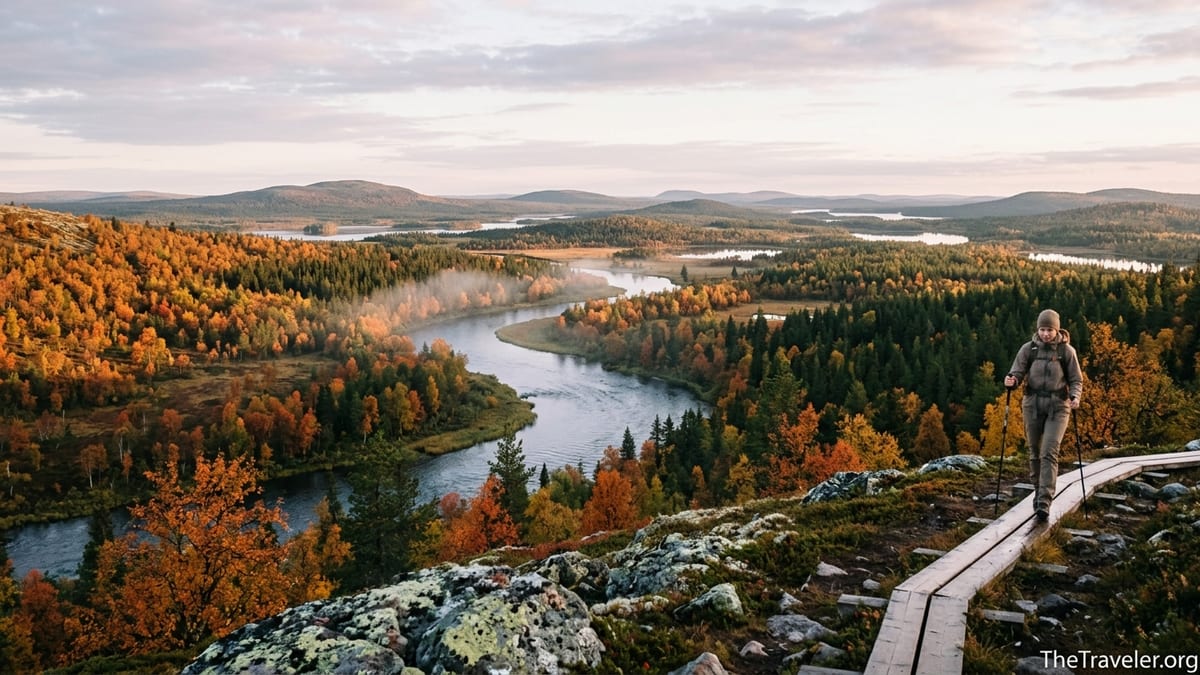
Autumn, especially from early September to early October, is increasingly popular with photographers who come for ruska, the Finnish term for fall color. Birch and aspen turn gold, marshes glow red, and the first night frosts can bring crisp, clear days. This shoulder period is ideal if you want to hike the Bear’s Trail with fewer insects and cooler temperatures. Many bear‑watching operators also run their last tours at the end of September, so you can combine long day hikes with evening wildlife hides in a single trip.
Wildlife Watching and Brown Bear Hides
Ruka–Kuusamo is one of the best places in Finland to see large carnivores safely and ethically. Several specialist companies, including Bear Kuusamo and Taiga Bear Kuusamo, maintain purpose‑built hides near the Russian border where wild brown bears regularly come to feed in the evenings. These facilities typically sit in private reserves of boreal forest and wetlands, designed to keep both animals and visitors safe while offering clear views for photography.
A standard bear‑watching evening often begins around late afternoon, with transfer from a meeting point in Kuusamo or Ruka to the remote hide area. After a briefing on behavior and safety, you enter a wooden cabin with large viewing windows, narrow photography slots and basic seating. Bears may appear any time from early evening until late at night, sometimes wading through bogs or passing directly in front of the hide. Some operators provide a “bear guarantee,” allowing you to return another evening for free if no bears are seen, reflecting how frequently the animals now visit these feeding areas.
Prices vary by company and season, but as a broad indication an evening bear‑watching tour in 2026 commonly costs around 120 to 140 euros per adult, with children under 18 often paying roughly half. Overnight options, where you remain in the hide until dawn and sleep on bunk beds between animal visits, can cost closer to 180 to 200 euros per person. These rates usually include guiding, transport from a local meeting point and hot drinks or snacks, though not full meals, so you should eat beforehand and bring simple additional food if allowed.
Ethical considerations are taken seriously. In most operations, food is placed at a distance from the hides to avoid habituating bears to close human contact. Guides emphasize silence, no flash photography and avoiding strong perfumes or smelly snacks that might interfere with animal behavior. Alongside bears you may see white‑tailed eagles, wolverines or smaller forest species. For many visitors, combining one overnight bear hide with a few days of hiking in Oulanka delivers a concentrated experience of Finland’s wild east.
Practical Planning: Costs, Transport and Seasons
Reaching Ruka–Kuusamo typically begins with a flight or long overland journey to Kuusamo. In winter there are usually frequent flights from Helsinki and seasonal charters from various European cities aimed at ski holidaymakers. In summer, schedules may be thinner, with some travelers opting to fly to Oulu or Rovaniemi and continue to Kuusamo by rental car or long‑distance bus. Roads are paved and well maintained, but in winter you should be comfortable driving on snow and ice, with studded tires standard on local rental cars.
On the ground, staying within Ruka village reduces your need for a car in winter. Many accommodations sit within walking distance of lifts, restaurants, ski rentals and tour offices. Shuttle buses link Ruka and Kuusamo town, as well as some neighborhoods of cabins and the local spa. In summer, however, having a rental car greatly expands your options for trailheads and lake access, especially if you plan to hike the Pieni Karhunkierros or visit more remote starting points for the full Bear’s Trail.
Budgeting depends strongly on your style of travel. A couple renting a small self‑catering apartment in Ruka outside peak Christmas and New Year might pay somewhere around 100 to 150 euros per night, while larger chalets with private saunas can be several times more but split well between groups. Restaurant main courses in resort eateries often fall between 18 and 30 euros, with cheaper grill kiosks and supermarket take‑out reducing costs. Guided activities such as snowmobile safaris, bear watching and husky tours are likely to be your biggest discretionary expenses, each often priced in the low to mid hundreds of euros for a family.
Timing your visit comes down to priorities. If you dream of quiet forests and long hikes, late June through early September is ideal, with July best for warmth and August for berries and slightly quieter trails. For skiing, December to April offers the most reliable conditions, though the very darkest mid‑winter weeks can be tough if you are unused to limited daylight. March and early April provide a sweet spot of strong snow cover, sunnier days and better chances of seeing the northern lights on clear nights.
Staying Safe and Respecting Nature
Ruka–Kuusamo’s outdoor infrastructure makes it accessible even to newer hikers and skiers, but conditions can be harsh, and preparation matters. In winter, temperatures can plunge below minus 20 degrees Celsius, especially away from the villages and on open fells. Proper layering, windproof outer shells, insulated boots and mittens are essential. Rental shops in Ruka can provide skis and snowshoes, but you must bring adequate clothing or rent thermal overalls and boots from safari operators if you lack arctic‑ready gear.
On the trails, maps and basic navigation skills remain important despite clear waymarking. Smartphone apps with offline topographic maps are popular, but batteries drain fast in the cold, so a paper map and spare power bank are sensible backups. In Oulanka National Park, remember that camping is only allowed in designated sites and that collecting firewood is restricted to supplied wood stores near shelters. Rangers regularly update information boards at main entrances about trail conditions, seasonal bridge removals and any closures due to nesting birds or maintenance.
Wildlife encounters outside guided hides are rare but possible. Finland’s brown bears, wolves and lynx generally avoid people, and attacks on humans are extremely uncommon. Still, you should store food carefully at campsites, avoid leaving food waste and keep dogs on a leash where required. During bear‑watching tours, always follow guide instructions about noise and movement. Responsible operators balance close viewing with maintaining the animals’ natural wariness of humans.
Finally, consider the broader impact of your trip. Stick to marked trails to protect fragile bog vegetation, pack out all waste and choose local businesses that demonstrate care for the environment, such as accommodations using renewable energy or safari companies that limit group sizes. In a region where tourism now plays a significant role in the local economy, each traveler’s choices help determine how well the wilderness is preserved for future visitors and for the wildlife that still thrives here.
The Takeaway
Ruka–Kuusamo offers a rare combination: a compact, well‑organized resort region wrapped in genuinely wild forests and river canyons. In a single trip you can ski on floodlit slopes, snowshoe through silent spruce, hike one of Finland’s iconic long‑distance trails and spend a night watching brown bears roam across a bog at the edge of the Russian border. Strong infrastructure, from marked hiking routes and wilderness huts to regular winter flights, makes it accessible, yet the feeling on a misty autumn morning above the Oulankajoki remains unmistakably remote.
Whether you come for a family ski week, a solo trek on the Bear’s Trail or a photography‑focused wildlife stay, success in Ruka–Kuusamo depends on three things: choosing the right season, planning around realistic travel times and respecting the local environment. Do that, and this corner of north‑eastern Finland will reward you with some of the most atmospheric outdoor experiences in the Nordic countries.
FAQ
Q1. When is the best time to visit Ruka–Kuusamo for hiking?
The most reliable period for snow‑free hiking is usually from late June to late September, with July and August offering the warmest temperatures and fully open trails.
Q2. How difficult is the Pieni Karhunkierros (Small Bear’s Trail)?
The 12 kilometer loop is considered moderate. There are some steep sections, stairs and hanging bridges, but most reasonably fit walkers with proper footwear can complete it in three to five hours.
Q3. Do I need a guide to hike in Oulanka National Park?
No, most marked routes, including the Pieni Karhunkierros, can be safely hiked independently by prepared walkers. Guides are useful if you want in‑depth nature interpretation, winter routes or multi‑day logistics.
Q4. How long is the full Karhunkierros (Bear’s Trail) and how many days should I allow?
The full Karhunkierros is roughly 80 kilometers from Hautajärvi to Ruka. Most hikers allow four to six days, depending on fitness, daily distances and whether they prefer hut stays or camping.
Q5. What does a typical day of skiing at Ruka cost?
As an approximate guide, an adult one‑day lift pass often costs around 60 to 70 euros, with ski rental roughly 30 to 45 euros. Costs drop per day when you buy multi‑day passes.
Q6. Can beginners learn to ski or snowboard in Ruka?
Yes. Ruka has several ski schools offering beginner group lessons and private tuition in multiple languages, plus gentle green slopes and dedicated beginner areas near the village base lifts.
Q7. Is bear watching safe in Ruka–Kuusamo?
Bear‑watching tours are designed to be very safe. Visitors remain inside sturdy hides, food is kept at a distance, and trained guides manage behavior and brief guests on safety and ethics.
Q8. Do I need a car to get around Ruka–Kuusamo?
If you stay mainly in Ruka village in winter, you can manage without a car using resort buses and walking. For summer hikes, trailheads and lakes are easier to reach with a rental car.
Q9. What kind of clothing should I pack for a winter trip?
Pack thermal base layers, a warm mid‑layer such as fleece or wool, a windproof and waterproof shell, insulated boots, warm socks, mittens, a hat and a neck gaiter or balaclava.
Q10. Are there northern lights in Ruka–Kuusamo?
Yes, auroras are visible on many clear nights from roughly September to March. Light pollution is low a short distance outside the village, making nearby fells and lakeshores good viewing spots.