


Lapland in winter feels almost unreal: skies streaked with green auroras, deep snow muffling the forests, and reindeer tracks crossing frozen rivers. Planning a trip here is not difficult, but doing it well means understanding when to come, where to base yourself, how to balance Northern Lights chasing with daytime activities, and what this kind of Arctic adventure really costs. This guide walks through the key decisions with concrete examples from Finnish and Swedish Lapland so you can turn an idea into a workable, realistic itinerary.
Get the latest updates straight to your inbox!
Choosing the Right Lapland Base for Your Trip
“Lapland” is a broad region stretching across northern Finland, Sweden and Norway. For a first trip focused on Northern Lights and winter activities, most travelers narrow it down to a few practical hubs. In Finnish Lapland, Rovaniemi, Levi and Ivalo are common choices. Rovaniemi is the easiest to reach, with direct winter flights from many European cities and frequent connections from Helsinki. It mixes city services with quick access to wilderness, which suits first-time visitors who want everything from supermarkets to snowmobile safaris in one place. Levi, about 170 kilometers north, feels more like a compact ski resort village with slopes, restaurants and cabins clustered around a central hill. Ivalo and nearby Inari sit further into the Arctic, with darker skies and quieter surroundings that appeal to travelers who care more about aurora odds than nightlife.
On the Swedish side, Kiruna and Abisko are the key names. Kiruna is a functioning mining town with regular flights from Stockholm and direct night trains, making it a practical base for a four to five day stay. Abisko is tiny by comparison, essentially a village and national park, but it is famous among aurora fans for its relatively dry microclimate and clear skies. Many visitors fly to Kiruna, spend a night or two there, visit the Icehotel in Jukkasjärvi, then move on to Abisko for dedicated Northern Lights hunting. If you prefer a little more infrastructure, Kiruna typically has a wider range of hotels and rental apartments, while Abisko offers a few lodges, hostels and aurora camps rather than city comforts.
Think of each base as a style choice as much as a dot on a map. Rovaniemi is family friendly, with Santa Claus Village and plenty of English-speaking tour operators. Levi is ideal if you want to combine skiing with aurora excursions and après-ski bars. Ivalo and Inari feel remote and quiet, with Sámi culture and frozen lakes framed by forested hills. Kiruna gives you that “working Arctic town” atmosphere, complete with locals doing their shopping in snow boots, while Abisko delivers long, dark nights and easy access to a national park, but little else in terms of urban life. Matching these personalities to your own travel style is more important than chasing the single “best” place.
When to Go: Balancing Auroras, Snow and Daylight
Auroras are visible in Lapland roughly from late August to early April, but the classic winter season for Northern Lights and snow-based activities runs from about November to late March. In Rovaniemi and similar latitudes, local tourism boards highlight November through March as the core window for snow and aurora, with February and March often described as the sweet spot for many travelers. At that time you typically get deep, reliable snow, long nights for aurora hunting, but also enough daylight to enjoy husky safaris, snowshoeing and scenic viewpoints without rushing.
December has a special appeal because of Christmas markets, Santa-themed attractions and the polar night atmosphere. However, it can be crowded and relatively expensive, particularly between mid December and early January, with popular resorts charging premium rates for cabins and glass igloos. Daylight can shrink to just a few hours of blue twilight around the winter solstice, which is magical but limits how much you can do outside before dark. If your main goal is pure winter atmosphere and festive vibes, this period delivers, but you may have to accept higher prices and colder temperatures that can dip below minus 20 degrees Celsius.
January brings even colder air but usually fewer crowds and lower prices. This can be a good month for budget-conscious travelers who are prepared for real Arctic conditions and very short days. By February and March, daylight increases significantly while the Northern Lights remain strong, and weather patterns often settle into more stable high pressure systems that bring clear skies. This combination is why many aurora-focused guides recommend planning your main Lapland trip in February or March if you are not tied to school holidays or Christmas schedules. In northernmost areas like Abisko, Ivalo or Inari, the aurora season stretches into early April, but spring sun quickly brightens the nights after that.
How Long to Stay and How to Structure Your Itinerary
For a focused Northern Lights trip with winter activities, three nights is an absolute minimum, and four to five nights is usually more comfortable. The aurora does not appear on command and you need multiple chances to catch a clear, dark sky. Many experienced travelers aim for four to seven nights in one main location such as Rovaniemi, Levi, Kiruna or Abisko, then consider a second base only if logistics and budget allow. For example, a common itinerary is to spend three nights in Rovaniemi for Santa attractions, city comforts and snowmobile tours, then travel by train or bus to Levi for another three nights of skiing and quiet aurora hunting away from city lights.
Think in terms of “aurora nights” and “activity days.” A practical structure for a five-night trip could be to schedule one guided Northern Lights tour on your first or second night, leaving the rest flexible. If the weather is bad, operators often let you move to another evening if there is space, which is impossible if you have only one night in town. Daytime could include one dog sledding tour, one snowmobile excursion, and one slower day for visiting museums, saunas or simply walking the snowy trails. In Kiruna and Abisko, for example, visitors often combine an afternoon visit to the Icehotel with a relaxed evening in Abisko National Park, then book a single big aurora tour using heated minibuses that can chase clear skies several hours away if necessary.
Short stays require you to make choices. If you have only three nights in Lapland, consider dedicating one night to a guided aurora hunt and the remaining evenings to do-it-yourself watching from your accommodation or a nearby viewpoint. In that case, it can be smart to book lodging slightly away from town lights, such as a cabin outside Rovaniemi or a lakeside cottage near Inari, so you can simply step outside when the aurora alert sounds. With a week or more, you can afford to slow down, include a rest day after a late-night tour, or add a two-night side trip to a more remote location such as Inari from Ivalo, or Abisko from Kiruna, without feeling rushed.
Budgeting and Realistic Costs
Lapland is not a cheap destination, but costs vary widely depending on your base, timing and travel style. For accommodation, winter prices in Rovaniemi, Levi or Kiruna often start around 80 to 120 euros per night for a basic guesthouse or simple hotel room if booked early in the shoulder weeks of January or March. Comfortable midrange hotels and well-equipped cabins can run from 150 to 250 euros per night, while glass igloos and high-end chalets at peak Christmas weeks can easily exceed 400 euros per night. In smaller places like Inari or Abisko, you may find fewer options but also slightly lower base rates outside key holiday periods.
Activity prices are a major part of your budget. In Rovaniemi, a basic group Northern Lights tour using a bus or minibus often costs roughly 75 to 120 euros per person for a three to five hour outing, including hot drinks and sometimes a light snack. Small-group or premium aurora hunts in heated minibuses with professional photography typically fall in the 150 to 250 euro range per person, especially if the tour promises to drive long distances to find clear skies. Snowmobile safaris commonly cost around 110 to 180 euros per adult for a two to three hour tour shared between two people on one machine, with higher prices for private or longer routes that include wilderness dinners or ice fishing.
Dog sledding and reindeer experiences tend to be similar in cost. A one to two hour husky safari in Finnish Lapland might start around 120 to 200 euros per adult, depending on group size and whether you drive your own team. Shorter reindeer sleigh rides at Santa-themed attractions may be in the 40 to 80 euro range, while longer cultural visits with Sámi hosts, storytelling and meals cost more but also offer a deeper experience. Food can be another budget shock: a simple restaurant main course in Rovaniemi or Levi often costs 18 to 30 euros, and a hot chocolate or mulled berry drink at an activity center easily reaches 5 to 7 euros. Self-catering from supermarkets and booking a cabin with a kitchen can reduce overall spending for families or longer stays.
Flights and internal transport depend on your starting point. From many European capitals, winter fares on low-cost carriers into Rovaniemi or Kittilä (near Levi) fluctuate but can sometimes be found around 150 to 300 euros return if booked several months in advance. A separate domestic return flight from Helsinki to Rovaniemi often hovers near 150 to 250 euros, although peak Christmas dates may be higher. In Sweden, return flights from Stockholm to Kiruna are often in a similar range, while night trains, if booked early in advance, can be a memorable and sometimes economical way to reach the Arctic while saving a night of accommodation. Building a realistic budget means adding these travel costs to your likely spend on accommodation, two to three paid activities, food and basic winter gear you may need to buy or rent.
Aurora Strategy: Tours vs DIY and Where to Watch
Seeing the Northern Lights is the headline goal for many Lapland trips, but it helps to treat it like wildlife watching instead of a guaranteed show. You need darkness, relatively clear skies and some geomagnetic activity, and there will always be luck involved. Booking at least one guided aurora tour early in your stay gives you access to local knowledge, live cloud forecasts and vehicles that can drive toward clearer skies. In Finnish Lapland, small-group tours from Rovaniemi or Levi typically leave between 7 and 9 p.m., drive 30 minutes to two hours into darker areas, and stay out until after midnight if conditions look promising. Guides often supply thermal overalls, boots, hot drinks and photography tips, which can significantly improve your odds of coming home with a good photo.
At the same time, do not rely solely on tours. If your accommodation is in a dark location, such as a glass igloo near Ivalo, a cabin by a lake outside Kiruna, or a hillside chalet in Levi, you can often see auroras without leaving your porch on clear nights. Many northern hotels now offer aurora alerts via phone or in-room alarms, waking you if the display begins. Checking simple aurora forecasts and cloud maps before bed helps you decide whether to stay up late or set an alarm for the early hours, when skies can sometimes clear after a cloudy evening. A mix of one or two guided tours and several nights of do-it-yourself watching from a dark spot usually gives the best balance of cost and flexibility.
Choosing where to watch matters as much as when. In Rovaniemi, you might take a short taxi or bus ride to darker areas like Ounasvaara Hill or the edge of the frozen Kemijoki River instead of staying in bright city streets. In Levi, walking ten to fifteen minutes out of the compact village to a lakeshore or small hill already cuts light pollution dramatically. Around Kiruna, guides often head to frozen lakes or hillsides with low horizons, while in Abisko, many people simply step outside their lodge into the national park or take a chairlift to an aurora sky station on clear nights. Wherever you are, look for a location with a broad view of the northern and eastern sky, minimal artificial light, and safe footing on snow or ice.
Winter Activities: What to Book and What to Expect
Beyond auroras, Lapland offers a dense menu of winter activities, most of them accessible to first-time visitors with no previous experience. Husky sledding is one of the most popular. On a typical tour near Rovaniemi or Levi, you might spend two to three hours at a husky farm, learn basic commands to stand on the sled runners, then ride a loop through forest and over frozen swamps while a partner sits in the sled. These tours usually include time to meet the dogs, hot berry juice, and sometimes a simple meal in a wooden kota hut with an open fire. Short one-hour “taster” rides are gentler on the budget and can work well for families with young children.
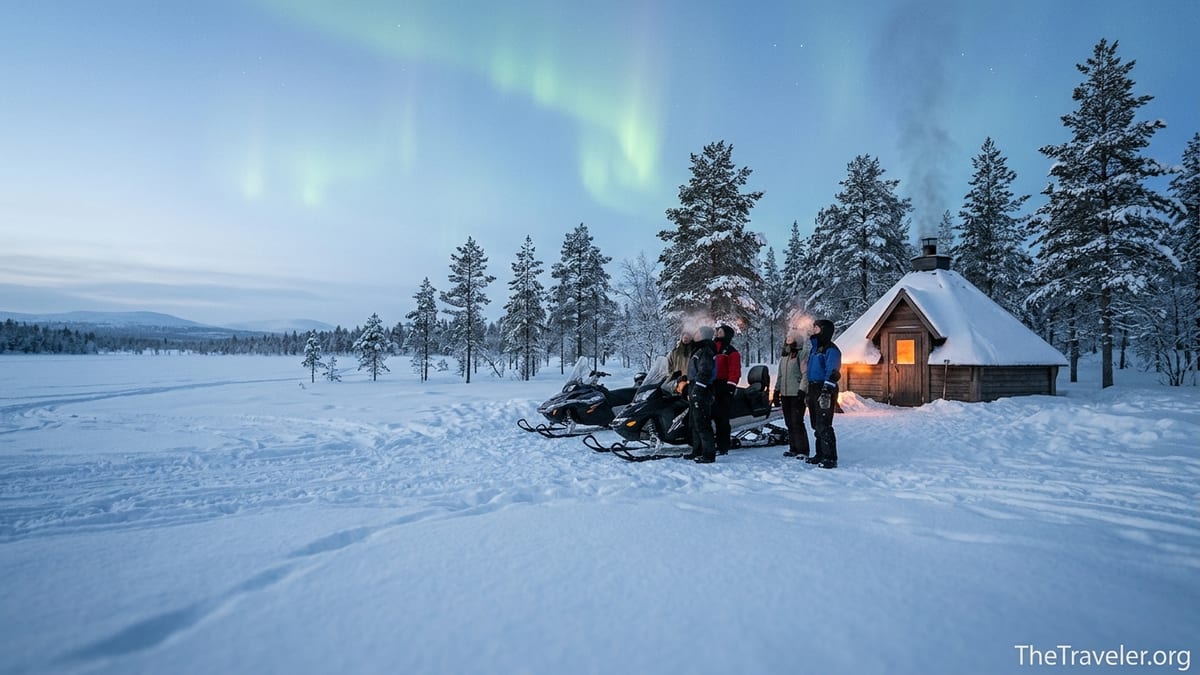
Snowmobile safaris are another staple. Operators around Rovaniemi, Kittilä and Kiruna supply snowmobiles, helmets, thermal suits and guidance, and many tours are suitable for beginners as long as you have a valid driver’s license and are comfortable operating a vehicle on snow. A two-hour evening safari might combine a ride across frozen rivers and through forest tracks with a snack around a campfire and a chance to look for auroras if the sky is clear. Longer day safaris, sometimes lasting five to six hours, reach remote wilderness cabins or high fells with wide views, and may include ice fishing on a lake. Travelers who are not confident drivers can often ride as passengers behind a guide, which is slower but still gives that wind-in-your-face Arctic sensation.
For slower-paced experiences, many Lapland bases offer reindeer sleigh rides, snowshoeing, cross-country skiing lessons and ice fishing. Near Inari and Ivalo, guided visits with Sámi hosts might include storytelling about reindeer herding, traditional yoik singing and tastings of local foods like smoked fish or reindeer stew inside a lavvu tent. In resort areas like Levi or Ruka, downhill skiing and snowboarding are available, but slopes tend to be shorter than in the Alps and are well suited to beginners and families. Indoor attractions add variety on very cold days: in Rovaniemi, the Arktikum museum dives into Arctic nature and culture, while glass igloo resorts across Lapland often include saunas and outdoor hot tubs where you can watch the snow fall after a day outside.
Practical Logistics: Getting There, Getting Around and Staying Warm
Reaching Lapland usually involves at least one connection. Travelers from North America or Asia typically fly into a major European hub such as Helsinki, Stockholm or Oslo, then connect to regional airports in Rovaniemi, Kittilä, Ivalo or Kiruna. In Finland, domestic flights from Helsinki to Rovaniemi or Ivalo are frequent in winter, and trains run overnight from Helsinki to Rovaniemi, with seats or sleeping cabins that can get you into Lapland early in the morning. In Sweden, night trains from Stockholm to Kiruna and beyond are a classic Arctic travel experience, while regional buses and transfers link Kiruna to Abisko and the Icehotel.
Once in Lapland, you can choose between relying on tours and transfers or renting a car. For most first-time winter visitors, particularly those not used to driving on snow and ice, it is often safer and less stressful to stay in a central location and use shuttle buses and organized tours that include pickup and drop-off. In Rovaniemi and Levi, many activity operators collect guests from major hotels and cabins, so you can manage without a car. In more remote areas like Inari or Abisko, a rental car can increase your freedom to chase clear skies and explore, but you must be confident handling slippery roads, limited daylight and potentially severe cold. Rental cars are usually equipped with studded winter tires, but you still need to drive slowly and be prepared for snow-packed roads.
Clothing is as important as any ticket. Daytime temperatures in mid-winter commonly sit between minus 5 and minus 20 degrees Celsius, with colder snaps further north. Most visitors do well with a layered system: a moisture-wicking base layer, an insulating mid-layer such as fleece or wool, and a windproof and waterproof outer shell. On top of that, you will want insulated winter boots, thick wool socks, a warm hat that covers your ears, a neck gaiter or scarf, and insulated mittens rather than thin gloves. Many tour operators provide full thermal suits and boots for activities like husky sledding and snowmobiling, which help a lot when you are sitting still watching the sky. Hand warmers, a thermos of hot drink and a small foam mat to sit or kneel on the snow can make long aurora vigils far more comfortable.
The Takeaway
Planning a winter trip to Lapland for Northern Lights and Arctic adventures is less about finding a magic spot and more about stacking the odds in your favor. Picking a base like Rovaniemi, Levi, Kiruna or Abisko that matches your style, traveling between November and March with a preference for February or early March if your dates are flexible, and staying at least four nights all boost your chances of success. Building a budget that reflects real-world costs for accommodation, one or two guided aurora tours, and a couple of major activities such as dog sledding or snowmobiling prevents unwelcome surprises once you arrive.
Most importantly, approach the aurora as part of a wider Arctic experience rather than the only goal. Even if clouds win one or two nights, you will still remember steering a husky sled through the forest, gliding over a frozen lake on a snowmobile, or sharing soup around a campfire at minus 15 degrees while the stars blaze overhead. Lapland rewards travelers who plan with care but stay flexible on the ground, ready to swap activities, shift a tour, or simply step outside when an unexpected green glow appears behind the trees.
FAQ
Q1. How many nights should I spend in Lapland to see the Northern Lights?
Most travelers should plan at least three nights, with four to five nights giving a much better chance of catching clear skies and a good aurora display.
Q2. Which Lapland destination is best for a first visit focused on winter activities?
For a first trip, Rovaniemi and Levi in Finnish Lapland or Kiruna in Swedish Lapland work well because they combine good infrastructure, varied tours and relatively easy access.
Q3. When is the best month to visit Lapland for Northern Lights and snow?
February and March usually offer the best balance: deep snow for activities, long dark nights for auroras, a bit more daylight than December and often more stable weather.
Q4. Do I need to book a guided Northern Lights tour, or can I watch on my own?
You can do both. A guided tour early in your stay adds expertise and mobility, while staying in a dark location lets you watch on your own on other nights if skies are clear.
Q5. Is driving in Lapland in winter recommended for visitors?
Driving is possible but only recommended if you are confident on snow and ice. Many first-time visitors choose to rely on organized tours and transfers instead of renting a car.
Q6. How expensive are winter activities like husky sledding and snowmobiling?
Shorter group tours commonly range from about 100 to 200 euros per adult, with longer or private safaris costing more. Prices vary by location, operator and season.
Q7. What kind of clothing do I need for a Lapland winter trip?
Plan on multiple warm layers, insulated boots, a good hat, mittens, and a windproof outer shell. Many tour companies also provide thermal suits and boots for their activities.
Q8. Are glass igloos worth the extra cost for seeing the Northern Lights?
Glass igloos are atmospheric and convenient for sky-watching, but they are expensive. Many travelers choose one special night in an igloo and cheaper lodging for the rest.
Q9. Can families with children enjoy Lapland in winter?
Yes. Places like Rovaniemi and Levi cater to families with shorter husky rides, reindeer visits, easy sledding hills, Santa-themed attractions and beginner-friendly ski slopes.
Q10. What happens if the weather is cloudy during my whole stay?
Cloudy weather is always possible. Choosing a longer stay, traveling outside the busiest weeks, and booking flexible tours helps, but it is wise to value the overall Arctic experience as much as the lights themselves.