


Choosing between Lapland and Iceland is a dilemma many Arctic dreamers face. Both promise snow-draped landscapes, northern lights and once-in-a-lifetime adventures, but the experiences on the ground feel very different. One is about storybook forests, reindeer and Santa’s hometown. The other is raw volcanic coastlines, steaming hot springs and black-sand beaches. This guide compares Lapland and Iceland in detail so you can decide which destination will deliver the better Arctic experience for your style, budget and comfort level.
Get the latest updates straight to your inbox!
Setting the Scene: What “Arctic” Means in Lapland vs Iceland
When travelers say “Lapland,” they usually mean the northernmost regions of Finland, Sweden or Norway. In practice, most visitors base themselves in Finnish Lapland around Rovaniemi, Levi, Ylläs or Saariselkä. Here the Arctic feels intimate: snow-laden forests, frozen rivers, small wooden lodges and distances that are relatively short. Temperatures in midwinter commonly drop to around minus 15 degrees Celsius in places like Rovaniemi, with deep snow and very short days from December to February.
Iceland, by contrast, is a North Atlantic island just south of the Arctic Circle, with a climate moderated by the ocean. It is still cold and dark in winter, but coastal temperatures near Reykjavik are often closer to freezing than to deep subzero. Instead of dense forests, you get treeless lava fields, glaciers spilling to the sea and dramatic cliffs pounded by waves. Route 1, the Ring Road that loops the island, is kept open year-round, and winter road maintenance focuses on connecting Reykjavik with towns like Akureyri and Egilsstaðir.
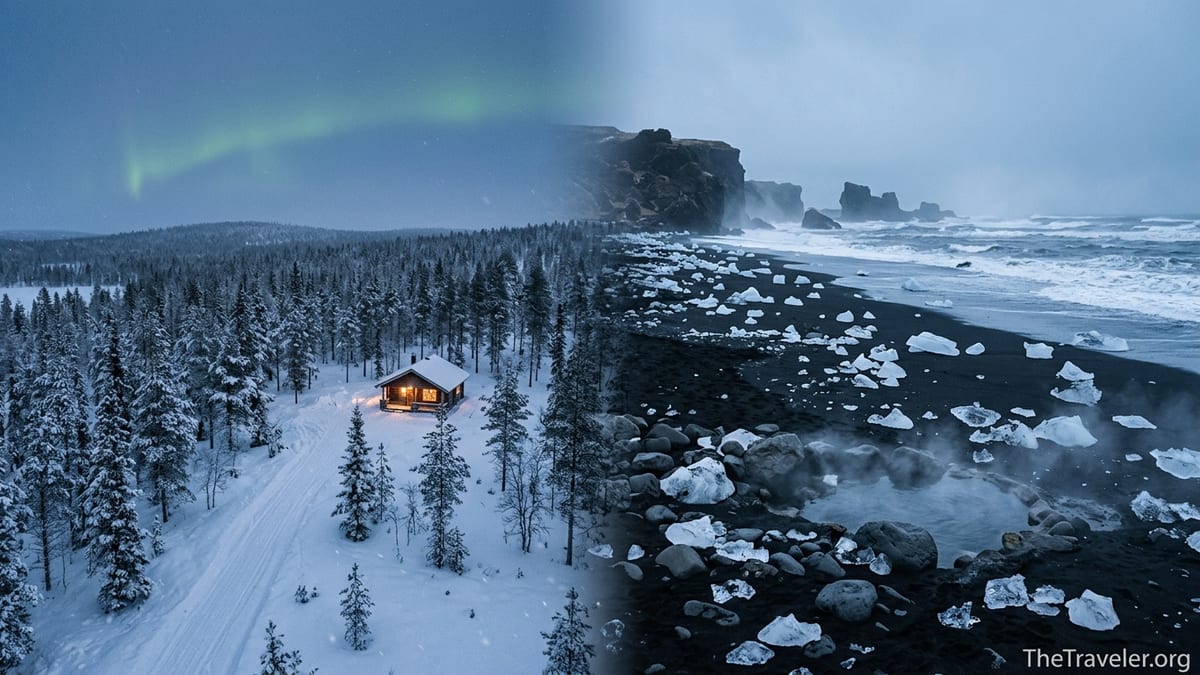
Visually, Lapland feels like a soft-focus snow globe: candlelit saunas, wooden cabins, reindeer grazing outside, and slow snowmobile rides through the trees. Iceland is more cinematic: steam vents hissing out of lava, waterfalls half frozen mid-plunge and waves crashing on black-sand beaches at places like Vik. Both are undeniably Arctic in atmosphere, but the tone of your trip will be very different depending on where you go.
This difference matters when you picture your ideal winter holiday. If you imagine a cosy, sheltered base with excursions into the wilderness, Lapland fits naturally. If your dream is an active road trip between otherworldly landscapes, Iceland delivers more dramatic variety within a single week, especially if you combine Reykjavik, the South Coast and a short stretch of the Ring Road.
Signature Experiences: Reindeer & Santa vs Lava & Hot Springs
Lapland excels at curated Arctic experiences that revolve around snow, animals and Christmas magic. In Rovaniemi, the self-proclaimed hometown of Santa Claus, the Santa Claus Village sits directly on the Arctic Circle and welcomes visitors year-round. Families can meet Santa, send postcards from the Santa Claus Main Post Office and sleep in glass-roofed igloo-style cabins that look out toward the northern sky. Nearby SantaPark, an underground theme park, opens seasonally from late November to early January with elf shows and kid-focused activities.
Animal-based excursions are another Lapland highlight. Husky safaris where a small dog team pulls a sleigh through the forest typically cost in the region of 120 to 350 euros per person depending on length and whether you drive the sled yourself. Reindeer sleigh rides are gentler, often lasting 30 to 60 minutes, and appeal especially to younger children and travelers who are less comfortable with speed. For something more high octane, snowmobile safaris allow you to cover long distances over frozen lakes and fells, often combined with a campfire dinner and aurora watching in the wilderness.
Iceland’s signature experiences look completely different. Instead of reindeer safaris, you might hike on a glacier near Skaftafell with a local guide, strap on crampons to explore blue ice caves, or take a boat ride among icebergs in Jökulsárlón during shoulder seasons when conditions allow. The classic Golden Circle day out includes the geyser area at Haukadalur, the eruptive hot spring activity at Strokkur, the Gullfoss waterfall and Thingvellir National Park, where you can literally walk between tectonic plates.
Hot water plays a starring role in almost every Iceland trip. The country is dotted with geothermal baths ranging from sleek, high-end lagoons near Reykjavik to community pools in small towns where locals swim outdoors even in midwinter. Many northern lights tours now pair aurora hunting with a soak in a hot spring, letting you float in 38 degree water while watching for green arcs overhead. If soaking in open-air hot pools is central to your dream, Iceland clearly has the advantage.
Northern Lights: Where Are Your Odds Better?
Both Lapland and Iceland sit beneath the auroral oval and offer excellent chances to see the northern lights between roughly late September and early April. In both places, clear skies and solar activity matter more than the map location, but the practical experience differs.
In Lapland, many accommodations are designed around aurora viewing. Glass igloos, panoramic cabins and wilderness lodges outside Rovaniemi or Levi may offer wake-up calls if the lights appear. Guided aurora safaris by minibus, snowmobile or reindeer sleigh typically leave after dinner and last 3 to 5 hours, with local guides driving out of town toward clearer skies. Prices often fall in a broad range from simple group bus tours at a relatively modest cost per person up to private photography tours that can cost several hundred euros per couple. The key advantage is that you leave light-polluted towns quickly and spend the entire evening in genuinely dark, snowy surroundings.
Iceland is also a northern lights heavyweight. From Reykjavik, large-group coach tours are widely available and can be among the most affordable options, while small-group minibuses and super jeeps charge more for flexibility and access to remote areas. Typical outings last about 4 hours, and many operators offer a free retry if the lights do not appear on your first night. Because Reykjavik itself is a proper city with street lighting, most tours drive at least an hour to darker countryside, often along the South Coast or inland valleys.
Weather is the main difference. Coastal Iceland gets more frequent clouds, wind and storms than inland Lapland, which means you must build in extra flexibility. Local guides in Iceland rely heavily on live cloud cover maps and road conditions when choosing nightly routes. Lapland also has cloudy spells, but the continental climate and stable high-pressure systems in midwinter can produce long runs of clear, extremely cold nights that are excellent for aurora hunting if you can tolerate temperatures well below freezing.
If seeing the northern lights is your absolute top priority and you are willing to embrace serious cold, basing yourself in a dark-sky area of Lapland with multiple nights booked and guided tours will usually feel more efficient. If you would rather combine aurora chances with a broader mix of landscapes and hot springs, Iceland delivers more variety even if night skies can be more fickle.
Cost, Comfort and Accommodation Styles
Neither Lapland nor Iceland is a low-cost destination, but the expense shows up in different ways. In Lapland, winter is peak season, especially around Christmas and New Year. Flights into Rovaniemi and other small airports rise sharply in December, and popular hotels and cabins around Christmas week can sell out many months ahead. A three-night family package in Rovaniemi that includes airport transfers, half-board, a husky safari, a reindeer ride and a Santa visit can easily run into several thousand euros for two adults and two children once all activities are added.
However, Lapland offers a broad spread of accommodation, from simple guesthouses and city hotels in Rovaniemi to self-catering cabins near ski resorts like Levi. Away from the Christmas and school holiday peaks, midweek stays in January or early March can be considerably more affordable, and you may find better value in packages that bundle activities and meals. The comfort level is generally very high: thick duvets, private saunas in many apartments, warm drying cupboards for wet gear and restaurants that serve hearty dishes built around salmon, reindeer and potatoes.
Iceland’s costs are more spread between basics such as car rental, fuel and food. Reykjavik hotel prices remain relatively high year-round, and Iceland is known for expensive groceries and restaurant meals. Renting a 4x4 vehicle with winter tires for several days in winter can significantly add to your budget, although it gives you the freedom to explore beyond day tours. Travelers who want to keep costs in check often stay in guesthouses with shared kitchens on the South Coast, cook some meals and choose a mix of free natural sights and one or two paid experiences such as a geothermal spa visit or a glacier hike.
Accommodation style reflects the landscape. In Iceland, you are more likely to stay in modern guesthouses along main routes, small hotels in fishing villages or design-forward apartments in Reykjavik. The feeling is minimalist and contemporary rather than rustic. In Lapland, wood dominates: log cabins with fireplaces, ski resort chalets and boutique lodges where evenings revolve around long dinners and watching the sky from the hot tub.
Getting Around and Dealing With Winter Conditions
Lapland is surprisingly accessible for somewhere so far north. Rovaniemi Airport sits only a short drive from the city and Santa Claus Village, with winter charter flights from several European hubs layered on top of regular domestic connections. Once you arrive, many travelers have no need to drive at all: airport transfers, activity operators and ski bus systems connect hotels, villages and slopes. For visitors nervous about driving on ice, this is a major point in Lapland’s favor.
A typical Lapland winter day might start with a pickup directly from your hotel for a husky safari. After your ride, guides bring you back in time for a late lunch, and you might walk to a riverside sauna in the afternoon. After dinner, your aurora tour minibus collects you again, taking responsibility for weather checks, back-road navigation and safe driving on packed snow. Many visitors never see a car rental desk and never feel they are missing out.
Iceland is different. Public transport outside greater Reykjavik is limited, and most visitors either rent a car or rely heavily on organized day tours. Winter driving can be both rewarding and intimidating. The main Ring Road is generally well maintained in winter, but conditions change quickly. Local road guides emphasize that a 4x4 vehicle with winter or even studded tires is strongly recommended outside the immediate Reykjavik area during the darkest months. Strong crosswinds, black ice and blowing snow are regular features of the season.
If you have solid winter driving experience and are comfortable adjusting plans to daily weather and road forecasts, self-driving in Iceland opens up considerable freedom. You can time your visits to places like Skógafoss, Seljalandsfoss and the Reynisfjara area to avoid peak tour bus arrivals and linger for photography when light is best. If you are not confident behind the wheel, however, relying on guided excursions from Reykjavik or Akureyri may feel safer, even if it constrains your itinerary. In this practical, on-the-ground sense, Lapland provides a smoother introduction to Arctic conditions for many first-time visitors.
Culture, Food and Atmosphere
Beyond landscapes, Lapland and Iceland offer distinct cultural flavors. In Finnish Lapland, you encounter a blend of modern Nordic life and Sámi heritage. Reindeer herding remains important, and many excursions include short introductions to Sámi culture, traditional clothing and joik singing. Rovaniemi itself, though small, hosts museums such as Arktikum, which examines Arctic nature, climate and indigenous cultures in depth, making it a worthwhile stop during a multiday stay.
Food in Lapland is hearty and comforting, shaped by the realities of a long winter. Restaurant menus commonly feature slow-cooked reindeer, Arctic char, salmon soup, mashed root vegetables and local berries preserved as jams or used in desserts. Many cabins have fully equipped kitchens, inviting you to cook simple meals after a day in the cold. Evenings often center on the private sauna, which is almost a ritual: heat, ice plunge or snow roll, then a slow return to warmth.
Iceland’s cultural draw leans toward literary history, music and a strong contemporary art scene, particularly in Reykjavik. You can spend an afternoon in small galleries, browse local design shops and then catch live music in the evening. Outside the capital, village life feels quieter but is still distinctly modern, with bright community pools serving as social hubs.
Icelandic cuisine reflects the island’s isolation and geothermal resources. Fresh fish, lamb and dairy dominate menus, but the real differentiator is how central hot water is to daily life. Greenhouses heated by geothermal energy grow vegetables year-round. Bakeries use geothermal steam to cook bread in the ground in areas such as the shores of Lake Mývatn. Casual diners can expect excellent fish-of-the-day dishes, warming lamb soups and, in Reykjavik, a sophisticated restaurant scene that rivals larger European capitals in creativity and price.
Who Should Choose Lapland and Who Should Choose Iceland?
Lapland and Iceland are both outstanding winter destinations, but they serve different traveler profiles. Lapland is especially strong for families with young children, couples who want a cosy romantic escape and anyone who prefers a soft landing into Arctic conditions. You can book a single lodge or resort, let the staff coordinate activities and focus on enjoying the snow. The rhythm of a Lapland trip is gentle: one or two guided outings per day, long evenings indoors and a sense that the outside world has shrunk to a manageable scale.
Iceland suits travelers who thrive on movement and variety. If you enjoy road trips, are comfortable adapting to weather and like a day that might start at a roaring waterfall and end at a geothermal lagoon, Iceland fits naturally. It is also the better choice if you want to see volcanic and coastal scenery that exists in very few other places, from columnar basalt cliffs to massive glaciers nearly at sea level.
Budget and flexibility also play a role. Very short festive-season trips can work well in Lapland because you can have a concentrated experience in three or four nights: one day for huskies and reindeer, one for snowmobiles, one for Santa and an aurora chase built in every clear evening. Iceland rewards an extra day or two and a willingness to reroute when storms blow in. Travelers who must stick to fixed dates and cannot easily handle disruption may find Lapland’s more controlled environment less stressful.
Ultimately, many Arctic enthusiasts end up visiting both destinations over different years. One strategy is to start with Lapland for a classic snow holiday, especially if you are traveling with children or older relatives, then tackle Iceland later as a more independent, landscape-driven adventure when you feel ready to manage winter roads and fast-changing conditions.
FAQ
Q1. Which destination gives me a better chance of seeing the northern lights, Lapland or Iceland?
Both offer strong aurora potential from roughly late September to early April. Lapland’s inland location often means clearer, colder nights and dedicated aurora-focused accommodations, while Iceland offers similar auroral activity but more variable coastal weather. Your odds improve in either place if you stay several nights, avoid city centers and join guided tours that can chase clear skies.
Q2. Is Lapland or Iceland better for families with young children?
Lapland generally works better for younger families. Rovaniemi’s Santa Claus Village, gentle reindeer rides, short husky safaris and compact town layout make logistics simple, and you can often avoid driving completely. Iceland can be wonderful for older children and teens who enjoy road trips and hiking, but winter driving and long days in the car may be challenging with very young kids.
Q3. Which is more expensive overall, Lapland or Iceland?
Both are costly by global standards, but expenses appear in different places. Lapland’s big-ticket items are festive-season flights and bundled activity packages, especially around Christmas. Iceland’s core costs center on car rental, fuel, accommodation and restaurant prices, which stay relatively high year-round. With careful planning, self-catering and travel outside peak periods, either destination can be made more affordable, but neither is a traditional budget choice.
Q4. I have no winter driving experience. Should I avoid Iceland in winter?
If you lack experience on snow and ice, self-driving in Iceland during winter is not ideal. Strong winds, black ice and sudden storms are common, and local authorities strongly emphasize the need to monitor weather and road conditions daily. In that case, consider visiting Iceland in late spring or summer, or rely on guided day tours from Reykjavik in winter. Alternatively, choose Lapland, where many visitors never drive at all and still enjoy a full Arctic experience.
Q5. When is the best time to visit Lapland for snow and activities?
Snow conditions and winter activities in Lapland are usually reliable from early December through March. December offers intense Christmas atmosphere but also peak crowds and prices. January can be extremely cold yet often quieter, while February and early March bring more daylight and slightly milder temperatures that many travelers find ideal for longer husky safaris, skiing and snowshoeing.
Q6. Is it realistic to drive Iceland’s entire Ring Road in winter?
Driving the full Ring Road in winter is possible but should only be attempted by confident winter drivers with a suitable 4x4 vehicle, flexible dates and spare days built into the schedule for weather-related delays. For many first-time visitors, focusing on the South Coast and Golden Circle instead of the whole loop makes for a safer and more enjoyable trip during the darkest months.
Q7. Can I combine Lapland and Iceland in a single trip?
It is technically possible to combine both, usually by flying between northern Finland and Reykjavik via a hub such as Helsinki. However, each destination deserves time, and winter flight schedules can be tight. Unless you have at least two weeks and a generous budget, most travelers will have a more relaxed and immersive experience by choosing either Lapland or Iceland for one trip, then planning the other for a future journey.
Q8. How cold does it really get in Lapland compared with Iceland?
In midwinter, Lapland often sees daytime temperatures near minus 10 to minus 20 degrees Celsius, especially away from the coast, with deep snow and still air. Iceland’s coastal areas, including Reykjavik, are usually closer to zero, but the wind can make it feel just as harsh. Lapland’s cold is often dry and steady, while Iceland’s feels more changeable due to Atlantic weather systems.
Q9. Which destination is better if I want a mix of nature and city life?
If you want a lively city scene with cafes, music, galleries and nightlife alongside nature, Iceland has the edge, especially if you base yourself in Reykjavik and add side trips. Lapland’s towns are pleasant but small, and the focus is firmly on outdoor activities and lodge life rather than urban culture.
Q10. For a first Arctic trip, should I start with Lapland or Iceland?
For many travelers, starting with Lapland makes sense. The logistics are simpler, guided activities handle most practical challenges, and the experience feels classically “Arctic” without requiring you to manage winter driving. Once you are comfortable with cold-weather travel, Iceland makes a compelling second Arctic trip, offering wilder landscapes and greater independence if you choose to self-drive.