


On the western edge of Naples, Lake Averno sits inside an ancient volcanic crater that Roman writers once imagined as the gateway to the underworld. Today this small, circular lake west of Pozzuoli is one of the easiest places to experience the landscapes, history and flavors of the Campi Flegrei without leaving the comfort of the city. With a flat lakeside path, nearby volcano viewpoints and family-run vineyards that pour local Falanghina and Piedirosso, it makes a rewarding half or full day trip for travelers who want walks, views and authentic local encounters rather than big-ticket attractions.
Get the latest updates straight to your inbox!
Understanding Lake Averno and the Campi Flegrei
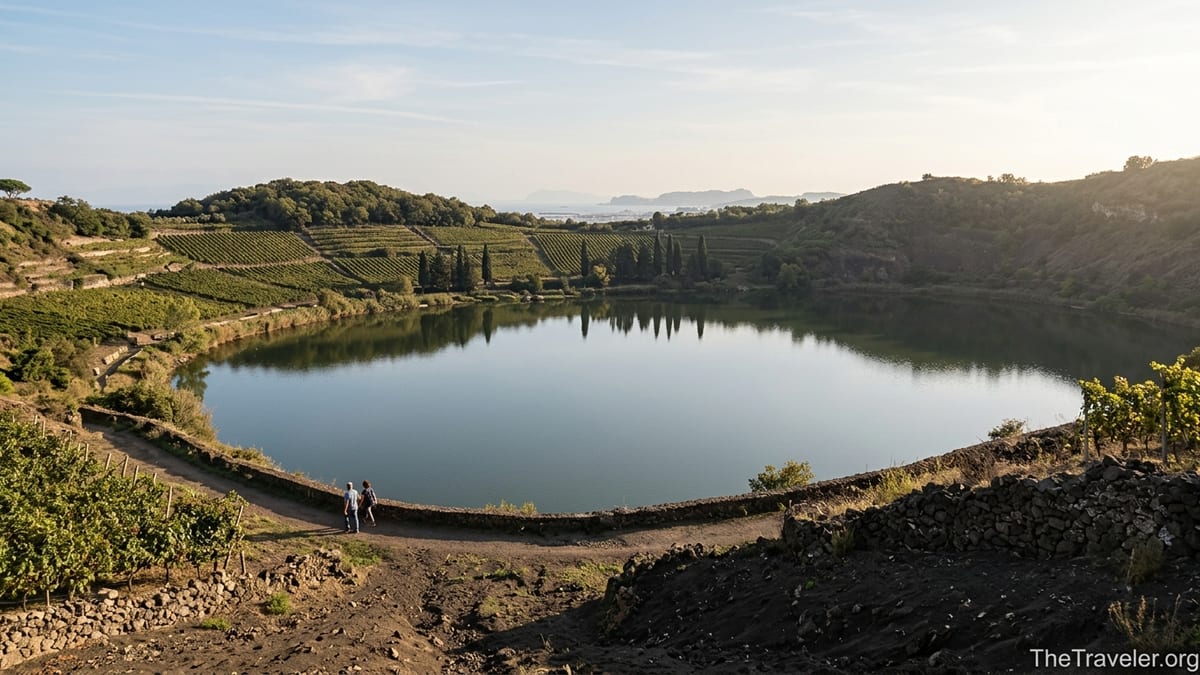
Lake Averno, or Lago d’Averno, is a volcanic crater lake about 4 kilometers west of Pozzuoli, within the wider Campi Flegrei caldera. The water fills a nearly perfect circular basin, ringed by low wooded slopes and vineyards. In Roman times this was a strategic harbor connected to the sea by a canal and surrounded by villas and temples. Ancient authors described its dark waters and occasional vapors and associated it with the mythical entrance to Hades, which is why you may see it referred to in modern literature as the “lake of the underworld.” In reality the atmosphere today is peaceful and rural, especially compared with central Naples.
The wider Campi Flegrei area is an active volcanic field where the ground slowly rises and falls in a process known locally as bradyseism. Recent scientific work notes that uplift and small earthquakes have been ongoing since the mid-2000s, with a further acceleration since around 2023. Authorities monitor the area closely and issue civil protection guidance, including evacuation plans for the most at-risk neighborhoods of Pozzuoli and Bacoli. Travelers should always check the latest official advice from Italian civil protection or local tourism offices before visiting, but under normal alert levels day trips to Lake Averno continue as usual and local businesses remain open.
In practical terms, the volcanic setting is more visible in the landscape than in daily life. As you walk the lakeshore you see black, loose volcanic soil, layers of ash in cut banks and, just beyond the lake, the small cone of Monte Nuovo, Europe’s youngest volcano which formed in a 1538 eruption. The soil supports vines and citrus trees, and you will find wineries and agriturismi using the crater walls as natural amphitheaters for their terraces. For most visitors Lake Averno feels more like a countryside escape than a high-risk zone, but it is worth remembering that you are inside one of Europe’s most studied volcanic systems.
Getting to Lake Averno from Naples or Pozzuoli
Reaching Lake Averno from central Naples typically takes between 45 and 75 minutes depending on your mode of transport and traffic. Drivers follow the coastal road toward Pozzuoli and then Bacoli, leaving the main route near Cuma. A common approach is to park near the eastern side of the lake where small parking areas and pull-offs serve local restaurants and vineyards. Expect informal roadside parking to be tight on sunny weekends when locals come for lunch and a stroll; arriving before midday or later in the afternoon usually gives you more options. Most areas are free or low cost, but watch for any posted restrictions, especially near vineyard entrances.
Without a car, you can combine the Cumana suburban railway or metro-style trains from Naples with local buses or short taxi rides. Travelers often take a train toward Pozzuoli and then continue by bus in the direction of Cuma or Bacoli, getting off at stops signed for Lago d’Averno. Because transport patterns can change, especially while Pozzuoli stations are upgraded or lines are rerouted, it is sensible to ask at your hotel or a Naples tourist information point for the current combination of train and bus. Allow extra time and avoid planning tight connections to flights or long-distance trains on the same day.
Taxis and ride-hailing services between Naples and Lake Averno tend to charge a fare that reflects the distance of roughly 20 kilometers. You can expect a one-way taxi from central Naples to cost in the range of a mid-distance airport transfer. For cost-conscious travelers, one practical strategy is to travel out by public transport when you have time and then budget for a taxi back in the evening if buses are infrequent. This is particularly useful after dinner at an agriturismo around the lake when you may be returning after dark.
If you are already staying in Pozzuoli or Bacoli, reaching Lake Averno is much simpler. Local buses serve the main road above the lake, and some visitors choose to walk down into the crater from roadside stops, taking 10 to 20 minutes on foot. Cyclists sometimes combine the lake with a circuit of the Campi Flegrei, riding from the Pozzuoli seafront up toward Cuma and looping back via Lake Lucrino. If you plan to arrive by bicycle, note that the roads around the crater rim are narrow and can be busy on weekends.
The Classic Lakeside Walk: Flat, Easy and Scenic
The main attraction for many visitors is the lakeside walking path that encircles Lake Averno. This trail follows the shoreline for roughly 3 kilometers, forming an almost complete loop. It is mostly flat, with packed dirt and short sections of paved or gravel surface, and is suitable for casual walkers in sneakers. Many local families push strollers along the eastern stretches, and you are likely to see joggers using the loop as a training circuit in the early morning and at dusk.
Walking clockwise from the eastern side, you pass reed beds, small jetties and low vineyards that descend nearly to the water. In calm weather the lake’s surface mirrors the crater walls and the vines above, making this an excellent place for reflection shots with a phone camera. The western side feels quieter and more wooded, with stretches of path shaded by pines and Mediterranean scrub. Birdlife is present year-round, and though Lake Averno’s ancient reputation comes from the idea that birds could not fly over its vapors, you will see ducks, coots and herons in the shallows.
Most travelers complete the full loop in 45 to 60 minutes at a relaxed pace, stopping frequently to take photos. Benches and informal sitting spots appear every few hundred meters, often near small fishing boats pulled up on shore. There is usually enough space to step aside for cyclists, though you should keep an eye on children near the path edge as there are long stretches without a protective fence. After heavy rain, the path can develop muddy patches, particularly on the western half of the loop, so closed shoes are recommended outside the dry summer months.
For a more structured experience, local guides and walking tour companies offer half-day circuits that combine the lakeside path with short detours to viewpoints and archaeological remains. These may start in the late afternoon and finish with an aperitivo in a vineyard overlooking the lake, pairing the walk with tastings of local wine and cheese. Joining such a tour is a straightforward way to get context about the geology and myths while also meeting residents who work the land today.
Views From Above: Monte Nuovo and Surrounding Vistas
While the shoreline walk gives you intimate contact with Lake Averno’s water and vineyards, the best views come from above. Just southeast of the lake rises Monte Nuovo, a low volcanic cone only about 130 meters high. Trails in the Monte Nuovo nature oasis allow you to climb to the crater rim and look across Lake Averno, Lake Lucrino and the Gulf of Pozzuoli. On clear days you can see the outline of Capri and the ridgeline of the Sorrento Peninsula beyond the bay, making this one of the most rewarding short climbs in the region.
The ascent of Monte Nuovo is relatively short but includes some steep, stepped sections on volcanic ash and compacted soil. Most reasonably fit visitors can reach the rim in 20 to 30 minutes from the trailhead. Once on top, a narrow path circles the crater, which is now overgrown with trees and shrubs. The highlight for many is the segment where the curve of Lake Averno aligns with the coast, allowing panoramic photos that show crater, lake and sea in one frame. Late afternoon and just before sunset often produce soft, warm light and long shadows that accentuate the shapes of the caldera.
Several local operators advertise guided walks in the Monte Nuovo nature oasis that end with a glass of Campi Flegrei wine. A common format involves a late-afternoon start, a loop of the crater rim with an environmental guide explaining the 1538 eruption and the current monitoring of Campi Flegrei, and then an aperitif in a nearby vineyard terrace. While you can certainly hike Monte Nuovo on your own, joining a guided walk can help first-time visitors understand how this landscape fits into the broader volcanic story of the Bay of Naples.
If you prefer gentler viewpoints, stretches of road and trail on the crater rim above Lake Averno also offer good elevated views without a full summit hike. Short detours from car pull-offs lead to overlooks where you can see the circular outline of the lake framed by vines and cypresses. These are especially atmospheric in winter and early spring, when morning mists sometimes cling to the water surface while the upper slopes catch the sun.
Wine, Food and Agriturismi Around the Lake
One of the pleasures of visiting Lake Averno is that the crater slopes are not only scenic but also productive. The volcanic soils are used for viticulture, producing Campi Flegrei DOC wines such as white Falanghina and red Piedirosso. Several family-run wineries operate directly on the lakeside or just above it, blending agricultural work with hospitality. Agriturismo Le Cantine dell’Averno, for example, sits on the lakeshore and cultivates vines on the eastern side of the crater. Visitors can book tastings, lunches and in some cases overnight stays in a handful of rooms that overlook the water.
Experiences at these agriturismi tend to feel local and unfussy. A typical lunch might involve a tasting of Falanghina, a crisp, mineral white wine that pairs well with fried anchovies or marinated seasonal vegetables, followed by a glass of Piedirosso with a pasta dish using clams from the nearby coast or a slow-cooked meat sauce. Desserts are often simple, such as lemon-scented cakes or seasonal fruit from trees grown on the property. Prices for set menus are usually moderate by European standards, often comparable to a casual restaurant in central Naples but with the added value of vineyard views and homegrown ingredients.
Another option around the lake is to book a dedicated wine tasting that focuses on the characteristics of Campi Flegrei grapes. Some wineries welcome guests for short tours of the cellar and vineyard before pouring several wines alongside small bites like local cheeses, cured meats and bruschette. Because these are working farms rather than polished resort properties, arrangements are often made directly by phone or email and times can be flexible. It is a good idea to reserve ahead, especially on weekends and in late summer, when Neapolitans plan celebrations and family gatherings in these settings.
For travelers without a car, one practical approach is to arrange a half-day tour through a local operator that includes transport from Naples or Pozzuoli to a specific agriturismo. This allows you to enjoy the wine without worrying about the drive back. Alternatively, you can walk the lakeside loop first and then schedule a leisurely lunch at a lakeshore restaurant or farmhouse within easy distance of your starting point, timing your meal so that you finish while daylight remains for your return.
Local Culture, History and Everyday Life
Lake Averno may be steeped in myth, but what you encounter on a visit is a blend of ancient history and contemporary local life. Roman remains still dot the landscape: the so-called Temple of Apollo near the northeastern shore, actually the ruins of a Roman bath complex, rises among vines and olive trees, providing a tangible link to the period when this crater was integrated into the extensive Portus Julius naval base. Fragments of brickwork, walls and old quarries appear along some paths, and guided archaeological walking tours explain how the shoreline has shifted over centuries because of bradyseism.
On weekends, the lakeshore becomes a gathering place for residents of Pozzuoli, Bacoli and nearby villages. You may see families picnicking near the water, groups of friends jogging or walking the circuit, and anglers casting lines from small clearings along the bank. Food trucks and simple kiosks occasionally set up near the main access points in high season, selling espresso, soft drinks and snacks. The atmosphere is relaxed and social, more like a neighborhood park than a remote natural reserve.
Because this is a living landscape rather than a backdrop preserved only for tourism, visitors should approach it with the same respect they would give a residential area. Paths sometimes cross private farm tracks; if you are unsure whether a lane is public, look for signs or ask before entering. When photographing vineyards or people working the land, it is polite to gesture your request and accept a smile or a shake of the head. Buying a bottle of wine or some produce from a small farm stand is an easy way to support the communities that keep the crater cultivated and cared for.
Festivals and special events linked to the Campi Flegrei calendar sometimes include activities around Lake Averno, such as guided nighttime walks under the full moon or storytelling evenings that revisit the myths of Aeneas and the underworld. Details vary from year to year and are usually advertised locally, so if your visit coincides with such events, ask at your accommodation or at a tourist office in Pozzuoli for current schedules.
Practical Tips, Seasons and Safety Considerations
Spring and autumn are generally the most comfortable seasons for walking at Lake Averno. From March to early June and again from late September to November, daytime temperatures usually favor leisurely lakeside strolls and short climbs without extreme heat. In July and August, the midday sun can be intense even near the water; many locals switch to early morning or evening walks and reserve the hottest hours for long lunches in shaded terraces. Winter can bring rain and cooler winds off the bay, but on clear days the low light and thin crowds make for atmospheric photography.
Footwear and clothing depend on your plans. For the flat lakeside path, sturdy sneakers are usually sufficient most of the year. If you intend to climb Monte Nuovo or follow steeper trails on the crater rim, light hiking shoes with good grip are more comfortable, especially on loose volcanic gravel. Carry water in all seasons, since fountains are not evenly distributed and some may be out of service. In summer, a hat and sunscreen are essential; shade is partial at best around the circuit.
Because Lake Averno lies within an active volcanic district, visitors should remain aware of current safety guidance. Italian authorities use a color-coded alert system for Campi Flegrei, and local media in Naples report on changes. Hotels and tour operators are accustomed to questions about this and can explain whether any special measures are in place at the time of your trip. During periods of heightened seismic activity, access to certain areas, including parts of Monte Nuovo or nearby fumarole zones, may be temporarily restricted as a precaution. Respect any closures or instructions from park rangers and civil protection staff.
As with any semi-rural walking destination on the edge of a city, basic precautions apply. Keep valuables discreet while traveling between Naples and the lake, and avoid leaving visible items in parked cars. In the evening, stick to paths that are lit or that you know well in daylight, or plan to end walks before full dark. Mosquitoes can be active around the lake in warm months, particularly near reed beds at sunset, so packing a simple insect repellent is wise if you are sensitive to bites.
The Takeaway
Lake Averno offers a compact but remarkably varied experience: an easy lakeside walk, short climbs to volcanic viewpoints, Roman ruins half-hidden among vines and relaxed meals in family-run agriturismi that pour wine grown on crater slopes. Unlike the crowded circuits of Pompeii or the Amalfi Coast, this is a place where you share the path with local joggers and grandparents, not only tourists with guidebooks. The setting is undeniably dramatic, framed by the wider Campi Flegrei volcanic field, yet the mood on most days is quiet and convivial.
By planning your transport carefully, choosing the right season and combining the lakeside loop with either a Monte Nuovo viewpoint or a vineyard lunch, you can turn a simple outing into one of the most memorable days of your stay around Naples. Respect the land and its people, stay informed about local safety advice, and allow time to sit by the water and watch the light change on the crater walls. Lake Averno may once have symbolized the entrance to the underworld, but for modern travelers it is more likely to feel like a doorway into everyday Campanian life.
FAQ
Q1. Where exactly is Lake Averno and how far is it from Naples?
Lake Averno is in the Campi Flegrei area near Pozzuoli, roughly 20 kilometers west of central Naples. By car it usually takes about 45 minutes, depending on traffic.
Q2. Is it safe to visit Lake Averno given the Campi Flegrei volcanic activity?
Lake Averno lies inside an active volcanic district that is closely monitored by Italian authorities. Under normal alert levels, day visits are considered acceptable and local life continues as usual, but you should always check the latest official guidance before traveling.
Q3. How long does it take to walk around the lake?
The nearly flat path that circles Lake Averno is about 3 kilometers long. Most visitors complete the loop in 45 to 60 minutes at an easy pace, allowing extra time for photos and short breaks.
Q4. Do I need special hiking gear to enjoy the walks?
For the lakeside loop, sturdy sneakers are usually enough. If you plan to climb Monte Nuovo or follow steeper crater trails, light hiking shoes with good grip are recommended, especially on loose volcanic gravel.
Q5. Can I visit wineries or agriturismi around Lake Averno without a car?
Yes, but it takes more planning. You can reach the area with a mix of train and bus from Naples and then walk to lakeside agriturismi, or you can book a small-group tour that includes transport, wine tasting and a meal.
Q6. What is the best time of year to visit for walks and views?
Spring and autumn are ideal, with comfortable temperatures and clearer skies for crater and coastal views. Summer can be very hot in the middle of the day, so early morning and evening walks work best then.
Q7. Are there swimming or boating options on Lake Averno?
Swimming is not a major attraction at Lake Averno, and access to the water is limited in many sections by reeds and private land. Small boats are sometimes used by locals, but organized tourist boating is modest compared with larger Italian lakes.
Q8. Is Lake Averno suitable for families with children?
Yes, many local families bring children for the flat lakeside walk and picnics. Parents should watch younger children near the water and on sections of path without railings, but overall it is a family-friendly outing.
Q9. How can I combine Lake Averno with other nearby sights in one day?
Many travelers pair Lake Averno with a short hike on Monte Nuovo or a visit to nearby sites in the Campi Flegrei, such as Baia, Cuma or the seafront in Pozzuoli, creating a varied day of walking, archaeology and coastal views.
Q10. Do I need to book ahead for vineyard lunches or tastings?
Advance booking is strongly recommended, especially on weekends and in summer. Many agriturismi and wineries around Lake Averno are small, family-run places that plan their menus and staffing around confirmed reservations.