


It happened three turns after I told myself I “knew the way.” One moment I was following the flow of people toward Stockholm’s Royal Palace, the next I was standing alone at the end of a cobbled cul‑de‑sac in Gamla Stan, hemmed in by honey‑colored townhouses and leaning street lamps. My offline map had given up inside the maze of alleys, the winter sun was sliding down behind Riddarholmen, and I realized something both inconvenient and wonderful: I was completely, gloriously lost.
Get the latest updates straight to your inbox!
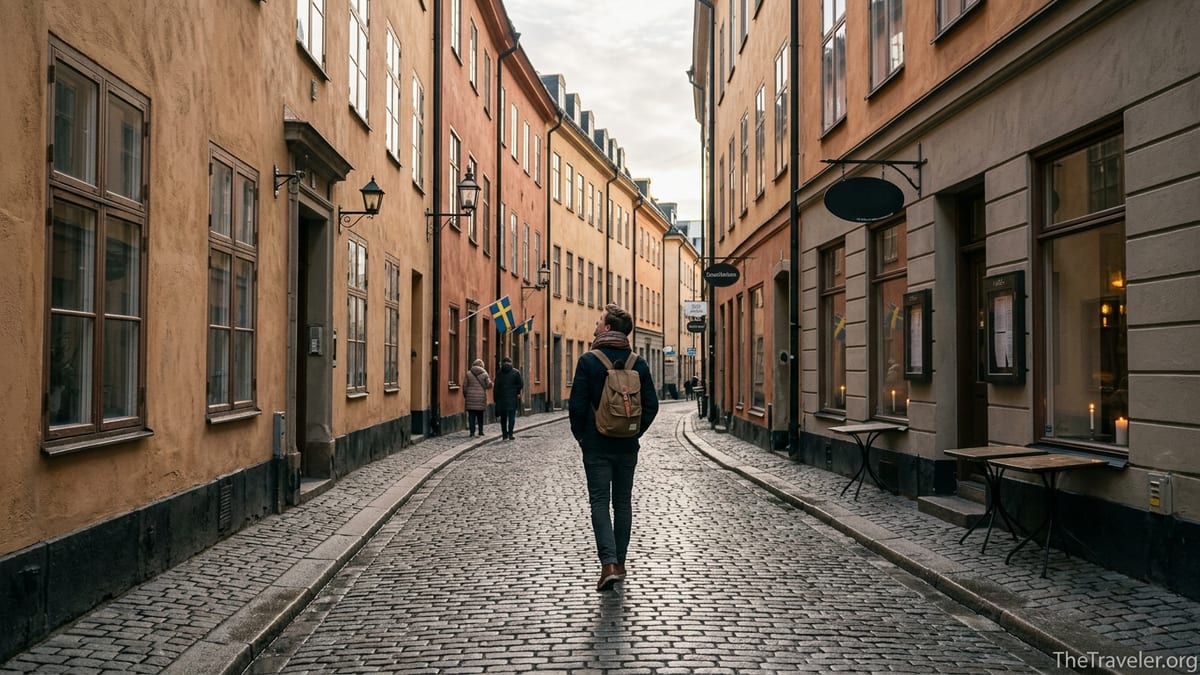
Getting Lost in Stockholm’s Storybook Island
Gamla Stan is technically small enough to cross in fifteen minutes, but it does not behave like a logical grid. The Old Town is an island of medieval streets that bend, narrow and double back on themselves, stitched together by sudden staircases and sloping cobbles. You enter thinking you are walking “through” a neighborhood; you quickly realize you are walking “into” a centuries‑old puzzle where the point is not to arrive but to wander.
On the day I got lost, I had set out from the central station with a clear plan: metro to Gamla stan station, quick look at Stortorget, then on to Södermalm for sunset. The metro made its part easy; Gamla stan station sits right on the Green and Red lines, one stop from the modern shops at T‑Centralen. From the platform it was a short climb into a different era entirely. I followed the crowd past convenience stores and into streets that seemed to shrink with each turn, until the swell of traffic noise faded and my phone’s blue dot began to spin in confusion.
The funny thing is that it takes very little to disorient yourself here. One wrong choice at a fork between Västerlånggatan, the busy shopping street, and one of its side alleys, and suddenly the souvenir signs vanish, the air cools in the shade of close‑set facades, and you are alone with your footsteps on stone. That quiet, which can feel unnerving when you are trying to “stay on schedule,” is exactly what makes getting lost in Gamla Stan worth embracing.
The Moment the Map Stops Mattering
My plan came undone somewhere between a postcard stand and a shop selling Viking‑themed bottle openers. I had meant to stay on Västerlånggatan, but a narrow opening painted the color of saffron pulled me toward it. Within twenty seconds the chatter of tour groups disappeared. Laundry lines idled above my head; a bicycle leaned against an ochre wall; the cobblestones beneath my boots were slick from a recent drizzle. The alley might have been Staffan Sasses Gränd or Solgränd; the names, painted in black letters on white and nailed to the cornerstones, appeared and vanished so quickly that it hardly mattered.
When the street ended in a blank wall, I did what we are all trained not to do: I put the phone away. Gamla Stan is compact, edged on all sides by water and linked to other islands by bridges that you can almost always reach within ten or fifteen minutes. Instead of fighting the layout, I decided to treat the island as a safe labyrinth. Left at the dead end, right under the carved wooden sign of an antique shop, down a flight of uneven steps that looked like they had been worn into their curve by centuries of boots and clogs.
What happened next was not a grand discovery but a series of very small, very human moments. A woman in a wool coat carrying a paper bag of cardamom buns brushed by, leaving a wake of butter and spice. Two teenagers sat on a doorstep sharing a paper cone of roasted almonds. A delivery worker eased a hand truck loaded with crates along stones that forced him to move slowly. This enforced slowness is one of Gamla Stan’s greatest gifts. The roads themselves insist that you stop rushing and look up.
It was looking up that made me realize how deceptive the Old Town can be. Above the trinket shops and ice cream counters, the upper floors still tell the story of merchants and sailors, their windows slightly crooked, roofs pitched steeply for Nordic snow. On street level you might see a sandwich board advertising a lunch special for around 140 to 200 kronor, or a handwritten sign for “today’s fika” set out in front of a tiny café, but a glance at the stone lintels and Latin inscriptions reminds you that business has been conducted here since long before tourism.
Stumbling into Unexpected Fika
The real turning point of my wrong turn was not a view or a landmark but a doorway. Cold and a little frustrated, I followed the smell of coffee to a small café opening directly onto a side street off Stortorget, Gamla Stan’s main square. Inside, the ceiling dipped low, candles flickered in brass holders, and students hunched over laptops next to tourists peeling off damp gloves. The chalkboard listed filter coffee for the equivalent of a few euros, a dense selection of cakes, and thick slices of rye bread layered with cheese and cucumber.
Places like this are not rare here, which is precisely the point. In Gamla Stan, you are almost always within a few minutes’ walk of a café that takes fika seriously. Classic institutions in and around the square serve strong coffee and cinnamon buns under vaulted ceilings, while on quieter streets like Österlånggatan you find spots such as Fika & Wine that blur the line between daytime pastry bar and evening wine hangout. Elsewhere, chains like Fabrique and Bröd & Salt have outposts in the neighborhood, reliable for sourdough sandwiches and kanelbullar when you need a quick, unfussy break.
My own break turned into an hour. The barista, when I asked for a recommendation, steered me toward a cardamom bun and a dark roast from a Swedish microroaster. At the next table, a local couple debated weekend plans while their dog waited patiently under the wooden chair. One of them noticed my damp map and offered directions that were both generous and vague: “If you want to see the water, just keep going downhill. If you hit the Royal Palace, you have gone too far. But really, it is nicer if you do not worry about it.”
That attitude sums up the best experiences I had in Gamla Stan. A café is not just a place to refuel; it is a shelter where the script of your day can be rewritten. Whether you end up at a centuries‑old konditori with gilt mirrors or a modern espresso bar tucked into Västerlånggatan, the prices and pastries will vary, but the invitation is the same: sit, look around, and let your route change.
Hidden Courtyards, Steep Stairs and Quiet Corners
Once I leaned into being lost, the Old Town began to reveal its smaller secrets. Gamla Stan is packed with courtyards, passageways and blind alleys that most guided tours only brush past. Some are marked by discreet arches leading off main routes; others lurk at the end of alleys that look unpromising until you commit to walking them. I found one such inner courtyard after following the clink of cutlery through a narrow tunnel, emerging into a square ringed by pale yellow walls, with a single tree in the center and a restaurant setting up its outdoor tables.
Streets like Västerlånggatan and Österlånggatan run roughly north to south and are known names on walking itineraries, but the true charm is often a story or two below or above them. Cellar restaurants such as Den Gyldene Freden or the vaulted rooms of Fem små hus occupy foundations that predate most modern capitals, their doorways half a level below the current street. Climbing up, you encounter stone staircases that act as vertical shortcuts between streets and viewpoints, suddenly delivering you to balconies above Skeppsbron or to the footbridges leading toward Riddarholmen.
Because I was not aiming for any particular sight, I allowed myself to backtrack freely. At one point I reached a blind alley that ended not in a courtyard but in a simple wooden door flanked by two potted evergreens. A plaque described the building’s former occupants in a language I only half understood, but I stayed there a full minute anyway, listening to the echo of my own breathing. In that small, deliberately unremarkable corner, it struck me how many visitors march along set paths here without ever stepping into these pockets of stillness.
On another accidental detour, I found myself descending a tight stairway toward the water. The light shifted from the amber reflection of buildings to a silvery gleam off the harbor as the alley opened onto Skeppsbron. Suddenly the space expanded. Ferries nudged at their moorings, and across the water, the green slopes of Djurgården glowed in the late afternoon sun. I had not “earned” this view by following a guidebook’s perfectly timed plan; it had simply appeared at the bottom of the stairs I happened to choose.
Old Stones, New Conversations
Being lost in a place where many residents are used to helping visitors can be a surprisingly social experience. In Gamla Stan, almost everyone has given directions at some point, and the tone tends to be practical but friendly. At one junction near the Nobel Prize Museum, I hesitated with my folded paper map. A local man in a thick parka stopped, pointed with his mittened hand, and said, “If you want the metro, follow the crowd. If you want something better, go the other way.” Then he nodded toward a quiet side street and carried on before I could ask a follow‑up question.
Taking his advice, I headed in the opposite direction of the flow, and within minutes I was away from the souvenir shops and into a lane where the only open door belonged to a small gallery. Inside, a photographer was hanging prints of Stockholm in winter: frozen ferries, silhouettes on bridges, and one image taken from a Gamla Stan rooftop, looking across to City Hall. We spoke for ten minutes about how the city changes by season, about how snow softens the sound of footsteps on these streets and how summer crowds shift the neighborhood’s energy entirely.
Later, at a bakery where I stopped for a second fika I had not planned to take, I ended up in conversation with a staff member about the rising cost of operating a café in the Old Town and the fine line between welcoming visitors and keeping the place livable for locals. She explained that while some streets felt overrun in July, others stayed surprisingly residential, especially in the evenings and during the darker months. The trick, she said, was to step just forty or fifty meters away from the main route whenever you could.
By the time I finally checked my phone again, I realized I had drifted in an lazy loop from the southern tip of the island toward the Royal Palace and back down again. I had accidentally done what many travelers try to plan: I had combined classic views, casual encounters and local food in a single roaming walk, stitched together not by an itinerary but by curiosity and chance.
Practical Tips for Embracing the Maze
Getting pleasantly lost is easier when you know you can reorient yourself quickly. In Gamla Stan, the water is your compass. If you keep walking downhill, you will almost always reach a quay within a short time. From the eastern waterfront along Skeppsbron, you can look across to Djurgården and pick out landmarks like the Vasa Museum’s roofline. From the western edge by Riddarholmen, City Hall’s tower gives you a clear sense of where central Stockholm lies. Once you see one of these anchors, it becomes simple to regain your bearings.
Public transport also acts as a safety net. Gamla stan metro station, on both the Green and Red lines, sits at the narrow waist of the island. You rarely need more than ten minutes’ walking to reach it from almost anywhere in the Old Town. Single tickets on Stockholm’s SL network are typically priced so that most inner‑city journeys cost only a handful of euros for adults, with 24‑hour or multi‑day travel cards offering better value if you move around a lot. You can buy tickets through vending machines, SL centers or mobile apps, and once you are back on the train, every other neighborhood suddenly feels close.
In terms of budget, Gamla Stan does skew a little higher than some surrounding districts, especially at the most photographed cafés and streets around Stortorget. Expect coffee and a pastry at a cozy Old Town café to run to the equivalent of 70 to 120 kronor, depending on how elaborate your cake or bun is. Sit‑down lunches in casual bistros often hover somewhere in the 140 to 220 kronor range for a daily special. You can, however, trim costs by filling a reusable water bottle at your accommodation, eating a simple breakfast from a supermarket on the mainland, and saving your spending here for the fika or dinner that feels most special.
Time of day shapes how your experience of being lost will feel. Early mornings, especially outside peak summer, are when delivery trucks edge through the alleys and shopkeepers sweep their thresholds. Wander then and you may have entire streets to yourself, with the smell of baking bread drifting from basement windows. Evenings, particularly in winter when twilight comes early, wrap the streets in a warmer, more intimate atmosphere as restaurant signs glow and candles appear in windows. Afternoons in July and August are the busiest, but even then, turning off Västerlånggatan or Stortorget and walking for a minute or two can drop you into relative quiet.
When the Best Memories Are Unplanned
Looking back on my time in Stockholm, it is striking how few of my favorite Gamla Stan memories were on my original list. I had intended to check off headline sights: the Royal Palace’s changing of the guard, the Nobel Prize Museum, the view across the water from Skeppsbron. I did see some of these, but what I remember most vividly are the unscripted fragments that came out of being lost: the glimpse of a family eating dinner behind lace curtains, the sound of a violinist practicing behind an open window, the way the late afternoon light turned the stucco facades along a nameless alley from pale yellow to deep gold.
Even the small inconveniences have softened into something I am grateful for. My boots slipped once on a wet patch of cobbles, forcing me to walk with the kind of attention I usually reserve for hiking trails. A light rain crept in from the harbor, sending me under the striped awning of a café I might otherwise have walked right past. A wrong turn placed me in the middle of a group of schoolchildren on an outing, their teacher using the buildings as a chalkboard for an impromptu history lesson about the city’s medieval defenses.
Travelers sometimes talk about “getting off the beaten path” as though it requires a remote village or a long bus ride. In Gamla Stan, the path is beaten by design, yet escape is often a matter of five or ten steps sideways. You do not need to avoid the popular spots to have a deeper experience here. You simply need to allow enough time that when a street unexpectedly ends or an alley leads you astray, you see it not as a setback but as the beginning of the most interesting part of your day.
When I finally crossed the bridge to Södermalm that evening, the sky above the Old Town was streaked with streaks of pink and gray. I could trace, in the tilt of the rooftops, some of the routes I had taken: up to the Royal Palace and back down, over toward Riddarholmen, into the tangle around Stortorget. None of it had followed my original schedule, and yet it all added up to a fuller, more textured understanding of the city. Gamla Stan had stopped being a postcard and become a place.
The Takeaway
If there is a lesson in my wayward afternoon on Stockholm’s Old Town island, it is that some destinations reward precision, while others reward drift. Gamla Stan belongs firmly in the second category. Its medieval street plan, its waterfront edges, its layers of cafés and courtyards and cellar restaurants are designed, almost accidentally, to pull you off course in the best possible way.
Arrive with enough structure to feel secure: know where the metro station is, have a rough sense of your budget, recognize that you are never far from the water or from a place to warm up with coffee. After that, loosen your grip on the plan. Let a smell, a snippet of music, or the curve of an alley decide your next turn. Give yourself permission to ignore the blue dot on your phone for an hour or two.
In doing so, you give Gamla Stan room to surprise you. Maybe you will stumble into a gallery you never meant to visit, or a courtyard that feels like a secret garden, or a café where the barista remembers your order when you return the next day. Maybe, as happened to me, you will discover that the story you tell about Stockholm later does not center on the grand monuments at all, but on the simple fact that you got lost one afternoon and never once truly wanted to be found.
FAQ
Q1. Is it actually safe to get lost in Gamla Stan?
Yes, Gamla Stan is generally very safe, especially during the day and early evening. The island is small, surrounded by water, and well connected by bridges and the metro, so you are never far from main streets or public transport.
Q2. How do I get back to my hotel if I lose my bearings completely?
Use the water and the Royal Palace as reference points and walk downhill toward a quay or up toward the palace. From there, follow signs to Gamla stan metro station, where you can take the Green or Red line back toward central Stockholm and connect to buses, trams or commuter trains.
Q3. What is a typical budget for food and fika in Gamla Stan?
A basic fika with coffee and a pastry usually falls somewhere around 70 to 120 kronor, while simple sit‑down lunches often range roughly from 140 to 220 kronor. Dinners in historic cellar restaurants or more upscale bistros can cost significantly more, especially if you add wine or cocktails.
Q4. When is the best time of day to wander without crowds?
Early mornings and later evenings outside peak summer are usually the quietest. In high season, mid‑afternoons around Stortorget and Västerlånggatan can be very busy, but stepping a block or two away from the main routes often brings you into calmer alleys and courtyards.
Q5. Can I rely on mobile maps in Gamla Stan?
Most of the time, yes, but the narrow streets and tall buildings can occasionally make GPS signals inaccurate. It helps to download offline maps in advance and to use them as a loose guide rather than something to follow turn by turn. Being willing to disconnect for a while is part of the area’s charm.
Q6. Are there good places for coffee and pastries off the main tourist streets?
Yes. While the cafés around Stortorget and the main shopping streets are popular, you will also find smaller spots sprinkled along side streets like Österlånggatan and in lanes leading toward the waterfront. Chains such as Fabrique and Bröd & Salt sit alongside independent cafés and centuries‑old konditorier, so you can choose between classic and contemporary fika experiences.
Q7. What footwear should I bring for wandering the cobblestones?
Comfortable, supportive shoes with decent grip are important, especially if it has rained or snowed, as the cobblestones can become slippery. In cooler months, insulated boots with good soles make it easier to handle both the uneven surfaces and the chill from the harbor.
Q8. How much time should I plan to explore Gamla Stan without rushing?
You can walk across the island quickly, but to enjoy getting a little lost, plan at least half a day. That allows time for one or two leisurely fika breaks, impromptu photo stops, and detours into courtyards, churches or galleries you discover along the way.
Q9. Are there public restrooms if I wander away from the main sights?
Public restrooms exist but are not on every corner, so it is practical to use facilities in cafés, museums and restaurants while you are there. Some public toilets in the area are pay‑to‑enter, so carrying a small amount of local currency or a card that works in automatic gates can be helpful.
Q10. Can I visit Gamla Stan year‑round, or is it best in summer?
Gamla Stan is open and atmospheric all year. Summer brings long evenings and busy streets, while winter adds snow, candles in windows and a cozier feel in cafés and cellar restaurants. Spring and autumn can offer a balance of quieter lanes and relatively mild weather, making them ideal seasons for slow, unhurried wandering.