


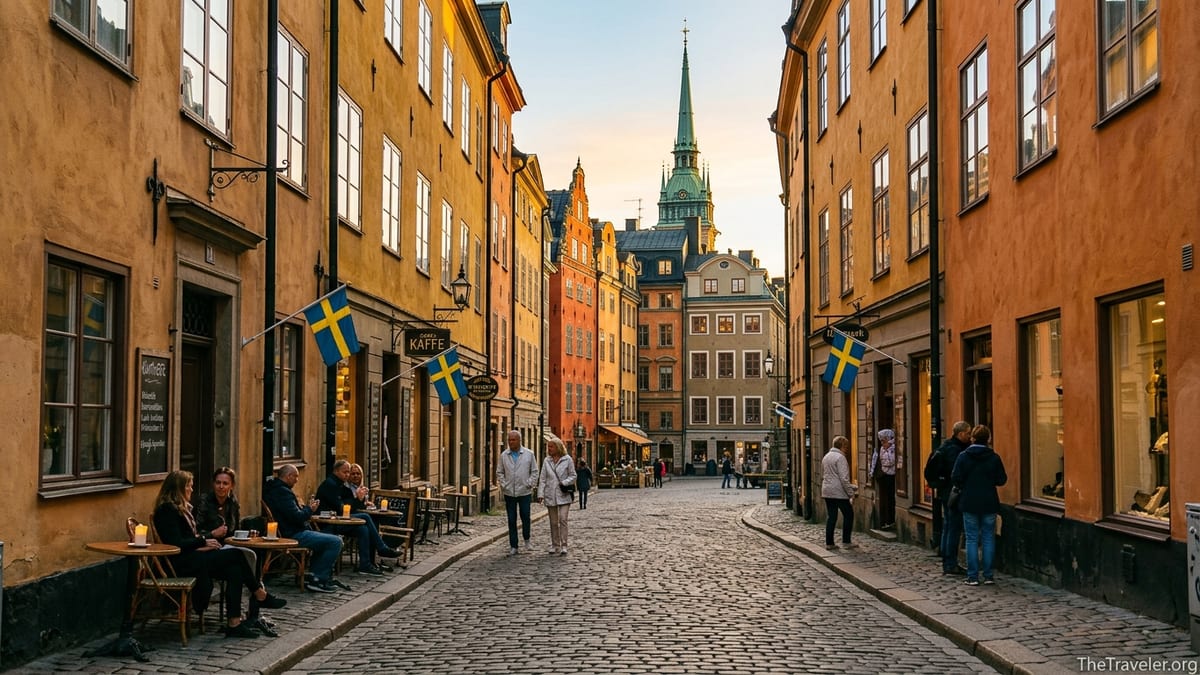
Few city neighborhoods in Europe feel as instantly cinematic as Gamla Stan, Stockholm’s medieval Old Town. Its tangle of cobbled lanes, ochre townhouses, palace courtyards, and tiny alleyways sits on its own island in the very center of the city. This guide brings together the essential attractions, the most atmospheric streets to wander, and up to date visitor information so you can make the most of a half day or a full day in Gamla Stan.
Get the latest updates straight to your inbox!
Why Gamla Stan Belongs on Your Stockholm Itinerary
Gamla Stan is Stockholm’s historic core and one of the best preserved medieval city centers in Europe, with roots going back roughly 750 years. Today it is both a lived-in neighborhood and the city’s most visited historic district, filled with cafés, galleries, gift shops, and several of Sweden’s most important national buildings, including the Royal Palace and Stockholm Cathedral. You can walk here in about 10 to 15 minutes from Stockholm Central Station or ride one stop on the metro to Gamla stan station, which sits at ground level just west of the island.
For most visitors, Gamla Stan is where Stockholm’s history feels most tangible. Squares like Stortorget, once a medieval market, now host outdoor café tables in summer, while narrow lanes such as Västerlånggatan and Österlånggatan still broadly follow their medieval street pattern. It is compact enough that you can see the main sights in around three to four hours, but layered enough that you can easily spend a full day exploring side streets, church interiors, and hidden courtyards.
Gamla Stan also works well in any season. In June and July, long northern evenings turn the pastel facades golden late into the night. In December, many streets are strung with Christmas lights, and Stortorget hosts a traditional Christmas market most years. Spring and early autumn are often ideal for travelers who want the atmosphere without peak-season crowds.
Because this is Stockholm’s most concentrated tourist area, prices for food, drinks, and souvenirs are typically higher than elsewhere in the city. Expect a simple sit-down lunch in a midrange restaurant on or near Västerlånggatan to cost in the region of 140 to 220 SEK for a main course in 2026, with coffee drinks from about 40 to 55 SEK. If you are on a tighter budget, you can save by grabbing takeaway sandwiches or pastries from bakeries on the edges of the district and enjoying them on a bench overlooking the water.
Unmissable Landmarks: From Stortorget to the Royal Palace
Stortorget, Stockholm’s oldest square, is the natural starting point for exploring Gamla Stan. Surrounded by narrow, gabled merchants’ houses in shades of red, mustard, and green, it was once the heart of medieval trade and the site of the 1520 Stockholm Bloodbath. Today, visitors come to photograph the colorful facades, linger over coffee at outdoor tables in warmer months, and watch street musicians perform. If you stand at the south side of the square with the tall red building behind you, you get one of the classic postcard views of Stockholm.
On the north side of Stortorget stands the former Stock Exchange Building, now housing the Nobel Prize Museum. Inside, you can explore exhibitions about Alfred Nobel, the laureates, and the history of the Nobel Prizes, along with temporary displays and children’s activities. As of 2026, standard adult admission is around 160 SEK, with reduced prices for students and seniors and free entry for visitors under 18. A guided tour is usually included in the ticket and is a practical way to get more context if you are new to Swedish history and science culture.
A short walk from Stortorget along Trångsund brings you to Storkyrkan, Stockholm Cathedral. This Gothic church, with its distinctive brick exterior and green spire, is where many royal weddings and official ceremonies have taken place. Inside, look for the famous wooden sculpture of Saint George and the Dragon and the richly decorated choir stalls. There is typically a modest entrance fee for sightseeing visits when services are not in progress, and you should dress and behave respectfully, as it remains a working church.
Just to the north of the cathedral rises the Stockholm Royal Palace, one of Europe’s largest palaces still used for official state functions. The enormous Baroque building has more than 600 rooms and several small museums, including the Royal Apartments, the Treasury, and the Tre Kronor Museum, which tells the story of the earlier castle that once stood on this site. Tickets are sold per section or as combined passes; a full visit to the Royal Apartments and Treasury will usually take at least 90 minutes, and there is a fee for adults with discounts for children. Many visitors time their visit to include the changing of the guard ceremony in the palace courtyard, which is free to watch and held on most days in the high season.
Atmospheric Streets and Alleys You Should Not Miss
Gamla Stan’s charm lies as much in its streets as its individual attractions. Västerlånggatan runs roughly north–south through the western part of the island and is the busiest pedestrian street, lined with souvenir shops, casual restaurants, and ice cream stands. Even if you are not interested in shopping for Viking helmets or moose T-shirts, it is worth walking its length once to experience the energy. Prices here reflect heavy foot traffic, so many travelers choose to browse but eat on a side street where menus are often better value and more local in character.
For a quieter and often more picturesque alternative, make your way to Österlånggatan on the eastern side of the island. Here, the mix shifts toward independent galleries, small design boutiques, wine bars, and intimate restaurants. Facades are slightly less polished than on the main squares, giving the street an authentic, lived-in feel. In the early evening, this is a good place to look for a relaxed dinner; you might find classic Swedish dishes like meatballs with lingonberries and mashed potatoes or modern Nordic small plates alongside international options.
One of the most distinctive spots in Gamla Stan is Mårten Trotzigs gränd, the narrowest alley in Stockholm. At its tightest point, it measures less than a meter across, with steep stone steps climbing between tall, close-set buildings. It connects Västerlånggatan with Prästgatan, and visitors often queue briefly to take a photo walking up the alley. The alley is now closed at night for safety between about midnight and early morning, so plan to visit in the daytime or early evening.
Other streets worth seeking out include Prästgatan, which runs parallel to Västerlånggatan and offers a more peaceful stroll past residential doorways and ivy-clad walls, and the lanes around Järntorget, the city’s old iron market square. Here, you can still sense something of the area’s trading past, even though today the ground floors are largely cafés and taverns. Simply wandering without a rigid plan, turning down any lane that looks inviting, is often the best way to discover Gamla Stan’s smaller courtyards and viewpoints.
Practical Visitor Information: Getting There, When to Go, Accessibility
Reaching Gamla Stan is straightforward from almost anywhere in central Stockholm. The Gamla stan metro station, served by both the red and green lines, sits on the western edge of the island; from there it is a five-minute walk to Stortorget or the Royal Palace. Many visitors also arrive on foot from Norrmalm across the bridges at Slussen or Riksbron, or by public buses that stop on the approaches to the island. Because parking is scarce and streets are narrow, most travelers find it easier to avoid driving here altogether.
Time of day can make a big difference to your experience. Late morning to mid-afternoon in June, July, and August is typically the busiest, with cruise-ship excursion groups and family travelers crowding the main streets and squares. If you prefer a quieter atmosphere for photography or simply to soak up the architecture, aim for early morning before 9.30 am or later in the evening after dinner. In winter, mornings can be very peaceful, especially on weekdays, though some smaller shops open later.
Gamla Stan’s cobblestones and steps are beautiful but can be challenging for some visitors. Many streets have uneven surfaces and inclines, and narrow alleys like Mårten Trotzigs gränd are accessed only by stairs. However, there are still several relatively level routes from the metro station to Stortorget and the Royal Palace that are manageable with a sturdy stroller or wheelchair, particularly via main streets such as Västerlånggatan. If mobility is a concern, allow extra time, wear shoes with good grip, and consider focusing on the larger squares and main streets rather than the tightest alleys.
For the latest local guidance in English, look for the Visit Gamla Stan visitor information office. In recent summers, a staffed center has operated on Svartmangatan in the heart of the Old Town, typically open on weekdays during the peak season. Staff can provide free maps, suggestions tailored to your interests, and updates about temporary closures or events. Elsewhere in the city, the Visit Stockholm information point at Stockholm Central Station is another useful place to pick up maps and get orientation advice soon after arrival.
Museums, Culture and Hidden Corners
Beyond the Nobel Prize Museum and the Royal Palace museums, Gamla Stan is dotted with smaller cultural institutions and historic churches that reward a closer look. For example, the alleyways behind the cathedral lead to tranquil courtyards where informational plaques explain the history of particular buildings or former guild houses. You may find small exhibitions hosted by local associations or art schools in vaulted cellar spaces beneath street level, often with free or low-cost entry and short opening hours posted on signs outside.
A simple way to get under the surface of the neighborhood is to join a walking tour. Several companies organize historical tours that start in or near Stortorget, typically lasting from 90 minutes to two hours. Prices vary, but a paid small-group tour might cost in the region of 250 to 350 SEK per person, while “free tour” operators work on a tips-based model. These walks generally cover key episodes like the founding of Stockholm, the 1520 bloodbath, and the development of the Royal Palace, and they often point out quirky details, such as runestones embedded in house walls or historic cannonballs lodged in masonry.
If you prefer to explore independently, look for self-guided walking routes available from the city tourism office or downloadable audio guides. Some visitors combine Gamla Stan with the adjacent island of Riddarholmen, reached by a short bridge, where you find Riddarholmen Church and panoramic views back toward the Old Town skyline. Others weave their way to the waterfront promenades at Skeppsbron, where ferries and sightseeing boats depart for other islands. It is entirely feasible to set aside a morning for Gamla Stan and spend the afternoon in a different part of Stockholm, such as Djurgården’s museums or Södermalm’s viewpoints.
To experience quieter corners, duck into side alleys off Prästgatan and Österlånggatan, where some buildings still show medieval or early modern detailing around doors and windows. Courtyards that once served as loading spaces for merchants sometimes host small cafés or galleries today. In the early evening, many of these back streets become atmospheric but not deserted, with just enough foot traffic to feel safe while still retaining an old-world character.
Eating, Drinking and Shopping in Gamla Stan
Food in Gamla Stan ranges from traditional Swedish fare aimed at visitors to contemporary bistros and simple cafés. In the most central, high-traffic areas, it is common to see set lunch menus and “Smörgåsbord” buffets pitched toward tourists. These can be convenient but are not always the best value. A more rewarding strategy is to explore a block or two off the busiest streets and read menus posted outside. Look for places serving classic dishes such as herring with potatoes, salmon with dill and lemon, or cinnamon buns baked on site, often at prices that are competitive with the rest of central Stockholm.
Cafés around Stortorget and on the nearby streets are particularly popular in the afternoon, when visitors stop for fika, the Swedish coffee break tradition. A typical fika of a filter coffee or cappuccino and a cinnamon bun in Gamla Stan in 2026 might total around 80 to 110 SEK, depending on the café and your choice of drink. Outdoor seating is in high demand on sunny days, so if you spot a free table with a view toward a square or a picturesque alley, it can be worth claiming it even if prices are slightly higher than average.
Shopping in Gamla Stan leans heavily toward souvenirs, crafts, and specialty stores. Many shops on Västerlånggatan stock similar items, from wooden Dala horses and reindeer hides to magnets and T-shirts. If you are looking for something more distinctive, browse side streets and the upper ends of Österlånggatan, where you may find small design shops selling Swedish textiles, ceramics, or jewelry made by local artisans. Bear in mind that Sweden is very card-focused, and virtually all shops accept major credit and debit cards; however, in the dense “tourist trap” area, nearly every souvenir shop will also accept cash, especially Swedish kronor, though some may prefer exact amounts or round up modestly.
For drinks, there is a mix of cozy wine bars, pubs in vaulted cellars, and relaxed cocktail bars. In the evenings, especially on weekends, some streets can feel lively but generally not rowdy, and most places close earlier than nightlife spots in neighborhoods like Södermalm. If you want an atmospheric but relatively quiet evening, consider an early dinner followed by a stroll through the streets as the day-tripping crowds disperse and the streetlights reflect off the cobblestones.
The Takeaway
Gamla Stan is more than a postcard backdrop; it is a compact, walkable slice of Stockholm’s past that still shapes how the city looks and feels today. With its dense grid of cobbled lanes, monumental squares such as Stortorget, and institutions like the Royal Palace and the Nobel Prize Museum, the district condenses centuries of Swedish history into a small island in the city center.
For most travelers, planning three to four hours in Gamla Stan allows time to wander the main streets, visit at least one major attraction, and sit down for a fika or meal. If you add in the Royal Palace museums or linger in galleries and smaller churches, you could easily stretch that to a full day. Either way, arriving early or staying a bit later into the evening will help you experience the neighborhood at its most atmospheric, when the light softens and the crowds thin.
Come prepared with comfortable shoes, an open schedule for getting pleasantly lost in the side streets, and a willingness to explore beyond the most photographed facades. With a little planning and curiosity, Gamla Stan can be both a highlight of a first visit to Stockholm and a neighborhood worth returning to on future trips.
FAQ
Q1. How much time do I need to see the main attractions in Gamla Stan?
Most visitors find that three to four hours is enough to walk the main streets, visit one major attraction like the Royal Palace or the Nobel Prize Museum, and stop for a coffee break.
Q2. What is the best way to get to Gamla Stan from central Stockholm?
The easiest options are to take the metro one stop to Gamla stan station on the red or green line, or to walk about 10 to 15 minutes from Stockholm Central Station across the bridges into the Old Town.
Q3. Is Gamla Stan very crowded, and when is it quieter?
In high season, late mornings and early afternoons are busy with tour groups and cruise passengers. For a calmer experience, visit early in the morning, later in the evening, or on weekdays outside peak summer.
Q4. Are the streets in Gamla Stan suitable for strollers and wheelchairs?
Many main streets and squares are manageable but have uneven cobblestones and some slopes. Narrow alleys and stairways like Mårten Trotzigs gränd are not accessible, so visitors with mobility concerns may wish to focus on larger, flatter routes.
Q5. Do I need to book tickets in advance for the Nobel Prize Museum or Royal Palace?
For most regular days, you can usually buy tickets on arrival. During peak summer, holidays, or special events, it is wise to check current information and consider advance booking for specific time slots where offered.
Q6. Is Gamla Stan safe to visit at night?
Gamla Stan is generally considered safe, with well-lit main streets and a steady flow of people in the evening. As in any city, use basic precautions, stay on well-traveled routes, and keep an eye on your belongings, especially in quieter alleys.
Q7. Can I pay with cash in Gamla Stan, or is it card only?
Almost all cafés, restaurants, and shops accept major cards, and many prefer them. However, in the most touristy streets, souvenir shops commonly accept Swedish kronor in cash, though having exact or close to exact amounts can make transactions smoother.
Q8. What should I wear when visiting in winter?
In winter, expect cold temperatures and potentially icy cobblestones. Wear warm layers, waterproof or insulated shoes with good grip, gloves, and a hat, and allow extra time to move around safely on the streets and steps.
Q9. Are there guided tours of Gamla Stan in English?
Yes, several companies offer walking tours in English that start near Stortorget or the Royal Palace, often lasting 90 minutes to two hours and covering major historical sites and stories from the Old Town.
Q10. Can I combine Gamla Stan with other Stockholm sights in one day?
Yes, many travelers spend a morning or afternoon in Gamla Stan and then continue to other areas such as Djurgården’s museums, Södermalm’s viewpoints, or a boat tour of the archipelago, since distances in central Stockholm are relatively short.