


More news on this day
Flight disruptions at Incheon International Airport on May 27 created a knock-on effect across the busy Seoul to Kuala Lumpur corridor, as a key cancellation and schedule adjustments left dozens of passengers facing long waits, missed connections and extended rerouting across Asia.
Get the latest news straight to your inbox!
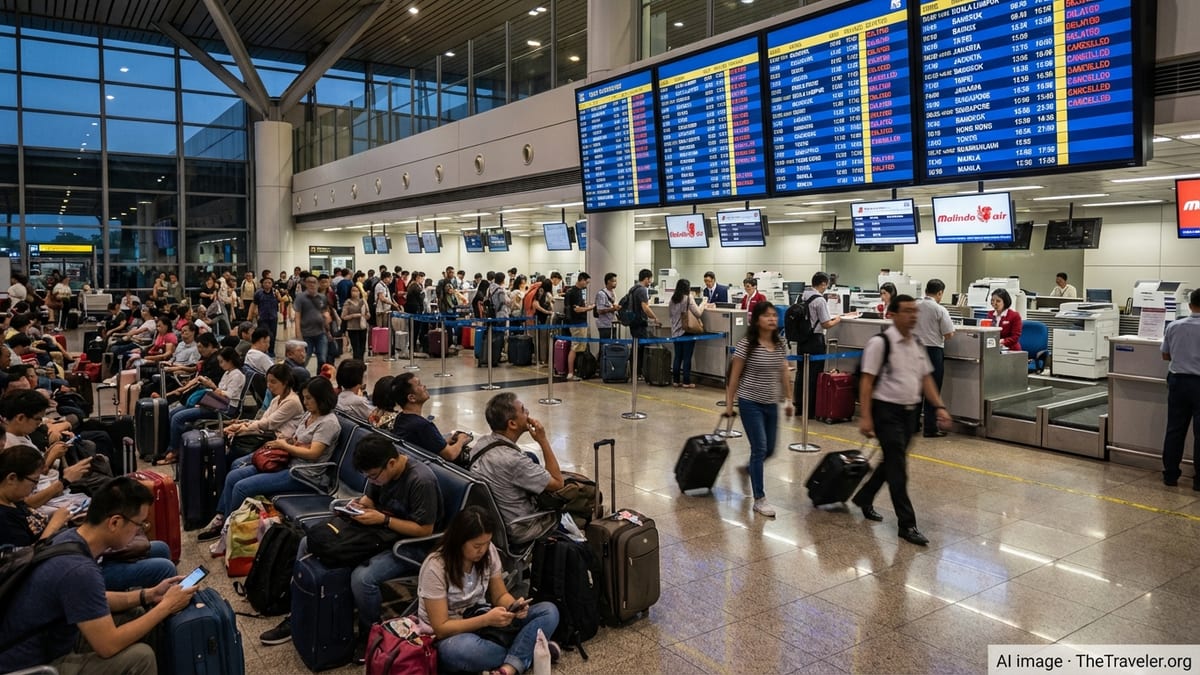
Key Seoul–Kuala Lumpur Service Abruptly Pulled
According to live flight-tracking data and schedule aggregators, at least one regularly scheduled Incheon to Kuala Lumpur service was withdrawn from the daily roster on May 27, with passengers reporting at the terminal that their flight had been cancelled at short notice. Publicly available status boards continued to show other services between the South Korean and Malaysian capitals, but the missing rotation reduced overall capacity on a route that has seen steadily rising demand in 2026.
Data from several tracking platforms indicates that some carriers, including full service and low cost operators, have been fine-tuning Seoul–Kuala Lumpur frequencies throughout the northern summer schedule, occasionally removing individual rotations from specific days while maintaining the broader route network. On Wednesday, this pattern translated into a single high-impact cancellation at Incheon, concentrating disruption onto one group of outbound passengers rather than spreading minor delays across multiple departures.
Travel search tools that monitor historical and real time performance show that other operators, such as Malaysia Airlines and major codeshare partners, continued to list departures from Incheon to Kuala Lumpur on May 27, but with tighter connection windows and heightened sensitivity to any upstream delay. The sudden loss of one flight compounded the pressure on remaining services, sparking competition for spare seats among stranded travelers keen to secure same-day options.
Dozens Stranded as Rebooking Bottlenecks Grow
Passengers arriving at Incheon to check in for the cancelled service were met with long lines at airline counters as staff attempted to rebook affected travelers onto later flights via alternative hubs. Social posts and traveler reports described confusion over revised itineraries, with some customers offered routings through other North Asian or Southeast Asian cities before continuing to Kuala Lumpur, while others faced overnight stays near the airport.
Published coverage from regional outlets notes that the disrupted flight coincided with a busy outbound period from Seoul, with a high number of international departures scheduled across the evening peak. This limited the number of available seats on alternative routes, forcing some passengers into next day travel even as airlines sought to open up capacity through voluntary change incentives and cabin upgrades where possible.
Publicly accessible airline advisories in recent weeks have urged travelers across Asia to monitor flight status closely and allow additional buffer time at airports, citing operational constraints, aircraft rotations and regional weather as potential triggers for short-notice changes. The Incheon disruption on May 27 appears to fit this pattern, with a single cancellation magnified by the scarcity of spare capacity on an increasingly popular corridor.
Knock-On Delays Across Regional and Long Haul Networks
The removal of one Incheon to Kuala Lumpur leg also fed into a wider web of delays affecting connecting passengers. Kuala Lumpur International Airport functions as a major Southeast Asian hub, linking South Korea to destinations in Australia, India and the broader ASEAN region. When one of the northbound or southbound links is cut, travelers with through tickets can miss long haul connections, requiring complex rebookings further down the line.
Flight history records show that services operating between Incheon and Kuala Lumpur on surrounding days have generally completed their journeys, but often with modest schedule variations. Even a short delay on departure from Seoul can create missed connections in Kuala Lumpur for itineraries with tight transfer windows, especially late at night when alternative onward flights are limited.
Industry data providers emphasize that aircraft and crew rotations are tightly interlinked, so the cancellation of one leg can ripple into subsequent flights if an aircraft is required later in the day on another route. In the Incheon case, tracking information suggests that at least some downstream segments operated with altered timings as carriers worked to reposition aircraft, underscoring how a local disruption can echo across multiple time zones.
Travelers Advised to Monitor Status and Build in Buffer Time
In the wake of the latest disruption, travel platforms and aviation analysts are reiterating guidance for passengers using Incheon, particularly those heading to Kuala Lumpur or connecting onward in Southeast Asia. Publicly available advisories recommend checking flight status repeatedly in the 24 hours before departure and again on the way to the airport, using both airline channels and independent tracking tools.
For those traveling on multi segment tickets, experts point to the value of building longer connection buffers in Kuala Lumpur and other hubs, reducing exposure to missed onward flights if a departure from Seoul leaves late or is swapped to a different time. Travelers are also encouraged to keep digital copies of their itineraries and booking references readily accessible, which can speed up rebooking at airport counters when disruption occurs.
Some carriers operating between Incheon and Kuala Lumpur continue to offer flexible booking policies for specific dates or fare classes, allowing changes without high penalties when operational issues arise. Public information suggests these arrangements are typically time limited and subject to seat availability, making early action essential for travelers wishing to adjust their plans around any further instability on the route.
Outlook for the Seoul–Kuala Lumpur Corridor
Despite the latest cancellation at Incheon, schedule data for the coming weeks still shows a robust slate of flights between Seoul and Kuala Lumpur, operated by a mix of South Korean, Malaysian and partner airlines. Forward timetables point to continued demand through the peak summer travel season, reflecting strong tourism flows in both directions and Kuala Lumpur’s role as a connecting hub.
Aviation analysts note that airlines in the region are still fine tuning post pandemic capacity, adjusting frequencies and aircraft types in response to fuel prices, crew availability and evolving demand. In this environment, isolated cancellations such as the May 27 Incheon disruption may continue to occur, particularly on days when aircraft are heavily utilized or when weather or technical checks compress turn times.
For travelers, the episode serves as a reminder that even well established routes can experience sudden changes. While most flights between Incheon and Kuala Lumpur are operating broadly as scheduled, the events of May 27 highlight the importance of contingency planning, flexibility in routing and close attention to pre departure updates when flying between these two key Asian gateways.