


More news on this day
Turkey and Albania are taking a prominent place on Southeastern Europe’s travel map as Turkish Airlines ramps up daily services between Istanbul and Tirana, a move seen as strengthening tourism flows, business travel and wider regional connectivity.
Get the latest news straight to your inbox!
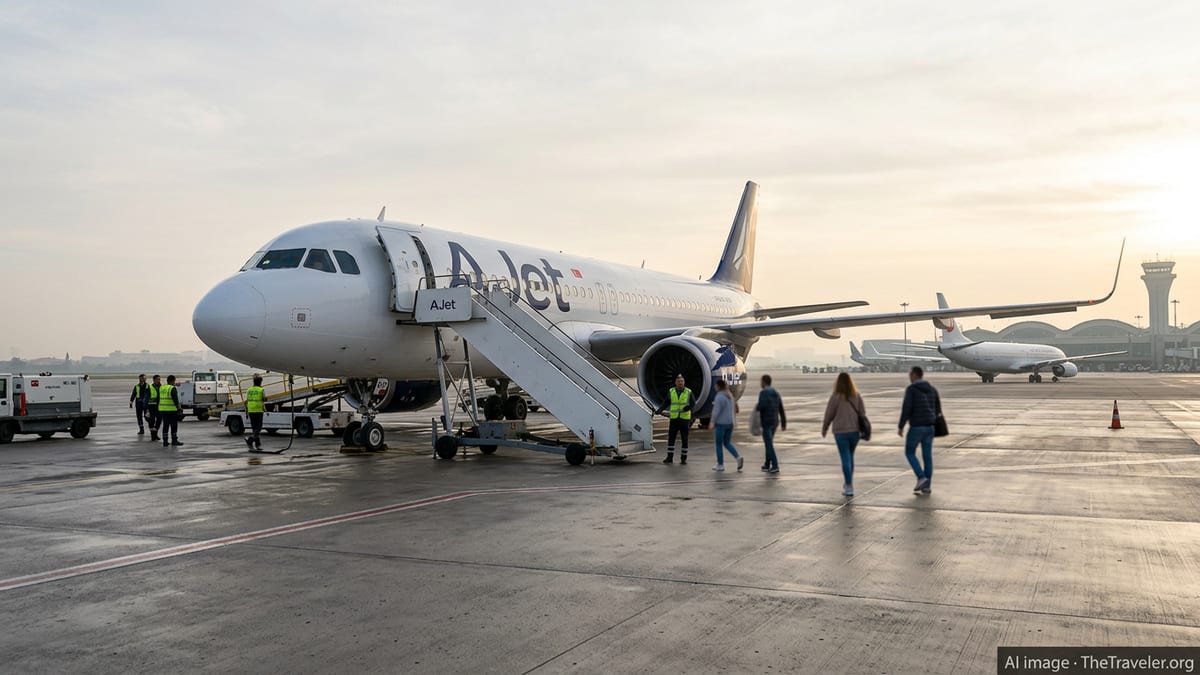
Daily Services Restore a Key Regional Air Bridge
Publicly available schedule data shows that Turkish Airlines has relaunched regular daily flights on the Istanbul–Tirana route, with at least one non-stop service operating in each direction and additional frequencies on select days. Industry coverage describes the step as the restoration of a key air bridge between Türkiye’s largest hub and the Albanian capital after a period of reduced operations.
The carrier’s booking channels and route information platforms indicate that Istanbul Airport now offers multiple departure options to Tirana across the week, typically in the morning and evening. This pattern is designed to accommodate both short business trips and longer leisure stays, while enabling convenient onward connections through Istanbul to destinations across Europe, the Middle East, Africa and Asia.
Route-mapping services further highlight the strategic role of the Istanbul–Tirana link in the Western Balkans, where direct intercontinental connections remain limited. By consolidating traffic through Istanbul, Turkish Airlines is positioned to serve Albanian travelers heading to long haul markets and to bring inbound visitors into Albania with a single transfer.
Flight tracking data also suggests that Tirana is being integrated more deeply into the airline’s broader European network, with daily operations reinforcing Istanbul’s position as a primary gateway for Southeastern Europe. This increased frequency is expected to provide greater schedule reliability and flexibility for passengers compared with thinner, less frequent services.
Tourism Prospects Brighten for Turkey and Albania
Tourism analysts note that both Turkey and Albania have seen rising visitor numbers in recent seasons, helped by competitive pricing, Mediterranean climates and expanding flight options. The normalization of daily Istanbul–Tirana operations is widely viewed as another catalyst for growth, allowing travelers to combine both countries in a single trip or use one as a gateway to explore the wider region.
Travel-focused coverage points out that Tirana International Airport has been steadily expanding its airline portfolio in recent years, while Istanbul has consolidated its status as one of the world’s busiest international hubs. The availability of daily non-stop flights brings these trajectories together and reduces friction for visitors planning multi-country itineraries around the Adriatic and Aegean seas.
Tour operators and online travel platforms are expected to leverage the enhanced connectivity by packaging joint Turkey–Albania products, including cultural circuits, coastal holidays and city breaks. The short flight time, generally under two hours, makes it feasible for tourists to add either Istanbul or Tirana as an extra stop without substantially extending their overall journey.
In addition, the route supports the growing popularity of short, frequent city trips among regional travelers. Residents of both countries gain easier weekend access to each other’s capitals, potentially increasing shopping, dining and cultural tourism in both directions and adding off-season demand that can help smooth out traditional summer peaks.
Business Travel and Trade Ties Set to Deepen
According to economic data published by regional observers, Turkey remains one of Albania’s significant trading partners and a rising source of investment across sectors such as construction, retail and banking. The resumption of daily Istanbul–Tirana flights is expected to complement these ties by simplifying travel for corporate executives, project teams and small and medium sized enterprises.
Business travel planners highlight that a daily schedule is often a threshold for companies when deciding whether to base staff in a market or manage it remotely. With at least one flight per day in each direction and occasional additional frequencies, travelers gain greater flexibility to arrange same day meetings or short turnaround site visits, reducing both time away and accommodation costs.
Reports on Albania’s economic development strategy emphasize its ambition to position Tirana as a regional services and logistics hub. In this context, smoother air links to a major global hub such as Istanbul can make the Albanian capital more attractive as a base for companies aiming to cover the Western Balkans, southern Italy and parts of Central Europe.
For Turkish businesses, the route also acts as a bridge into the Western Balkans, where infrastructure projects and consumer markets are gradually expanding. Direct, frequent air service reduces perceived distance, supporting more frequent contacts, trade missions and participation in fairs, conferences and professional events across both countries.
Istanbul’s Global Hub Role Extends to the Western Balkans
Publicly available airline data shows that Turkish Airlines operates a large global network, connecting Istanbul to hundreds of destinations. The carrier’s strategy has long relied on channeling traffic from smaller and medium sized markets through its Istanbul hub to long haul destinations. The reinforcement of daily flights to Tirana aligns closely with this model.
Route analysis platforms illustrate how travelers from Albania can now connect via Istanbul to cities in North America, East Asia, the Gulf and Africa, often with a single stop. This positions Tirana as a more viable origin for long haul travel and may reduce the need for passengers to first reach other European hubs for intercontinental flights.
At the same time, Istanbul’s hub function benefits from growing inbound flows originating in the Western Balkans. Additional passengers from Albania and neighboring markets transiting through Istanbul contribute to network sustainability, supporting higher frequencies and a wider choice of destinations for the entire system.
Observers of the regional aviation sector note that the improved link can also intensify competition for traffic that might otherwise route via nearby hubs in cities such as Vienna, Rome or Athens. For price sensitive passengers in Albania and neighboring states, competitive fares combined with daily departures could make Istanbul an increasingly attractive transit point.
Regional Aviation Landscape in Flux
The return to daily Istanbul–Tirana operations is taking place against a backdrop of shifting airline strategies across the Western Balkans. Industry reports describe consolidation, financial pressures and route reshuffling among local carriers, while larger network airlines strengthen their presence where demand justifies sustained schedules.
Tirana International Airport’s own traffic statistics show significant growth in recent years, with Turkey already ranking among the leading country markets served from the Albanian capital. The presence of daily services by a major network airline adds another layer of stability to this growth, complementing low cost and regional operators on other routes.
Analysts caution that capacity adjustments remain possible in response to seasonal patterns and macroeconomic conditions, but they generally view the Istanbul–Tirana corridor as structurally important for both countries. The combination of family visits, labor mobility, tourism and business travel provides a diversified demand base that supports regular daily operations.
As airlines revisit their networks for upcoming seasons, the strengthened link between Istanbul and Tirana is being interpreted as a sign of confidence in the Turkey–Albania market and in the broader potential of Southeastern Europe. For travelers, it translates into more predictable schedules, new itinerary possibilities and a smoother pathway between two fast evolving capitals.