


More news on this day
Flights across Indonesia are resuming in stages after a two-day shutdown caused by volcanic ash from Anak Krakatau, as Jakarta’s main Soekarno-Hatta International Airport and several regional hubs restart operations while airlines work through a heavy backlog of stranded passengers.
Get the latest news straight to your inbox!
Jakarta hub reopens after blanket closures at eight airports
Jakarta’s Soekarno-Hatta International Airport, the country’s busiest gateway, has reopened to commercial traffic on Tuesday, September 8, following a two-day suspension triggered by ash from the eruption of Anak Krakatau in the Sunda Strait. Published coverage indicates that flight operations were halted on Sunday after volcanic particles were detected over the airport area, forcing hundreds of cancellations and diversions.
Reports from regional news agencies show that the ash cloud forced authorities to temporarily close at least eight airports across western Indonesia, including Jakarta’s secondary Halim Perdanakusuma airport, Lampung’s Radin Inten II, Budiarto, Pondok Cabe and Husein Sastranegara in Bandung. Official aviation notices documented rolling extensions of those closures through Monday as meteorological data continued to show ash in the vicinity of flight paths.
Data released by Indonesia’s transport ministry and relayed in local and international media point to more than 200 flights disrupted at Soekarno-Hatta on Sunday alone, with tens of thousands of passengers affected. Subsequent tallies from national monitoring centers indicated over 370 flights impacted nationwide once additional airport restrictions were brought into effect.
The disruptions followed a series of Anak Krakatau eruptions beginning on Friday, September 4, with satellite and ground-based observations tracking ash plumes up to around 15,000 meters and drifting over parts of Java and Sumatra. Aviation meteorology bulletins referenced in public statements show that the ash cloud spread across key air corridors serving Jakarta and several popular domestic destinations.
Gradual return of airline operations and ongoing schedule gaps
International and domestic airlines have begun restoring services into Jakarta and other affected cities, but schedules remain uneven as carriers reposition aircraft and crews. According to publicly available information, low-cost carrier AirAsia has resumed the bulk of its flights to and from Jakarta after the airport reopened, while maintaining limited cancellations on routes linking the capital with nearby Bandar Lampung.
Other Indonesian operators, including Garuda Indonesia, Batik Air and Super Air Jet, are progressively reinstating services on routes that were suspended during the ash event. Airport operators in Labuan Bajo reported that several flights to the Komodo gateway were canceled on Monday due to knock-on effects from the Jakarta closures, underscoring how disruption at the main hub has rippled deep into the domestic network.
Industry updates suggest that travelers should expect continued irregular operations over the coming days, even as most airports reopen. Airlines are working through a backlog of stranded passengers from the two-day shutdown, which has required added recovery flights, schedule swaps and the use of larger aircraft on key routes where possible.
Analysts tracking the disruption note that aircraft rotations, crew duty limits and limited spare capacity across Southeast Asian fleets are likely to prolong the recovery. Published commentary from aviation specialists highlights that it can take several days for networks to fully absorb the impact of a systemwide stoppage at a major hub like Soekarno-Hatta.
Safety-driven airspace restrictions and monitoring of ash cloud
Indonesia’s air navigation service and meteorological agency have continued to update airspace users on the evolution of the Anak Krakatau ash cloud, issuing a series of volcanic ash advisories and flight information messages. Public statements describe a coordinated response between air traffic managers, airport operators and meteorologists aimed at keeping aircraft clear of contaminated airspace.
According to published briefings from Indonesia’s transport ministry, decisions to close or reopen airports are being guided by ash concentration maps, wind forecasts and paper tests conducted on the ground to detect deposits on runways and aprons. The ministry has emphasized through official channels that airport operations will only be restored once ash has moved away from critical approach and departure paths.
Regional and international aviation planning documents underline the risks associated with flying through volcanic ash, which can damage jet engines, reduce visibility and affect onboard systems. In recent years, Indonesia has refined its contingency plans for volcanic events, drawing on guidance from the International Civil Aviation Organization and lessons from previous eruptions in the archipelago.
As Anak Krakatau’s activity continues to be monitored, airspace restrictions remain in place over certain sectors above the Sunda Strait and surrounding waters. Flight crews have been advised through standard aviation notices to avoid these zones and to remain alert to updated routing instructions as atmospheric conditions evolve.
Impact on travelers and key Indonesian destinations
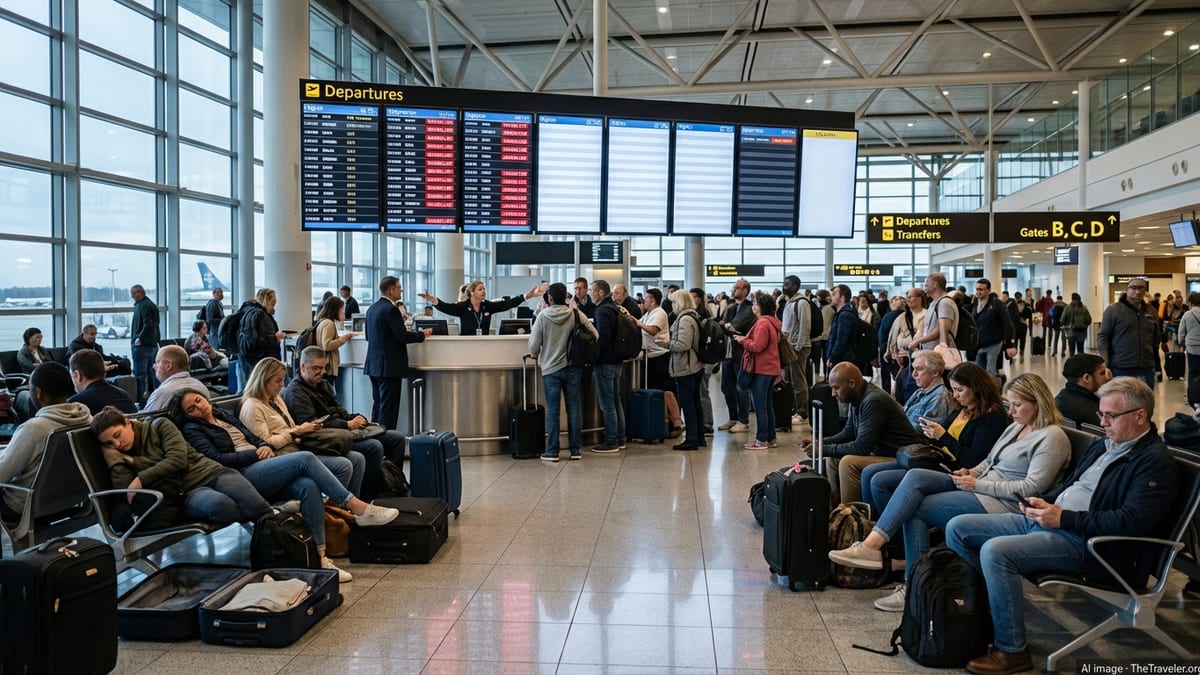
The disruption has been felt across Indonesia’s tourism and business corridors, particularly in and out of Jakarta, which handles the majority of the country’s international and domestic traffic. Local media reports describe crowded terminals, long queues at airline service counters and passengers seeking alternative routes via still-operational airports during the height of the shutdown.
Popular destinations such as Bali, Lombok and Labuan Bajo experienced indirect effects as airlines adjusted their schedules and aircraft allocations. Travel forums and social media posts from stranded passengers referenced rebookings several days ahead, indicating that the backlog is likely to influence travel plans throughout this week even as direct ash impacts recede.
Hotel operators and tour providers in some regions reported a wave of last-minute cancellations and date changes, particularly from travelers transiting through Jakarta. While airports in Bali and eastern Indonesia largely remained open, the reliance on connections through the capital limited options for many international visitors.
Travel industry observers suggest that the episode highlights the vulnerability of Indonesia’s tourism flows to volcanic hazards, given the country’s location along the seismically active Pacific Ring of Fire and the central role of Jakarta’s hub airports in the national network.
What travelers should do in the coming days
Public advisories from airlines and aviation authorities encourage passengers with flights to, from or within Indonesia in the coming days to check their flight status frequently and to allow extra time at the airport. Carriers are directing customers to official websites, mobile apps and customer service channels for the latest information on rebookings, refunds and travel waivers.
Travelers already holding tickets are being urged to monitor airport announcements and consider flexible arrangements for onward connections, as knock-on delays and gate changes remain likely. Those planning new trips to Indonesia are advised by travel industry guidance to build in additional buffer time for transfers, especially when connecting through Jakarta or other recently affected airports.
Insurance specialists note that comprehensive travel insurance policies that cover natural hazards and consequential delays may help offset costs from extended stays or missed connections in events of this kind. However, passengers are generally expected to follow airline instructions and make reasonable efforts to accept offered alternative itineraries.
With Anak Krakatau’s activity still under scrutiny by Indonesia’s geological and meteorological agencies, the overall message from publicly available guidance remains one of cautious resumption rather than a complete return to normal. While the immediate shutdown has eased and aircraft are returning to the skies, schedules across the archipelago are expected to remain fluid until volcanic ash risks subside further.
AP News coverage of Anak Krakatau flight disruptions and Jakarta reopening
Bernama report on ash impact across eight Indonesian airports
BMKG update on Anak Krakatau ash dispersion and airport closures
AirAsia operational update on flights resuming after Anak Krakatau eruption