


More news on this day
Travel operators and UK housebuilders are issuing a growing number of profit warnings as the Iran war ripples through energy markets, consumer confidence and construction demand, putting two of Britain’s most cyclical sectors under renewed pressure.
Get the latest news straight to your inbox!
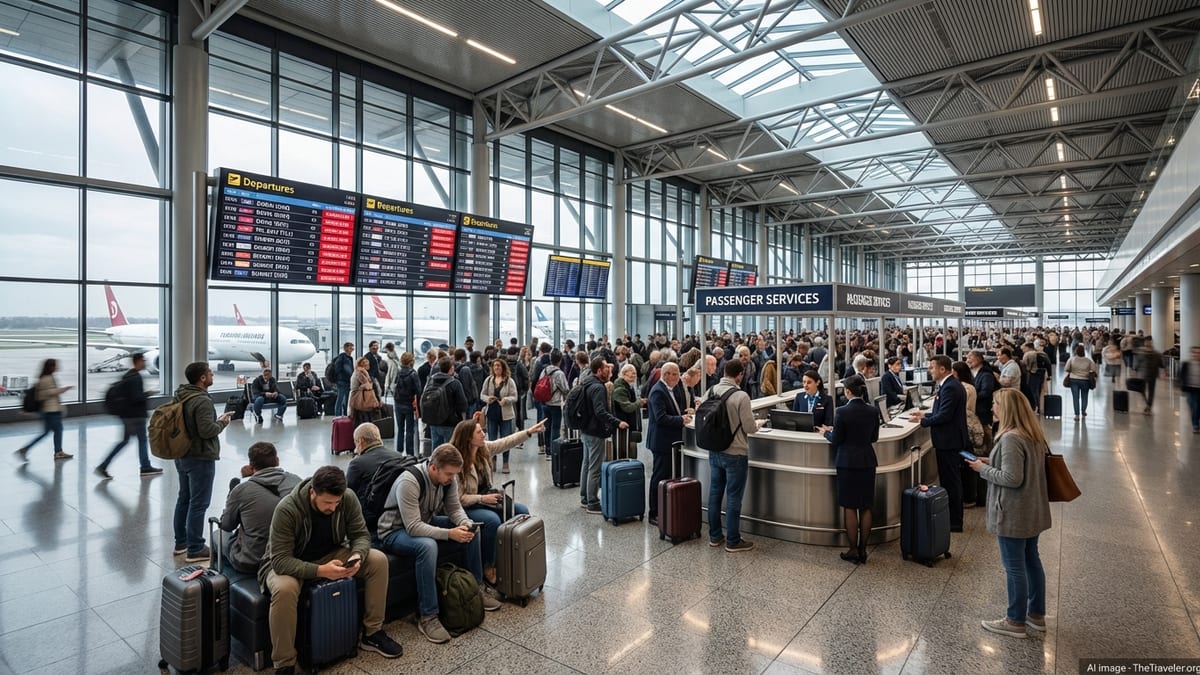
Conflict drives up costs and squeezes margins
The Iran war has triggered renewed volatility in global oil and gas markets, pushing up wholesale energy prices and transportation costs at a time when many UK companies were only just recovering from previous shocks. Publicly available analysis of the conflict’s economic impact indicates that higher energy costs and delayed interest rate cuts are weighing on growth expectations in Europe and the United Kingdom.
For travel businesses, fuel is one of the largest operating expenses, so rising jet fuel and bunker costs are eroding margins even when planes and cruise ships remain relatively full. Industry commentary suggests that operators are struggling to pass the full impact of these increases on to price-sensitive customers, forcing them to trim earnings guidance for the year.
Housebuilders face a different but related problem. Elevated energy prices are feeding into the cost of building materials, from bricks and cement to steel and insulation, while financing costs for developers remain high. Construction sector surveys show that smaller builders in particular report a sharp deterioration in their outlook for the next 12 months, citing the Iran conflict as a key factor in worsening conditions.
These input pressures come on top of lingering labour shortages and higher wage bills across both sectors. The result is a squeeze on profitability that has already prompted several listed companies to warn that earnings will fall short of previous expectations.
Travel demand softens as holidaymakers react to Middle East tensions
Travel firms are being hit not only by higher costs but also by a more cautious consumer mood. Reports from UK tour operators and online travel agencies show that bookings to destinations perceived as close to the conflict zone, such as Turkey, Egypt and parts of the eastern Mediterranean, slowed sharply earlier this year as news of missile strikes and shipping attacks dominated headlines.
One major UK-based online holiday retailer recently suspended its full-year profit guidance, citing a significant slowdown in demand for several popular sun destinations following an escalation in Middle East tensions. The company indicated that while trading days around key sales periods remained strong, heightened geopolitical risk had made customer behaviour more volatile, with late bookings and frequent switches between destinations.
Airlines and leisure carriers have also reported a challenging backdrop, even when headline booking numbers are improving. A leading UK travel and leisure group told investors that summer passenger numbers were running ahead of last year and that booking momentum had picked up as fears of wider regional escalation eased. However, it also acknowledged that the competitive nature of the outbound leisure market, combined with the impact of the Iran war on costs, was creating a tougher near-term earnings environment.
Industry-wide estimates from global tourism bodies suggest that the conflict has inflicted substantial daily losses on the wider travel and tourism sector as routes are adjusted, insurance premiums rise and some travellers opt to delay or downgrade trips. The picture is not uniformly negative, but the overall effect has been to increase uncertainty and prompt a wave of caution in corporate forecasts.
Housebuilders warn on profits as confidence and volumes weaken
In housing, the Iran war has arrived at a particularly delicate moment for UK developers that were already grappling with higher mortgage rates and subdued buyer confidence. Official and industry data point to falling transaction volumes and lower prices in several regions, with estate agents reporting that more sellers now feel “trapped” as chains collapse or offers are reduced.
Large listed housebuilders have issued or reiterated profit warnings over recent months, highlighting weaker reservation rates, build cost inflation and slower completions. Some firms have pointed to intensifying pressure in energy-intensive parts of the construction supply chain, where manufacturers of bricks, tiles and other materials face steep utility bills and are passing on increases through higher wholesale prices.
Surveys of small and medium-sized housebuilders conducted in late June show confidence at some of its lowest levels since the financial crisis. More than nine in ten respondents said that the Iran conflict had made their business outlook for the coming year worse than expected, linking the war to higher funding costs, greater caution among lenders and persistent uncertainty over where energy prices will settle.
Retail-facing suppliers are also sounding the alarm. A leading UK tile and flooring retailer recently warned that profits for its current financial year would fall well below last year’s level, blaming weaker discretionary spending and temporary stoppages on construction sites during periods of extreme weather. The company noted that housebuilding and commercial projects had come under further pressure in a macroeconomic climate shaped by geopolitical tensions and elevated costs.
Profit warnings surge as geopolitical risk reshapes forecasts
The pattern emerging from corporate updates points to a broader rise in UK profit warnings, with travel and leisure firms and construction-linked businesses among the hardest hit. Analysis from a major professional services firm shows that UK-listed companies have issued dozens of profit warnings so far this year, citing factors ranging from fragile demand to policy uncertainty, but with the Iran war increasingly prominent as a trigger.
In sectors directly exposed to consumer demand, such as travel, leisure and retail, warnings often reference a collapse in confidence and a shift towards later booking or cheaper products. In more capital-intensive industries, including housebuilding and materials, companies emphasise the dual hit from higher input costs and delayed investment decisions as households and businesses postpone big-ticket spending.
The conflict’s impact is also filtering through to the macroeconomic outlook. International financial institutions have trimmed growth forecasts for the UK and other advanced economies, linking the downgrade to higher-for-longer energy prices, disrupted trade routes and the risk that inflation will remain elevated. Some projections suggest that UK inflation could return towards 5 percent if energy markets remain tight, a scenario that would complicate plans for interest rate cuts and keep borrowing costs elevated for developers and homebuyers.
Financial markets have reacted by repricing risk across several exposed sectors. Share price volatility for airlines, tour operators and housebuilders has increased since the start of the conflict, with investors scrutinising each trading update for signs that the worst of the disruption might be over or, alternatively, that a more protracted slowdown is taking shape.
Consumers and policymakers weigh next steps
The fallout for households is already visible in higher fuel and energy bills, as well as in renewed anxiety about job security in sectors vulnerable to discretionary spending cuts. Consumer groups and analysts warn that if the Iran war keeps global energy prices elevated, the UK could face another bout of cost of living pressure just as previous support schemes have wound down.
Government departments and regulators are under pressure to respond. The UK competition watchdog has said it is stepping up its scrutiny of fuel retailers amid concerns about profiteering linked to the war-driven spike in wholesale prices, signalling that it intends to monitor margins more closely in the months ahead.
At the same time, economic commentators are urging policymakers to consider targeted support for sectors bearing the brunt of geopolitical disruption, including export-oriented manufacturers, construction firms and travel operators with significant exposure to Middle Eastern routes. Proposals range from temporary tax reliefs and loan guarantees to expanded trade promotion and diplomatic efforts aimed at stabilising key shipping corridors.
For now, the immediate reality for UK travel companies and housebuilders is one of elevated uncertainty. With the trajectory of the Iran war unclear and global energy markets on edge, corporate earnings forecasts across both industries are likely to remain under strain, and investors, workers and holidaymakers will be watching closely for further warnings in the months ahead.