


More news on this day
New travel advisories are highlighting rapidly escalating risks across the Democratic Republic of the Congo, as July protest calls, severe restrictions on eastern air links and a growing pattern of drone attacks converge on key transport hubs in Kinshasa, Goma, Bukavu and Kisangani.
Get the latest news straight to your inbox!
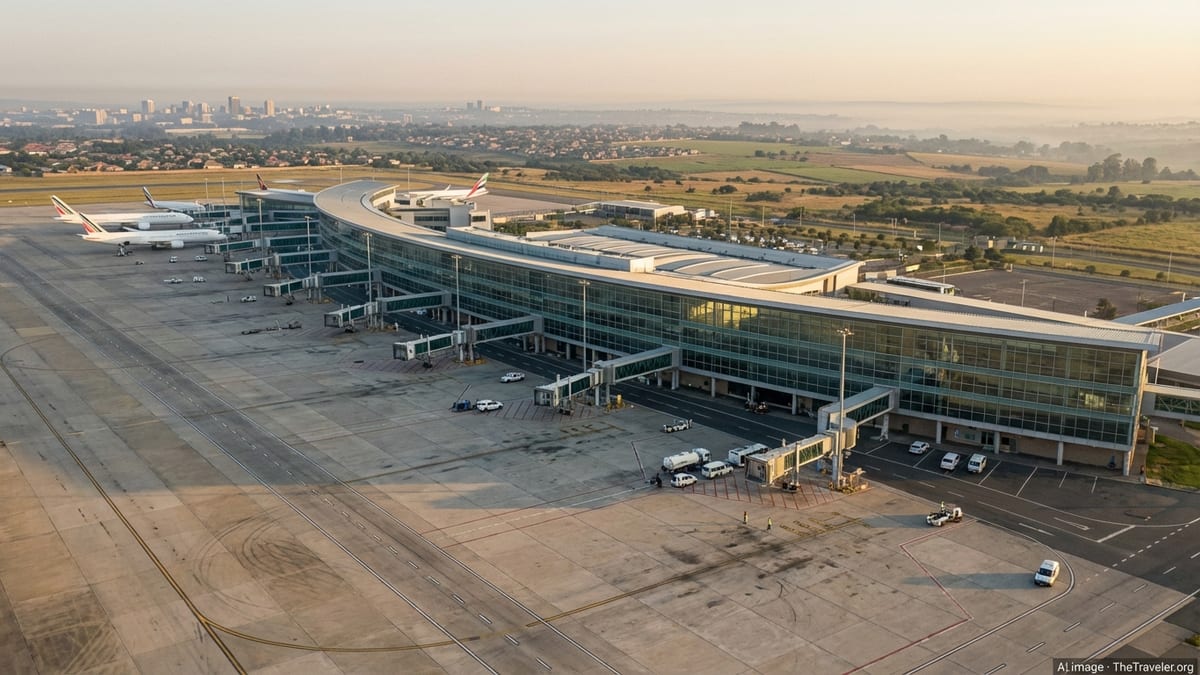
Global Travel Alerts Now Converge on the DRC
Multiple governments now advise against all or all but essential travel to the Democratic Republic of the Congo, reflecting a convergence of political unrest, armed conflict and public health emergencies. Recent updates from several countries maintain a highest-level warning for the entire territory, underscoring widespread concern about the ability to move safely between major cities and remote regions.
Publicly available advisories describe an extremely volatile security landscape, particularly in the east, where armed groups remain active and large parts of North Kivu, South Kivu and Ituri continue to experience frequent clashes and attacks. These alerts also point to a concurrent Ebola Bundibugyo outbreak in eastern provinces, increasing the likelihood of sudden internal movement controls and health checkpoints for domestic travelers.
In addition to the eastern conflict, updated guidance stresses that nationwide unrest, including protests over the conflict and broader political grievances, can trigger rapid shutdowns of transport infrastructure. Travelers are being warned that air links, border crossings and main highways can be blocked or suspended at short notice, even in areas that may appear calm on arrival.
Several advisories highlight the limited capacity of many foreign governments and international organizations to assist their citizens anywhere in the DRC outside a few major urban centers. This combination of constrained consular access and fluid front lines is shaping a new phase of caution for both tourism and business travel plans throughout 2026.
July Protest Calls Raise Risks Around Kinshasa and Key Cities
New protest calls planned for July are a central driver of the latest warnings for Kinshasa and other major cities. Recent coverage of the security situation indicates that large, politically charged gatherings have increasingly been used to show support for the military, denounce foreign involvement in the eastern conflict and protest economic conditions. Demonstrations in the past have quickly spread from originally planned locations to outlying districts and secondary cities, including Bukavu and Goma.
Reports from previous protest waves show that roadblocks, burning barricades and ad hoc checkpoints can appear with little notice on key arteries in and around Kinshasa. These blockages frequently affect links between the city center, residential districts and N’djili International Airport, delaying or completely halting airport transfers for hours. For travelers, this raises the risk of missed international connections and unexpected overnight stays in the capital.
Observers note that demonstrations sometimes begin peacefully but can turn violent if security forces intervene or if rival groups attempt to exploit the crowds. Extensive use of tear gas, rubber bullets and, in some instances, live ammunition has been documented in earlier episodes, prompting foreign travel advisories to warn of collateral harm to bystanders. Even those attempting simple transits through protest-affected areas have faced exposure to clashes and petty crime.
Local accounts and regional analyses further indicate that callouts for nationwide solidarity actions around events in the east can come with limited advance notice, especially via social media and local radio. This makes it difficult for travelers and operators to predict which neighborhoods, bridges or city exits will be affected on a given day in July, increasing the importance of checking conditions immediately before any movement.
Eastern Flight Access Severely Curtailed
The air picture over eastern DRC has deteriorated sharply since 2025, and the trend continues into mid 2026. Open-source reporting describes repeated closures and severe limitations on access to Goma and Bukavu, driven by frontline fighting, shelling and the risk of stray munitions affecting runways and fuel depots. Goma’s international airport, a lifeline for humanitarian operations, has already faced major damage and lengthy shutdowns in past offensives.
Regional and international travel advisories now warn that flights serving eastern hubs can be delayed, rerouted or cancelled at very short notice. Commercial services into Goma and Bukavu operate under tight constraints when they run at all, while many humanitarian and charter operators have introduced additional safety margins, including daylight-only operations and contingency diversion plans.
Travel risk assessments compiled by governments and global security providers describe eastern DRC airspace as highly congested with military aircraft, helicopters and drones from a range of state and non-state actors. In practice, this has translated into tighter flight corridors, altitude restrictions and more complicated coordination for pilots, as well as periodic suspension of operations when fighting intensifies near approach paths.
For travelers attempting to reach or depart Goma, Bukavu or nearby airstrips, this environment means that even confirmed tickets cannot be taken as a guarantee of travel. Logistics planners increasingly recommend that any essential journeys factor in the possibility of multiple days of delay, enforced detours through other regional hubs or the need to exit by land through neighboring countries if conditions allow.
Drone Warfare and Airfield Security in Kisangani
The rise in drone use is transforming the risk profile around Congolese airports, with Kisangani’s Bangoka International Airport emerging as a new focal point. Research organizations tracking the conflict have documented a series of drone attacks targeting military positions in and around the airfield since early 2026, some attributed to M23 and others to government-aligned forces.
Foreign travel advisories now reference these drone incidents when describing the security situation in Kisangani, stressing that the overall environment around the airport remains unpredictable. Although the primary targets have been military installations, nearby civilian infrastructure and air operations have faced collateral disruption, including temporary suspensions and heightened security screenings.
United Nations documentation on the wider conflict in eastern DRC also highlights extensive electronic warfare activity, including jamming and spoofing of navigation systems in areas around Goma and other contested zones. Analysts warn that similar capabilities could complicate air operations elsewhere in the country, particularly where opposing forces deploy surveillance or armed drones in close proximity to civilian traffic.
These developments have prompted some aviation risk monitors to classify Bangoka and several eastern airports as high-threat environments, where sudden security incidents or damage to aviation infrastructure could force extended closures. Travelers are being urged, in publicly available guidance, to build maximum flexibility into itineraries that rely on internal flights through Kisangani or onward links into the east.
Operational Challenges for Overland and Humanitarian Travel
The combined effects of protests, restricted airspace and drone activity are magnified by the severe difficulties of overland travel in much of the DRC. Country information pages and consular advisories emphasize that roads outside a few main axes are often in poor condition, prone to flooding and exposed to banditry, illegal checkpoints and clashes between armed groups and government forces.
In North Kivu, South Kivu and Ituri, many humanitarian organizations have scaled back or temporarily suspended activities due to worsening security and access constraints. Public humanitarian reporting notes a reliance on convoys, careful route planning and occasionally armed escorts for essential movements, conditions that effectively shut down normal tourist and business itineraries.
Even in urban centers such as Kinshasa, Goma and Bukavu, travel planners report that curfews, localized lockdowns and sudden security operations can immobilize entire districts without warning. These measures can coincide with responses to protests, counterinsurgency operations, public health measures linked to the Ebola outbreak or efforts to secure visiting delegations and strategic infrastructure.
For would-be visitors, current open-source guidance converges on a single theme: travel to the Democratic Republic of the Congo in July 2026 carries extreme and rapidly evolving risks. Those who must travel are advised to maintain constant contact with operators and to prepare for fast-changing security, health and logistical conditions in Kinshasa, the eastern cities of Goma and Bukavu, and the strategically sensitive hub of Kisangani.