


More news on this day
Escalating confrontation between the United States and Iran in mid‑2026 is sending shockwaves through global travel and transport, as governments from Asia to Europe rush to shield their citizens from a rapidly deteriorating security landscape across the Middle East and around the Strait of Hormuz.
Get the latest news straight to your inbox!
Airlines Reroute and Cut Capacity Across a Widening Conflict Zone
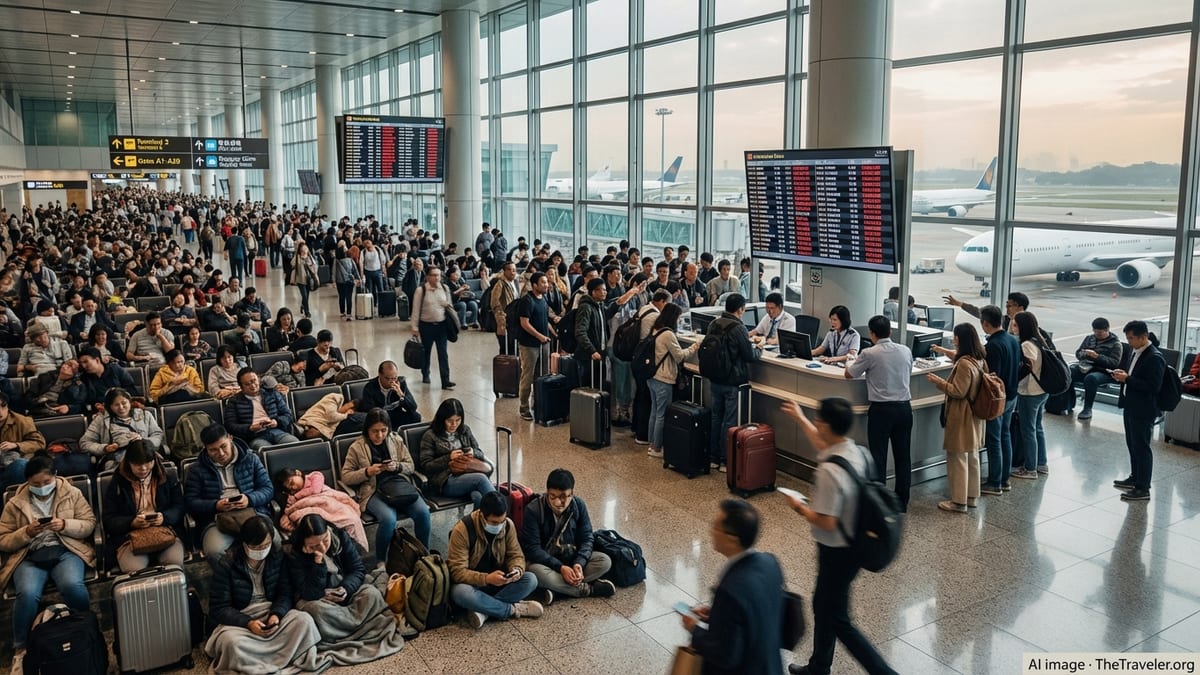
Air travel across the Middle East has entered a new phase of disruption as the US–Iran confrontation broadens into a regional crisis. Published coverage from aviation trackers and major news outlets indicates that commercial routes skirting Iran, the Persian Gulf and the Gulf of Oman have been repeatedly redrawn since late February, when Iran began restricting traffic through the Strait of Hormuz in response to US and Israeli strikes. More recent reports describe additional air operations against Iranian targets in July, heightening concern that long‑haul corridors between Europe, Asia and Africa could face further turbulence, delays and cancellations.
Carriers that once overflew Iran or used nearby hubs are increasingly routing flights over Turkey, Central Asia or the Red Sea region, adding time and fuel costs. Industry data highlighted in global business media shows that select European and Asian airlines have reduced frequencies or paused certain services into Gulf gateways most exposed to the conflict. While major hubs remain open, operational plans are being recalibrated day by day in line with evolving risk assessments.
Travel safety advisories from several governments underscore that the security environment above and around Iran is now classified as highly volatile, with the potential for miscalculation involving military aircraft, drones and missiles. Public information from international aviation bodies points to a patchwork of overflight restrictions, special caution zones and operator‑specific risk rules, all of which complicate itinerary planning for both airlines and passengers.
For travelers, the immediate impacts are longer routings, higher fares on some intercontinental sectors and reduced connectivity to secondary cities in the broader Middle East. Industry analysts quoted in recent business reports suggest that if strikes and counter‑strikes continue into the peak travel months, airlines may deepen capacity cuts or consolidate services through a smaller number of perceived lower‑risk hubs.
Strait of Hormuz Turmoil Ripples Through Maritime Routes
The Strait of Hormuz, already at the center of a protracted shipping standoff since late February, has again emerged as a focal point of the crisis. Publicly available maritime incident summaries describe multiple attacks on commercial vessels, including cargo ships and tankers, and note that traffic through the narrow waterway has been severely constrained. The United States has launched repeated strikes aimed at degrading Iran’s ability to target shipping, while Iran is accused in open sources of continuing to threaten or hit vessels with drones and missiles.
The US Maritime Administration and allied information centers have issued detailed security alerts describing the Persian Gulf, Strait of Hormuz and Gulf of Oman as high‑risk waters for commercial operators. These notices highlight the dangers of anti‑ship missiles, loitering munitions, explosive boats and electronic interference, and recommend that shipowners carefully weigh the risks of transiting or operating near Iranian waters. Shipping insurers and classification societies have, in turn, circulated safety circulars referencing a “state of active conflict” in parts of the Middle East maritime domain.
Rerouting strategies are now a prominent feature of voyage planning. Reports from shipping journals indicate that some energy and container carriers are diverting around the Arabian Peninsula, using longer tracks via the Red Sea and Suez Canal where possible. Others are delaying sailings or consolidating cargoes to minimize exposure. Analysts warn that these workarounds, while reducing immediate danger to crews, add days to voyages and increase fuel and insurance costs, with potential knock‑on effects for global energy prices and supply chains.
The heightened maritime risk also has a direct travel dimension. Cruise itineraries in the Gulf region have been revised or suspended, and many seafarers’ unions are pressing for hazard pay and stricter safety protocols. Governments in Asia and Europe are telling citizens employed at sea to exercise extreme caution in designated risk areas, and to coordinate closely with employers and consular services.
India Moves to Safeguard Seafarers and Nationals in High‑Risk Waters
India, one of the countries most exposed to disruptions in Gulf shipping, has stepped up efforts to protect its citizens, particularly seafarers working on international vessels. Circulars issued this year by India’s Directorate General of Shipping, referenced in official maritime safety publications, warn Indian‑flagged ships and Indian crew about the escalating security situation around Iran, the Strait of Hormuz, the Persian Gulf and adjacent waters.
These documents advise vessels to heighten onboard security, maintain close contact with regional naval information centers and be prepared to report incidents of missile or drone activity, suspicious small craft and attempted boardings. Indian seafarers present in Iran are urged, according to publicly available advisories, to limit non‑essential movements ashore, keep travel documents accessible and arrange safe departure from the country at the earliest opportunity, working through employers, unions or local agents.
New standard operating procedures for Indian vessels operating in designated “maritime security risk areas” outline the spectrum of threats now considered relevant, including state‑directed interdiction, electronic jamming of navigation systems and cyber‑enabled attacks against shipboard infrastructure. Industry coverage notes that Indian shipping firms are increasingly weighing whether to transit the high‑risk zones at all, or to adjust schedules and routing to mitigate exposure for crews while responding to commercial demands.
Beyond the maritime sector, Indian travel advisories for Iran and parts of the wider region have been progressively tightened since the outbreak of the 2026 conflict. Public information from the Ministry of External Affairs stresses the importance of registration with consular portals, advance planning for exit routes and close monitoring of local developments for any nationals who remain.
South Korea and Switzerland Tighten Middle East Travel Warnings
South Korea has adopted some of the most stringent measures in response to the conflict. Government statements carried by national and international media earlier this year raised the travel alert for Iran to the highest level in Seoul’s four‑tier system, effectively banning travel and urging all remaining nationals to leave as soon as conditions and flight availability permit. These steps followed earlier advisories that strongly encouraged South Koreans to depart Iran due to the likelihood of US military action and expanding regional hostilities.
Reports from Korean and foreign outlets indicate that evacuation operations have already brought home groups of South Korean citizens from Iran and neighboring states, using chartered or military flights routed through safer hubs. For those still present in the region, the government continues to emphasize the need to avoid protest sites, critical infrastructure, military facilities and border areas, and to stay in regular contact with diplomatic missions where possible.
Switzerland, though militarily neutral, has also sharpened its guidance. Publicly available travel advice from Swiss authorities classifies Iran and several nearby countries at the highest danger level, recommending against all tourist travel and urging those whose presence is not strictly essential to depart. Swiss nationals are encouraged to maintain low profiles, ensure travel documents remain valid and keep contingency funds on hand in case rapid relocation becomes necessary.
Both countries are aligning their messaging with broader warnings from international bodies regarding terrorism risk, potential spillover of missile or drone strikes into neighboring territories and the possibility of sudden airport or border closures. Travel industry observers say these policies are likely to suppress leisure travel demand to the region for the foreseeable future, while complicating movements for business travelers and aid workers.
United Kingdom and United States Highlight Expanding Security Threats
The United Kingdom has significantly reinforced its stance on Iran and nearby waters, reflecting the intensifying crisis. The latest guidance on Iran from the Foreign, Commonwealth and Development Office advises against all travel to the country and warns that UK government support inside Iran is extremely limited. Separate notices on regional maritime security highlight a record of vessel seizures and attacks in and around the Strait of Hormuz and the Gulf of Oman, describing a persistent risk landscape for British‑linked shipping.
In parallel, the UK’s maritime trade information service, based in the Gulf, has issued multiple advisories related to incidents in the Strait of Hormuz. One recent notice referenced a vessel catching fire after being struck by a projectile near the Omani coast, an event widely covered by international media. Such reports are feeding into insurance risk models and encouraging ship operators serving UK and European markets to re‑evaluate routing and emergency response plans.
The United States, while a direct party to the confrontation, is also shaping global travel behavior through its advisories. A Worldwide Caution updated in mid‑July urges US citizens to exercise increased vigilance worldwide due to heightened tensions in the Middle East and warns that groups supportive of Iran may target US interests or locations associated with Americans. Separate country‑specific advisories continue to list Iran and several other states in the conflict zone at the highest “Do Not Travel” level.
Travel security analysts note that these warnings, combined with visual coverage of missile launches, ship fires and airstrikes, are likely to deter discretionary travel to large parts of the Middle East and prompt multinational firms to reconsider staff deployments. Corporate risk managers are reviewing evacuation plans, crisis communication protocols and insurance coverage for employees in the region, while tour operators are reprogramming itineraries to focus on alternative destinations seen as more stable in the current climate.