


More news on this day
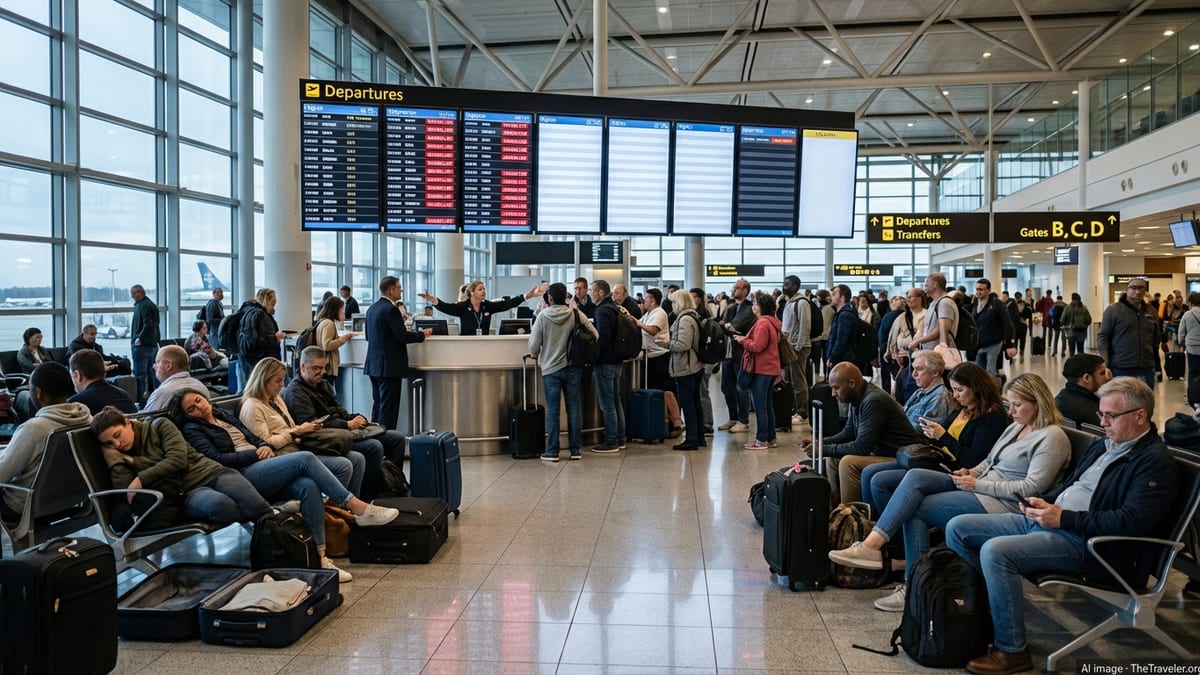
Global travel advisories on Iraq have intensified as regional conflict widens, airspace is repeatedly closed, and commercial passengers scramble to exit the country through a shrinking number of operational routes.
Get the latest news straight to your inbox!
Top-Level Warnings Hold Across Western Governments
Publicly available advisory data shows that Iraq remains subject to the highest tier of travel warnings across major Western governments, reflecting a convergence of concern over conflict spillover, drone and missile activity, and the potential for sudden transport shutdowns. The United States currently classifies Iraq at Level 4, the most severe category in its advisory system, with guidance that people should not travel to the country due to risks that include unrest, terrorism, kidnapping and the broader regional security environment.
Canada’s most recent travel advisory likewise urges people to avoid all travel to Iraq, citing an unpredictable security situation, the presence of armed groups and the possibility of further attacks on infrastructure and government-linked sites. The language used in Ottawa’s guidance aligns closely with that of other Western capitals, underlining that Iraq is viewed as part of a wider arc of instability stretching from the eastern Mediterranean to the Gulf.
In the United Kingdom, official travel advice continues to recommend against all or all but essential travel to most of Iraq, with particularly strict warnings for areas along the borders with Iran, Saudi Arabia and Kuwait. Updated material from the Foreign, Commonwealth and Development Office highlights the potential for cross-border incidents, including missile and drone activity linked to the evolving conflict involving Iran and its regional adversaries.
Travel advice from Switzerland, Australia and New Zealand follows a similar pattern, with government portals emphasising the risks of terrorism, civil unrest and regional hostilities that could affect both urban centres and critical transport nodes. While the terminology varies by jurisdiction, the core message is consistent: Iraq is currently considered an extremely high-risk destination for non-essential travel.
Regional Conflict Drives Airspace Closures and Airport Disruptions
A key factor behind the hardened stance on Iraq travel is the increasing frequency of airspace closures and airport disruptions driven by regional conflict dynamics. In recent weeks, Iraq’s civil aviation authorities have repeatedly announced temporary closures of national airspace to incoming, outgoing and overflying traffic, framed as precautionary steps during periods of heightened regional tension and security assessments.
Reports from regional outlets describe a pattern in which airspace shutdowns are triggered or extended around anticipated military activity, including missile launches and drone operations connected to the ongoing Iran-related conflict. These closures have grounded flights at short notice, rerouted international services and complicated efforts by airlines to maintain predictable schedules for passengers transiting Baghdad and other Iraqi airports.
Coverage from aviation-focused publications indicates that commercial operations at Baghdad International Airport have faced periodic suspensions and heightened security procedures as a result of drone strikes and rocket fire directed at installations in and around the airport complex. These incidents have reinforced perceptions among carriers and insurers that Iraq’s primary air gateways carry elevated risk, even during hours when the airspace is technically open.
Similar precautionary measures have been taken at other airports across the region, including in neighboring states, as authorities respond to concerns about potential spillover from the wider conflict. For travelers, this has translated into a volatile operating environment in which confirmed bookings can be disrupted or canceled with limited warning, particularly on routes crossing Iraqi airspace.
Embassy Alerts and Organized Departures Intensify
Security alerts issued by foreign embassies in Baghdad and Erbil have become more frequent as regional tensions have escalated. Recent public notices highlight the continuation of top-tier travel advisories and, in some cases, refer to earlier decisions to order the departure of non-essential diplomatic staff from Iraq. These moves are framed as responses to the risk of armed conflict, indirect fire near diplomatic compounds and the vulnerability of key transport corridors.
Public reporting from international news agencies describes how several governments have urged their citizens already in Iraq to leave while commercial options remain available. Such messages often emphasise that evacuation assistance may be limited or unavailable if the security situation deteriorates further or if airspace closures become more prolonged, reinforcing the urgency of voluntary departures.
Accounts shared by travelers and diaspora communities online point to an uptick in demand for outbound seats from Baghdad and other Iraqi cities during recent periods of tension. Some report difficulties in rebooking disrupted itineraries or securing alternative connections through neighboring hubs when Iraq’s airspace has been closed for extended intervals.
Humanitarian and risk-analysis organisations have also issued assessments warning that intensified conflict elsewhere in the region could have rapid second-order effects inside Iraq, including on civilian air travel and ground transport. These assessments stress that the country’s complex security landscape and the presence of multiple armed actors increase the likelihood that civilian movement could be restricted with minimal notice.
Travel Insurance, Routing Choices and Airline Responses
The elevated advisory levels for Iraq have significant implications for travel insurance coverage and airline routing decisions. Many mainstream insurers include clauses that limit or exclude coverage for destinations under top-tier government travel warnings, leading some prospective visitors and business travelers to report difficulties obtaining policies that would respond to incidents inside Iraq.
Industry commentary indicates that airlines and charter operators are closely tracking official advisories and airspace notices when planning routes through or near Iraqi territory. The recurring closures, combined with the risk of miscalculation in congested skies during periods of military activity, have prompted some carriers to detour around Iraq even when the airspace is technically open, adding time and cost to flights linking Europe, the Gulf and South Asia.
Aviation data shared in recent media coverage highlights how these route changes and suspensions interact with broader disruptions across the Middle East, where several countries have at times restricted airspace due to the same set of security concerns. For travelers attempting to leave Iraq, the result can be a patchwork of limited options that depend heavily on the operational status of nearby hubs and transit corridors.
As these dynamics play out, travel risk consultants and regional analysts have continued to underline that conditions can change quickly, and that a lull in visible attacks or a temporary reopening of airspace should not be interpreted as a broader stabilisation of the situation. Instead, they describe the current phase as one of elevated volatility in which periods of relative calm can be punctuated by sudden escalations.
Prospects for Travelers and the Tourism Sector
The tightening of global travel advisories and the pattern of recurring airspace closures have serious implications for Iraq’s nascent tourism and aviation sectors, which had begun to see renewed interest before the latest round of regional conflict. International coverage in recent years has highlighted efforts to promote cultural tourism to historic cities and religious sites, as well as to develop new air links with regional hubs.
Those initiatives are now constrained by the overarching security picture. With multiple major governments aligning around top-tier warnings and advising citizens to avoid or depart Iraq, tour operators and airlines targeting leisure or business travel to the country face a sharply reduced pool of potential customers and significant operational uncertainty.
For individual travelers, publicly available guidance stresses that any decision to remain in or travel to Iraq at this time involves a high degree of personal risk. Observers note that even well-informed visitors with local contacts and contingency plans may find themselves affected by factors beyond their control, such as sudden airport lockdowns, localised clashes or damage to critical infrastructure.
As regional tensions continue to evolve, Iraq’s place at the intersection of multiple conflicts leaves its transport networks and foreign visitor traffic particularly exposed. For now, the convergence of strong travel warnings, airspace restrictions and pressure on foreign nationals to leave points to a prolonged period in which discretionary travel to the country is likely to remain both difficult and strongly discouraged.