


More news on this day
Regional tensions linked to the latest US Iran confrontation have pushed many would-be visitors to Dubai and Abu Dhabi to reassess upcoming trips, even as flights and tourism infrastructure in the United Arab Emirates continue to operate.
Get the latest news straight to your inbox!
What official advisories say about travel to the UAE
As of late August 2026, the United States categorises the United Arab Emirates as a Level 3 destination, advising travellers to reconsider travel because of terrorism and the risk of armed conflict affecting transport and public places. The advisory cites the possibility of sudden changes to flight operations and security conditions, reflecting concern about the wider regional environment rather than specific incidents inside Dubai or Abu Dhabi.
Guidance from the United Kingdom’s Foreign, Commonwealth and Development Office continues to distinguish the UAE from neighbouring conflict zones while acknowledging regional risks. Recent updates highlight the need for travellers transiting or visiting Gulf hubs to monitor developments, particularly given missile activity and tensions around Iran and the Strait of Hormuz, but they do not advise against all travel to Dubai or Abu Dhabi.
Travel-industry bodies such as ABTA draw on these government advisories and recommend that travellers check the latest country-specific pages shortly before departure. Insurance providers have also updated policy wordings in recent weeks to clarify how cover may be affected by the Middle East conflict, underscoring that eligibility often depends on whether official advice restricts or permits travel to the UAE.
The overall picture from publicly available advisories is one of elevated caution rather than a formal prohibition on leisure or business travel. Travellers are being urged to stay informed, register with consular services where available and maintain flexible plans in case of rapid changes.
How Dubai and Abu Dhabi airports are operating
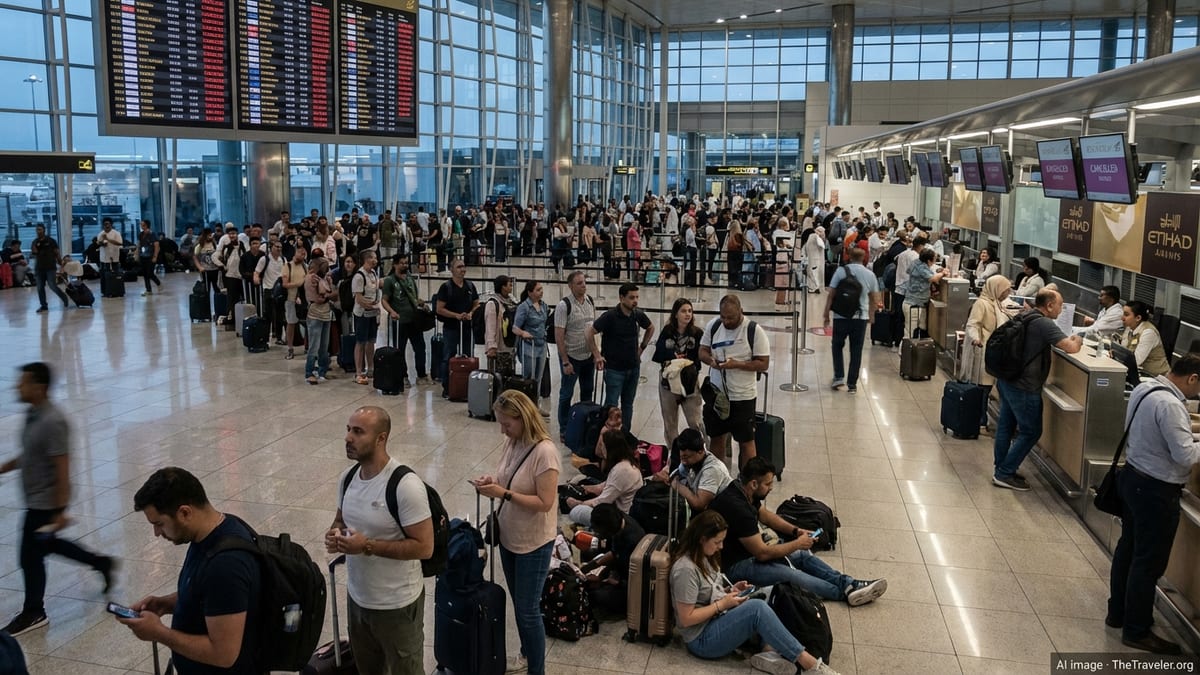
Dubai International and Abu Dhabi’s Zayed International Airport remain open and handling large volumes of passenger traffic. Reports from UAE media in early September describe both hubs as operational, but with intermittent delays and a limited number of cancellations as airlines adjust routings around higher-risk airspace and respond to shifting demand.
Coverage from regional outlets shows that major UAE carriers including Emirates, Etihad Airways, flydubai and Air Arabia continue to run substantial parts of their networks. Some services to and from nearby countries such as Iran, Bahrain and Kuwait have been reduced or suspended, while long-haul routes from Europe and Asia are being re-timed or re-routed, sometimes resulting in longer flight times or short-notice schedule changes.
Passengers connecting through Dubai or Abu Dhabi are being advised by airlines and airport notices to arrive earlier than usual, in some cases at least four hours before departure, to allow extra time for check in, security screening and possible congestion. Travellers are also being encouraged to use online check in and real-time flight status tools on the day of travel.
Separate logistics and aviation updates indicate that cargo operations into the UAE are facing capacity constraints and route diversions, but they continue to function. This has a limited direct impact on leisure travellers, although it reinforces that global supply chains and airspace management are still being reshaped by the conflict.
On-the-ground security conditions in Dubai and Abu Dhabi
Publicly available reporting does not indicate active fighting or direct attacks taking place inside Dubai or Abu Dhabi. The primary risks identified by foreign ministries and security briefings relate to terrorism, potential spillover from regional hostilities, and the possibility that strategic infrastructure in the Gulf could become a target in the event of further escalation.
Security awareness updates for the Gulf region repeatedly stress that large public areas, transport hubs, prominent hotels and popular attractions can be considered potential targets in the event of an incident. However, there have been no widely reported closures of major attractions in Dubai or Abu Dhabi tied specifically to the most recent round of tensions, and tourism operations continue with visible but routine security procedures.
Port advisories from earlier this year stated that ports across the UAE remained fully open with normal security postures despite maritime incidents elsewhere in the region. That assessment supports the broader view that, while the Gulf is affected by military and shipping risks, day-to-day life and commercial activity inside the Emirates continue largely as normal.
For individual visitors, the main practical implications are the need to remain attentive to local news, follow any security announcements in public places and be prepared for increased screening or temporary restrictions in response to international developments.
Airline and booking implications for travellers
International carriers have responded to the evolving situation in different ways. Some European low cost and full service airlines have suspended flights to Dubai and Abu Dhabi until at least October, according to airline statements summarised in financial and aviation news reports. Others, including leading Gulf-based airlines, have maintained operations while cancelling selected regional routes and building in routing detours.
Travel trade and aviation coverage emphasises that schedules can change at short notice, particularly for flights that overfly or connect to areas closer to active hostilities. This means that travellers with non flexible tickets may face disruption, with options depending on airline policies, the fare type purchased and whether services are formally cancelled or simply retimed.
Industry guidance suggests that travellers planning imminent trips should routinely check their booking status, ensure that the airline has up to date contact details and consider the value of travel insurance that specifically addresses disruption linked to conflict and airspace closures. Some policies issued after early September updates treat the current situation as a known event, which can limit cancellation benefits unless there is a new and material change.
For those yet to book, published advice from travel associations and insurers highlights the importance of reviewing fare conditions, including change fees and refund rules, and being realistic about the possibility of route adjustments or extended layovers in the coming weeks.
Practical safety advice for visitors considering the UAE
For travellers still deciding whether to go ahead with plans to visit Dubai or Abu Dhabi, the key question is how much risk is acceptable in an environment of elevated but managed tension. Government advisories currently frame the UAE as higher risk than it was prior to the latest round of conflict, yet they also acknowledge that airports, hotels and tourism services remain open and functioning.
Publicly available guidance encourages travellers to enrol in any relevant embassy alert systems, share itineraries and contact details with friends or family, and keep digital copies of passports and key documents. It also recommends maintaining a low profile, avoiding demonstrations or large political gatherings, and following the instructions posted by local transport providers and venue operators.
Special attention is being directed to those transiting the UAE to reach other destinations in the region. Travel associations advise building longer connection times into itineraries, monitoring whether onward flights to neighbouring countries are being reduced or suspended, and being prepared for last minute rerouting that may involve alternative hubs.
Ultimately, the available evidence depicts the UAE as a major aviation and tourism hub that is still open for business, but located in a region where conditions can change quickly. Travellers who choose to proceed are being urged to remain flexible, stay informed up to and including the day of departure and understand the implications of the current Level 3 advisory issued by the United States and the evolving guidance from other governments.