


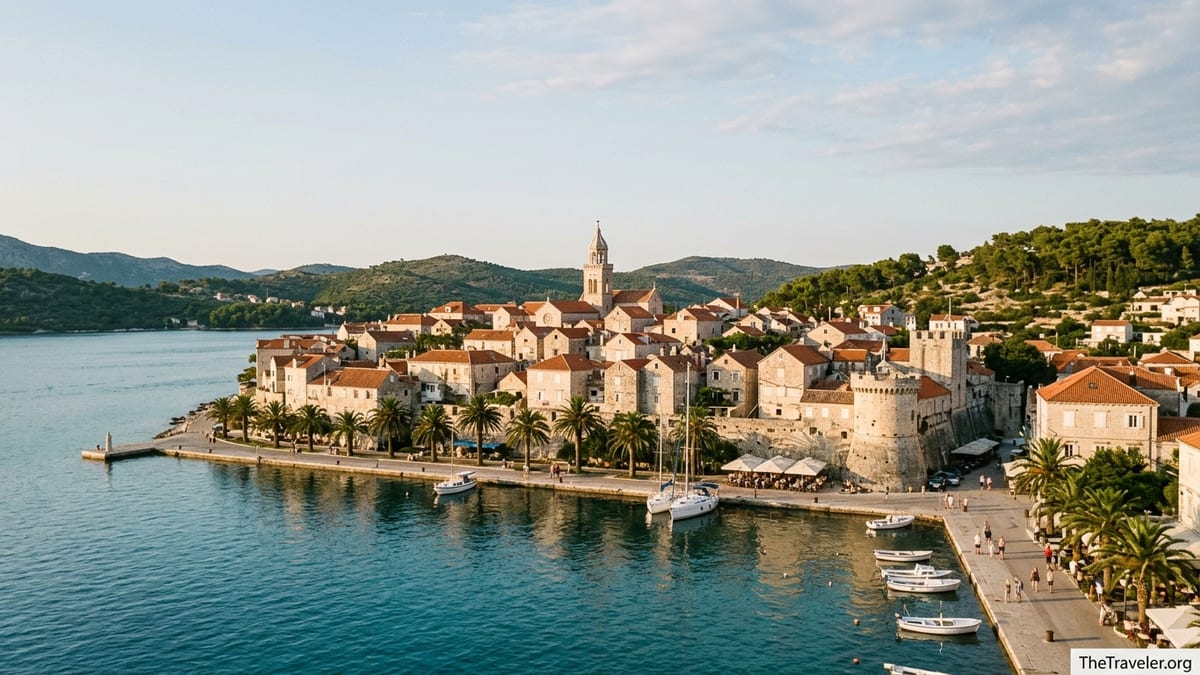
Korčula used to be the island people “discovered” by accident on their way between Split and Dubrovnik. Today, it is firmly on the radar, but still feels far calmer and more local than its headline neighbors. If you are debating whether to carve out time for Korčula instead of, or in addition to, Hvar, Brač or Dubrovnik, this guide walks through who will love it, how it compares in real life, what it costs, and how many nights to stay.
Get the latest updates straight to your inbox!
Who Is Korčula Really Good For?
Korčula is best for travelers who want a slower, more authentic Dalmatian island vibe rather than a high-octane party scene. Think long seafood lunches in stone-paved alleys, swimming from rocky coves into clear, bottle-green water, and evenings that feel like a small town rather than a festival. Couples in their late 20s to 50s, food and wine lovers, and families with school-age kids tend to be the happiest here. It works especially well in July and August if you want to escape the biggest crowds while still having plenty of restaurants and bars open.
If your ideal day is renting kayaks to explore islets, cycling through vineyards, or joining a small-boat trip to quiet bays, Korčula is a strong fit. For example, many visitors base in Korčula Town but head out with a local skipper from companies offering full-day trips that combine snorkeling, grilled fish lunches, and stops at tiny islets where you may only share the bay with a couple of other boats. Late afternoon is for a glass of local Pošip or Grk wine on the waterfront promenade rather than shots at a beach club.
On the other hand, if you want to party until 4 a.m. with big-name DJs or be surrounded by superyachts and designer boutiques, you will almost certainly be happier on Hvar. Korčula does have nightlife, but it is mostly wine bars, cocktail terraces, and a handful of low-key clubs that wrap up earlier. Solo travelers who are set on meeting lots of other backpackers their age may also find Hvar or Split a better primary base.
Budget-conscious travelers and those planning longer Croatia trips should also pay attention to Korčula. Average hotel rooms here often cost noticeably less than on Hvar or in Dubrovnik in peak season, and you can still find good-value apartment rentals in villages like Lumbarda or Račišće even in late July. Restaurant prices are not “cheap,” but they are often a step down from Dubrovnik’s old town, especially away from the most scenic waterfront spots.
Korčula vs Hvar, Brač and Dubrovnik: How They Actually Feel
Hvar, Brač, Korčula and Dubrovnik all sit on many of the same itineraries, yet the experience on each is quite different. Hvar Town is Croatia’s classic party island hub, with cocktails on its main square regularly hitting double figures in euros and beach bars where the sunset DJ sets roll straight into late-night dancing. You will see polished hotels, day beds with minimum spends, and speedboats ferrying people to the Pakleni island beach clubs. Korčula, by comparison, feels more intimate and lived-in: there are still boutique hotels and rooftop bars, but you are just as likely to see locals chatting outside their houses in the evening.
Brač, especially the town of Bol, is defined by its famous Zlatni Rat beach, a long white-pebble spit that appears on many Croatia postcards. It is fantastic for families and swimmers who want easy access to a big organized beach with rentals, showers and cafes right behind the pebbles. Nightlife on Brač exists, especially in Bol, but it is still more low-key than Hvar. When people compare Brač and Korčula, they often say Brač wins for a single iconic beach, while Korčula wins for atmosphere, historic town charm and wine culture spread across the island, rather than one specific spot.
Dubrovnik is a different category altogether: a walled medieval city on the mainland, not an island, dominated by day-trippers and cruise passengers in high season. Walking its famous walls at 8 a.m. can feel magical, but by mid-morning in July, the Stradun often feels packed. It has a small number of nearby beaches and sea-access spots, and some atmospheric bars on the cliffs, but beach life is not its main strength. Many travelers now choose to sleep on Korčula for several nights and visit Dubrovnik either for a long day trip or for one or two nights to experience the old town without making it their only coastal base.
In short, if you imagine your time on the Dalmatian coast as primarily “city plus excursions,” Dubrovnik is unmatched. If you picture your days as “swim, read, wine, repeat,” in a place that still feels like an island community, Korčula is more likely to deliver. Hvar adds the glamour and late nights, Brač brings a great signature beach and an easy hop from Split, while Korčula gives you a softer, more relaxed middle ground that works especially well when you are traveling between Split and Dubrovnik.
How Long to Stay on Korčula: 1 Night, 3 Nights, or a Full Week?
For most travelers, 3 to 4 nights on Korčula is the sweet spot. That gives you time to wander the medieval streets of Korčula Town, spend a full day lazing on a nearby beach, take at least one boat or wine-focused excursion, and still have an unplanned day for wandering or just napping under the pines. With 3 nights, you arrive in the afternoon or evening, have two full days on the island, then depart on the fourth day. With 4 nights, you add a full extra day that makes it worthwhile to venture further afield to places like the western port of Vela Luka.
If you are on a tight 7- to 10-day Croatia itinerary focused on highlights, a 2-night stay can work, especially if you are combining it with Hvar and Dubrovnik. In that scenario, one full day could be for Korčula Town and nearby swimming spots, while the second might be dedicated to a wine and beach day around Lumbarda. You will not see the whole island, but you will still get a good sense of its atmosphere and know whether you might want to return for a longer stay another year.
A longer visit of 5 to 7 nights makes sense for slow travelers, digital nomads escaping summer heat, and families who like to unpack once and settle in. People working remotely often choose an apartment in Lumbarda or just inland from Korčula Town, rent bikes or a scooter long-term, and treat the island like a seaside neighborhood for a week or more. With that much time you can explore smaller villages, watch the traditional sword dance performances in the evenings in summer, and discover your own favorite swim spots you are not sharing with many others.
Day trips to Korčula also exist, especially from Dubrovnik and from Pelješac Peninsula towns like Orebić. These often combine a quick walking tour of Korčula Town with a swim stop and lunch in a nearby bay. While this is better than skipping the island completely, it can feel rushed, and you will miss the special evening atmosphere when the excursion boats leave and the old town settles back into a quieter rhythm. If you are already coming as far south as Dubrovnik and have any flexibility, choosing at least one overnight on the island tends to be a much more rewarding experience.
Beaches and Swimming: What to Expect on Korčula
Korčula has a mix of rocky coves, pebble beaches and a few rare sandy stretches, which are unusual for Croatia. The best-known sandy area is around Lumbarda, a village about 10 to 15 minutes by road from Korčula Town. Beaches like Pržina and Bilin Žal are shallow, soft underfoot, and particularly popular with families who want children to be able to play at the shoreline. A typical day there might involve renting sun loungers, grabbing a plate of grilled fish or calamari from a simple beach restaurant, and watching kids paddle in waist-deep water.
Closer to Korčula Town you will mostly swim from rocky platforms or small pebble coves carved into the shoreline. Spots like Banje Beach and the stretch around Sveti Nikola offer easy access to clear water just a short walk from the old-town walls. Many visitors also hop on a short water taxi or rent kayaks to reach the tiny islets just off the town, where you can find simple beach bars and quieter swimming bays shaded by pine trees. These mini-excursions feel like a softer, more low-key version of the Pakleni islands off Hvar, with fewer crowds and lower prices for drinks.
Compared with Hvar, Korčula’s beaches are generally less developed as club destinations and more about relaxed swimming. You will not find the same level of DJ-driven beach parties or large day-bed setups with high minimum spends. Compared with Brač’s Zlatni Rat, Korčula does not have one “wow” beach that dominates Instagram feeds, but it offers a wider spread of bays and coves that are easier to enjoy without booking ahead or fighting for space in peak weeks. For strong swimmers and snorkelers, the water quality around Korčula is excellent, though you should expect mostly pebbles or rocks underfoot outside the Lumbarda area.
For travelers planning shoulder-season visits in May, June, September or early October, the beaches around Korčula stay appealing even when the sea is a little cooler. Water taxis and excursion boats still operate on a reduced schedule, and the lack of beach clubs means the atmosphere does not depend on big summer crowds. It is easy to find yourself alone or sharing a quiet cove with a few other people, particularly if you walk or cycle a little away from the main town in the morning or late afternoon.
Prices, Value for Money and When to Visit
Korčula tends to sit in the middle of the Dalmatian price spectrum. In the peak of summer, typical mid-range hotel rooms here can easily run to low or mid hundreds of euros per night, but often still come in below comparable properties in Dubrovnik’s old town or Hvar Town’s waterfront. Apartment rentals remain a strong value play, especially in villages such as Lumbarda, Žrnovo or Račišće, where you can sometimes rent a simple but comfortable one-bedroom near the sea for less than a basic hotel room in July and August.
For day-to-day spending, a coffee on a central square in Korčula Town might be a couple of euros, while a scoop of gelato or a glass of local house wine stays within a moderate range by Western European standards. A casual dinner of grilled fish, salad and a carafe of wine at a mid-range konoba for two people might come to a reasonably affordable total, especially if you eat a bit back from the waterfront. By contrast, ordering cocktails at a high-profile terrace bar in Dubrovnik or Hvar Town often costs significantly more for a similar view of the Adriatic.
Timing your visit has a major impact on how expensive Korčula feels. Late June through August is peak season, when ferries are fullest, nightlife is liveliest, and accommodation prices reach their highest levels. If you can travel in late May, early June, or September, you will usually find lower room rates, more relaxed restaurant availability, and still-warm sea temperatures. Even October can be rewarding on sunny years, especially for hikers and cyclists who do not mind slightly cooler water.
It is also worth considering that some Dubrovnik and Hvar costs are not just about prices on menus but about the overall environment. In those destinations, you may feel nudged more often toward high-end experiences such as sunset charter boats, luxury transfers or multi-course tasting menus. On Korčula, it is easier to spend most of your days in simple pleasures: buying fruit from a local stand, tasting wine in a family-run cellar, or renting bikes for a fraction of the cost of an organized tour.
Nightlife and General Island Atmosphere
Korčula’s nightlife is often described as “lively but not wild.” In Korčula Town you will find several wine bars tucked into stone alleys, a handful of cocktail terraces with sea views, and a couple of small clubs or late-night bars where music plays into the early hours during July and August. A typical evening out might start with local white wines like Pošip or Grk at a bar on the old-town walls, continue with dinner at a konoba, and end with a nightcap at a bar overlooking the harbor.
Compared with Hvar Town, which has become famous for beach parties, open-air clubs and a distinctly glamorous crowd, Korčula feels more grown-up and more mixed in age. You will see groups of friends in their 20s, but also couples in their 40s and 50s and local families out for an evening stroll. There are no large-scale beach clubs around Korčula Town in the style of Hvar’s Hula Hula or Carpe Diem, and the music scene is more about live bands and DJs in small venues than big-ticket performers.
A defining element of Korčula’s atmosphere is its sense of being a real place first and a resort second. Outside the height of August, you will often hear Croatian spoken around you in shops and cafes, see children going to school in the mornings, and notice everyday life unfolding alongside tourism. Events such as traditional sword dances in the old town and local wine and food festivals add a cultural dimension that makes evenings feel more than just another round of cocktails.
For travelers who enjoy a “glass of wine and good conversation” kind of evening, Korčula usually feels just right. If you are the type who wants to jump from pre-drinks to bar to club until sunrise, you may find the island quiet after the first night or two and will likely be happier staying in Hvar Town or using Split as your nightlife base while visiting Korčula earlier in the trip for balance.
Getting to Korčula and Building It into Your Itinerary
Korčula is well connected by passenger ferries, especially in the main summer months. Fast catamarans link it with Split, Hvar, Brač, Dubrovnik and nearby mainland ports such as Orebić, often with several departures per day in July and August. For example, many travelers sail south on a morning catamaran from Split, stopping at Hvar on the way and reaching Korčula Town by early afternoon, then continue later in their trip on another fast boat towards Dubrovnik. Journey times vary, but the route fits naturally into a north-to-south Dalmatian itinerary.
If you are driving, car ferries run from the Pelješac Peninsula, with the crossing from Orebić to Korčula taking only a short time. Many people choose to park their car on the mainland and travel to Korčula as foot passengers, using local buses, taxis, bikes or scooters to get around once on the island. This can save money and hassle, especially if your accommodation is in Korčula Town’s historic center where parking is limited.
A common pattern for first-time visitors is to fly into Split, spend a couple of nights there, then travel by catamaran to Hvar for 2 or 3 nights, move on to Korčula for 3 or 4 nights, and finish with 2 or 3 nights in Dubrovnik before flying home. Others might skip Hvar and instead combine Brač and Korčula, using Split as a flexible ferry hub. Because connections between these islands are frequent in summer, you can usually choose departure times that do not eat an entire day, leaving room for a swim or stroll after you arrive.
When planning, remember that ferry timetables change with the seasons, and services are less frequent in spring and autumn. If you are traveling in May or October, it is smart to check which routes run on your exact dates and to build in an extra buffer night in Split or Dubrovnik in case of weather-related cancellations. During July and August, popular departures can sell out, so buying tickets in advance once your itinerary is set is wise, especially for Friday and weekend sailings.
The Takeaway
So, is Korčula worth visiting? For most travelers looking for a balance of historic charm, swimmable coves, good food and wine, and a calmer atmosphere than Croatia’s biggest hotspots, the answer is yes. It works particularly well if you are already planning to move between Split and Dubrovnik and want an island stay that feels more like a lived-in town than a curated resort. You will trade some of Hvar’s headline nightlife and Brač’s signature beach for quieter evenings and a more spread-out, exploratory style of beach-hopping.
Ideal stays are usually 3 to 4 nights, long enough to get beyond the ferry pier and find your own favorite waterfront bar or cove, but the island also rewards a longer, slower visit. If you picture your Croatia trip as swimming in clear water, tasting local white wines at sunset and wandering medieval alleys without shoulder-to-shoulder crowds, Korčula is likely to be one of the most memorable stops on your route. If your priorities are huge clubs, luxury shopping or a single blockbuster beach, you may be happier basing yourself on Hvar, Brač or in Dubrovnik and visiting Korčula as a gentler interlude.
FAQ
Q1. Is Korčula worth visiting if I have already booked Hvar or Brač?
Yes, if you have time for at least 2 to 3 nights, Korčula adds a calmer, more historic island experience to balance Hvar’s nightlife or Brač’s beach focus. Many travelers report that the combination of one livelier island and a more relaxed Korčula makes their overall Croatia trip feel more rounded.
Q2. How many days should I spend on Korčula?
Three to four nights is ideal for most visitors. This gives you two or three full days to explore Korčula Town, enjoy at least one dedicated beach day and fit in a wine or boat excursion without rushing. Shorter stays can work on tight itineraries, but you will see less of the island.
Q3. Is Korčula good for nightlife?
Korčula has a pleasant but fairly low-key nightlife scene. Expect wine bars, cocktail terraces and a couple of small clubs in peak season rather than the big open-air parties and famous DJs you might find in Hvar Town. It suits people who like social evenings without needing to stay out until dawn.
Q4. Are Korčula’s beaches sandy?
Most of the island has pebble or rocky beaches with very clear water. However, the area around Lumbarda, a short drive from Korčula Town, has rare sandy stretches such as Pržina and Bilin Žal, which are especially popular with families and people who prefer soft sand underfoot.
Q5. Is Korčula cheaper than Hvar and Dubrovnik?
Generally yes, especially for accommodation and some dining options. While waterfront spots in Korčula Town can still be pricey in July and August, mid-range hotels and apartments often cost less than similar options in Hvar Town or inside Dubrovnik’s old walls, and everyday expenses such as drinks are often more moderate.
Q6. Is Korčula a good choice for families?
Korčula is very family-friendly, especially for school-age children. The island feels safe, traffic is limited in the old town, and sandy, shallow beaches in Lumbarda are ideal for kids. The quieter nightlife compared with Hvar also means evenings are more relaxed for families.
Q7. Can I visit Korčula as a day trip from Dubrovnik or Split?
In peak season there are fast ferries that make long day trips technically possible from Dubrovnik and, with more effort, from Split. However, you will only have a few hours on the island. Staying at least one night is recommended so you can enjoy the old town in the evening when day-trippers depart.
Q8. Is Korčula better for couples than Hvar or Brač?
For many couples who prefer relaxed evenings, good food and wine, and exploring cobbled streets, Korčula is an excellent choice. Hvar suits couples who want more nightlife and beach-club energy, while Brač works well for those prioritizing big, organized beaches like Zlatni Rat. Korčula sits in the middle, with a romantic old town and quieter vibe.
Q9. Do I need a car on Korčula?
You do not need a car if you plan to stay mainly around Korčula Town and nearby beaches, as local buses, taxis, bikes, boats and scooters can cover most needs. A car becomes more useful if you want to explore distant villages or stay in more remote parts of the island, but parking can be limited in the historic center.
Q10. When is the best time of year to visit Korčula?
The most popular months are June through September, when ferries run often and the sea is warm. July and August are busiest and most expensive. Late May, early June and September can offer a great balance of pleasant weather, swimmable water, open restaurants and more manageable crowds, with prices often lower than at peak summer.