


Perched on a forested hill above Ljubljana’s old town, Ljubljana Castle is the city’s most recognizable landmark and one of Slovenia’s busiest attractions. But if you only have a day or two in the capital, you may wonder if the climb or funicular ride, ticket price, and time commitment are really worth it. The answer depends on what you enjoy most when you travel: views, history, food, or simply soaking up a city’s atmosphere from above. This guide uses current prices, recent visitor impressions, and on-the-ground logistics to help you decide whether Ljubljana Castle deserves a spot on your itinerary.
Get the latest updates straight to your inbox!
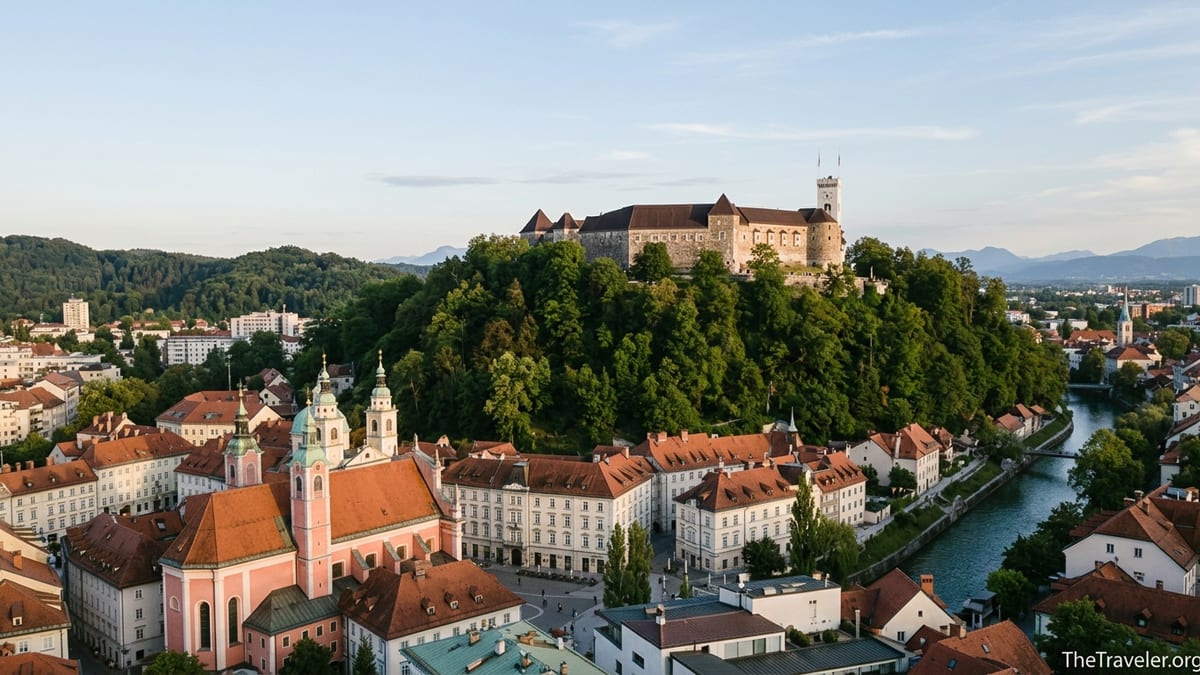
What Ljubljana Castle Actually Offers Today
Ljubljana Castle is not a single museum but a compact complex of courtyards, towers, exhibitions, restaurants and event spaces on Castle Hill directly above the old town. A funicular railway, opened in 2006, links the historic center with the castle in about one minute, while forested walking paths and a narrow access road provide alternative ways up. The castle itself is a mix of medieval, Baroque and 20th‑century restoration, so visitors find more of a lived-in cultural hub than a perfectly preserved fortress.
The core historic appeal is the Viewing Tower and the Slovenian History Exhibition. The tower gives a 360‑degree panorama over the red roofs of Ljubljana, the Ljubljanica River and, on clear days, distant Alpine peaks. The history exhibition traces the territory’s story from prehistoric times through the Habsburg era, Yugoslavia and independent Slovenia. There is also a small but well-regarded Museum of Puppetry, reflecting Slovenia’s long puppet-theater tradition, and a multimedia "Virtual Castle" show that reconstructs the fortress through the centuries.
Beyond museums, the grounds host seasonal concerts, open-air cinema nights in summer, weddings, and corporate events. Two main restaurants, including the fine-dining Restavracija Strelec and the more traditional Gostilna na Gradu, along with cafés and a wine bar, mean you can turn a visit into a full evening out. For many travelers, the combination of view, exhibitions and the chance to linger over a glass of local wine is what makes the castle feel worthwhile rather than just another historic monument.
Importantly, the complex is open year-round. Current official information indicates the castle itself generally opens at 9:00 and closes at 18:00 in the cooler months and 20:00 in late spring and summer, while the funicular runs into the evening, typically until 19:00 in winter and 22:00 in summer. Opening hours can shift slightly for special events or holidays, so it is sensible to confirm the exact schedule shortly before your visit, especially if you plan to go late in the day.
How Much a Visit Really Costs
As of spring 2026, a standard “Castle Ticket” that includes the main attractions (Viewing Tower, Slovenian History Exhibition, Museum of Puppetry and Virtual Castle) costs around 15 euros for adults. If you want a combined ticket that includes both the attractions and a return ride on the funicular, the price is about 19 euros. Reduced tickets for children from 7 to 18, students, seniors and groups start around 10.5 euros without the funicular and 13.5 euros with it. Family tickets for up to two adults and at least one child cost roughly 36 euros (castle only) or 46 euros (castle plus funicular).
These prices are for self-guided access. If you prefer a regular guided tour that bundles commentary with your castle entry, current adult prices are about 19 euros for the tour and castle, or 23 euros including the funicular. Families pay in the region of 46 to 55 euros for guided options, depending on whether the funicular is included. Specialized experiences like the "Escape Castle" game, which combines puzzle-solving with castle entry, are typically priced per person and start near the high teens or low twenties in euros.
The funicular on its own also has a standalone price. A simple return ticket currently costs around 6 euros for adults and 4.5 euros for youths, students and seniors, with one-way journeys about half that. Families pay roughly 15 euros for a return family ticket. Since the ride is only one minute long, some budget-conscious visitors choose to walk up and only buy an admissions ticket to the exhibitions, or even skip the paid areas entirely and just enjoy the free courtyards and viewpoints.
For a concrete comparison, imagine a couple visiting in May. If they walk up, buy a combined Castle Ticket with all exhibitions but without the funicular, they would spend about 30 euros together. If they prefer the funicular both ways and a guided tour, the cost would rise to approximately 46 euros. Add a mid-range dinner for two in Gostilna na Gradu, where mains might start around 18 to 25 euros, plus a shared dessert and wine, and an evening at the castle can easily reach 120 to 150 euros in total. Travelers on tighter budgets can keep costs closer to 10 to 20 euros per person by walking, limiting themselves to the basic castle ticket or simply enjoying the free areas.
Views, Atmosphere and Why Many Travelers Say It Is Worth It
For many visitors, the deciding factor is not the exhibitions but the view. From the Viewing Tower and certain sections of the walls, Ljubljana spreads out like a model city. The emerald curve of the Ljubljanica River cuts through the old town, triple and dragon bridges are clearly visible, and the modern districts stretch toward low hills and, in good weather, the white line of the Alps. Photographers often plan their visit for late afternoon, when the light softens and the city’s pastel facades look especially warm.
Recent visitor comments frequently mention how compact and walkable everything feels from above. Travelers who have only a few hours in the city use the castle as an orientation point, spotting key landmarks and then heading back down with a mental map of where they want to wander next. Others highlight the calm of the forested hilltop: even though the castle is heavily visited, you can often step away from the crowds onto a quieter path just outside the main walls and look down on the old town from a shaded bench.
Atmosphere plays a big role in making the castle feel worth the time. In summer, the central courtyard can host open-air film screenings, concerts or theatre performances. Imagine arriving by funicular at dusk, strolling past the illuminated walls, then settling into a folding chair under the stars as a film or concert begins. In December, the castle is often lit with festive decorations, and mulled wine stands appear, making an evening visit part of the city’s winter celebrations.
Many travelers also mention the novelty of combining a bit of culture with good food and wine in a historic setting. Having a tasting of Slovenian wines in the castle’s wine bar, then lingering over coffee while looking out across the rooftops, is a very different experience from a quick museum visit. For couples, the setting frequently ends up as a highlight of a romantic city break. For families, the views and open spaces give children room to move while parents enjoy the scenery, although some younger kids may tire of the historical content more quickly.
Exhibitions, Museums and Who Will Enjoy Them Most
The exhibitions inside Ljubljana Castle are well curated but selective. The Slovenian History Exhibition is the main interpretive space and tends to appeal to travelers who like to understand the wider story of the place they are visiting. Panels and multimedia explain how the region evolved from prehistoric settlements to Roman times and then into the medieval, Habsburg and Yugoslav periods. It does not rival a national museum in depth, but for an hour or so it gives context that makes walks around Ljubljana’s streets more meaningful.
The Museum of Puppetry, created in cooperation with Ljubljana Puppet Theatre, is a surprise favorite for many visitors. It showcases decades of Slovenian puppet art, with historic marionettes, stage sets and video clips of performances. Families with children often report that this is where kids become engaged, especially if there are interactive elements available during their visit. Adults interested in theatre or visual arts generally find it more charming than they expected from the name alone.
The Virtual Castle is a short multimedia presentation that reconstructs the fortress through different eras, using projections and sound effects. It can be a helpful introduction if you have limited background in Slovenian history, although some visitors feel it is skippable if you already plan to do the main exhibition or are short on time. For detail-oriented travelers, guided tours led by local staff or contracted guides can knit together these various elements and point out small architectural details you might otherwise miss, such as coat-of-arms stones or changes in masonry that reveal phases of construction.
On the other hand, travelers who are mainly interested in grand palace interiors or extensive collections of arms and armor may find Ljubljana Castle relatively modest compared to major European fortresses. There are no endless galleries of original furniture or lavish royal apartments on the scale of Prague Castle or Vienna’s Hofburg. The site leans more toward clear, modern interpretation and flexible event spaces than toward fully reconstructed medieval life. If your priority is staging elaborate castle photos or immersing yourself in richly decorated halls, your expectations should be adjusted accordingly.
Getting There, Accessibility and How Much Time to Allow
Reaching Ljubljana Castle is straightforward. From the old town, many visitors take the funicular, whose lower station sits near the riverside and central market. The ride itself lasts about one minute, gliding up the steep hillside to emerge just inside the castle complex. The funicular cabins are enclosed and suitable for all weather, and they are particularly handy for travelers with mobility issues, people carrying luggage, or anyone short on time.
Walking up is a popular option for active visitors. Several short trails lead from the old town to the castle, typically taking 10 to 20 minutes depending on your starting point and fitness level. One route begins near the city hall, climbing steadily through the trees with occasional glimpses of the rooftops below. Another path starts closer to the river and zigzags up through a small park. The incline can be steep in places, and the cobbles may be slippery after rain, but for many people the walk becomes part of the experience, especially on a clear spring or autumn day.
Once at the top, the amount of time you need depends on what you choose to do. If you only want to wander the free courtyards, take in the city views from the walls and maybe grab a coffee, 45 minutes to an hour can be enough. For a full visit that includes climbing the Viewing Tower, exploring the Slovenian History Exhibition and the Museum of Puppetry, and watching the Virtual Castle show, most travelers report spending between two and three hours. Add a sit-down lunch or dinner and you can easily spend half a day on the hill.
Accessibility inside the complex is mixed. The funicular makes the castle hill itself accessible, and some exhibitions and restaurants are reachable without stair climbing. However, the Viewing Tower and certain walls require ascending narrow staircases that are not suitable for everyone. Surfaces in the courtyards are mostly cobbled or stone, which can be uneven. If accessibility is a concern, it is worth checking the most current information directly with Ljubljana Castle and planning which parts of the visit are realistic for your needs.
Food, Drink and Special Experiences at the Castle
Food is a major part of the castle experience for many travelers. Restavracija Strelec, set in one of the castle’s towers, has become known as a destination restaurant in its own right. Diners praise the multi-course tasting menus that reinterpret Slovenian dishes with fine-dining techniques, along with Slovenian wine pairings and views over the city. Dinner here can be a splurge, making the castle not only a sightseeing stop but also the centerpiece of an evening out in Ljubljana.
For something more casual, Gostilna na Gradu serves traditional-style Slovenian food in a relaxed castle setting. Typical offerings might include dishes like beef or venison stews, local cheeses and cured meats, seasonal vegetable plates and desserts with regional fruits or walnuts. Prices here are generally lower than at Strelec but higher than a basic old-town café, reflecting the location and quality of ingredients. A meal for two with drinks can still be significant in the context of a daily travel budget, so some visitors opt for a lighter snack or coffee instead.
The castle’s café and wine bar are attractive options if you want to enjoy the setting without committing to a full meal. You might order a glass of local white wine from the Primorska or Podravje regions, or sample an orange wine that reflects Slovenia’s growing natural wine scene, and sip it while looking down over the river and market below. In warmer months, outdoor seating in the courtyards is popular; in winter, indoor spaces with views provide a cozy vantage point over the icy rooftops and fog that sometimes curls around the city.
Occasional special experiences can change the feel of a visit entirely. For example, taking part in the "Escape Castle" game with friends turns the complex into a puzzle-filled adventure as you follow clues through various rooms. Attending an evening concert or a DJ set during a festival gives the courtyards a lively, almost club-like atmosphere inside centuries-old walls. Couples sometimes book the castle for weddings or photo sessions; even if that is not your plan, you may witness a bridal party crossing the cobbles when you visit, a reminder of how closely the castle is woven into modern city life.
When Ljubljana Castle Might Not Be Worth It
Despite its popularity, Ljubljana Castle is not the right choice for every traveler or every trip. If you are extremely short on time and only have a few hours in Ljubljana, you might decide that a leisurely walk along the river, coffee at a café in Prešeren Square, and a quick look at the dragon statues on Dragon Bridge give you a better sense of the city’s street-level charm than a dedicated visit up the hill.
Budget is another consideration. While the castle is not unusually expensive by Western European standards, the combination of funicular tickets, admissions and a meal can feel steep if you are traveling on a tight daily allowance or as a larger family group. Some visitors choose to skip the paid exhibitions and instead walk up, wander the free areas and take photos from the accessible viewpoints. They still enjoy the atmosphere and views without committing to a full-price ticket.
Travelers who have visited many European castles sometimes report that Ljubljana Castle feels less dramatic or less historically immersive than fortresses in places like Scotland, Germany or Spain. The heavy 20th-century restoration means parts of it appear quite modern, and the interior emphasizes flexible cultural spaces over meticulously reconstructed medieval rooms. If your heart is set on exploring a crumbling, romantic ruin or a richly furnished royal residence, you may prefer to allocate more time to nearby day trips, such as the storybook clifftop setting of Bled Castle or the dramatic cave-side Predjama Castle, which offer very different atmospheres.
Finally, weather can dramatically affect whether the visit feels worth it. On a cloudy day with low fog, the famous views may be largely obscured, and much of the courtyard experience depends on being comfortable outdoors. In winter or during rain, you can still enjoy the exhibitions and indoor restaurants, but if your main goal was panoramic photography or sunset drinks, it may be wiser to time your castle trip for clearer conditions or accept that you will get a more subdued experience.
The Takeaway
So, is Ljubljana Castle worth visiting? For most travelers, the answer is yes, provided you tailor the visit to your interests and budget. The castle delivers three main rewards: sweeping views over one of Europe’s most charming small capitals, a concise introduction to Slovenian history and culture, and the chance to enjoy food and drink in a memorable hilltop setting. When these align with what you value in a trip, the time and ticket price are usually justified.
If you enjoy city panoramas, appreciate learning how places evolved, or like to punctuate your sightseeing with a glass of wine in a scenic spot, you will likely come away glad you made the ascent. Travelers who build the castle into a relaxed afternoon or evening, rather than rushing through it, often describe it as a highlight of their time in Ljubljana. Families who combine the Viewing Tower, Museum of Puppetry and some unstructured courtyard playtime generally find it a good use of a few hours.
On the other hand, if your stay in Ljubljana is extremely short, your budget is very tight, or your priority is more dramatic castles or nature-focused day trips, you may decide to limit your time at the castle to a quick, mostly free visit or skip the interior altogether. The key is to decide what you want most from the city and let that guide how much money and time you allocate to Castle Hill.
In practical terms, planning a visit outside of peak midday hours, checking the latest opening times, and deciding in advance whether you want to pay for exhibitions or just wander the grounds will help make the experience smoother. Approached thoughtfully, Ljubljana Castle can be far more than a postcard backdrop: it can be the vantage point from which the rest of your journey in Slovenia comes into focus.
FAQ
Q1. Is Ljubljana Castle free to visit?
The castle courtyards and some outdoor viewpoints are free to enter, but the Viewing Tower, main exhibitions and multimedia shows require a paid ticket.
Q2. How much does it cost to visit Ljubljana Castle in 2026?
Expect to pay around 15 euros for a standard adult castle ticket and about 19 euros if you include a return funicular ride, with discounts for children, students and seniors.
Q3. Do I need to book Ljubljana Castle tickets in advance?
Most visitors buy tickets on the day at the castle or funicular station. Advance booking is mainly useful in peak summer or for guided tours and special events.
Q4. How long should I plan for a visit to Ljubljana Castle?
If you just want views and a quick walk around the courtyards, allow about an hour. For the tower, exhibitions and a relaxed drink or meal, plan two to three hours.
Q5. Is the funicular to Ljubljana Castle worth it?
The funicular is convenient and scenic, especially for those with limited mobility or time. Fit travelers on a budget often prefer the short, pleasant walk up through the trees.
Q6. Can I visit Ljubljana Castle in bad weather?
Yes. The exhibitions, Virtual Castle and restaurants are indoors, but poor weather will limit city views and make outdoor courtyards less comfortable.
Q7. Are there good places to eat at Ljubljana Castle?
Yes. Restavracija Strelec offers fine dining with views, while Gostilna na Gradu and the castle cafés and wine bar provide more casual options.
Q8. Is Ljubljana Castle suitable for children?
Families often find the Viewing Tower and Museum of Puppetry engaging for children, though some younger kids may lose interest in the more detailed history exhibits.
Q9. What is the best time of day to visit Ljubljana Castle?
Late afternoon toward sunset is popular for softer light and city views. Mornings outside peak season are usually quieter if you want fewer crowds.
Q10. How does Ljubljana Castle compare with other castles in Slovenia?
Ljubljana Castle is the most accessible and urban, with strong city views and cultural events. Bled and Predjama castles feel more dramatic if you prefer wild or storybook settings.