


If you have had your fill of Naples’ frenetic streets and want a laid-back day by the sea without committing to the more crowded and expensive Amalfi Coast, Miseno often appears as a tempting dot on the map. Just beyond Pozzuoli in the Campi Flegrei area, this small coastal town promises broad sandy beaches, views of Ischia and Procida, and walks on a volcanic headland. But is Miseno really a good day trip from Naples for beach lovers and nature seekers, or should you look elsewhere along the bay?
Get the latest updates straight to your inbox!
Where Is Miseno and What Kind of Place Is It?
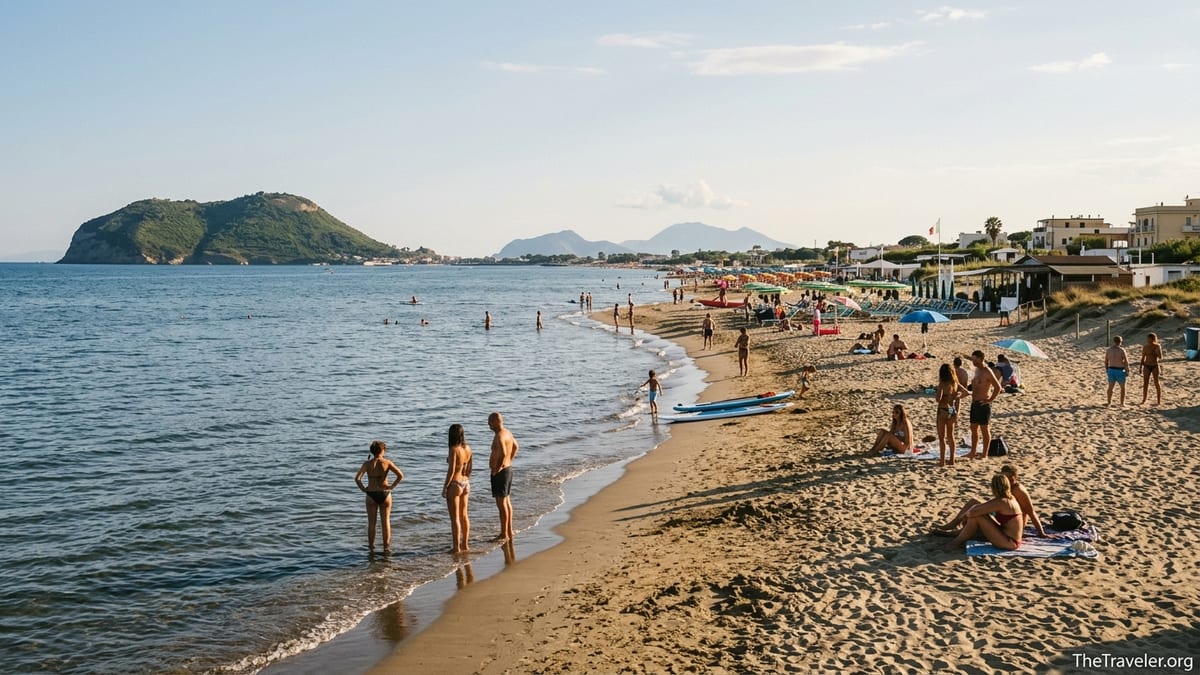
Miseno sits in the municipality of Bacoli, on the northwestern edge of the Bay of Naples, roughly 25 kilometers from central Naples. It lies in the Campi Flegrei volcanic area, where low hills, craters and lakes form an amphitheater around the sea. Today it feels more like a local seaside town than a high-profile resort, with a strip of modern beach clubs, fishing boats in the small harbor and pastel apartment buildings climbing gently up the slope behind the waterfront.
The coastline here is defined by a long, fine-sand beach that curves from the bay of Miseno to neighboring Miliscola, backed by low dunes and a scatter of lido establishments. Out to sea, the islands of Procida and Ischia sit on the horizon, and on clear days you can trace the line of the Sorrento Peninsula and even glimpse Capri in the distance. For context, the scene is quieter and less vertical than Positano, and far less developed with high-rise hotels than the Sorrento waterfront.
Historically, this unobtrusive town was once a key strategic point of the Roman Empire. The natural harbor at Miseno served as the main naval base for the western imperial fleet, and the area was thick with seaside villas and elaborate water systems. Today, most visitors come not for the history but for an easy beach day in reach of Naples, and then discover that Roman remains, craters and underwater ruins sit just a few minutes away around the bay in Baia and Bacoli.
Because Miseno remains outside the main international tourism circuits, the crowd you encounter is mostly Italian: Neapolitan families escaping the city heat, teenagers meeting at the lidos, retirees on early-morning walks. This gives the town a lived-in, local feel that can be appealing if you are looking for authenticity rather than luxury, but it also means services are designed primarily around regional day trippers.
Reaching Miseno From Naples: Practical Transport Tips
For a day tripper without a car, the most common route from Naples to Miseno combines the local Cumana railway and a short bus ride. From Napoli Montesanto station in the historic center, the Cumana line runs west toward the suburbs and out to Torregaveta. From there, a regional bus, often labeled 102 or similar depending on current schedules, continues along the coast and stops near Via Miliscola and the Miseno beach area. Travelers report this route taking around 70 to 90 minutes door to door, depending on connections and traffic.
Tickets remain relatively inexpensive by European beach-town standards. Cumana rides tend to be in the low single digits in euros for a one-way ticket, similar to local metro rides within Naples, and the connecting bus fare is usually just a bit more. It is sensible to buy your rail ticket before boarding at Montesanto and to have cash or a contactless card ready for the bus, since smaller coastal stops may not have bilingual staff or clear signage. Services can be crowded in July and August, especially on weekends when Neapolitans head to the lidos in large numbers.
Several times in recent summers, the municipality of Bacoli has operated seasonal shuttle services between major parking areas such as Baia or Cuma and the beaches of Miseno and Miliscola, with some routes offered free of charge to reduce traffic to the seafront. While these shuttles mainly serve drivers who park inland, they illustrate that the local authorities expect heavy demand on sunny weekends. If you are relying on public buses, aim to travel early in the morning and avoid the mid-afternoon return crush if possible.
Driving from Naples is straightforward in terms of navigation, following the coast-road toward Pozzuoli and Bacoli, but parking near the sand often becomes a major headache in high season. Private car parks spring up along the main access roads and can charge noticeably higher prices at peak times. If you are staying in central Naples without a rental car, the train-and-bus option is often less stressful than attempting to park at the beach yourself.
What Beach Lovers Will Actually Find at Miseno and Miliscola
The main attraction for most visitors is the continuous strip of sand that runs from Spiaggia di Miseno to Spiaggia di Miliscola. Together they form one of the longest sandy beaches in the Campi Flegrei area, with a shoreline that feels broad and open compared with the pocket coves of the Amalfi Coast. The sand is generally golden and fine, sloping gently into the water, which makes it suitable for families with young children who prefer to wade rather than navigate steep drops.
Most of the waterfront is occupied by stabilimenti balneari, or private beach clubs, which rent sun loungers and umbrellas by the day and provide showers, changing cabins, restrooms and bars. Prices vary by establishment and season, but it is common in recent years to find a pair of sunbeds and an umbrella costing somewhere in the range that Italian families routinely pay along the Tyrrhenian coast, with weekend and August prices at the upper end. Some clubs offer discounted afternoon rates after a certain hour, while others include extras such as paddleboard rental or a simple lunch menu.
For those watching their budget, stretches of public beach still exist between the lidos, though they can be narrower and fill up quickly. On busy summer Sundays it is not unusual to see towels laid out almost edge to edge on the free sections by late morning. On weekdays in June or early September, by contrast, the atmosphere can be considerably more relaxed, with more room to spread out and clearer water after the weekend crowds depart.
The sea here is typically calm, sheltered by the curve of the bay and the nearby islands. Regular maintenance of the lido areas tends to keep the main bathing zones relatively clean, but conditions can vary after storms or during heavy-use weekends. The backdrop is distinctly urban-beach rather than wild bay: music from beach bars, rows of parasols, lifeguard stands and snack kiosks selling iced coffee and panini. Travelers looking for a social, local beach scene are likely to enjoy it; those seeking a secluded, silent shore might find it busier and more built up than they imagined.
Nature and Views: Capo Miseno, Lago Miseno and Nearby Landscapes
Beyond the lidos, Miseno holds more appeal for nature-minded visitors than a first glance from the bus window might suggest. The headland of Capo Miseno, a volcanic promontory that closes the bay, offers walking routes with expansive views over the Gulf of Naples. From paths on the slopes and near the lighthouse, you can look back toward the city of Naples and Vesuvius on one side and out toward Procida, Ischia and the open Tyrrhenian Sea on the other. Local hiking enthusiasts often recommend this short hike as a way to see the bay from a different angle without committing to the more rugged trails farther south.
Miseno is also bordered inland by Lago Miseno, a brackish coastal lake once used by the Romans as part of their naval base. Today, it forms a calm water basin separated from the sea by the strip of sand that carries the modern road. Birdlife can be surprisingly rich here, particularly outside peak beach hours, and the combination of lake, dunes and sea gives the area a layered, semi-natural feel even though urban development is never far away.
Public green spaces have had a mixed history. A public park overlooking the sea, for example, has at times been partially neglected, with reports of rusted gates or incomplete redevelopment. That said, guided nature walks organized by local associations still highlight the headland and surrounding environment as a small-scale sanctuary for coastal vegetation and migratory birds within the broader Campi Flegrei landscape. If your primary interest is dramatic, untouched nature, you may prefer more extensive reserves like the Cilento coast, but for a half-day escape from Naples, Capo Miseno’s panoramas can be a memorable surprise.
One advantage for travelers is how easily this coastal scenery combines with nearby archaeological and geological sights. Within a short bus or taxi ride of the beach lie attractions such as the ancient cistern of Piscina Mirabilis, the partially submerged Roman ruins of Baia and various volcanic craters. This means nature seekers who also appreciate culture can design a varied day that mixes a morning swim, an afternoon walk on the headland and an early evening visit to an archaeological park before heading back to Naples.
Combining Beach Time With History and Underwater Archaeology
For many visitors, what turns Miseno from a simple beach into a worthwhile day trip is the density of historical sites close by. The Roman city of Misenum was once the heart of the imperial fleet, and traces of that era dot the landscape. In nearby Bacoli, the vast underground cistern known as Piscina Mirabilis shows how the Romans stored water for the ships anchored in the bay, with a forest of stone pillars and vaulted ceilings preserved beneath a modern neighborhood.
Just around the bend at Baia, an extraordinary marine protected area preserves the remains of luxurious Roman villas, streets and bath complexes that sank over time due to volcanic subsidence. The Parco Archeologico Sommerso di Baia is often described by Italian tourism officials as one of the most important underwater archaeological parks in the world, with mosaic floors, statues and port structures now lying several meters beneath the surface. Visitors can experience this site through guided dives for certified scuba divers, snorkeling tours or glass-bottom boat excursions that glide above the ruins.
These experiences are not available directly off Miseno’s main bathing beach, but operators in Baia and Bacoli frequently serve travelers who base themselves on the Miseno coast for the day. A typical combined itinerary might see you arrive on the beach by mid-morning, secure sunbeds, swim until early afternoon, then take a short taxi or bus ride to Baia for a late-afternoon boat tour over the submerged city before returning to Naples in the evening.
On land, the Parco Archeologico delle Terme di Baia showcases multi-level Roman bath complexes cut into the hillside, with views back toward Capo Miseno and the sea. The small but photogenic Casina Vanvitelliana, an 18th-century hunting lodge on Lake Fusaro nearby, offers another scenic stop with a very different atmosphere from the crowded Neapolitan streets. All of these sites sit within roughly a 15- to 20-minute reach of Miseno by local transport or taxi, making the area appealing to travelers who like to mix beach time with culture.
When Miseno Works Best, and When It Might Disappoint
Miseno tends to work best for travelers who want a low-key, relatively affordable beach day within reach of Naples and do not mind a local, sometimes hectic atmosphere. If your ideal day involves renting a couple of loungers at a family-run lido, ordering espresso and a brioche at the bar, taking long swims in calm water and watching the sun drop behind the outline of Ischia, Miseno is likely to satisfy. The views across the bay and the long, shallow shoreline make it especially appealing for families and casual swimmers.
On the other hand, beach lovers seeking crystal-clear turquoise coves, dramatic rock formations and photogenic cliffs may feel underwhelmed. Miseno is more open sandy bay than postcard-perfect cove, and heavy use in peak summer can mean crowds, busy parking areas and music from multiple beach bars at once. Water clarity is generally good enough for swimming, but it does not have the sparkling, secluded feel of some lesser-known Amalfi or Cilento inlets or the volcanic coves on Capri.
Nature seekers should set their expectations accordingly. While Capo Miseno offers genuine viewpoints and short hikes, the overall setting is semi-urban. You share the landscape with apartment blocks, roads and typical coastal development rather than being enveloped in wilderness. If you dream of extensive coastal trails with no buildings in sight, this corner of the Campi Flegrei may feel modest in scale.
Season and timing matter a great deal. Visiting on a sunny but not scorching weekday in late May, June or September can reveal Miseno at its best: space to enjoy the sand, manageable noise levels and pleasant water temperatures. On August weekends, by contrast, traffic jams, full car parks and tightly packed rows of umbrellas are common. For a first impression, many travelers find that catching an early train and bus from Naples, arriving by 9 or 10 in the morning and leaving before sunset crowds try to exit all at once, leads to a more enjoyable day.
Planning Your Day Trip: Sample Itineraries From Naples
To decide whether Miseno suits your style, it helps to imagine a realistic daily schedule. A straightforward beach-focused day might begin with breakfast in Naples, then a mid-morning Cumana train from Montesanto toward Torregaveta, followed by the connecting bus to Miseno. You arrive around 10:30, pick a mid-range lido where two loungers and an umbrella are priced similarly to other Italian seaside towns, and settle in for a few hours of swimming, sunbathing and people-watching. A simple lunch of seafood pasta or a caprese salad at the beach bar keeps you on the sand rather than searching inland for restaurants.
In the mid-afternoon, as the sun begins to soften, you could pack up your towels and walk or take a short ride toward the base of Capo Miseno for an easy hike up to a viewpoint above the lighthouse. From here, you watch ferries move between the islands, trace the curve of the bay and take in a panorama of Naples and Vesuvius that helps you understand the geography of the region. Returning to town, you may stop for a gelato before catching the bus back to Torregaveta and the train into Naples in time for a late dinner.
For a mixed beach-and-culture day, consider an early start from Naples aiming to reach Miseno by about 9:30. Spend the morning swimming and relaxing, then around 14:00 take a taxi or local bus to Baia. There, you might visit the hillside archaeological park of the Roman baths, then join a late-afternoon glass-bottom boat tour over the submerged ruins of the ancient resort city. Afterward, you can enjoy an aperitivo at a bar overlooking the small marina and catch an evening bus toward the rail connection back to Naples.
Travelers with a strong interest in Roman history might reverse the order: morning visit to Piscina Mirabilis and Baia’s archaeological sites, followed by a late-afternoon swim at Miseno to cool off. Because transport connections are local and sometimes infrequent, allowing extra time between activities and checking current schedules once in Naples or Bacoli is crucial. Planning loosely around the heat of the day, when you will appreciate shade and water the most, can help you enjoy the area rather than racing from stop to stop.
The Takeaway
So, is Miseno a good day trip from Naples for beach lovers and nature seekers? For many travelers, the answer is yes, provided you know what to expect. Miseno and neighboring Miliscola deliver one of the most accessible broad sandy beaches from Naples, with calm, swimmable water, a lively local lido culture and views of the bay’s volcanic arc and islands. Add in the short hikes on Capo Miseno and the nearby Roman and underwater archaeological sites at Baia and Bacoli, and you have the ingredients for a fulfilling day that combines sea, landscape and history.
At the same time, Miseno remains very much a local seaside strip rather than a polished international resort or untouched nature reserve. Crowds, cars and music are part of the experience in high season, and the scenery feels more gently urban than dramatically wild. If your dream day revolves around simple pleasures on the sand, an authentic south Italian atmosphere and the chance to look back at Naples from the far side of its bay, Miseno can be an excellent choice. If you crave postcard-level drama or deep solitude, you may want to treat Miseno as one stop among several along the Campania coast rather than your only taste of the Tyrrhenian Sea.
FAQ
Q1. Is Miseno really worth visiting as a day trip from Naples?
Yes, Miseno is worthwhile if you are looking for an easy beach escape with a long sandy shoreline, local atmosphere and nearby archaeological sites rather than luxury resorts.
Q2. How long does it take to reach Miseno from central Naples by public transport?
Allow roughly 70 to 90 minutes using the Cumana train from Montesanto to Torregaveta and then a local bus to the Miseno and Miliscola beach area.
Q3. Are there free public sections of beach at Miseno, or do I have to pay for a lido?
There are free public stretches between beach clubs, but they can be narrow and busy in summer, so many visitors opt to pay for a lido with sunbeds and facilities.
Q4. Is Miseno suitable for families with children?
Yes, the gently sloping sandy seabed, calm bay and availability of services like showers, restrooms and snack bars make Miseno popular with local families.
Q5. Can I hike or enjoy nature near Miseno, or is it only about the beach?
You can walk up the Capo Miseno headland for broad views over the Gulf of Naples and explore the lakeside and volcanic landscape of the surrounding Campi Flegrei area.
Q6. How crowded does Miseno get in summer?
On July and August weekends, Miseno can be very crowded, with packed trains and buses, full parking lots and closely spaced umbrellas; weekdays and shoulder seasons are calmer.
Q7. Are there good snorkeling or diving opportunities near Miseno?
Basic snorkeling is possible from the beach, but the most interesting underwater experiences are at the submerged archaeological park in nearby Baia, accessible by organized tours.
Q8. Is Miseno cheaper than the Amalfi Coast for a beach day?
In general, transport, sunbed rentals and food around Miseno tend to be more affordable than in the main Amalfi Coast towns, attracting many budget-conscious day trippers.
Q9. Can I combine Miseno with a visit to Procida or Ischia in a single day?
Logistically it is difficult to fit both Miseno and an island visit into one relaxing day, so most travelers choose either the islands or Miseno and Baia for a focused trip.
Q10. What is the best time of year to plan a Miseno beach day from Naples?
Late May, June and September usually offer warm weather and swimmable water with fewer crowds than peak August, making them ideal months for a Miseno day trip.