


Planning a French Riviera escape usually conjures images of summer heat, beach clubs in Cannes and late sunsets over the Mediterranean. Yet one of the coast’s biggest events explodes not in July, but in the depths of winter: the Nice Carnival. As one of the world’s major carnival celebrations, it draws hundreds of thousands of visitors to Place Masséna and the Promenade des Anglais each February. The question for many travelers is simple: is it worth building an entire Riviera itinerary around this event, or is it better left to locals and carnival obsessives?
Get the latest updates straight to your inbox!
What Exactly Is the Nice Carnival?
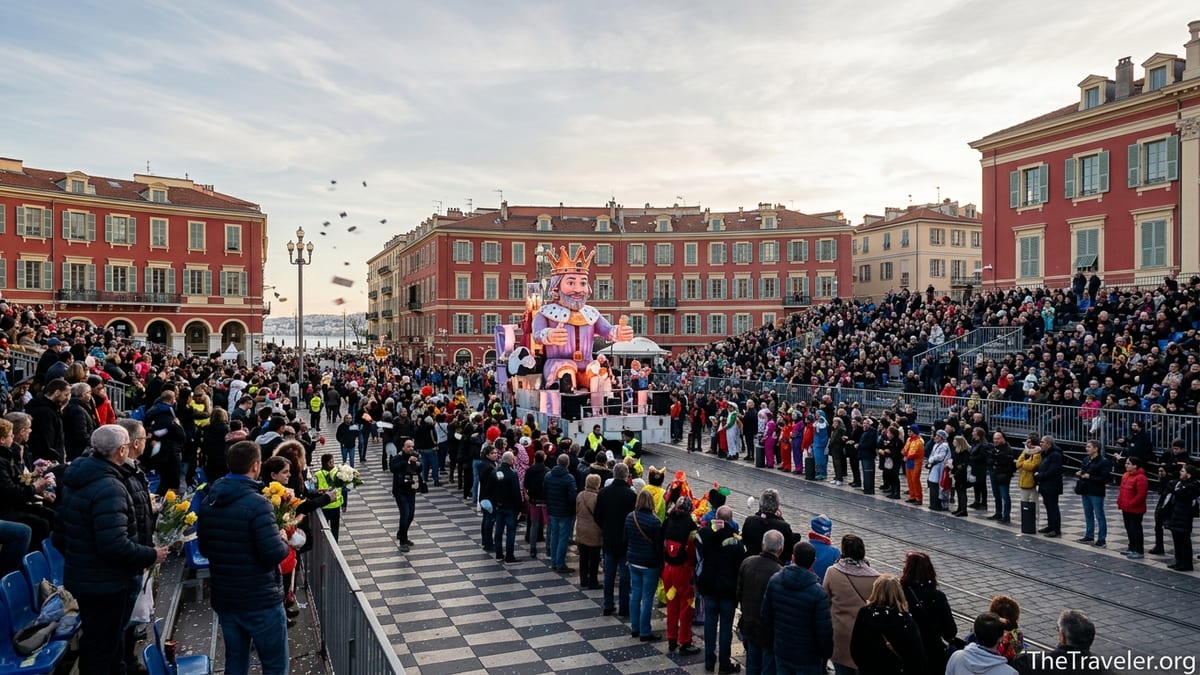
The Nice Carnival, or Carnaval de Nice, is one of the world’s longest-running carnival celebrations, with written references dating back to 1294. Modern editions typically stretch across a little more than two weeks in February and early March, transforming central Nice into a dense program of parades, light shows, and street performances focused around Place Masséna and the Jardin Albert 1er. Organizers often choose an overarching theme, such as “King of the Oceans,” with giant satirical floats, costumed performers and illuminated decorations built around that year’s idea.
During the carnival period, visitors can usually expect two main types of ticketed events. The first are the “Corso Carnavalesque” parades, both by day and at night, featuring enormous puppets, brass bands and performers weaving slowly through the city center. The second are the famous “Batailles de Fleurs,” or flower battles, daytime parades in which elaborately decorated floats shower the crowds with locally grown flowers, especially mimosa. Both happen multiple times across the festival, which means even short-stay visitors have a good chance of catching at least one major event.
While the core parades are ticketed, the atmosphere spills far beyond the parade route. On carnival evenings, you will find street musicians in the Old Town, families in costume along the Promenade des Anglais and food stalls clustered near key entrances. For many travelers, those informal moments are as memorable as the main shows, and they do not require anything more than a stroll and a warm jacket.
Crucially, the Nice Carnival is not a small local fair. Tourism authorities highlight that it regularly attracts hundreds of thousands of spectators and is considered the largest winter event on the Côte d’Azur. For anyone debating whether it is “worth it,” that scale alone changes what Nice feels like in February compared with a quiet, off-season city break.
Dates, Weather and How Carnival Fits a Riviera Itinerary
The Nice Carnival usually takes place in mid to late February, occasionally stretching into early March depending on the movable dates of Shrove Tuesday. For example, the 2024 edition ran from mid February to early March, and recent programs for 2025 show events scheduled from around February 12 through early March. If you are planning a broader French Riviera trip, this means you will be traveling in deep winter, not shoulder season. Your packing list and expectations should reflect that.
Weather in Nice in February is mild by European standards but decidedly not beachy. Long-term averages show daytime highs around 11 to 13 degrees Celsius, with lows around 5 degrees. Some years bring crisp blue skies and seven or more hours of sunshine per day; others are cloudier with short bursts of rain. The Mediterranean stays cold, around 13 degrees, making swimming realistic only for hardy locals in wetsuits rather than most visitors looking for a dip. You will want layers, a warm scarf for evening parades and comfortable shoes that can handle wet pavement if a shower rolls through.
In a wider Riviera itinerary, carnival pairs well with coastal day trips where scenery, villages and food matter more than swimming. A typical one-week February plan might include three nights in Nice for carnival events, one day visiting nearby hilltop Èze and Monaco by train, and two or three nights in Cannes or Antibes to explore quieter old towns and coastal paths. While resorts like Saint-Tropez can feel sleepy in winter with many beach clubs closed, core hubs such as Nice, Cannes and Monaco remain active and well connected by rail, so you are not sacrificing basic convenience by coming in February.
The trade-off is clear. If your dream of the French Riviera centers on warm sea swims, boat trips and rooftop cocktails at 9 p.m., carnival season will not match that fantasy. If instead you are drawn to festivals, cooler weather sightseeing and smaller crowds at museums like the Matisse Museum or the Picasso Museum in Antibes, timing your trip around Nice Carnival can turn a simple winter city break into a marquee event.
What Does It Actually Cost to Experience Nice Carnival?
For many readers, the decision comes down to money. Compared with visiting Nice on an ordinary February weekend, carnival introduces new costs in tickets and potentially in accommodation, although it still tends to be cheaper than peak summer. As a rough guide, recent editions have priced grandstand seats for the main parades somewhere in the range of 25 to 40 euros per adult, depending on whether it is a daytime corso, a nighttime illuminated parade, or a flower battle. Standing or “promenoir” tickets along the route are usually cheaper, often in the high teens to low twenties. Children and students may see discounted rates, sometimes around half of adult prices, especially for family-oriented daytime events.
For a couple wanting one flower battle and one illuminated night parade from the comfort of grandstand seats, it is realistic to budget roughly 120 to 160 euros total in tickets. Families can plan for more, but might mix one seated event with a standing-area experience to keep costs in check. Tickets for the most popular nights, such as opening and closing parades, can sell out weeks in advance, particularly in the seated tribunes. Travelers posting in online forums for the 2026 edition reported that by early February, most grandstand tickets for key dates were already gone, leaving only standing options, a useful reminder to book early if sitting is important for older travelers or anyone with mobility issues.
Accommodation is the other big variable. Carnival coincides with the low tourist season for beach holidays, but demand in Nice still spikes for these specific weeks. A central three-star hotel near Place Masséna that might cost around 90 to 120 euros per night in a normal February can edge closer to 130 to 170 euros on peak carnival weekends. Well-located apartments on major rental platforms also show noticeable increases compared with early January or late March. To keep costs reasonable, some visitors base themselves a short tram or train ride away, for instance staying near Nice Riquier station, in the Libération neighborhood, or even in nearby Antibes or Cagnes-sur-Mer and commuting in for parade nights.
Day-to-day expenses otherwise resemble travel at any time on the Riviera, perhaps with a small festival premium near the route. A glass of wine or beer at a casual bar away from the main square typically runs 5 to 7 euros, while a simple plat du jour lunch in a local bistro might be 16 to 20 euros. Food stalls set up around the carnival zone sell snacks like socca, crêpes and sandwiches at slightly elevated prices, but you can easily step a few streets back into the Old Town to find more typical menus. In practice, the biggest “extra” you pay to experience Nice Carnival is in event tickets rather than dramatically higher everyday costs.
The Atmosphere: How Nice Carnival Feels On the Ground
Descriptions of Nice Carnival sometimes conjure images of wild, all-night revelry similar to Rio de Janeiro or New Orleans. In reality, the feel on the ground is significantly more mixed and in many ways more family-friendly. The main parades follow a carefully controlled route around Place Masséna and along the Promenade des Anglais, surrounded by security barriers and controlled entrances where bags are checked. Inside, there is plenty of noise and color, from thundering drums and brass bands to confetti cannons and costumed dancers, but the overall tone is festive rather than chaotic.
Families with children form a large share of the crowd at daytime events, particularly the flower battles and the newer kid-focused parades, where performers throw armfuls of mimosa and gerbera daisies into the stands. It is common to see toddlers dressed as tiny lions or superheroes seated on parents’ laps in the grandstands, and groups of local teenagers in simple masks roaming the standing areas with bags of confetti. For many visitors, that mix of locals and tourists is precisely what makes the event feel authentic rather than purely staged for outsiders.
The nighttime illuminated parades push the energy up a notch, with floats glowing under spotlights and bands performing louder sets, but they still end at a reasonable hour, often by 10:30 or 11 p.m. Compared with late summer nights in Nice, there may actually be fewer rowdy bar scenes outside the immediate carnival zone, as winter temperatures encourage most people back into bars, bistros and hotels once the final float passes. Travelers who want a more adult evening can easily pair an early dinner in the Old Town or on Rue Masséna with a night parade and then finish with a cocktail at a wine bar or a stroll along the Promenade des Anglais.
One aspect first-time visitors sometimes underestimate is how much the city beyond the barriers continues its normal life. While traffic patterns and some bus routes adapt to closures during parade times, daytimes outside the events see regular markets in Cours Saleya, relaxed promenades along the seafront and cafes open as usual. You could spend the morning visiting the Russian Orthodox Cathedral or the Chagall Museum with only subtle hints that one of Europe’s biggest carnivals is setting up just a few blocks away, then cross into a completely different ambiance once security opens the parade zone in the afternoon.
Pros and Cons: When Nice Carnival Is Worth It (and When It Isn’t)
Whether Nice Carnival is “worth experiencing” depends heavily on your travel style, tolerance for crowds and what you hope to get out of a French Riviera trip. For festival lovers, photographers and families, the benefits are straightforward. You gain access to a major cultural event that showcases local creativity, from the giant papier-mâché figures lampooning world leaders to the orange and yellow mimosa garlands sourced from nearby hills. Instead of a sleepy winter city break, you get fireworks, music and a calendar of events almost every other day, without the oppressive heat and peak-season prices of August.
Consider a couple visiting from London for a long weekend in mid February. Without carnival, their days might be filled with museum visits, long lunches and short coastal walks, pleasant but relatively quiet. With carnival, they can still fit those activities in, but they also have a choice of a Friday night illuminated parade, a Saturday flower battle, and a Sunday side trip to Monaco, all within the same three days. For photographers in particular, the combination of low winter light bouncing off parade floats and the pastel architecture of Place Masséna can produce far more dramatic images than a standard blue-sky beach panorama.
On the other hand, travelers seeking solitude may find the barriers, bag checks and crowds somewhat intrusive. During the busiest evenings, especially on opening and closing nights, it can take longer to move through the center, and popular restaurants around Place Masséna and Cours Saleya may require reservations or have queues. If your idea of an ideal Riviera trip is lingering over quiet sunsets, reading on near-empty terraces and wandering through almost deserted streets, a non-carnival week in January, March or April could suit you better.
There are also practical drawbacks. Security is tight, and items such as glass bottles, bulky backpacks or certain objects may be restricted inside the parade zone. Sudden rain showers can dampen both mood and confetti, and while parades often continue in light rain, heavy weather may cause changes in timing. Finally, for anyone with mobility challenges or sensory sensitivities, the combination of loud music, bright lights, standing crowds and stepped grandstands requires advance thought. In those situations, carefully chosen seats at a quieter daytime flower battle, booked early, can make the difference between a magical experience and a stressful one.
Planning Tips to Make Carnival Fit Smoothly Into Your Trip
If you decide the Nice Carnival belongs in your French Riviera itinerary, a few concrete planning steps will maximize enjoyment and minimize frustration. First, lock in accommodation early, ideally three to six months in advance if you want a central hotel or apartment. Staying within a 10 to 15 minute walk of Place Masséna makes it much easier to slip back to your room between events, drop off extra layers, or avoid crowded trams after night parades. Areas like the Carré d’Or, the edge of the Old Town near the opera, and streets just north of the main square strike a good balance between access and noise, though you should expect some late-evening sound spillover on big nights.
Second, buy tickets directly from the official channels or recognized partners as soon as your travel dates are firm. Decide which kind of experience you want: grandstand seating for a more relaxed view, or standing areas for a closer feel of the action at a lower price. Families with young children and older relatives generally appreciate the convenience of seats, while younger travelers often prefer the flexibility of promenoir access. If you are budget-conscious, consider attending just one ticketed event, then soaking up the rest of the carnival vibe from free public spaces and smaller happenings around town.
Third, plan your non-carnival sightseeing around the parade schedule. On a day with an evening illuminated corso, spend the morning visiting the Matisse Museum in the Cimiez neighborhood and strolling through the olive groves nearby, then enjoy a late afternoon coffee before heading through security for the parade. On a day with a mid-afternoon flower battle, keep the morning light with a walk along the coastal path toward Villefranche-sur-Mer or a tram ride to the Libération market, then arrive at the stands about 45 minutes early for a smoother entry. Thinking of your days as built around one focal event helps avoid the feeling of rushing from one thing to another.
Finally, pack with February conditions in mind. In practice, that means a warm but packable jacket, a scarf, closed shoes that can handle being stepped on in crowds, and something waterproof in case of showers. Thin gloves can make a real difference during a long night parade when you are holding a camera or phone. Even though it is winter, bring sunglasses; the low Mediterranean sun bouncing off white floats and confetti can be surprisingly intense, especially during flower battles.
The Takeaway
So is the Nice Carnival worth experiencing during a French Riviera trip? For many travelers, the answer is yes, provided expectations are aligned with reality. You are not signing up for a beach vacation with a side of carnival, but for a winter city break anchored by one of Europe’s largest and most historic festivals. You will trade swimming and sun loungers for jackets and confetti, yet gain access to a spectacle that locals have been perfecting for centuries.
If you enjoy lively events, street performances and the feeling of a city collectively throwing itself into celebration, then timing your Riviera itinerary to catch even one or two days of Nice Carnival can transform your trip. With careful planning around tickets, accommodation and weather, the festival becomes less of a logistical headache and more of a highlight, one that pairs surprisingly well with quiet coastal walks, museum visits and slow lunches by the sea.
On the other hand, if your primary goal is tranquil seaside relaxation or you dislike crowds and security checks, you may be happier visiting the French Riviera a few weeks before or after carnival, when Nice returns to a more subdued winter rhythm. The beauty of the region is that both options exist. Carnival simply adds a vivid, once-a-year layer that, for many visitors, turns a pleasant stay into a genuinely memorable story.
FAQ
Q1. When does the Nice Carnival usually take place?
The Nice Carnival generally runs for a little over two weeks in mid to late February, sometimes stretching into early March, with specific dates announced about a year in advance.
Q2. Is the Nice Carnival suitable for children and families?
Yes, it is very family-friendly, especially the daytime flower battles and certain parades designed with children in mind, where costumes, confetti and music create a playful atmosphere.
Q3. How far in advance should I book tickets and accommodation?
Booking three to six months ahead is sensible for central hotels and popular parade dates, particularly if you want seated grandstand tickets, which can sell out weeks before the event.
Q4. What should I wear to the parades in February?
Plan for mild but cool winter weather: comfortable closed shoes, warm layers, a jacket, scarf and possibly thin gloves for evening events, plus something waterproof in case of showers.
Q5. Do I need tickets to enjoy the carnival atmosphere?
Tickets are required for access to the main parade routes and stands, but you can still enjoy much of the festive atmosphere in surrounding streets, cafes and public areas without a ticket.
Q6. Is visiting during carnival much more expensive than a normal winter trip?
Event tickets add a clear extra cost and central accommodation can be pricier than in early January, but overall it is usually less expensive than visiting in peak summer.
Q7. Can I combine Nice Carnival with visits to other Riviera towns?
Yes, efficient regional trains make it easy to base in Nice for the carnival and take day trips to places like Antibes, Cannes, Monaco and Èze between events.
Q8. How crowded does Nice get during carnival?
The city is noticeably busier around parade times, especially in the evening near Place Masséna, but outside event hours many neighborhoods, markets and museums remain pleasantly uncrowded.
Q9. Is Nice Carnival a good idea for travelers who dislike big crowds?
If you strongly dislike crowds, you may prefer quieter weeks, but choosing seated daytime events and avoiding opening and closing nights can offer a more relaxed experience.
Q10. Is it safe to attend the Nice Carnival?
Security is taken seriously, with bag checks and controlled access to parade areas; as with any major event, staying aware of your belongings and following local guidance is recommended.