


Most visitors know Eixample as the neighborhood of Sagrada Família and designer flagships along Passeig de Gràcia. But this vast, gridded district is far richer than its two headline acts. Walk a few blocks off the main arteries and you find quiet chamfered corners, markets where neighbors still greet each other by name, Modernisme masterpieces with barely a queue, and bars where the bartender will remember your order by the third round. This guide focuses on the best things to do in Eixample beyond Sagrada Família and Passeig de Gràcia, with practical, real-world suggestions you can plug straight into an itinerary.
Get the latest updates straight to your inbox!
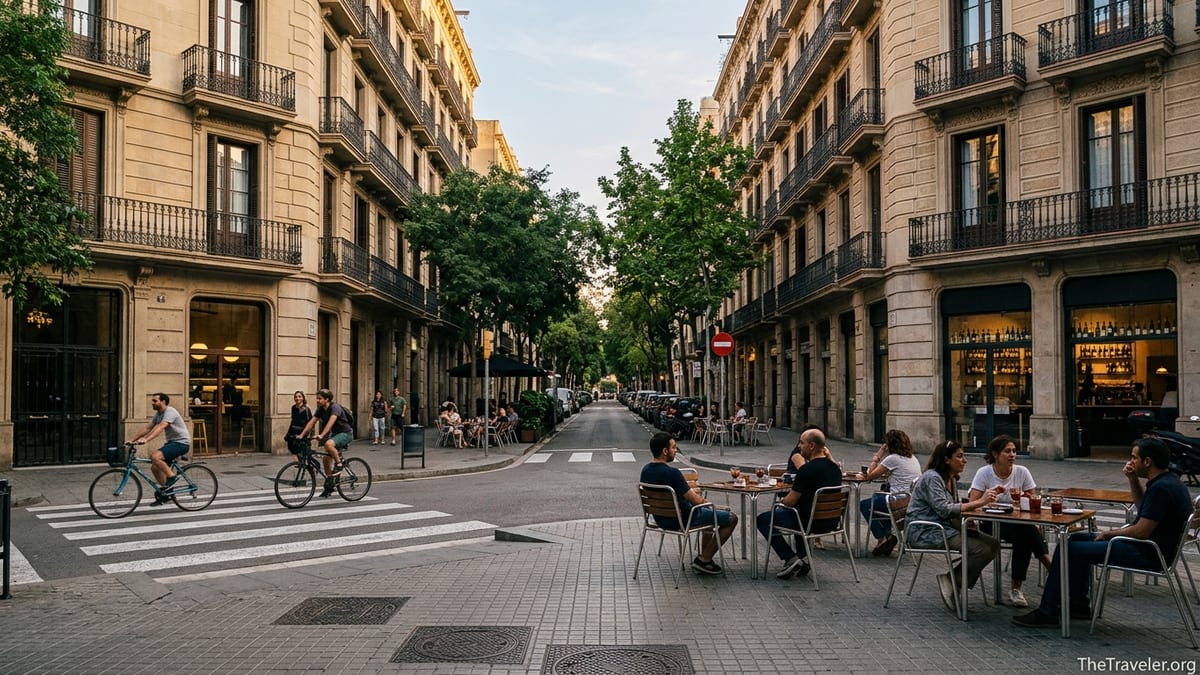
Get Lost in Everyday Eixample Streets
Eixample was designed in the 19th century as Barcelona’s expansion beyond the medieval walls, with a geometric grid, airy courtyards and characteristic chamfered corners that open up the crossroads. Today, some of the most rewarding moments come from exploring the quieter stretches between the big sights. Start around Plaça de Mossèn Jacint Verdaguer, where Avinguda Diagonal cuts across the grid, and wander along Passeig de Sant Joan. You will see how the grand boulevards soften into residential streets lined with local butchers, bakeries and hardware stores, a contrast to the polished luxury just a ten-minute walk away.
One particularly pleasant axis is Carrer de Girona, parts of which have been calmed for pedestrians and bikes. Plan a late afternoon stroll when the sun slants through the plane trees and balconies. Look up at the wrought-iron railings and colored ceramic tiles that define many Eixample facades. You might stop for a cortado at a corner café where a coffee is usually around 1.50 to 2 euros, or grab a pastry from a neighborhood forno and eat it on a bench while you people-watch. The point here is not to tick off big-name sights but to feel how the district actually lives.
Rambla de Catalunya, which runs parallel to Passeig de Gràcia but feels far less formal, is another good avenue for gentle exploration. Locals use the central promenade to walk dogs, push strollers and linger on terraces. You will pass mid-range fashion chains, independent shoe shops and long-established cafés with marble-topped tables. Prices for a glass of house vermut on tap typically sit between 3 and 5 euros, so it is easy to settle in for half an hour and watch the traffic of daily life flow past.
If you are staying elsewhere in Barcelona, Eixample is simple to reach. Metro stations like Verdaguer, Girona and Urgell bring you straight into the core of the district. From there, aim to walk rather than transfer again. The blocks are short, and part of Eixample’s charm is how quickly you move from noisy junctions to surprisingly hushed residential corners.
Explore Sant Antoni’s Market and Foodie Streets
Southwest Eixample’s Sant Antoni neighborhood has quietly become one of Barcelona’s most appetizing districts. At its heart stands Mercat de Sant Antoni, a vast 19th-century iron market hall laid out in a Greek-cross plan, recently restored and now recognized as a protected heritage site. Inside the main market, stalls sell glistening seafood, jamón, cheeses and seasonal produce at prices locals actually pay, so you can expect, for example, a kilo of ripe tomatoes for just a few euros or a paper cone of olives for loose change. Outside, under the covered perimeter, clothing vendors set up weekdays, while on Sundays the space fills with book and collectible stalls that draw families and collectors from across the city.
Arrive around 10:00 in the morning, when the market is lively but not yet at its midday rush. You can order a simple breakfast of a tortilla slice and coffee at one of the bars tucked between fishmongers and fruit sellers. Counter seating is often limited, and it is common to stand shoulder to shoulder with regulars in workwear. Prices are lower than in the tourist-heavy parts of the city; a full plate of tortilla and a drink might run around 5 to 7 euros depending on the stall.
Step outside the market and follow Carrer del Parlament or Carrer del Comte Borrell, now known among Barcelonans for their cafés and small restaurants. Brunch-focused spots serve stacks of pancakes, shakshuka and specialty coffee to a mixed crowd of locals and visitors. At peak weekend brunch times, expect to wait for a table, though you can often leave your name and return after a quick spin through the area. In the evenings, tapas bars along these streets fill with people sharing patatas bravas, grilled octopus and local craft beers, with many dishes priced in the 5 to 12 euro range.
Recent years have seen the city adjust some of the public space around Sant Antoni, responding to concerns from residents about noise and overcrowding. For visitors, that means you might encounter ongoing tweaks to street furniture or traffic patterns, especially around the so-called “superblock” sections. It is still a very walkable, pleasant area, but be prepared for some construction screens or rerouted sidewalks as the city fine-tunes the balance between calm streets and busy terraces.
Discover Modernisme Beyond Gaudí at Sant Pau
While Sagrada Família dominates conversation about Catalan Modernisme, one of the movement’s greatest ensembles sits on the northeastern edge of Eixample at the Sant Pau Art Nouveau Site. Designed by Lluís Domènech i Montaner and built mainly in the early 20th century, this former hospital complex covers the equivalent of several Eixample blocks and blends pavilions, gardens and subterranean corridors into a kind of city-within-a-city. Its colorful tiled domes, mosaics and brickwork are lavish, but the atmosphere is surprisingly tranquil compared with the crush around Gaudí landmarks.
Visitors today explore Sant Pau as a cultural and heritage site rather than a working hospital. You can typically choose between a standard ticket and a slightly more expensive guided visit, with adult prices usually somewhere in the mid-teens in euros, and small discounts for students and seniors. Once inside, you are free to roam between pavilions, read about the hospital’s history and admire details like stained-glass skylights and ornate ceramic friezes that honor the institution’s benefactors and saints. Because the complex is spacious, even at busier times you can often find a quiet bench under an orange tree or in the central avenue.
To get there from central Eixample, walk uphill along Avinguda Gaudí, a diagonal pedestrian-friendly avenue that links Sagrada Família to Sant Pau. Many visitors stop at the midpoint and turn back, so continuing on gives you a sense of breaking away from the typical route. Along the way you will pass family-run bars serving daily lunch menus, or menú del dia, which usually include two courses, bread, a drink and dessert for roughly 14 to 20 euros depending on the restaurant. It is a good option if you want a substantial meal before or after your visit.
Plan at least two hours for Sant Pau if you enjoy architecture or photography. Tripods are usually restricted, but handheld photography is welcome, and the combination of sunlit brick, glazed tiles and carefully landscaped gardens makes for striking images. Because this is more of a cultural site than a religious one, dress codes are relaxed, but remember that parts of the complex still serve health or administrative purposes, so some buildings will remain closed to casual visitors.
Embrace Café and Brunch Culture
Eixample has emerged as one of Barcelona’s strongholds of speciality coffee and relaxed brunch culture. Streets such as Carrer d’Enric Granados, which is heavily calmed to traffic, feel almost like an open-air living room lined with leafy terraces. Here you will find third-wave coffee bars pulling single-origin espresso, airy cafés serving açai bowls and sourdough toasts, and neighborhood bakeries where locals stop in for takeaway espresso and croissants on the way to work.
Prices vary, but as a rough guide, expect to pay around 2.50 to 3 euros for a flat white or cappuccino at a specialty spot, and 10 to 16 euros for substantial brunch plates like eggs Benedict or smoked salmon on toast. Many of these venues operate on a walk-in basis, though a few take reservations for peak weekend slots. Service is generally casual: baristas might chat about the origin of the beans or offer tasting notes, and it is common to linger over a laptop outside peak hours, especially on weekdays.
Sant Antoni and Esquerra de l’Eixample are particularly dense with brunch and coffee options. Federal-style cafés with bright, minimalist interiors share blocks with more old-school establishments where a classic bikini sandwich and a glass of orange juice are the norm. This mix means you can tailor your stops to mood and budget, combining one day of elaborate brunch with another of simple, quick bar breakfasts that cost less than half the price.
For travelers staying in apartments rather than hotels, Eixample’s café culture can effectively replace hotel breakfasts. Many places open by 8:30 or 9:00, sometimes earlier on weekdays to catch commuters. Combining a morning coffee stop with a stroll to a nearby market such as Mercat del Ninot, where you can pick up fruit, yogurt and cured meats, is an easy way to start the day feeling a bit like a local rather than a visitor rushing to the city’s headlines.
Experience Nightlife in Gayxample and Beyond
Part of central Eixample, especially around Carrer d’Aribau, Consell de Cent and Casanova, has developed into Barcelona’s best-known LGBTQ+ nightlife hub, often referred to as Gayxample or, more recently, Queerxample. Here you find a compact cluster of bars, clubs and mixed venues that keep the neighborhood lively long after office workers have gone home. Establishments range from sleek cocktail lounges to no-frills bars where the focus is on cold beer, loud music and a friendly crowd.
Many venues do not really get going until after 11:00 at night, with peak times closer to 1:00 in the morning, especially on weekends. Drink prices are in line with central Barcelona standards: you might pay 4 to 6 euros for a beer or simple mixed drink, and more for crafted cocktails. Some places run themed nights, drag shows or DJ sets tied to events such as Pride or the city’s major summer festivals. Check chalkboards outside or ask staff what is happening later in the week; you do not need to be part of the LGBTQ+ community to enjoy the scene, but be prepared to respect that you are in a space that has been built primarily for it.
Outside the specifically LGBTQ+-branded spots, Eixample offers plenty of bars and wine-focused venues where locals meet after work. Around Sant Antoni, small natural wine bars have appeared alongside traditional bodegas that serve vermut from the barrel. It is common to stand at high tables, share a plate of anchovies or olives and drift from one bar to another over the course of an evening. Noise regulations mean terraces generally close at a reasonable hour on residential streets, but interiors stay open later, so do not be surprised if the atmosphere shifts from relaxed terrace chat to a more club-like feel as people move indoors.
As with any nightlife area in a major city, keep basic urban safety in mind. Eixample is widely perceived as relatively safe, and you will see many groups walking home in the early hours, but watching your belongings and being cautious with open drinks is just good practice. Taxis and ride-hail services are easy to find on main arteries like Gran Via or Diagonal even late at night, and the grid layout makes it straightforward to orient yourself back to your accommodation.
Shop Like a Local: Markets, Boutiques and Everyday Stores
Beyond the designer brands concentrated around Passeig de Gràcia, Eixample remains one of Barcelona’s best districts for everyday shopping. Covered markets such as Mercat de Sant Antoni and Mercat del Ninot anchor their respective neighborhoods, drawing residents who shop several times a week for fresh produce. Visiting one of these markets gives you a sense of local prices and habits. For instance, you might see pensioners comparing the cost of artichokes between two neighboring stalls or office workers grabbing a pre-packaged lunch from a deli counter before heading back to their desks.
The streets radiating from these markets are lined with practical shops that are useful even for short-stay visitors: small supermarkets, independent wine stores, pharmacies, stationery shops and bakeries. If you are self-catering, you can easily assemble an affordable picnic from these sources: a baguette or pa de pagès loaf for a couple of euros, a selection of sliced embotits, seasonal fruit and a bottle of local cava or vermut. Take your picnic to one of the district’s small plazas or even back to your apartment balcony to enjoy the late-afternoon light that Eixample’s wide streets allow.
Those looking for more distinctive souvenirs should explore the side streets off Rambla de Catalunya and Avinguda Diagonal, where small design studios, independent fashion boutiques and bookstores occupy ground-floor spaces in Modernisme buildings. Prices are higher than in fast-fashion chains, but you are more likely to come away with a piece of locally designed jewelry, a Barcelona-printed art book or ceramics made in Catalonia. Many shops are owner-operated, and it is common to be greeted personally when you walk in, even if you are just browsing.
Remember that many independent businesses close for several hours in the afternoon, typically between approximately 2:00 and 4:30, and some remain shut on Sunday. Supermarkets, larger chains and the markets themselves adhere to stricter schedules, but planning your shopping for late morning or early evening will reduce the risk of arriving to find shutters down. This rhythm is part of daily life in Eixample, and noticing it is another way to understand how the district functions beyond the tourist circuit.
The Takeaway
Spending time in Eixample beyond Sagrada Família and Passeig de Gràcia means trading some of Barcelona’s most photographed views for a closer look at how the city actually lives. It is in the grid’s quieter streets, iron-framed markets, Art Nouveau hospital gardens and bustling brunch terraces that you feel the district’s character most strongly. You can walk almost everywhere, fold café stops naturally into your day and combine small cultural visits with everyday errands like picking up fruit or stationery.
Rather than treating Eixample as a corridor between famous sights, consider basing yourself here for a few nights or dedicating a full day to exploring its corners. Start with Sant Antoni’s market and streets, detour uphill to Sant Pau for a Modernisme fix, drift through Carrer d’Enric Granados for coffee and people-watching, then end the night nursing a drink in Gayxample. You will still see the familiar skyline of spires and grand avenues, but you will also pick up a richer, more grounded sense of Barcelona life that lingers long after you leave.
FAQ
Q1. Is Eixample a good area to stay in Barcelona for first-time visitors?
Eixample is an excellent base for first-time visitors because it is central, well connected by metro and buses, and generally perceived as safe at most hours. Staying here puts you within walking distance of major sites while also giving access to everyday shops, markets and restaurants that locals use regularly.
Q2. How do I get to Eixample from Barcelona airport without a car?
The most straightforward option is usually the airport bus to Plaça Catalunya, followed by the metro or a short taxi ride into Eixample. Depending on your exact destination, you might use metro lines that stop at stations such as Passeig de Gràcia, Urgell, Verdaguer or Sagrada Família. The overall journey typically takes 40 to 60 minutes.
Q3. Are Mercat de Sant Antoni and Mercat del Ninot worth visiting for tourists?
Both markets are very worthwhile, especially if you enjoy food and people-watching. They offer a more local feel than some of the city’s better-known tourist markets, and you can buy fresh produce, sample tapas at bar counters and observe everyday shopping routines without needing a tour or special reservation.
Q4. Is Sant Pau Art Nouveau Site suitable for children and people with limited mobility?
Sant Pau’s pavilions are surrounded by relatively flat gardens and paths, and the site has been adapted with ramps and lifts to improve accessibility. Children often enjoy the colorful domes and open spaces, though there are few hands-on exhibits, so younger kids may prefer a shorter visit combined with a stop at a nearby playground or café.
Q5. What time of day is best for exploring Eixample’s streets and cafés?
Late morning and late afternoon are particularly pleasant, when light filters between the wide streets and many cafés and shops are open. Midday in summer can be hot and quieter, as some people head indoors for lunch or rest. Evenings are excellent for terraces and bars, especially from around 7:00 onward when locals finish work.
Q6. Is Gayxample only for LGBTQ+ travelers?
Gayxample developed as an LGBTQ+-focused nightlife and community area, and many venues primarily cater to that crowd. However, most are welcoming to all respectful visitors. If you are not part of the community, it is still possible to enjoy the area’s bars and nightlife while being mindful that you are in a space that has particular importance for LGBTQ+ residents and visitors.
Q7. How expensive is it to eat and drink in Eixample compared with the old city?
Prices in Eixample vary but are often comparable to or slightly lower than in the busiest parts of the old city. You can still find a coffee for around 2 euros at traditional bars, while specialty coffee and full brunch plates cost more. Lunch menus at neighborhood restaurants can be good value, typically in the mid-teens of euros for multiple courses.
Q8. Are there safety concerns in Eixample at night?
Eixample is widely seen as relatively safe, with many people walking home late at night, especially around main streets and nightlife zones. As in any city, pickpocketing can occur in crowded areas, and it is sensible to keep an eye on your belongings, avoid very dark, empty side streets and use licensed taxis or ride-hail services if you feel uncomfortable walking.
Q9. Do shops and restaurants in Eixample close for siesta?
Many independent shops close for several hours in the mid-afternoon, often between roughly 2:00 and 4:30, and some restaurants focus on lunch and dinner service with a break in between. Larger supermarkets, chains and many cafés remain open throughout the day. Planning main shopping for morning or early evening reduces the risk of running into closed doors.
Q10. Can I see both Sant Antoni and Sant Pau comfortably in one day?
Yes, it is feasible to visit Sant Antoni’s market and surrounding streets in the morning, then head across Eixample and up Avinguda Gaudí to Sant Pau for an afternoon visit. Allow time for café stops and unplanned detours; with a full day, comfortable walking shoes and a flexible schedule, you can experience both areas without feeling rushed.