


North Jersey rewards the hungry traveler willing to follow their curiosity. From the gleaming Hudson waterfront to Portuguese bakeries tucked behind railroad tracks, this slice of the state is built for food-focused day trips. With compact downtowns, walkable neighborhoods, and reliable transit from New York City and beyond, you can graze through multiple communities in a single day, discovering both headline restaurants and the kind of low-key neighborhood spots locals would rather keep to themselves.
Get the latest updates straight to your inbox!
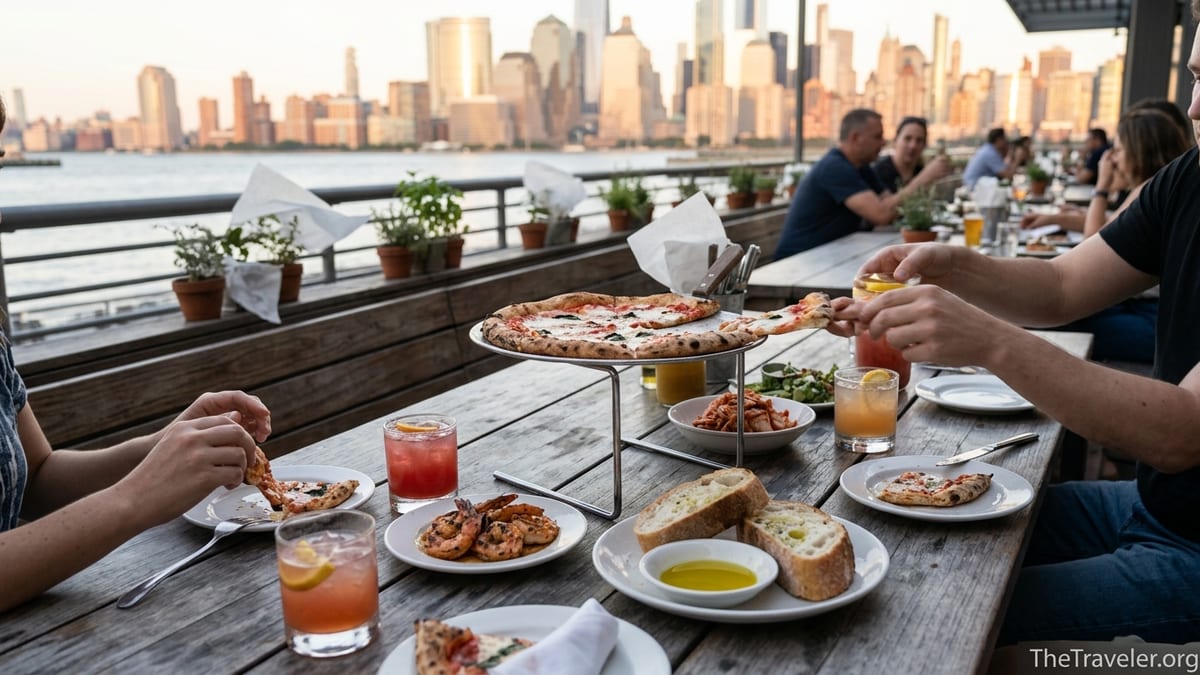
Planning a North Jersey Food Day Trip
Think of North Jersey as a cluster of small food cities that are all within an hour of one another. Jersey City, Hoboken, Newark’s Ironbound, Montclair, and the suburbs of Bergen and Passaic counties each have their own character and specialties. Because distances are short, you can build a day around one main neighborhood and still add a stop in a nearby town for coffee, dessert, or a late-night bite on your way home.
If you are coming from New York City, the PATH train makes car-free food days surprisingly simple. A ride from Manhattan into Jersey City or Hoboken typically costs under three dollars each way and drops you within walking distance of dense restaurant strips around Grove Street in Jersey City or Washington Street in Hoboken. From there, rideshare services and light rail can extend your reach to waterfront spots, residential pockets, and overlooked commercial avenues where newer openings tend to appear first.
Drivers have even more flexibility, but parking habits can make or break your day. In dense downtowns, expect to pay for metered street parking or use garages that commonly run from about 10 to 25 dollars for several hours, especially along the Hudson. In suburban areas like Fort Lee, Ridgewood, or Clifton, municipal lots are usually cheaper and easier, so you can linger over a long lunch without constantly feeding meters.
The most satisfying itineraries mix at least one “destination” restaurant with a couple of casual stops. For example, you might plan a pizza-focused pilgrimage to a celebrated Jersey City pizzeria for lunch, add a stroll through the local market streets, then cap the day with pastéis de nata from a Newark bakery or ice cream from a small-batch parlor in Montclair. Building in this variety keeps the day feeling like an exploration rather than a single reservation slotted into your schedule.
Jersey City: Pizza, Waterfront Views, and Global Neighborhoods
Jersey City has become one of the most exciting dining hubs in New Jersey, with everything from Michelin-recognized pizza to tiny family-run curry shops. Many visitors start downtown around Grove Street, where blocks of low-rise buildings hide dozens of restaurants. A widely praised pizzeria near Grove Street draws serious enthusiasts for its wood-fired pies, carefully sourced toppings, and house-made bread and butter. A margherita or seasonal pie there typically lands in the low twenties, and sharing a salad and dessert between two people can keep your total around 40 to 60 dollars before drinks.
Nearby, contemporary American spots and wine bars fill former warehouses and corner taverns. At the waterfront in Newport and Exchange Place, restaurants like Battello and similar upscale Italian or seafood outfits pair sweeping Manhattan skyline views with menus built around local produce and fresh fish. Expect dinner entrees in the 30 to 50 dollar range, plus cocktails that often hover in the mid-teens. For a more relaxed take on the waterfront, seasonal outdoor beer gardens by the Hudson serve burgers, lobster rolls, and wings alongside long picnic tables and fire pits, ideal for groups who want to linger after sunset.
Jersey City’s strength is its diversity. In Journal Square and the surrounding streets, South Asian restaurants offer thalis, biryanis, and chaat at prices that make casual grazing easy. A plate of masala dosa or a filling curry with rice can often be found for under 20 dollars. In the Heights and Bergen-Lafayette, younger restaurants and cafes are bringing natural wine lists, creative tacos, and modern Filipino or Honduran menus to blocks that used to be mostly residential. The spread of these spots makes it simple to design a day that shifts from sit-down lunch to coffee to bar snacks without ever needing a car.
To fully explore Jersey City in one day, arrive by late morning. Start with coffee and a pastry at a downtown bakery or cafe, walk to Liberty State Park for harbor views and room to digest, then work your way back through downtown for a late lunch. Leave room for a second stop in another neighborhood: maybe a Sri Lankan or Indian dinner in Journal Square, or drinks and small plates back along the waterfront as the lights come on across the river.
Hoboken: Brownstone Charm and Under-the-Radar Italian
Just north of Jersey City, Hoboken offers a more compact, brownstone-lined setting that is easy to cover on foot in an afternoon. Washington Street is the main spine, running from the PATH station up toward the residential north end. Along the way you will find long-established Italian-American restaurants, modern brunch spots, and bars that fill up quickly on weekends. Classic red-sauce places serve veal parmigiana, linguine with clams, and chicken francaise in portions generous enough to share, with most pasta entrees landing in the low to mid twenties.
Hoboken shines when you look beyond the obvious. Italian delis that have been operating for decades still turn out stacked mozzarella and prosciutto sandwiches for under 15 dollars, and many bake their own bread in-house. Walking a few blocks west or east from Washington Street, you will stumble upon tiny bakeries selling cannoli, rainbow cookies, and sfogliatelle by the piece. The city’s famous old-school taverns pour local beer and keep menus short, focusing on burgers, wings, and a few daily specials that change with the season.
On the waterfront, polished restaurants offer floor-to-ceiling views of Manhattan along Sinatra Drive and the piers. Here, you pay partly for the skyline. Outdoor patios line up at sunset, and reservations are smart on warm weekends. Entrees typically run from 28 to 45 dollars, with shared appetizers like burrata or calamari in the mid-teens. To balance the budget, consider a lighter sit-down meal here and save your appetite for dessert and late-night slices back on Washington Street, where slice shops and gelato counters stay open later.
A simple Hoboken day trip pairs well with another stop. You might have lunch at a casual Italian spot near the PATH station, stroll the waterfront promenade, then hop back on the train into Jersey City or Newark for a contrasting dinner. Alternatively, arrive midafternoon, snack through two or three delis and bakeries, then settle into a waterfront restaurant only for drinks and dessert while the sun drops behind the Palisades.
Newark’s Ironbound: Portuguese, Brazilian, and Late-Night Energy
Few food neighborhoods in North Jersey feel as intense as Newark’s Ironbound, just east of Newark Penn Station. Within less than a square mile, the area packs in a dense cluster of Portuguese, Brazilian, Spanish, and Latin American restaurants, bakeries, and bars. Local observers estimate that if you count every restaurant, lunch counter, and bar serving Spanish or Portuguese food, you could easily pass a hundred options within a short walk. Ferry Street and its side streets form the heart of the action, with grills smoking well into the night on weekends.
Ironbound’s traditional restaurants are perfect for hearty group meals. Many serve rodizio style, where servers circulate skewers of grilled beef, pork, and chicken to your table for a fixed price that commonly starts around 40 to 50 dollars per person. Seafood is another strength: look for clay pots of shrimp in garlic sauce, codfish stews, and paella platters meant for two or more diners, often falling between 35 and 80 dollars depending on size and ingredients. House wines by the carafe keep costs reasonable and add to the convivial feel.
The neighborhood is also evolving, with newer bistros and cafes from local restaurateurs opening in and around downtown Newark. Spots like modern Portuguese cafes and bistros near new residential developments are adding brunch, tapas, and cocktail programs to an area once defined mostly by late-night meat and potatoes. Prices at these newer places tend to match what you would pay in trendy parts of Jersey City: small plates in the low to mid teens, mains in the high twenties.
To experience the Ironbound on a day trip, take a mid-morning train to Newark Penn Station and simply walk east under the railroad tracks. Start with espresso and a pastel de nata from a bakery lined with tiles and glass pastry cases, spend time browsing grocery stores stocked with salted cod and imported olive oils, then sit down for a long, late lunch. If you plan to enjoy the area’s wine and caipirinhas, consider leaving the car at home; trains from New York and other parts of New Jersey run regularly, and the short walk keeps logistics simple.
Suburban North Jersey: Strip Malls, Diners, and True Hidden Gems
Some of North Jersey’s most memorable meals happen nowhere near a skyline. In Bergen, Passaic, and Morris counties, low-rise strip malls and quiet downtowns hide family-run restaurants that rarely make glossy magazine lists but inspire fierce local loyalty. Towns like Fort Lee, for instance, have become well-known for Korean barbecue and tofu stew spots tucked along side streets and shopping centers, where a table grill and an array of banchan side dishes rarely cost more than 30 to 40 dollars per person, even with shared appetizers.
Elsewhere, low-key Turkish, Greek, and Middle Eastern places serve grilled meats, meze, and baklava in small storefronts. In River Edge, for example, neighborhood favorites specialize in Greek seafood and mixed grills, while Clifton and Paterson host long-standing Turkish and Middle Eastern bakeries selling warm pita, lahmacun, and kunefe for only a few dollars a piece. These are the kinds of restaurants where lunch can easily slide under 25 dollars per person, even with dessert and Turkish coffee.
North Jersey’s classic diners are another essential layer of the landscape. Many have been family-owned for decades, with menus that stretch from disco fries and club sandwiches to grilled pork chops and Greek specialties. Prices vary but expect most breakfast plates to land under 15 dollars and massive burgers with fries around the high teens. Diners often operate late into the night or 24 hours, making them reliable bookends to a heavy food day.
Hidden gems in the suburbs usually require a car, but the payoff is discovering places that feel genuinely local. To find them, check not just social media but also small community newspapers, church fundraiser flyers, and local bulletin boards in supermarkets and libraries. These often advertise festivals, church fish fries, and pop-up food events where you can sample homemade pierogi, empanadas, or barbecue at prices that barely cover costs. String two or three of these stops together and you have a deeply North Jersey day without ever setting foot near the river.
Montclair and Beyond: Cafes, Markets, and Creative Kitchens
Montclair, a leafy suburb in Essex County, has the kind of walkable downtown that lends itself to slow, food-oriented wandering. Bloomfield Avenue and its side streets are dense with coffee shops, bakeries, and full-service restaurants that skew a bit more experimental than you might expect in a small town. Here you will find modern Italian spots, Japanese-Italian mashups, vegan cafes, and wine bars focusing on natural or small-production bottles, many of them operated by chefs who have cooked in New York or in other North Jersey hubs.
This is a good place to plan a “small plates” day trip. Start with a cappuccino and a croissant at a European-style bakery, move on to a shared lunch of tapas or mezze where plates run 10 to 18 dollars each, then finish with gelato or a slice of flourless chocolate cake at a dessert bar. On Saturdays, seasonal farmers’ markets draw regional producers selling local cheese, bread, and vegetables, making it easy to stock up for picnics elsewhere in the state.
Nearby towns like Bloomfield, Verona, and West Orange have their own pockets of culinary interest. Bloomfield’s main drag includes Peruvian and Mexican restaurants serving lomo saltado, anticuchos, tacos, and pozole at friendly prices. In West Orange, Caribbean and Nigerian eateries offer jollof rice, jerk chicken, and pepper soup that can easily anchor a lunch stop on your way to or from attractions like the local reservations and overlooks. When planning your route, look for ways to pair a hike or museum visit with a restaurant you have been curious about; that way your day trip feels balanced between eating and exploring.
Because these areas rely more on local driving than transit, they work best as part of a loop. One realistic circuit might begin with lunch in Montclair, a midafternoon walk through a nearby reservation or park, coffee and pastry in Bloomfield, then an early dinner at a Peruvian or Caribbean restaurant before heading home. With careful planning, you can keep each leg of the drive under twenty minutes while experiencing three or four different food cultures.
How to Find and Respect North Jersey’s Hidden Gems
In an era of listicles and social media, truly hidden gems can be hard to define. In North Jersey, they are often places that have been around for twenty years or more, run by the same family, and beloved in their immediate neighborhood even if they rarely appear in national write-ups. It might be a Honduran breakfast counter in Journal Square that is open only a few mornings a week, a Colombian bakery in Passaic that locals insist has the best pandebono, or a modest Polish deli in Wallington where pierogi are made in the back every afternoon.
To uncover these spots, combine online research with analog curiosity. Local Reddit threads and community Facebook groups can be surprisingly helpful for surfacing names in specific counties, while platforms that focus on New Jersey dining often highlight smaller towns outside the usual corridors. Once you are on the ground, pay attention to where construction workers, taxi drivers, and hospital staff line up during lunch. A crowded dining room at noon on a weekday is one of the most reliable signs that you have found something special.
When you visit, treat these restaurants with extra respect. That means being patient if service is slower than in polished downtown venues, tipping generously when you can, and following any house rules posted about time limits or cash-only policies. If a place seems busy and short-staffed, consider limiting your lingering at tables after paying, especially during peak hours. Taking a few moments to learn how to pronounce dish names correctly and asking thoughtful questions about ingredients helps build a rapport that may lead to off-menu recommendations or samples.
Sharing your discoveries can support these businesses, but some regulars prefer that their favorites stay low-profile. A balanced approach is to leave detailed, positive reviews and recommend specific dishes rather than just posting the restaurant name widely on social media. That way, people who are genuinely interested will find their way, and the staff will not be overwhelmed overnight by an influx of trend-chasers.
The Takeaway
Exploring North Jersey through food is less about chasing prestige and more about embracing variety. In one long day you can move from a slice of meticulously crafted pizza in downtown Jersey City to grilled picanha in Newark’s Ironbound, then finish with baklava at a suburban strip-mall cafe. The region’s compact geography and layered immigrant communities mean that if you follow your appetite a few blocks off the main drag, you rarely walk away disappointed.
Planning ahead helps, but you do not need an airtight itinerary. A short list of must-try places, an openness to spontaneous detours, and an understanding of local transit and parking habits go a long way. Whether you are hopping off the PATH for waterfront views, weaving through brownstone streets in Hoboken, or pulling into an unassuming parking lot in Fort Lee, treat each stop as a chance to learn a little more about the people who built these food traditions.
Over time, repeat visits will reveal patterns: which bakeries sell out of their specialties by noon, which diners still pour bottomless coffee refills at midnight, which Korean barbecue spots quietly fill on weeknights with local families. Those patterns are the real hidden map of North Jersey dining. Follow them, and your day trips will start to feel less like tourism and more like participation in a living, evolving food culture.
FAQ
Q1. What is the easiest North Jersey food destination to reach without a car?
Jersey City is usually the simplest, thanks to PATH stations at Grove Street, Exchange Place, and Newport, all surrounded by dense clusters of restaurants within a short walk.
Q2. How much should I budget for a full day of eating in North Jersey?
For coffee, a casual lunch, snacks, and a sit-down dinner with tax and tip, most travelers are comfortable budgeting roughly 80 to 150 dollars per person, not including transportation.
Q3. Is Newark’s Ironbound safe to visit at night for dinner?
The Ironbound is a busy, restaurant-focused neighborhood and feels lively late into the evening, especially on weekends. As in any urban area, stay aware of your surroundings and stick to well-lit main streets.
Q4. Do I need reservations for popular North Jersey restaurants?
For high-demand places in Jersey City, Hoboken waterfront restaurants, and well-known Ironbound rodizio or seafood spots, reservations are strongly recommended, particularly on Friday and Saturday nights.
Q5. Can I combine multiple towns in one North Jersey food day trip?
Yes. A common strategy is to pair Jersey City and Hoboken via PATH, or to visit Montclair and nearby Bloomfield or West Orange by car, keeping drive times under twenty minutes between stops.
Q6. Are North Jersey’s hidden gem restaurants usually cash only?
Some long-standing neighborhood spots still prefer cash, though many now accept cards. It is wise to carry some cash for small bakeries, delis, and older diners just in case.
Q7. What time should I arrive to avoid long waits at popular places?
For brunch and dinner, arriving before noon or before 6 p.m. can significantly reduce wait times. Late afternoon, between typical meal periods, is often the quietest window.
Q8. Is it realistic to do a North Jersey food trip with kids?
Yes. Many diners, pizzerias, and casual ethnic restaurants are family friendly, offer high chairs, and have flexible menus. Just build in park breaks or waterfront walks between meals.
Q9. How do I handle parking when exploring multiple neighborhoods by car?
Plan to park in one central garage or lot in each town, then walk for an hour or two before moving the car. Always check posted signs for residential permit rules and meter hours.
Q10. What is the best season for North Jersey food day trips?
Spring and fall are ideal, with comfortable temperatures for walking and frequent outdoor dining. In summer, waterfront and sidewalk seating fill up but add to the festive atmosphere.