


Pigeon Island Marine National Park, a tiny coral island off Nilaveli near Trincomalee, is one of Sri Lanka’s most popular family snorkeling spots. With shallow reefs, small sandy beaches and short walking trails, it can be a memorable day out with children if you plan for the heat, crowds and minimal facilities. This guide walks you through what to expect with kids in tow, from ages and trails to toilets, food, swimming safety and how to keep the day relaxed rather than rushed.
Get the latest updates straight to your inbox!
Where Pigeon Island Is and What It Is Like With Kids
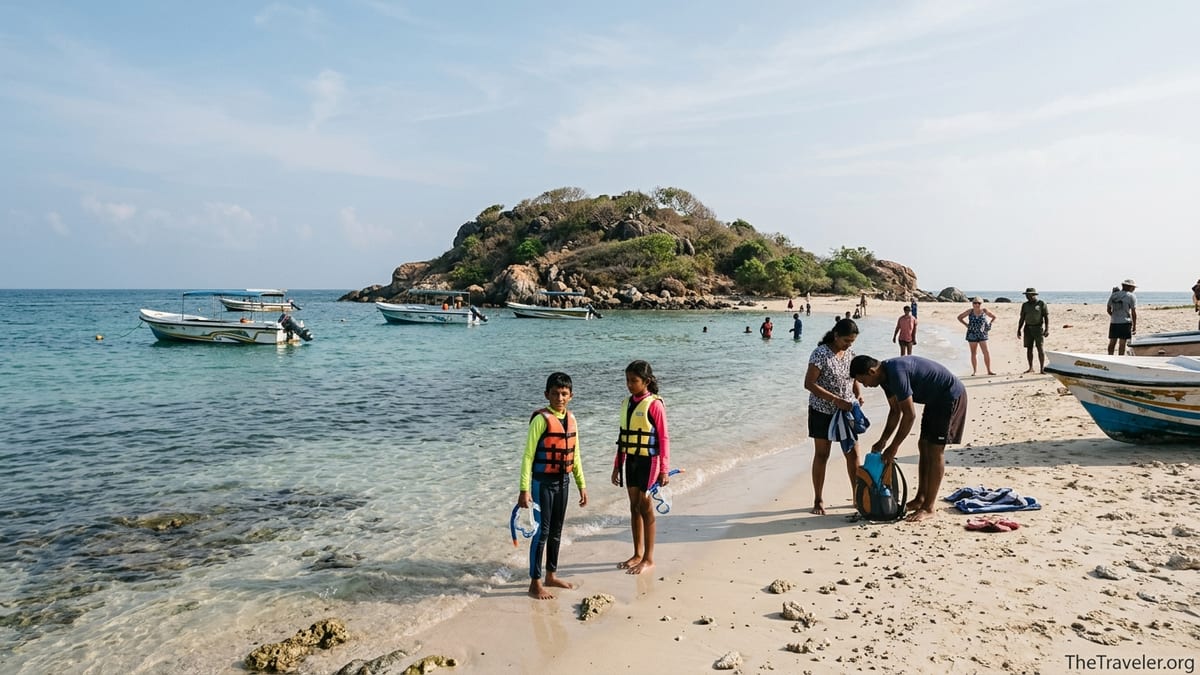
Pigeon Island lies roughly 1 kilometre off Nilaveli Beach on Sri Lanka’s northeast coast, about a 20 to 30 minute drive north of Trincomalee town. Access is only by boat, usually from Nilaveli, and most families visit as a half day or short day trip while staying in beach hotels such as Nilaveli Beach Hotel, Pigeon Island Beach Resort or mid range guesthouses along the main road. The island itself is very small, with two rocky islets, shallow fringing reef and a couple of narrow beaches where boats land and visitors swim.
The key draw for families is easy off the beach snorkeling in clear, warm water, with frequent sightings of reef fish, sea turtles and small blacktip reef sharks in shallow depths. Parents should know that this is a marine national park with no cars, playgrounds or shade structures. Expect a rustic environment of coral rubble, low scrub, ruined walls and rock outcrops rather than manicured paths. With children, the experience feels more like a short adventure to a wild offshore island than a standard resort beach excursion.
Most local operators run two to three hour trips, with around one hour of actual snorkeling time plus boat transfers and basic orientation at the park office. Families with younger kids often find that two to three hours is enough in the intense sun. Older children who love the water may wish they could stay longer, but the combination of heat, salt, and lack of shade usually makes a half day visit feel just right.
The atmosphere varies sharply by time of day. Before about 8.30 am the island can feel almost tranquil, with just a handful of boats and plenty of space for kids to splash. From mid morning, particularly in school holidays and on weekends from June to September, the shallow reef can become crowded with life jacketed snorkelers and boat traffic, which has implications for safety and comfort with children.
Recommended Ages, Swimming Skills and Life Jackets
Families bring children of all ages to Pigeon Island, from toddlers in arms to teenagers. In practical terms, the sweet spot tends to be kids aged around 6 to 14 who are confident in the water and curious about marine life. These children can usually manage clambering on and off boats, walking over uneven coral rubble and floating with a mask and snorkel for 20 to 30 minutes at a time.
Preschoolers between 3 and 5 can certainly enjoy the trip, but parents need to adjust expectations. Most will not snorkel in the full sense, but many are happy sitting in shallow water with a mask or simply paddling near the shore while a parent holds them. If your child cannot swim, treat the visit like a boat trip and beach paddle, and avoid any expectation that they will be out over the reef edge, where water can be chest deep or more.
Tour operators and boatmen typically provide life jackets as part of the excursion price, and these are mandatory for non swimmers and recommended for all children. However, quality varies. Some visitors report frayed straps or buckles that do not close properly. It is wise to check jackets carefully before boarding and, if you have toddlers or small children, consider bringing a well fitting children’s life jacket or float vest from home so you are not dependent on local stock.
Basic swimming ability is important because there are no lifeguards on Pigeon Island and no roped off child friendly lagoon. Even in calm conditions, the combination of waves, current, flippers and crowds can unsettle inexperienced swimmers. A useful rule of thumb is that any child entering water above waist depth should be within arm’s reach of a supervising adult. For families with mixed abilities, one adult can stay on the beach with the least confident child while another takes stronger swimmers further out over the coral.
Trails, Ruins and Steep Sections
Beyond the beaches, Pigeon Island offers a network of short, informal trails across coral rubble and rocky ground, including paths up to low viewpoints on the main islet and along the ridge of old walls and ruins. These are not long hikes; circuit walks usually take well under 30 minutes even at a slow child pace. However, the terrain is uneven and can feel demanding for very young children, especially around midday when the heat reflects off pale rock and coral.
The most popular walk with families is a short trail that climbs gently from the landing beach up to a rocky viewpoint, from which you can look back across the turquoise water to Nilaveli and south towards Trincomalee’s coastline. Parts of this path are steep enough that small children will want to use their hands as well as feet, and sturdy sandals or closed toe water shoes are much safer than loose flip flops. Parents commonly carry toddlers for the steepest sections.
There are no handrails, steps or safety barriers on the ridgeline paths, and in places there are sharp coral rocks at ankle height. Children who are used to urban pavements may find the footing surprisingly rough. Setting expectations helps: explain that this is an adventure path, ask kids to go slowly, and avoid running or climbing near exposed edges. If your family wants the viewpoint experience without a full scramble, you can simply walk a few minutes inland, take photos, and turn back before the steepest section.
Strollers are not practical on Pigeon Island. The landing area is a narrow beach of coarse sand and coral chunks, and all trails involve steps over rocks, tree roots or eroded ground. Even compact travel strollers with larger wheels will be more hindrance than help. For babies and toddlers, a soft structured carrier or hiking pack is the easiest way to move around the island, leaving both adult hands free for balance on the rocky sections and for boarding boats.
Beaches, Heat and Managing the Sri Lankan Sun
The main family friendly beach where boats arrive is relatively small, backed by low shrubs and scattered rocks. Another shorter stretch of sand lies a short walk away around the island. Both are beautiful, with clear, shallow entry and soft sand underfoot at the waterline, but there is limited natural shade, especially towards midday. Most operators and independent boatmen do not provide umbrellas, and you cannot rely on finding a spare patch of tree shade free of coral rubble.
Sri Lanka’s east coast is at its hottest from about March to September, with temperatures often in the mid 30s Celsius and a strong overhead sun even in the morning. Reflective white sand and water glare on Pigeon Island amplify this. Young children can overheat quickly when wearing life jackets over rash guards and being physically active in salt water. To manage this, many families aim for the earliest trip of the day, often leaving Nilaveli Beach between 7.00 and 7.30 am so that most snorkeling is finished before 10.00 am.
Practical heat management starts before you leave your hotel. Dress children in long sleeved UV rash tops, brimmed hats and light shorts that can get wet. Apply high SPF reef safe sunscreen at the hotel, then again on the beach just before boarding. On the island, encourage kids to drink small amounts of water frequently and to alternate time in the water with rest in whatever shade you can find. Bringing a thin sarong or travel towel to drape over a child’s shoulders while they sit can provide a basic sun break even without trees.
If any family member shows signs of heat stress such as headache, nausea, unusual fatigue or irritability, the priority is to get them out of direct sun and cooled down. This might mean cutting snorkeling short and waiting on the boat in the breeze, or asking your boatman for an earlier return than planned. Agree expectations with the operator beforehand so they understand that health and comfort for the children may trump staying the full advertised time.
Toilets, Food and Drinking Water
Facilities on Pigeon Island are basic. There is a small park office where rangers issue tickets and sometimes provide simple briefings on reef protection, but you should not expect a full visitor centre with café or shaded seating. Toilet availability can vary by season and maintenance. Many visitors report only rudimentary, sometimes unclean toilets on or near the island, and you cannot count on running water, toilet paper or soap.
Given this, it is advisable for children and adults to use hotel or restaurant bathrooms before heading to Nilaveli Beach for the boat. On the island, a flexible attitude helps. Families with recently toilet trained toddlers may find it less stressful to time the trip to avoid peak bathroom needs, for example doing a morning trip immediately after the child’s usual first toilet visit, then returning to shore by late morning or lunchtime.
There are no food outlets or official kiosks on Pigeon Island. Snacks and drinks are your responsibility. Locals often bring simple picnics such as fruit, biscuits and sandwiches kept in a small insulated bag. At a minimum, each person should carry their own refillable water bottle; for a family of four spending three hours in intense heat, two to three litres of water is a reasonable amount. Some boatmen provide a bottle of water or soft drink, but this is not guaranteed and should be seen as a bonus rather than a plan.
On Nilaveli Beach itself, just back from the sand, you will usually find small shacks and beach restaurants attached to guesthouses, where you can eat simple rice and curry, fried rice, kottu, omelettes and fresh juices before or after your trip. Families often have a light early breakfast at their hotel, do the morning Pigeon Island excursion, and then return for a more substantial lunch at a beachfront restaurant where children can cool off in the shade and, if the property allows, in a swimming pool.
Swimming, Snorkeling Safety and Supervision
The reef around Pigeon Island is known for shallow coral gardens and marine life that appears in only a few metres of water, which can be magical for children. At the same time, the mix of dozens of anchored boats, flippers, currents and sometimes limited visibility makes strong, hands on supervision essential. There are no lifeguards on duty, and boat crew are focused primarily on handling their vessels rather than watching children in the water.
On a typical visit, your boat will drop you on the main beach where you will step into knee to thigh deep water. Families with small children should carry them rather than letting them jump, as the seafloor can be uneven with sharp coral fragments. Once on the sand, most operators issue masks, snorkels and sometimes basic fins. Sizes for younger kids are often limited, and quality varies, so bringing your own well fitting child sized mask is one of the most effective ways to reduce frustration and water entering goggles.
When snorkeling as a family, keep children between you and the shore so that you are always seaward of them. This way, if a small wave or current pushes them inwards, it takes them towards shallower water rather than out to sea. Agree clear signals in advance, such as a tap on the shoulder to stop or a hand squeeze to surface. If your group includes more than one child, consider rotating so that only one adult leads a snorkel at a time while the other stays on the beach or in very shallow water with the rest.
In recent months, visitors and local forums have reported accidents and near misses around the area where boats anchor, with swimmers and snorkelers mixing closely with propellers and hulls. To reduce risk, set a strict family rule to stay clear of the main boat mooring zone. Point out to your children where most boats are parked and designate a separate area where your family will swim, ideally towards the edges of the reef rather than the crowded centre. If you are unsure, ask your boatman to show you the safest area for children, and do not hesitate to move if other boats crowd in.
Strollers, Gear and Packing for a Relaxed Day
Because the island has no smooth paths and many small steps and rocks, strollers are better left at your hotel. Instead, focus on lightweight, packable items that will make the few hours more comfortable. A soft baby carrier or sling for infants and toddlers is invaluable, both for climbing on and off the boat and for the short hikes to viewpoints. Even for older preschoolers who normally walk well, a carrier can be a welcome backup when the heat and rough ground tire little legs.
Footwear is as important as swimwear. Thin flip flops offer minimal protection from sharp coral and can easily slip off in the surf. Many families opt for closed toe water shoes or sturdy trekking sandals that can handle both beach landings and rocky trails. On the boat, children should keep shoes on rather than going barefoot, as decks may have hot metal fittings, splinters or stray fishing gear.
For gear, think in terms of a single medium day pack per adult rather than multiple loose bags. Pack reef safe sunscreen, hats, refillable water bottles, a few high energy snacks, lightweight towels or sarongs, spare T shirts for kids to change into after swimming, and a small dry bag to keep phones and passports clear of splashes. A compact first aid kit with plasters, antiseptic wipes and oral rehydration sachets can make a big difference if a child scrapes a foot on coral or feels the effects of the heat.
Masks and snorkels are usually included in the boat price, but if your child wears prescription lenses or has a small face, investing in your own junior mask set before the trip can transform their experience. Similarly, if your child tends to feel cold quickly even in warm tropical water, a thin shorty wetsuit or neoprene vest can extend their enjoyment and add an extra layer against the sun.
Planning and Booking: How to Keep the Day Calm
Most families arrange their Pigeon Island trip either via their hotel in Nilaveli or by speaking directly with boatmen on the beach. Hotel organised excursions tend to be slightly more expensive but offer clearer communication, hotel pickup and sometimes better maintained life jackets. Independent boats launched from Nilaveli public beach are often cheaper, with prices for foreigners typically quoted per boat rather than per person, but you will need to agree duration, inclusion of gear and timing in advance.
As a rough guide, many travellers report paying the equivalent of a modest family restaurant meal per adult for the combined boat transfer and basic snorkeling gear, with separate national park entry fees set by the Sri Lankan authorities and paid at the park office. Prices can change from year to year and are sometimes different for adults and children. Because park tickets are an additional fixed cost, sharing a boat as a family or with another family can make the overall trip more economical.
To keep the day relaxed, aim for an early morning departure and build slack into your schedule. For example, a family staying at a beach hotel might have breakfast at 6.30 am, walk to the boat at 7.15 am, snorkel and explore from 7.45 am to around 10.00 am, then return to shore by 10.30 am. This leaves the hottest midday hours for resting by the hotel pool or in an air conditioned room rather than trying to push on with more outdoor activities.
Finally, talk with your children beforehand about the realities of the trip. Explain that the reef is beautiful but may be busy with other people, that they will need to follow instructions closely when boats arrive and leave, and that touching coral or chasing turtles is not allowed. Framing the outing as a shared family adventure with responsibilities as well as fun can help children feel more engaged and cooperative when it counts.
The Takeaway
Pigeon Island can be a highlight of a family stay on Sri Lanka’s east coast, offering children a close look at coral reefs, turtles and tropical fish in relatively calm, shallow water. The short boat ride, small scale of the island and simple, half day format suit families who want an adventure without committing to a full expedition style outing.
At the same time, this is a wild marine environment with limited shade, minimal facilities and no lifeguards. Success with children depends less on chasing the perfect postcard moment and more on thoughtful preparation: choosing an early time slot, setting realistic expectations for young swimmers, packing snacks and water, and staying flexible if heat or crowds make the experience less comfortable than hoped.
Handled well, a Pigeon Island visit becomes not just another beach trip but a gentle introduction to marine conservation and responsible snorkeling. Children come away not only with stories of sharks and turtles, but with an understanding that coral is fragile, that safety rules matter and that sometimes leaving the reef a little earlier is the right call for both people and nature.
FAQ
Q1. Is Pigeon Island suitable for toddlers and very young children?
It is possible to visit with toddlers, but the experience is easier with children aged around 6 and over. The heat, lack of shade, rough ground and boat transfers can be tiring for very young kids. If you do go with a toddler, use a carrier instead of a stroller, focus on paddling in very shallow water and keep the visit short.
Q2. Are there lifeguards or supervised swimming areas on Pigeon Island?
No, there are no lifeguards or roped off swimming zones. Boat crew may keep a general eye on guests but they are not dedicated lifesavers. Parents should supervise children closely at all times in and near the water and avoid letting them swim near anchored boats or propellers.
Q3. Can we bring a stroller for our baby on the island?
Strollers are not recommended. The landing is on soft sand and coral rubble, and all trails involve rocks, steps and uneven ground. A baby carrier or child backpack is a much better option for moving around the island safely and comfortably.
Q4. Is there food available to buy on Pigeon Island?
No, there are no cafés, restaurants or official kiosks on the island. You will need to bring your own snacks and drinking water. Many families eat breakfast at their hotel, take fruit and biscuits for the boat trip and then have an early lunch at a beach restaurant back on Nilaveli.
Q5. What about toilet facilities on the island?
Toilets, if available, are very basic and may not always be well maintained. It is best to use hotel or restaurant bathrooms before departure and to be prepared for limited facilities while on the island. Families with recently toilet trained children may want to time their visit for when they are least likely to need a bathroom.
Q6. Do tour operators provide life jackets and snorkeling gear for children?
Most boat operators include adult life jackets and basic masks and snorkels in the price. However, sizes and quality for young children can be inconsistent. It is wise to check jackets before leaving and to bring your own child sized mask or even a small life vest from home if you want a guaranteed good fit.
Q7. How long should we plan to spend on Pigeon Island with kids?
For most families, two to three hours on and around the island is ideal. This usually allows time for boat transfers, one or two snorkeling sessions and a short walk, without exposing children to the worst of the midday heat. Longer stays can feel tiring due to the lack of shade and facilities.
Q8. Is it safe for children to snorkel with sharks and turtles there?
The blacktip reef sharks around Pigeon Island are generally small and shy, and sea turtles are accustomed to human presence. For children, the main safety concerns are currents, waves, contact with coral and boats rather than marine animals. Keeping kids within arm’s reach, using life jackets where needed and avoiding crowded boat areas significantly reduces risk.
Q9. When is the best time of day to visit Pigeon Island with a family?
Early morning is usually best. Departing between 7.00 and 8.00 am helps you avoid the strongest sun and the worst of the crowds. Water is often calmer and clearer at this time, which makes snorkeling more enjoyable and less stressful for children who are still building confidence.
Q10. Can we visit Pigeon Island independently or do we need to book a tour?
You cannot swim across to the island, so you will need a licensed boat, but it does not have to be a large organised tour. Many families arrange a simple boat transfer and snorkeling trip directly with boatmen on Nilaveli Beach or through their hotel. Booking through accommodation can be easier for first time visitors, while negotiating on the beach may offer more flexibility on price and timing.