


Rijeka is Croatia’s third largest city and its main northern seaport, but it rarely tops bucket lists in the way Split or Dubrovnik do. That can be a good thing. Rijeka is a lived-in, working city with layered history, gritty charm and quick access to islands and coastal resorts. Whether it is worth visiting for you depends on what you want from Croatia: beaches and nightlife, a cultural city break, a relaxed base for day trips, or a gateway to the Kvarner Gulf islands.
Get the latest updates straight to your inbox!
What Rijeka Is Really Like Today
Rijeka sits on Kvarner Bay, roughly two hours by highway from Zagreb and a similar drive north from Zadar. Historically shaped by the Habsburgs, Italy and Yugoslavia, it feels different from Dalmatian cities further south. In the compact center you can walk Korzo, the main pedestrian spine, from the port to the city tower in ten minutes, passing Austro-Hungarian facades, socialist-era buildings and cafe terraces filled mostly with locals rather than tour groups.
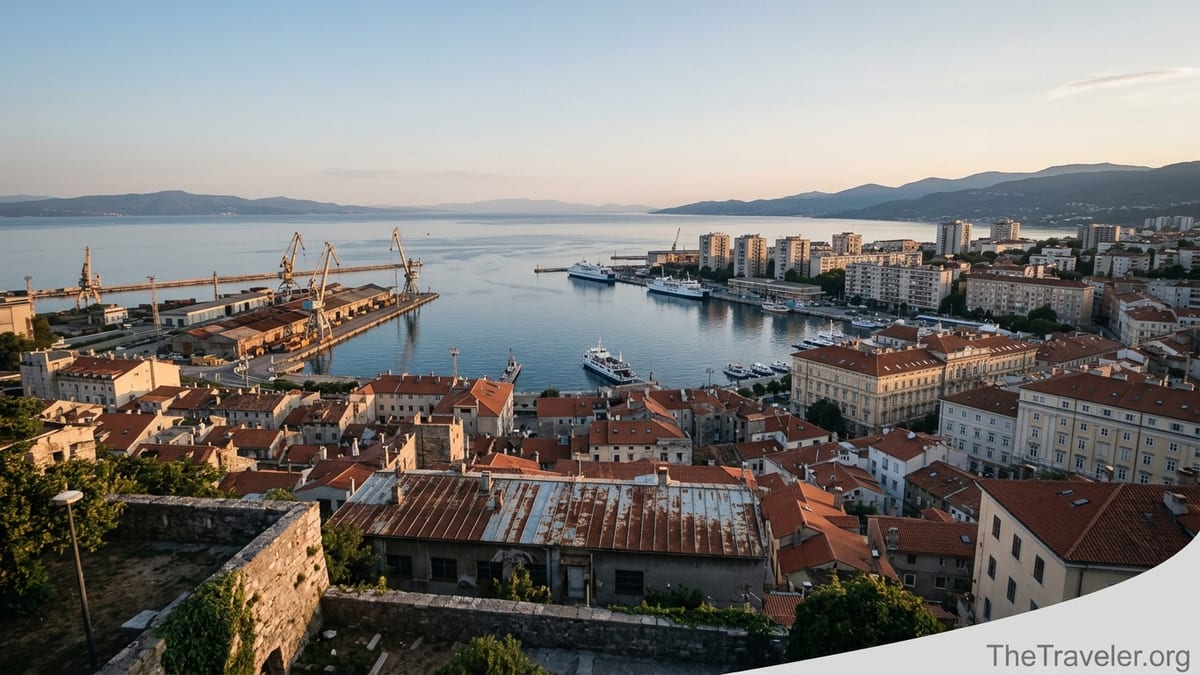
It is important to understand that Rijeka is a port city first and a beach destination second. The waterfront closest to the center is dominated by cranes, docks and ferries. You do not step out of the old town onto a postcard beach. Instead, you take a short bus or taxi ride to swimming spots like Ploče Beach under the Kantrida stadium or further along the coast at Kostrena. For travelers expecting something like Split’s Riva with palm trees and beaches next door, this can be a surprise.
What Rijeka does offer in its core is a dense mix of culture and everyday life. Within a short walk you can visit the Maritime and History Museum housed in a former governor’s palace, peek into the circular Baroque St. Vitus Cathedral, and explore the city market where fish and produce from the region arrive early each morning. In the evening, locals head back to Korzo for coffee, gelato or a drink in bars that mostly serve people who live here year round.
Rijeka feels more like a Central European city with sea access than a resort town. It hosted the European Capital of Culture program in 2020, and although not every project has left a visible trace, you can feel the legacy in venues like the revamped Exportdrvo warehouse for events and exhibitions and a year-round cultural calendar. If your idea of a good Croatian stop involves more galleries, concerts and street life than beach clubs and sunset cocktails, this is a strong point in Rijeka’s favor.
Who Will Enjoy Rijeka (And Who Will Not)
Rijeka tends to suit travelers who like cities with personality more than polish. If you appreciate places like Trieste, Marseille or Genoa for their working ports, slightly worn facades and layered histories, Rijeka is likely to click. A typical visitor who enjoys Rijeka might be a couple in their 30s combining Zagreb, Istria and the islands, who want one or two nights in a real Croatian city to eat well, see local nightlife and take a day trip to Krk or Cres.
It is also a good fit for culture-minded travelers. The Trsat Castle complex above town, reached by city bus or a staircase of more than 500 steps, gives sweeping views over Kvarner Bay. Nearby stands the Trsat Sanctuary, one of Croatia’s notable pilgrimage sites. Fans of niche museums can spend an hour at the quirky Peek & Poke computer museum, or attend performances at the Croatian National Theatre Ivan pl. Zajc, where tickets can often be had for the equivalent of a modest dinner for two.
Rijeka works particularly well for independent travelers using public transport. The main bus station offers direct services to Zagreb, Zadar, Istria and to island ports like Valbiska on Krk. Local operator Autotrolej runs buses along the coast and into hillside suburbs, so you can stay near the center and still reach beaches or the hilltop neighborhood of Trsat without a car. This makes it attractive for solo travelers and digital nomads who want a lived-in base with reasonable rents and non-touristy cafes.
On the other hand, if your priority is a classic Croatian beach holiday with turquoise coves a few minutes from your guesthouse, Rijeka itself is rarely the best answer. Many locals will steer beach seekers to Opatija, Crikvenica or the islands instead. Families with young children often find it simpler to base where swimming spots are on the doorstep rather than taking buses or taxis out of a port city each day.
Rijeka Compared With Split, Zadar, Zagreb and Opatija
Compared with Split, Rijeka is noticeably less touristy, especially in July and August. Split’s old town, built into Diocletian’s Palace, is one of the country’s star attractions and cruise ship magnets. The Riva waterfront is lined with bars aimed squarely at visitors, and prices for central accommodation and meals reflect that. Rijeka’s center, by contrast, still feels like a city for locals where tourism is present but not overwhelming. You will find some Airbnbs and boutique hotels, but far fewer souvenir shops or tour hawkers.
Zadar, further down the coast, occupies a middle ground. It has a compact historic peninsula, famous modern installations like the Sea Organ and a more obvious seaside promenade. It also offers excellent access to national parks such as Plitvice and Krka on organized day trips. For a traveler deciding between Rijeka and Zadar for a three-day coastal stay without a car, Zadar generally wins on sea access and island day trips, while Rijeka wins if you care more about feeling in a working city and having quick overland links to Zagreb, Istria or Slovenia.
Compared with Zagreb, Rijeka trades the Austro-Hungarian avenues and big-city museums for sea views and a milder coastal climate. Zagreb is a stronger choice for a pure urban city break with more extensive museums, nightlife zones and flights. Rijeka, however, is closer to the islands and Istrian coastal towns like Opatija and Lovran. Travelers who want a combination of urban culture and day trips by bus or rented car to both sea and inland hills may prefer Rijeka over the capital.
Opatija, just a 20 to 30 minute bus ride from Rijeka, is almost the opposite of Rijeka in tone. Once a Habsburg resort, it has a manicured seaside promenade, grand hotels and villas, and a much more overtly vacation feel. Think elegant terraces, spas and bathing platforms on rocks, with the Ucka mountain as a backdrop. Many travelers pair the two: sleeping in Rijeka for urban atmosphere and lower prices, then spending afternoons walking the Lungomare path from Opatija to nearby villages like Volosko for sea views and seafood lunches, or staying in Opatija for a resort base and heading into Rijeka for a concert or football match.
How Long to Stay in Rijeka
For most itineraries, one to three nights in Rijeka is enough. As a quick taste on a north-south journey, a single overnight can work well. You might arrive from Zagreb in the afternoon, stroll Korzo, have dinner at a konoba serving Kvarner scampi or grilled fish, sleep centrally, then head to Trsat Castle and the market the next morning before continuing to an island or to Istria.
If you like to explore cities in more depth, two full days will let you see both the core sights and get out to the water. A realistic two-day plan could include the historic center, St. Vitus, the Governor’s Palace museum and an evening along Korzo on day one, followed by a morning walk or bus up to Trsat for the views and a lazy afternoon swimming at Ploče or in Kostrena on day two. You could then depart on an evening bus or ferry.
Rijeka can also anchor a four to six night stay if you use it as a base for nearby trips. From the main bus station you can catch direct buses to Opatija for a day on the promenade, or to island departure points on Krk. Jadrolinija and other operators run ferries from Rijeka toward islands like Rab and Pag in season, and catamaran links connect further down the Kvarner Gulf. With that setup, a traveler could sleep in an affordable apartment in Rijeka and take three or four distinct day trips without changing beds every night.
Longer stays make the most sense for digital nomads or slow travelers who want an “ordinary” Croatian city experience at a calmer pace than Split or Dubrovnik. Monthly apartment rentals in Rijeka are often cheaper than in Dalmatian hot spots, and you get full city services: supermarkets, gyms, cinemas, live music and local sports events. If you imagine working from a cafe, doing groceries at the central market and taking occasional weekend trips to the islands rather than packing every day with sightseeing, a stay of several weeks can work very well.
When Rijeka Works Best as a Base
Rijeka is particularly strong as a base if you plan to explore the wider Kvarner region rather than stay on a single beach. The city is connected by highway to Zagreb and inland mountains, and by bridges and ferries to islands like Krk, Cres and Lošinj. For example, you can take an early bus from Rijeka to the island of Krk, spend the day in towns such as Krk Town or Baška, and return by evening, or continue onward by ferry to Cres if you are comfortable coordinating schedules.
Using Rijeka as a base works well for travelers arriving by train or bus who do not want to rent a car immediately. You can settle into a central apartment, orient in the city and then rent a car for a day or two to reach more remote beaches, inland villages like Kastav, or mountain routes in Gorski Kotar. After returning the car, you still have a walkable urban environment for the rest of your stay, with frequent buses to Opatija and surrounding towns.
It is also a smart base if your flight arrives at Rijeka Airport on Krk Island. Many low cost carriers and charter flights land there in summer. Instead of heading straight to a smaller beach town with limited year round services, you can spend the first or last nights of your trip in Rijeka, making it easier to adjust to arrival times and enjoy a broader choice of restaurants and accommodations before or after an island stay.
However, if your only goal is a quiet resort week with minimal logistics, Rijeka is usually not the ideal base. Places like Opatija, smaller coastal towns south of Crikvenica or villages on Krk or Lošinj will give a more straightforward sea holiday with everything within walking distance. In those cases, Rijeka might best be used as a half day excursion or an overnight stop between inland and island segments of your route.
Seasonality, Crowds and Costs
Rijeka’s seasonality is less extreme than in many Croatian coastal towns. Because it is a major port and regional center, the city remains active year round, with schools, universities and offices driving daily life. In July and August the waterfront and Korzo fill up more, but the feel is still far from the cruise-heavy intensity of Split or Dubrovnik. That makes Rijeka attractive for shoulder season trips in May, June, September and October, when sea temperatures are pleasant enough for many travelers and hotel prices are typically lower than in peak summer.
Winter in Rijeka has its own draw in the form of the Rijeka Carnival, usually held in February. For this event the city hosts parades, masked balls and street festivities that attract visitors from all over Croatia and beyond. During Carnival, accommodation books out earlier and prices tick up, but the experience is completely different from a standard summer stay. If you like festivals and do not mind cooler weather, timing a visit to coincide with Carnival can make Rijeka a destination in its own right rather than just a stopover.
In day to day costs, Rijeka tends to sit below the most famous Dalmatian cities but above some inland towns. A midrange hotel or well rated apartment in central Rijeka is often priced a bit lower than an equivalent in Split in high season, especially if you book outside the absolute peak weeks. Eating out ranges from affordable bakeries and pizzerias to seafood restaurants focused on Kvarner Bay specialties. You can grab a simple burek and coffee for a modest sum, while a sit down dinner with grilled fish and wine for two will typically cost less than in Split’s old town or Dubrovnik’s walled streets.
Transport costs are moderate. City buses operated by Autotrolej sell single tickets and day tickets that make it economical to reach beaches and suburbs without a car. Long distance buses to Zagreb, Zadar or Istria are competitively priced and run several times a day in season. Ferries and catamarans to islands are a larger budget line item, but these are comparable in price to other coastal hubs and, in some cases, allow you to combine passenger tickets with vehicle transport if you are driving.
The Takeaway
Rijeka is worth visiting if you are looking for a Croatian stop that feels more real city than curated resort, and if you value connections to islands and inland regions as much as immediate beach access. It rewards travelers who like to walk through neighborhoods where people are going about their daily business, drink coffee on Korzo surrounded mostly by locals and climb up to Trsat Castle for a view over working docks and distant islands rather than only picture perfect bays.
If your top priority is a lazy week of swimming steps from your hotel, or if you want a dense concentration of historic monuments in a compact old town, other places in Croatia may serve you better. Split, Zadar, Opatija and the islands have clearer roles as beach and resort destinations. Yet as a one to three night stop, a shoulder season city break or a multi day base for exploring Kvarner, Rijeka offers good value, culture and a glimpse of everyday coastal Croatia that many visitors miss.
When planning, think about whether you want a base that feels lived in all year, with buses full of commuters and students as well as day trippers with beach bags. If that mix sounds appealing, then Rijeka deserves a spot on your shortlist alongside better known names. Used thoughtfully within a wider route that might include Zagreb, Opatija and one or two islands, it can become a highlight of a Croatia trip precisely because it is not yet overrun.
FAQ
Q1. Is Rijeka worth visiting for a first time trip to Croatia?
Yes, if you want to see a more everyday side of Croatian coastal life and are interested in culture as much as beaches. For a first trip focused purely on iconic sights and islands, you might prioritize places like Split, Dubrovnik, Zadar and Hvar, then add Rijeka as a one or two night stop if your route passes nearby.
Q2. How many days should I spend in Rijeka?
Most travelers do well with one to three nights. One night works as a taste on a longer journey between Zagreb and the coast or between Istria and Dalmatia. Two or three nights allow time for Trsat Castle, the city center, market, a museum or two and at least one afternoon at the beach or in nearby Opatija.
Q3. Is Rijeka a good beach destination?
Rijeka itself is not a classic beach resort, but there are decent swimming spots within a short bus or taxi ride, such as Ploče Beach near the Kantrida stadium or beaches in Kostrena. If you want sandy or postcard style coves steps from your accommodation, basing in Opatija, Crikvenica or on islands like Krk and Lošinj is usually better.
Q4. Is Rijeka cheaper than Split or Zadar?
In general, accommodation and some everyday costs in Rijeka tend to be slightly lower than in heavily touristed centers like Split, especially in peak summer. You will still find a range of prices, but midrange apartments, local cafes and city transport can feel better value because the city serves residents year round rather than focusing mainly on visitors.
Q5. Is Rijeka safe for solo travelers?
Rijeka is considered safe by European city standards, with a lived in center that stays busy into the evening. Normal precautions apply, especially around bus stations or quiet areas late at night, but violent crime against visitors is rare. Solo travelers, including women, commonly walk along Korzo and around the central streets after dark, particularly in summer.
Q6. Is Rijeka a good base for visiting islands?
Yes, especially for the northern Adriatic. Buses and ferries connect Rijeka with Krk, Cres, Lošinj and Rab, and you can often combine a stay in Rijeka with day or overnight trips to these islands. It works best if you are comfortable with early departures and checking current ferry and bus timetables rather than expecting turn up any time services.
Q7. Should I stay in Rijeka or Opatija?
Stay in Rijeka if you prefer an urban feel with markets, local bars and a working port atmosphere. Choose Opatija if you want a resort environment with grand hotels, a seafront promenade and easy access to swimming platforms right in town. The two are close enough that you can visit the other by bus in about half an hour, so some travelers even split a few nights between them.
Q8. Do I need a car in Rijeka?
No, you can see the main city sights and reach several beaches and nearby towns using buses and taxis. A car becomes useful if you want to explore quieter coastal villages, inland mountain areas or multiple islands on your own schedule. Many visitors combine a car free stay in Rijeka with a short car rental period for targeted day trips.
Q9. When is the best time to visit Rijeka?
Late spring and early autumn, roughly May, June, September and early October, offer a good balance of mild weather, manageable crowds and reasonable prices. Summer brings warmer sea temperatures and more events but also higher accommodation costs. February is an exception to the low season pattern because of the Rijeka Carnival, which attracts visitors despite cooler weather.
Q10. Is Rijeka suitable for families with children?
Rijeka can work for families who do not mind using buses or taxis to reach beaches and who value city facilities like playgrounds, markets and indoor attractions on less sunny days. For a simple, walk to the sea holiday with younger children, a smaller coastal town or an island resort may be more practical, using Rijeka as a day trip for a change of scene.