


Rijeka is often treated as a gateway to the islands and Istria, but it is also a rewarding base in its own right. Choosing the right area to stay will shape whether your trip feels like a lively city break, a relaxed beach holiday, or a hub for day trips around Kvarner Bay. This guide compares Rijeka’s key areas, from Korzo and Trsat to Kantrida, Pećine, Costabella, Opatija and airport-friendly stays, and explains how your choice changes if you are traveling with or without a car.
Get the latest updates straight to your inbox!
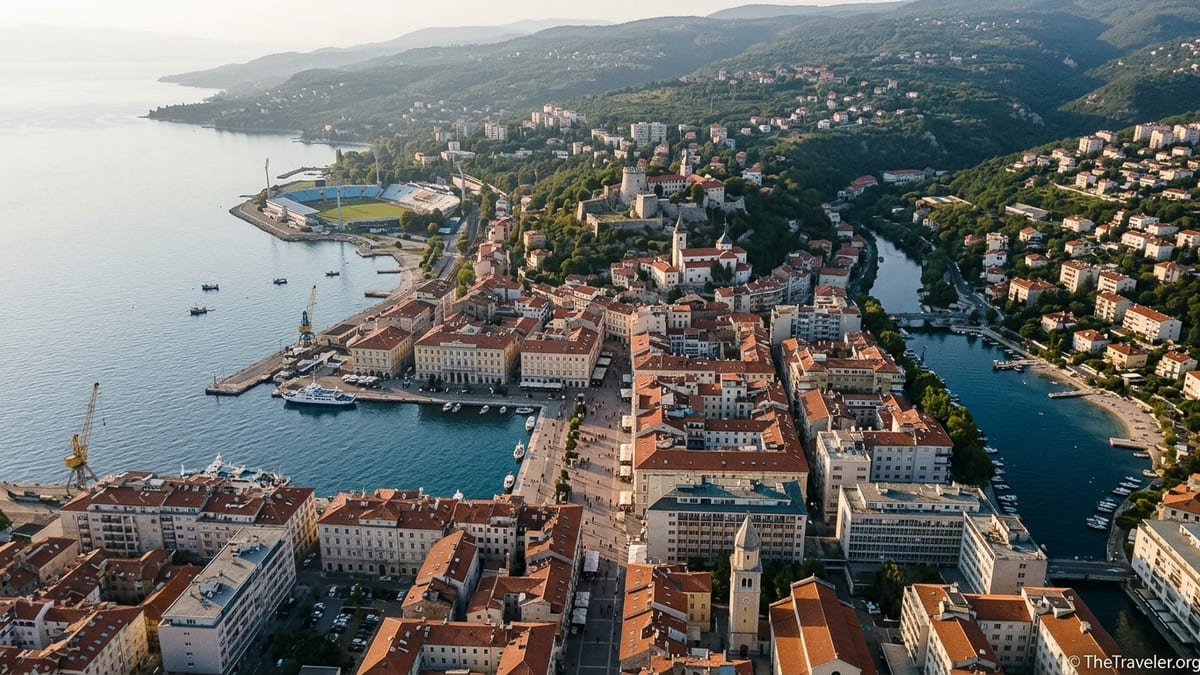
How Rijeka Is Laid Out and How That Affects Your Stay
Rijeka stretches along the northern Adriatic coast, hemmed in by hills behind the port. The compact historic core sits around the Korzo pedestrian street and the main harbor, with steep residential districts like Trsat and Kozala climbing up the slopes. To the east and west, the city thins into seaside suburbs such as Pećine, Kantrida and Costabella, before the coastline continues toward the resort town of Opatija in one direction and the Krk bridge in the other.
For a first visit, it helps to think in three broad zones: the city center for culture and nightlife, the eastern and western seaside neighborhoods for beaches and quieter residential feel, and nearby Opatija for classic resort ambience. Within those zones, walking distances vary a lot. Staying right on Korzo puts you a few minutes on foot from the bus station and ferries, while a hillside apartment in Trsat might mean a 20 to 30 minute walk or a short bus ride down to the waterfront.
Public transport is practical for most visitors without a car. Local buses link the center to Trsat in around 10 to 15 minutes and continue east to Pećine’s small pebble coves or west to Kantrida and Costabella. For day trips to Opatija, intercity-style buses run along the coastal road in about 25 to 30 minutes from Rijeka’s main bus station, and there are seasonal boat connections along the Riviera. If you plan to explore islands like Krk or Cres independently, or hike in Učka Nature Park, a rental car from Rijeka or from the nearby airport will give you far more flexibility.
Because the terrain is hilly, what looks close on the map may involve several staircases or a steep climb. When booking apartments on platforms like Booking or Airbnb, check guest comments carefully for notes on stairs and gradients. This matters especially if you are traveling with small children, have mobility issues, or will be carrying heavy luggage from the bus stop.
Korzo & City Center: Best for Car-free City Breaks
The area around Korzo, Rijeka’s main pedestrian promenade, is the obvious choice if you want an urban, car-free stay. Here you are within walking distance of the harbor, the City Clock Tower, the cathedral, city museums and the lively market. Hotels such as Hotel Bonavia Plava Laguna and Hotel Continental are long-established options that appeal to business travelers and weekend visitors, with typical summer doubles starting from around mid-range European city prices, depending on demand. Many upper-floor rooms in the taller buildings, including the modernized Hotel Neboder slightly uphill, offer wide views across the port and the islands beyond.
Korzo and the adjoining streets are packed with cafes, bakeries and casual dining. In the morning you can step out for a coffee and a burek within seconds, and in the evening you are close to bars, concert venues and Rijeka’s small but distinctive alternative scene. This makes it ideal if you want to experience the city’s everyday life rather than a classic beach resort. Noise can be an issue in the busiest blocks, particularly at weekends during festival periods, so light sleepers may want to choose a room on a higher floor or a side street behind the main promenade.
From Korzo it is easy to reach day trips by public transport. The main bus station is about a 10 minute walk from most central hotels and apartments, making Opatija, Lovran or Krk town feasible without a car. City buses to Trsat, Pećine or Kantrida stop around the market and at the harborfront. For travelers arriving by ferry or catamaran, staying near Korzo also minimizes transfers, since most boats dock at the central port right across the road from the old town.
Central accommodation stock is a mix of mid-range hotels and a large number of privately run apartments. These range from simple studios over cafes to renovated lofts in Austro-Hungarian townhouses with original parquet floors and high ceilings. If you want elevator access, check the building description carefully, as many historic buildings in the core still have only stair access.
Trsat: Hilltop Views, History and Campus Energy
Trsat rises directly above the city center on the eastern side of the Rječina river. It is best known for Trsat Castle and the Marian sanctuary that draws pilgrims up a long stone stairway from the center. In recent years the neighborhood has also grown into a student hub around the university campus. For visitors, Trsat offers a mix of residential calm, big views and easy bus links to the center below.
Most accommodation in Trsat is in modern apartments carved out of family homes or small buildings. You might find a one-bedroom with a balcony looking over the Kvarner Bay, a shared garden with a barbecue, and free street parking directly outside. Prices can be slightly lower than right in the old town, and you often get more space for the money. A typical mid-range apartment may offer a living room, proper kitchen, air conditioning and washing machine, which suits longer stays or digital nomads.
The trade-off is the hillside location. Walking down to the center takes around 20 minutes via streets and steps, but walking back up is a workout, especially in summer heat. Local buses connect Trsat with Korzo and the bus station in roughly 10 to 15 minutes and run into the evening, although late-night frequency drops. If you value quiet nights, easier parking and access out of the city toward the A7 motorway for trips to Krk or Zagreb, Trsat is a strong choice, especially with a car.
Trsat is less about beaches and more about views, cafes and green space. The castle’s terraces and nearby park make pleasant evening promenades, and there are a handful of neighborhood bars and restaurants aimed at both locals and students. For swimming, however, you will need to bus or drive down to Pećine or Kantrida, or plan a day in Opatija or on Krk.
Pećine: Quiet Villas and Local Beaches to the East
Pećine lies just east of the city center along the coast, about a 10 to 15 minute bus ride from Korzo. It is a leafy, mostly residential quarter, traditionally home to villas and low-rise buildings, with a string of small pebble beaches tucked between rocky headlands. The atmosphere is quieter and more local than at the big resorts elsewhere on the Adriatic, which appeals to travelers who prefer everyday neighborhoods to polished promenades.
Accommodation in Pećine is dominated by apartments and a handful of small guesthouses. A concrete example is an apartment like Villa Pećine, where guests stay in a spacious unit set in a garden directly above the shore, with steps down to a small beach, and supermarkets and bus stops a short walk away. Properties like this usually offer parking and sea-facing terraces, making them attractive for families who want to combine beach time with easy access to Rijeka’s center.
The beaches at Pećine are compact coves rather than long strands, but they often have basic facilities like showers, changing cabins and kiosks. In high summer they are busy with locals, yet outside peak weekends you can still find calm corners. Because Pećine remains part of the city, buses continue into the evening, so it is practical to base here without a car. You can swim in the morning, return to your apartment for lunch, then ride into the old town for museums, dinner and bars in the evening.
One consideration is that Pećine’s housing sits partly on a low bluff above the sea. Many apartments require negotiating stairways down to the waterfront, so it is worth messaging hosts in advance if anyone in your group has limited mobility. For day trips, Pećine works similarly to the center: you will usually bus through the core to reach the main bus station, then continue to Opatija or further afield.
Kantrida & Western Suburbs: Everyday Rijeka with Big Beaches
West of the center, the city runs through residential districts like Kantrida, Krnjevo and Zamet, with the sea on one side and apartment blocks rising toward the hills. Kantrida in particular is known for its beach directly below the football stadium and a stretch of coastal path that connects several bathing spots. The feel is firmly local, with sports facilities, playgrounds and small bars rather than a resort polish.
Staying in this area suits visitors who want access to broader beaches and do not mind being a short bus or taxi ride from Korzo. There are few large hotels, but plenty of apartments and holiday homes, including clusters of family-friendly units with shared pools a short drive back from the coast. A typical example might be an apartment in a small complex near Kantrida Beach, with on-site parking, self-catering facilities and a balcony facing the sea, around 10 minutes by car from the old town.
Without a car, Kantrida is still workable. Buses from the center follow the coastal road in roughly 15 to 20 minutes, and you can often walk from your accommodation to the sea within five or ten minutes. The trade-off is that evening returns can feel longer, and you will rely on timetables more than if you stayed closer in. On the other hand, if you are traveling with children, having beaches like Kantrida, Ploče or nearby Fiumana within walking distance can outweigh the commute.
Because this is a lived-in part of Rijeka, prices can be more modest than in landmark properties by the sea. Grocery stores, bakeries and local cafes line the main road, and you will be shopping and riding buses alongside residents. If your priority is “see how Rijeka lives” plus regular swims, rather than a resort bubble, Kantrida and its neighbors are worth a close look.
Costabella & Resort-style Stays: Best for Beach Holidays and Spa Time
Further west along the coast, roughly midway between Rijeka and Opatija, lies Costabella, a stretch of shoreline that has been developing into a more clearly resort-oriented zone. The headline property here is the Hilton Rijeka Costabella Beach Resort & Spa, a large contemporary complex spread down a terraced slope to a private-use beach area, with outdoor pools, spa facilities and several restaurants. It feels more like a self-contained holiday village than a city hotel, and appeals to guests who want familiar international standards and a full menu of amenities.
Rooms and suites in such resorts typically come at a premium compared with city-center hotels, especially in summer and on weekends. In return, you get services geared toward holidaymakers rather than business guests: kids’ clubs, multiple pools, a well-equipped spa, beach bars, and restaurants that range from casual to fine dining. Many units have sea-facing balconies, and some complexes include villa-style accommodation with direct access to the waterfront paths.
Costabella and its neighbors are best suited to visitors who prioritize beach time, wellness and sunsets over late-night city life. You can still reach Rijeka’s center by car or taxi in about 10 to 15 minutes in light traffic, and there are bus connections along the main coastal road, though these may feel slow for daily commuting. Day trips by car are easy: the Opatija Riviera is only a short drive further west, and the bridge to Krk Island is to the east, making it possible to combine island excursions with evenings by the pool.
If you do not plan to rent a car but are drawn to a resort like this, factor in the cost and practicality of taxis or ride-hailing to and from the airport, the bus station and evening outings in town. Some guests choose to split their stay, beginning with a few nights in a central hotel for sightseeing and then moving to a resort in Costabella for a slower-paced finale.
Opatija: Classic Riviera Feel within Easy Reach
While not part of Rijeka itself, Opatija is close enough to function as an alternative base, especially if your focus is on relaxation rather than city exploration. About 12 to 15 kilometers west along the coast, Opatija is one of the Adriatic’s oldest resorts, with grand 19th century villas, a palm-lined seaside promenade and a long tradition of spa tourism. It offers a different atmosphere to Rijeka’s working port, more akin to a compact Riviera town with manicured parks and elegant cafes.
Accommodation options in Opatija range from historic seafront hotels with ornate facades and indoor pools to modern boutique properties tucked into the hills behind the promenade. Many hotels feature wellness facilities, including saunas, indoor seawater pools and treatment rooms, which appeal in shoulder season when the sea is cooler. Prices can be higher than in Rijeka for similar standards, particularly for front-row buildings directly on the Lungomare promenade, but there is also a wide spread of mid-range and budget guesthouses on the slopes above.
Staying in Opatija works well if you want to combine gentle seaside walks, terrace dining and spa time with occasional forays into Rijeka. Frequent buses connect the two centers in about 25 to 30 minutes, so you can treat Rijeka as your “big city” for museums, shopping malls and more varied nightlife while returning to a resort-like environment each evening. With a car, you also have straightforward access to hilltop villages in the Učka foothills and to smaller coastal places like Lovran or Mošćenička Draga.
The main drawback for those keen on Rijeka specifically is that you will not be able to pop down to Korzo at a moment’s notice. If your main reason for coming is a festival, conference or event in Rijeka, you may prefer to stay in the city itself and visit Opatija as a day trip.
Airport-Area and Transit-Friendly Stays
Rijeka Airport is located on the island of Krk, across the bridge from the city, roughly 25 to 30 kilometers from the center. There is no dense hotel cluster at the terminal itself, but a handful of guesthouses and small hotels in nearby villages like Omišalj and Njivice cater to early departures and late arrivals. Many of these are family-run establishments with simple rooms, on-site parking and occasional shuttle arrangements to the airport by prior request.
For most travelers, it is usually more practical to stay either in Rijeka or on Krk Island rather than trying to be “at the airport” in the strict sense. If your flight is at dawn, you might book a modest room in Omišalj or Njivice for the final night, have dinner in a local konoba and then take a short taxi ride to the terminal in the morning. Alternatively, some visitors with rental cars choose accommodation along the main Rijeka to Krk road, where motels and roadside hotels provide easy parking and quick access to both city and island.
If you plan a car-based itinerary with several day trips, consider staying in a neighborhood like Trsat, eastern Rijeka near the A7 junction, or on Krk itself. This cuts down on the time spent threading through city traffic each day. Parking in central Rijeka can be tight and mostly paid, especially around Korzo and the port, while many suburban and island properties offer free private spaces.
Public airport buses link the terminal with Rijeka on flight days, usually timed to arrivals and departures, but schedules outside peak season can be sparse. If you are traveling without a car and your flight times are awkward, it may be wiser to prioritize a well-located city hotel and budget for a taxi to the airport, rather than sacrificing an evening in Rijeka to stay in an isolated roadside hotel.
Car-free vs Car-based Trips: How Your Choice Changes the Best Area
Whether you rent a car in Rijeka significantly changes which areas make the most sense. If you are traveling car-free, the safest bets are the Korzo area, the wider city center, and the directly connected seaside neighborhoods of Pećine and Kantrida. From these zones you can reach everyday needs like supermarkets, pharmacies and cafes on foot, and use local buses to get to beaches, Trsat, or the main bus station for regional day trips.
In this scenario, proximity to a reliable bus route matters more than on-site parking. For example, an apartment two blocks behind Korzo with no parking may be more convenient than a hillside home with a garage but infrequent buses. Travelers often combine public buses and regional coaches to visit Opatija, Kastav or Krk town, leaving from the central bus terminal. If you plan mostly city sightseeing, short coastal hops and perhaps one or two organized excursions, there is no real need for a car.
With a car, your radius expands dramatically. Trsat becomes more attractive thanks to easier parking and quick access to the ring road. Kantrida, Costabella and the outskirts of Opatija feel closer, and you can treat Rijeka as a hub for day trips to Učka Nature Park, Gorski Kotar’s forests and lakes, Krk, Cres or even Istrian towns like Labin and Rabac. In this case, check that your chosen accommodation provides either dedicated parking or realistic street parking, as central zones enforce paid parking and spaces fill up at peak hours.
A popular compromise is to split your stay. Spend a few nights in or near Korzo without a car, exploring the city on foot, then pick up a rental vehicle and move to a place like Pećine, Trsat or Costabella, where parking is easier and driving out each day is straightforward. This way you avoid navigating narrow central streets with luggage, but still benefit from the freedom of a car for exploring the wider Kvarner region.
The Takeaway
Rijeka’s compact size and good bus connections mean that almost any neighborhood can work as a base, but each area offers a noticeably different experience. The Korzo and city center zone suits visitors who want to walk out of their accommodation straight into a lively Adriatic port, with cafes, markets and nightlife steps away. Trsat trades waterfront convenience for hilltop views, quieter streets and easier road access. Pećine and Kantrida feel like local seaside districts where you slip quickly between everyday errands and pebbly coves.
Further west, Costabella and the resorts toward Opatija tilt the balance toward beach time and spa comforts, while Opatija itself adds a classic Riviera backdrop of grand hotels, promenades and manicured parks, still within easy reach of Rijeka’s museums and events. Around the airport, simple guesthouses and island stays on Krk serve early flights and road-based itineraries.
Before you book, decide whether your priority is city atmosphere, beaches, or day trips, and whether you want to rely on buses or prefer the freedom of a car. Once that is clear, matching your expectations to the right Rijeka neighborhood is straightforward, and you can treat the city not just as a transit point, but as a characterful base for exploring the wider Kvarner Bay.
FAQ
Q1: Is it better to stay in Rijeka or Opatija for a first-time visit?
For a first-time visit focused on culture, markets and local life, Rijeka’s center around Korzo is usually better. If you prefer a classic resort feel with promenades and spa hotels, Opatija works well, with easy bus links between the two so you can visit the other as a day trip.
Q2: Which area is best if I want to avoid renting a car?
Stay in or near the Korzo area, or in adjacent central neighborhoods like Potok or Belveder. Pećine and Kantrida can also work car-free because they have regular buses to the center and local shops, but the very best convenience for public transport is still in the core around the bus station and harbor.
Q3: Where should I stay in Rijeka for the best beaches?
If swimming is your priority, look at Pećine for local coves to the east, Kantrida and nearby western suburbs for larger city beaches, or the Costabella area and on toward Opatija for more resort-style waterfronts. You can still visit the center easily by bus or car from all of these.
Q4: Is Trsat too far from the city center for tourists?
Trsat is only about 10 to 15 minutes by bus from Korzo and roughly a 20 minute walk downhill, so it is not far in distance. The main consideration is the steep climb back up if you walk, which some visitors find tiring in summer. For many, the quieter streets, views and easier parking outweigh the hill.
Q5: How long does it take to get from Rijeka to Opatija?
By bus from Rijeka’s main bus station it usually takes around 25 to 30 minutes to Opatija, depending on traffic and stops. By car or taxi along the coastal road, the trip can be a little shorter in light traffic, though you should allow extra time in high season weekends.
Q6: Are there good options near Rijeka Airport?
There are a few small hotels and guesthouses in villages like Omišalj and Njivice on Krk Island that work well before an early flight. Most travelers, however, prefer to base in Rijeka or on Krk itself and then take an airport bus or taxi for departure rather than staying directly by the terminal.
Q7: Is parking difficult in Rijeka city center?
Parking around Korzo and the port is mostly paid and spaces can be hard to find at peak times. Many visitors with cars choose accommodation in Trsat, Pećine, Kantrida or the suburbs, where private or easier street parking is more common, and then ride buses or walk into the center when needed.
Q8: Can I use Rijeka as a base for day trips to the islands?
Yes, Rijeka is a practical base for visiting Krk Island by bus or car across the bridge, and in season there are boat connections to some Kvarner islands. For very beach-focused island time, some travelers still choose to spend a few nights on an island itself, then return to Rijeka for urban highlights.
Q9: Which area is best for families with children?
Families often like Pećine for its smaller, sheltered beaches and residential feel, or Kantrida and the western suburbs for larger city beaches and playgrounds. Resort-style properties in Costabella or in Opatija, with pools and kids’ facilities, are also popular if budget allows.
Q10: Is Rijeka noisy at night if I stay near Korzo?
Some streets directly off Korzo can be lively late into the evening, especially on weekends and during events. Choosing accommodation on a side street, a higher floor, or in a nearby but slightly removed neighborhood like Potok or Belveder usually provides a quieter environment while keeping you within walking distance of the action.