


Perched on a 138‑meter hill above Rijeka’s harbor, Trsat Castle combines sweeping Adriatic views with a slice of Croatian history and pilgrimage culture. Whether you arrive by bus, taxi, or on foot via the famous Petar Kružić steps, this compact fortress, shrine and café cluster makes one of the city’s most rewarding half‑day excursions. This guide walks you through how to get there, what to expect from the climb, where to find the best viewpoints, and how to capture it all on camera.
Get the latest updates straight to your inbox!
Orientation: What Trsat Castle Actually Is
Trsat Castle sits on the Trsat hill above Rijeka, in a neighborhood that feels more like a small town than part of Croatia’s third‑largest city. The medieval fortress was rebuilt on earlier Roman and prehistoric fortifications, and today it serves as a viewpoint, small cultural venue and café terrace rather than a fully furnished palace. Expect stone walls, towers, a central courtyard and bastions with low parapets rather than grand interiors.
The castle crowns a cluster of sights that together make the visit worthwhile. Immediately below are the Shrine of Our Lady of Trsat and a Franciscan monastery, an important pilgrimage site that has drawn worshippers for centuries. Connecting this religious complex with Rijeka’s lower town is the historic Petar Kružić stairway, a stone pilgrimage route of more than 500 steps that climbs steeply through a leafy ravine. For many visitors, the combination of castle, shrine and stairway, all within a few minutes’ walk of each other, defines the Trsat experience.
Trsat is not an isolated hilltop; it is a residential neighborhood with bus connections, bakeries and supermarkets. That means you can treat the visit like a normal urban excursion. Travelers staying near the Korzo, the main pedestrian street in Rijeka, typically visit Trsat in a three to four hour window, combining the castle with a stop at the shrine and a drink at the café, then returning downtown in time for dinner on the waterfront.
Because the site is compact, you do not need a full guided tour to enjoy it. Clear signage, an information point inside the castle and occasional small exhibitions provide enough context. This guide focuses on logistics and real‑world details: which bus to take, what the stairs really feel like, and how to position yourself for the panoramic photos most people come for.
Getting There: Bus Line 2, Taxi and Walking Options
Most visitors reach Trsat Castle from Rijeka’s city center using local bus line 2, which connects the hilltop district with various central stops. Buses operate several times per hour during the day in both directions, with a journey time of around 10 to 15 minutes from the harbor area to Trsat depending on traffic. Schedules are published by the local operator Autotrolej, but in practice you can usually show up at a central stop and not wait more than 20 minutes for the next bus.
In the compact downtown, convenient stops for line 2 include ones along Riva by the waterfront and near the main market and theatre park area. Travelers coming off ferries or cruise ships often walk 10 minutes from the port to one of these stops, then ride up to Trsat. The key point is to check that the destination display on the bus includes “Trsat” and to validate your ticket as locals do. Single urban tickets are inexpensive by Western European standards and can typically be bought from kiosks, ticket machines at major stops, or from the driver for a slightly higher price.
Once on board line 2, stay on until the bus climbs out of the city and levels off in the Trsat area. Many travelers get off at or near the stop for the Shrine of Our Lady of Trsat, which leaves you a short uphill walk to the castle entrance via local streets and signposted paths. If in doubt, you can simply ask the driver or follow the small crowd of tourists who usually disembark there in summer. The walk from the shrine bus stop to the castle typically takes about 5 to 10 minutes at a relaxed pace.
Taxis and ride‑hailing services provide a straightforward alternative if you are short on time, traveling with luggage or visiting late in the evening when bus frequencies may drop. The ride from the Korzo area to Trsat hill is short and usually reasonably priced, particularly if shared between two or three people. A third option is to walk up via the Petar Kružić steps from the city center, which is more demanding but memorable; many visitors choose to walk up or down once and use the bus in the opposite direction to avoid two steep ascents.
The Petar Kružić Steps: What the Climb Is Really Like
The Petar Kružić stairway is a historic stone staircase that connects Rijeka’s lower town to the Trsat hilltop, beginning near the mouth of the Rječina River and climbing through a wooded ravine to the shrine and castle area. Historical sources put the total number of steps at around 561, built gradually from the 16th century onward to provide a pilgrimage route to the Church of Our Lady of Trsat. Today, the stairs are used by worshippers, local joggers and visitors treating the climb as a workout with a view.
Physically, the climb is short but steep. Fit walkers often reach the top in 15 to 20 minutes, while others may take 30 minutes or more with pauses. The steps are mostly shallow but continuous, and in warm weather even healthy visitors can find themselves breathing harder than expected. Locals in their 60s and 70s are often seen taking the staircase in stride, which can be encouraging but also a reminder that pace matters more than age. Handrails and occasional small landings help break the climb, but there are long sections exposed to the sun.
Starting from the city, you enter the stairway through a stone arch with a small chapel that marks the beginning of the pilgrimage route. As you ascend, you pass additional votive chapels and religious markers. In the lower section, city noise fades and the ravine’s greenery closes in, making it surprisingly peaceful despite being close to central Rijeka. In wet weather, some steps can be slightly slippery, and footwear with decent grip makes a noticeable difference to comfort.
For many travelers, the smartest approach is to plan the climb for the cooler parts of the day. Morning before 10:00 and late afternoon after 17:00 are more comfortable in summer than the heat of midday, especially for those not used to sustained uphill walking. Carry at least a small bottle of water and a hat, particularly from June to September. Families with school‑age children who are used to walking usually manage the climb fine with breaks, but those traveling with strollers or anyone with mobility issues will be more comfortable taking bus line 2 or a taxi up to Trsat instead.
Viewpoints: Where to Find the Classic Trsat Panorama
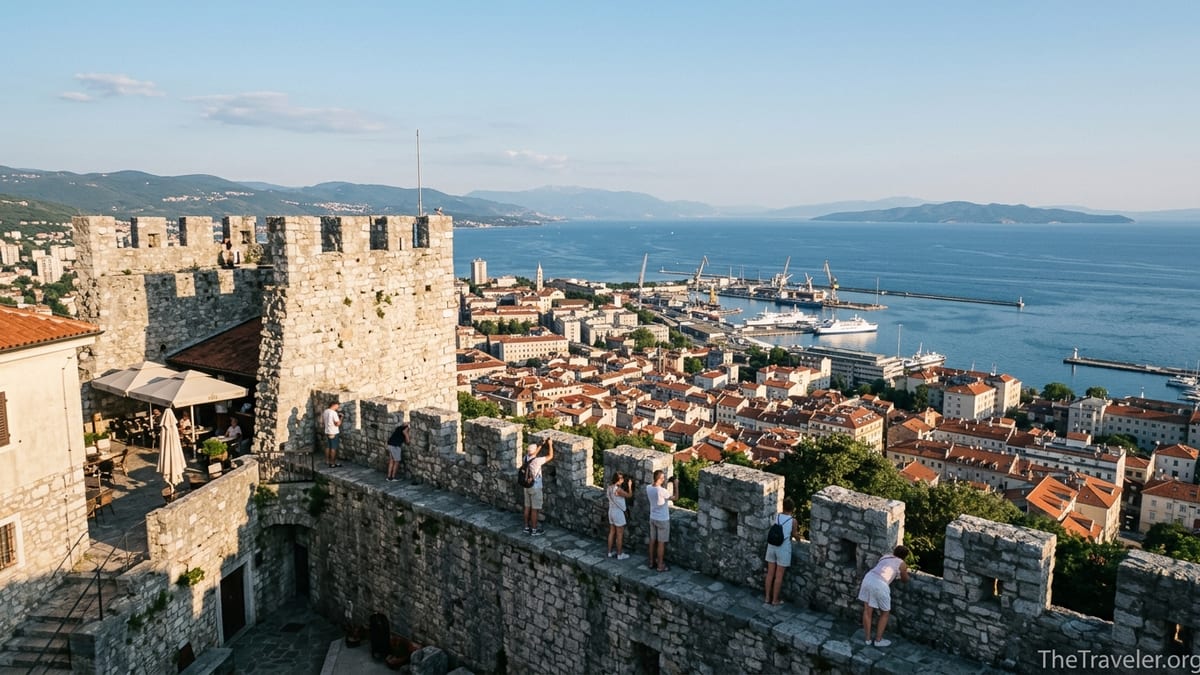
One of the main reasons to visit Trsat Castle is its view over Rijeka and Kvarner Bay. The fortress occupies a natural lookout on the edge of a plateau above the Rječina gorge, and several accessible viewpoints offer subtly different angles. The most popular spot is along the southern wall of the castle, where low stone parapets open to a long vista of the city’s red roofs, port cranes and the blue of the Adriatic beyond. On clear days, you can see out to Krk island and across the bay to the mountains of the mainland.
Inside the castle, raised bastions and towers provide slightly elevated vantage points. Climbing to the top of one of these gives a more three‑dimensional sense of Rijeka’s geography, showing how the city is hemmed in between steep hills and sea. The courtyard itself is often used for cultural events, but outside of performance times you can wander the ramparts freely and pause at viewing openings without feeling rushed. Low walls mean you should keep a close eye on children, but adults will find the viewpoints comfortable and unobstructed.
Beyond the castle, a few more viewpoints round out the experience. Just outside the entrance, small terraces and lookouts toward the shrine allow you to see the Franciscan complex from above, with its red‑tiled roof and church façade framed by trees. Short detours along signposted paths on Trsat hill can reveal quieter angles over Rijeka’s northern districts and the inland hills, which can be particularly atmospheric on slightly hazy days when the city softens into layers.
If your schedule is flexible, aim to reach Trsat in late afternoon on a clear day. The light then tends to be softer and warmer, giving the city and sea a more textured, less harsh look than at midday. In winter, clear cold days with strong visibility can produce surprisingly crisp views down to the port and across the bay, though you will want an extra layer against the hilltop breeze. Night visits are a different experience, with the city lights spreading out below; in that case, prioritize safety and stick to well‑lit routes and familiar bus stops on your way back.
The Shrine, Monastery and Café: More Than Just a Castle
Immediately below Trsat Castle lies the Shrine of Our Lady of Trsat, a church and Franciscan monastery that make this hill one of Croatia’s key Marian pilgrimage sites. The complex predates much of the current castle structure and has drawn pilgrims from across the region for centuries. The church interior is ornate and atmospheric, with side chapels, votive offerings and artwork that reflect a long history of devotion. Even for non‑religious visitors, the quiet interior offers a striking contrast to the open, windy battlements above.
The monastery area also includes a courtyard and shaded walkways that are particularly welcome in summer. Pilgrims arriving via the Petar Kružić steps typically pass through here, lighting candles or pausing for a short prayer before continuing up toward the castle. On major Catholic feast days, the entire area around the shrine and stairs can become very busy, with organized processions and more intense bus use. At such times, allow extra time for moving around and be respectful of worshippers who may be there for reasons more significant than sightseeing.
For many visitors, the practical heart of Trsat is its café culture. The castle grounds usually host a café bar with outdoor seating that spills into the courtyard and along the walls. It is a place to order a coffee, a glass of local wine or a soft drink while letting the view do the work. Prices are typically slightly higher than in an ordinary neighborhood café in Rijeka, but still moderate compared with tourist hotspots in Croatia’s larger coastal resorts. Ordering an espresso, a mineral water and perhaps a local pastry or ice cream can make a comfortable break after the stairs or bus ride.
Beyond the castle café, the surrounding Trsat neighborhood has additional options. Small bars and simple restaurants line nearby streets, serving standard Croatian café fare, pizza or grilled dishes. This makes it easy to turn a visit into a relaxed half‑day outing: climb or ride up, visit the shrine and castle, then reward yourself with a drink or meal on the hill before heading back down. If you plan to linger in the evening, check return bus times in advance or consider pre‑arranging a taxi pickup to avoid long waits after dark.
Photography Tips: Getting the Best Shots of Trsat
Trsat rewards patient photographers who pay attention to light and perspective more than those chasing quick snapshots. The classic wide shot of Rijeka from the castle walls works well in late afternoon when the sun is behind you as you look southwest over the city and harbor. Shooting in the harsh midday sun often produces flat, contrasty images with blown‑out highlights on the water, so if your schedule allows, time your visit for the golden hours around sunrise or sunset, particularly in summer when the days are long.
A wide‑angle lens or the wide setting on your smartphone is useful for capturing the full sweep of the city and bay from the ramparts. Stand back slightly from the parapet and include a bit of foreground stonework to give depth to the image. For detail shots, such as the texture of the castle’s masonry or the shrine’s architectural elements, switch to a normal or short telephoto focal length and look for side‑lit scenes where the low sun rakes across surfaces, emphasizing relief. Cloudy bright conditions can be excellent for photographing the stairway and chapels, as they reduce harsh shadows and make colors easier to balance.
The Petar Kružić steps offer a different photographic mood. From lower down, you can compose images of the stairway snaking upward under the tree canopy, using the repetition of steps as a leading line. Halfway up, turn back to frame glimpses of Rijeka’s port through gaps in the foliage. Because the stairway is narrow, be considerate of other users when stopping to shoot; step aside at landings and keep tripod use to a minimum. In wet weather, avoid standing on damp mossy patches, which can be slippery when you are concentrating on your camera instead of your footing.
Inside the shrine, photography rules may vary, and it is important to check signage and respect any “no photos” areas, especially near altars and during services. Where photography is allowed, keep ISO settings modest and stabilize your camera against a pillar or pew instead of using flash, which can be distracting in a place of worship. Around the castle, photographers traveling with serious gear may appreciate a lightweight travel tripod for blue‑hour cityscape images, but for most visitors a modern smartphone or compact camera is more than adequate to capture Trsat’s key views.
Is Trsat Castle Worth the Climb?
Whether Trsat Castle is worth the effort depends on your expectations and how you choose to reach it. If you are hoping for a fully furnished castle with extensive interior rooms to tour, you may be slightly underwhelmed; the fortress is more about atmosphere and views than about elaborate exhibits. The core visit is largely outdoors, centered on walls, towers and a courtyard with occasional small displays and an information point. In this sense, it is closer to a panoramic viewpoint built into a historic shell than to a large state‑run palace museum.
On the other hand, if you value sweeping city and sea views, enjoy modest historical sites and appreciate combining cultural and physical activity, Trsat is one of Rijeka’s best outings. The Petar Kružić steps alone give a sense of achievement and connection to local history that many visitors remember long after they have forgotten specific dates or architectural details. The shrine adds a layer of depth, showing how this hilltop has functioned as a spiritual landmark for centuries. The café terrace allows you to enjoy it all without rushing, which matters on a trip where days can easily fill with logistics.
For cruise passengers with limited port time, Trsat is often recommended as a top priority alongside a stroll down the Korzo and a walk along the breakwater. The short bus ride, compact site and flexibility to tailor the visit to 90 minutes or half a day make it a low‑stress excursion. Travelers who have already seen more famous Croatian coastal towns sometimes find that Trsat offers something slightly different: a vantage point over a working port city rather than a postcard‑perfect old town, with a more local feel and fewer crowds than the big destinations further south.
Those with mobility challenges may decide the steps are not worth tackling, but can still enjoy the views by using bus line 2 or a taxi to reach the top. In that scenario, the only unavoidable walking is around the shrine and castle precinct, which involves some uneven surfaces but far fewer continuous stairs. In short, Trsat Castle is unlikely to be the single highlight of a long Croatian itinerary, but for anyone spending time in Rijeka it is a rewarding, manageable outing that ties together landscape, history and daily local life.
Planning Your Visit: Practical Tips and Timing
Trsat can be visited at any time of year, but the experience changes with the seasons. In summer, high temperatures and strong sun on the exposed castle walls make early morning or late afternoon visits more comfortable, especially if you plan to climb the Petar Kružić steps. During these months, you will likely share the site with a mix of local families, domestic tourists and international visitors, but the area rarely feels as crowded as Croatia’s major resort towns. In winter, cold winds can make the hilltop feel significantly cooler than the city center, so a windproof jacket and hat are useful for lingering at the viewpoints.
Opening arrangements for the castle itself can vary slightly by season and event schedule. In general, the outer parts of the site and the lookouts are accessible during daylight hours, while interior spaces and the information center follow posted working times. The shrine and monastery have their own schedule, which is oriented around services and pilgrimage activity rather than tourism. It is wise to allow some flexibility in your plans so that if a chapel is temporarily closed for a service, you can explore the castle first and return later.
If you plan to walk the stairs in one direction and take the bus or taxi in the other, consider starting at the bottom in the cooler part of the day. For example, you could begin near the Rječina Delta around 9:00, climb the Petar Kružić steps with pauses to appreciate the chapels, visit the shrine, then continue to the castle. After a drink at the café and a relaxed photo session on the walls, you can ride bus line 2 back down to the center in time for lunch. Alternatively, those concerned about their knees sometimes prefer to bus or taxi up and walk down the stairs, which can be easier on the lungs but slightly tougher on joints.
As for what to bring, think in terms of a short hike inside a city. Comfortable walking shoes with some grip are more important than heavy hiking boots, especially on the stone steps. A small daypack with water, sunscreen and perhaps a light sweater or scarf for church interiors works well. If you are traveling with small children, a carrier is more practical than a stroller for the stairway. For solo travelers, Trsat is generally considered a safe area to visit in daylight, provided you take standard precautions with valuables and stick to well‑used routes, especially around the less busy upper sections of the stairway.
FAQ
Q1. How do I get to Trsat Castle from Rijeka city center?
Most visitors take local bus line 2 from central stops near the waterfront or market area and ride up to Trsat, then walk a few minutes to the castle. Taxis are a convenient alternative, especially outside bus operating peaks or for those with limited mobility.
Q2. What are the Petar Kružić steps, and are they very difficult?
The Petar Kružić stairway is a historic stone pilgrimage route of around 561 steps linking the lower town with the Trsat shrine and castle. The climb is short but quite steep; reasonably fit walkers usually manage it in 20 to 30 minutes with pauses, but it can be demanding in hot weather.
Q3. Is Trsat Castle free to visit?
Access to the surrounding viewpoints and general castle area is often free, while certain interior spaces or exhibitions may carry a modest fee. Exact arrangements can change, so it is best to check posted information at the entrance or at the castle information point on arrival.
Q4. Can I visit the Shrine of Our Lady of Trsat as a non‑religious visitor?
Yes, the shrine welcomes respectful visitors of all backgrounds. You are free to look around outside of service times, provided you dress modestly, keep noise low and follow any photography rules indicated inside the church.
Q5. When is the best time of day to visit Trsat for views and photos?
Late afternoon on a clear day usually offers the most flattering light, with softer shadows and warm tones over the city and bay. In summer, early morning is also excellent, both for cooler temperatures on the Petar Kružić steps and for gentle light on the castle and shrine.
Q6. Is Trsat Castle suitable for children and older travelers?
The castle and shrine area are generally suitable for children and older visitors who are comfortable with some uneven surfaces and a few short staircases. Those who wish to avoid the long Petar Kružić stairway can use bus line 2 or a taxi to reach the hilltop and then explore at their own pace.
Q7. How much time should I plan for a visit to Trsat Castle?
Most travelers are satisfied with two to three hours to cover the Petar Kružić steps or bus ride, a look around the shrine, exploration of the castle and a drink at the café. If you enjoy photography, history or quiet time at viewpoints, you may easily stretch this to half a day.
Q8. Are there food and drink options near Trsat Castle?
Yes, there is typically a café within the castle grounds offering drinks and light refreshments, along with several other cafés and simple restaurants in the surrounding Trsat neighborhood. Many visitors plan their visit to include a coffee or snack with a view.
Q9. Is it safe to walk the Petar Kružić steps alone?
During daylight, the stairs are commonly used by locals and visitors and are generally considered safe, provided you stick to the main route and take normal precautions. In low light or bad weather, it is wiser to use the bus or a taxi, especially if you are unfamiliar with the area.
Q10. Is Trsat Castle really worth it if I am only in Rijeka for one day?
For a one‑day visit, Trsat Castle is often recommended as one of Rijeka’s top highlights thanks to its panoramic views, historic atmosphere and easy connection to the city center. Combining a quick trip to Trsat with a walk along the Korzo and the waterfront gives a well‑rounded impression of Rijeka in limited time.