


More news on this day
Japan’s Ministry of Foreign Affairs has issued a new wide-area advisory for parts of the Middle East, urging travelers and residents to recheck country-by-country risk information and prepare for possible flight disruptions as regional tensions remain fluid.
Get the latest news straight to your inbox!
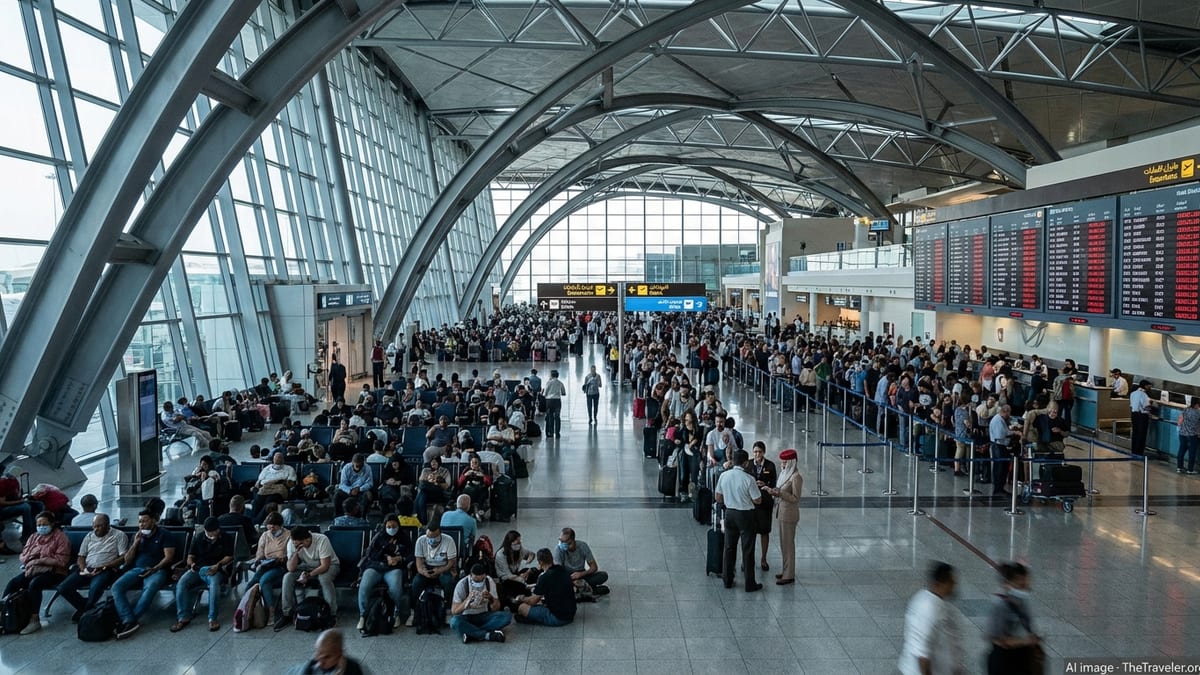
What Japan’s “wide-area” advisory covers
The alert, dated September 20, 2026 (Japan time), is framed as a regional, cross-border notice rather than a single-country upgrade. It applies to 14 destinations: the United Arab Emirates, Yemen, Israel, Iraq, Iran, Oman, Qatar, Kuwait, Saudi Arabia, Syria, Bahrain, Jordan, Lebanon, and Palestine.
The advisory emphasizes that each of the listed destinations already has existing Japan travel risk information in place, including some areas with the highest risk designations. The current notice is intended to prompt travelers to reconfirm the latest country and local-area guidance before moving around within the region, changing itineraries, or committing to new trips.
For travelers, the practical takeaway is that the Foreign Ministry is signaling uncertainty and fast-moving conditions that can spill across borders, even when a specific city or resort area appears calm. That typically matters most for people planning multi-country circuits, desert tours, cruises with Gulf calls, or stopovers that connect through the region.
What triggered the latest warning, and why it matters for trips
According to publicly available information cited in the notice, U.S. diplomatic posts issued travel information on September 19 local time calling for heightened vigilance and preparation for potential airline disruptions, including cancellations and temporary airspace closures. Japan’s advisory points to that development as a relevant signal for travelers assessing near-term risk.
The Japanese notice also highlights the continued unpredictability tied to ongoing attacks involving Yemen’s Houthi forces and Saudi Arabia. For travelers, such dynamics can translate into sudden changes to flight routes, altered maritime security conditions near key waterways, and short-notice updates to local movement guidance.
Even without a change to a specific risk level, a wide-area advisory can affect how travelers plan connections. Passengers transiting major hubs in the Gulf, or using regional airlines for onward trips to Africa or Europe, may need to build more buffer time, monitor carrier notices more closely, and consider how reroutes can cascade into missed connections or additional overnight stays.
Practical guidance for travelers: flights, airspace, and documentation
The Foreign Ministry’s notice urges travelers to collect up-to-date information from multiple sources, explicitly including flight information and the potential impact on their location. For travel planning, that usually means checking airline disruption pages, airport operational updates, and embassy messaging, then comparing that against local conditions at the hotel or destination city level.
For people already in the region, the advisory stresses following local instructions related to safety, including any directions connected to movement or evacuation. Conditions can vary sharply between neighborhoods and between daytime and nighttime, so the most relevant updates may be those that affect immediate logistics such as airport access routes, curfews, or temporary closures around government or military areas.
For those still booking trips, the advisory is a reminder to verify what flexibility exists before purchase. Travelers may want to confirm whether fares are changeable, whether travel insurance covers disruption linked to security developments, and whether accommodations have transparent cancellation rules that remain valid during short-notice operational changes.
A specific warning: photography near military facilities and attack damage
One of the most concrete points in Japan’s advisory is its caution about taking photos or videos of military facilities or attack damage, even from a distance. The notice indicates that such behavior could become an enforcement issue under local rules, which can differ widely across the region and can be applied more strictly during heightened security periods.
For tourists, that can include unintentional situations: photographing skylines that include sensitive buildings, filming from a vehicle near checkpoints, or posting content that reveals the location of security sites. The safest approach is to avoid filming near security infrastructure, obey signage and instructions, and be conservative about uploading location-tagged media while traveling.
This is also relevant for travelers joining guided tours. If an itinerary includes viewpoints near government districts, border areas, ports, or strategic bridges, travelers may want to ask in advance about local restrictions and whether the operator has updated route guidance for the current environment.
How Japan’s travel safety system affects Japanese travelers overseas
Japan’s overseas travel safety system relies on tiered risk information and supplemental notices such as wide-area advisories. The September 20 regional alert reinforces the expectation that travelers should review the specific risk level for their destination and for any side trips, rather than assuming neighboring locations share the same conditions.
The advisory also encourages travelers to use Japan’s “Tabi-Regi” travel registration service so they can receive updated safety messaging from Japanese diplomatic missions, and it notes that those staying three months or longer are expected to file a residence notification. For travelers, these steps are mainly about ensuring contactability during disruptions that can occur quickly, such as sudden airspace changes that trigger flight cancellations.
For non-Japanese travelers watching the situation, the update is still a useful planning marker: a wide-area advisory from a major outbound market can coincide with tighter operational posture from airlines, more conservative tour operations, and heightened messaging from hotels and airports. Trip plans that involve regional transits may benefit from added flexibility and closer monitoring over the coming days.