


More news on this day
Jersey Airport’s chief executive has issued a public apology after significant security delays left departing passengers facing long queues and, in some cases, missing their flights, intensifying scrutiny of peak-season resilience at the Channel Island hub.
Get the latest news straight to your inbox!
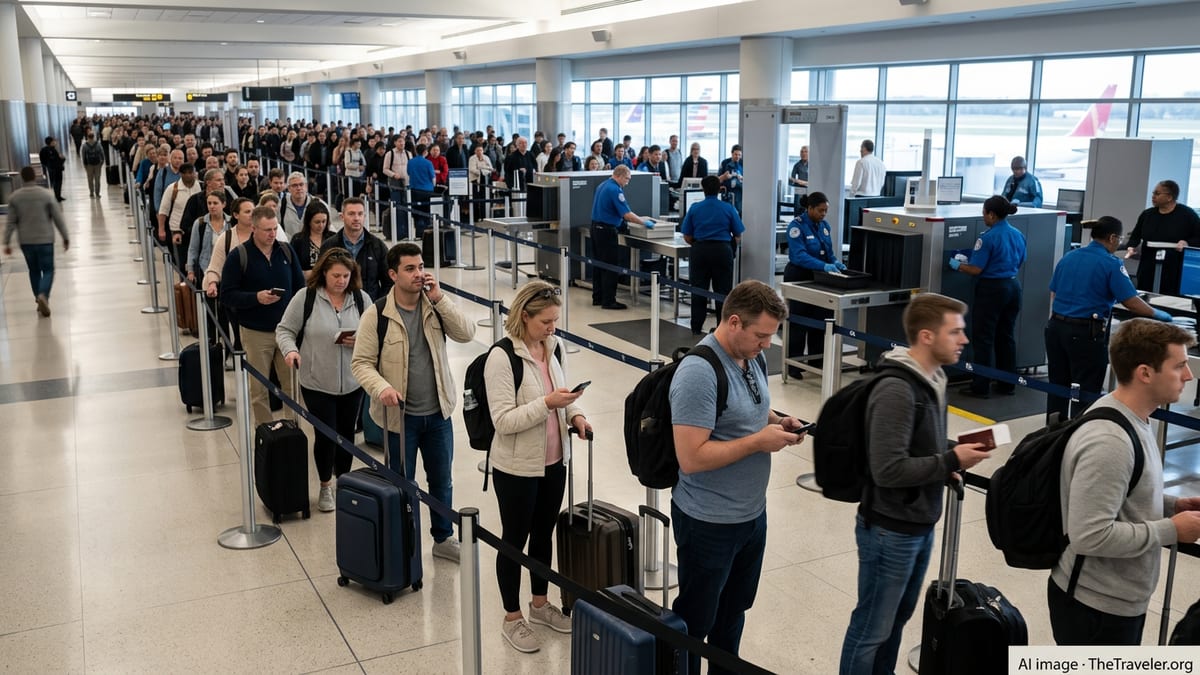
Security bottlenecks leave travellers stranded
Recent reports from Jersey Airport describe queues stretching through the departures hall as security screening struggled to keep pace with peak-time demand. Travellers who say they arrived within recommended check-in and security timeframes describe waiting so long at the checkpoint that boarding gates closed before they reached the aircraft.
Accounts shared locally indicate that some passengers watched their flights depart while they were still in security, with others rebooked on later services or forced to make alternative travel arrangements at their own expense. For an island community that depends heavily on air links for business, leisure, and medical travel, the disruption has provoked strong reactions and calls for clearer communication and contingency planning.
Publicly available guidance from the UK Civil Aviation Authority notes that when flights depart on time, airlines are rarely obliged to compensate travellers who miss departures because of airport security queues. That reality has placed additional pressure on the airport operator to demonstrate it is managing its part of the journey effectively.
Airport chief issues apology and promises review
In response to the disruption, Jersey Airport’s chief executive has apologised to passengers who missed flights or endured lengthy queues, acknowledging that the level of service fell short of expectations. The apology, widely reported in local media, focuses on the experience at security and the frustration caused to travellers whose travel plans were thrown into disarray.
The airport leadership has indicated that an internal review is under way to understand what went wrong at peak times and how staffing, equipment and passenger flows can be adjusted to reduce the risk of repeat problems. Publicly available information suggests that the review will examine the balance between scheduled passenger volumes and the number of open lanes, as well as how quickly extra capacity can be activated when queues begin to build.
Ports and airport operators across Europe have faced similar pressures in recent years as they introduce next-generation scanners and adapt to new security requirements. Jersey Airport’s management now faces the task of reassuring islanders and visitors that lessons from this episode will be incorporated into future planning.
Rising demand and evolving security technology
The disruption comes as many European airports, including regional gateways, adjust to the combination of strong leisure demand and evolving security technology. In Jersey, quality-of-service reports published in recent years highlight efforts to modernise checkpoints with new scanners designed to speed up screening while maintaining strict safety standards.
Although these upgrades are intended to improve throughput over time, industry experience shows that transition periods can create bottlenecks, particularly when staff are still adapting to new equipment or when older lanes operate alongside newer systems. If these factors coincide with holiday peaks or staffing shortages, even small delays can quickly escalate into long queues.
Analysts note that island airports with limited terminal space have less flexibility to absorb sudden surges in passengers. As airlines consolidate schedules into busy morning and evening banks of departures, security checkpoints must process a high proportion of daily traffic in relatively short windows, increasing the risk that any slowdown will cause passengers to miss flights.
Passenger expectations and rights under pressure
The scenes at Jersey Airport have reignited debate over what travellers can reasonably expect from airports at peak times. Consumer advice in the United Kingdom generally recommends arriving at least two hours before short-haul flights, and sometimes earlier during busy holiday periods or when security changes are being implemented.
However, when passengers say they have followed that guidance and still miss flights because of queues, frustration tends to focus on transparency and real-time information. Travel specialists argue that airports need to provide frequent updates on waiting times, open additional lanes swiftly when queues grow, and work closely with airlines to identify at-risk passengers and, where possible, hold flights for a short period.
Official guidance from regulators also underlines that airlines and airports have distinct responsibilities. If a flight departs on schedule, passengers who miss it due to security delays are often left relying on the goodwill of carriers to be rebooked at reduced cost. This framework has prompted some travellers to call for clearer rules when airport-side issues, rather than weather or airline decisions, are the primary cause of missed departures.
Calls for clearer communication and long-term fixes
Following the security delays and the airport chief’s apology, attention in Jersey has shifted to what changes will follow. Travel industry observers and local voices are urging the airport to publish more detailed performance data on security waiting times, to help passengers plan and to demonstrate whether remedial steps are working.
Potential responses being discussed in the wider industry include better demand forecasting, more flexible staffing models, and clearer digital messaging when queues lengthen. Airports elsewhere have begun using live queue-time displays in terminals and on mobile apps, along with targeted announcements and coordination with airlines to identify passengers on imminent departures.
For Jersey Airport, the episode marks a challenging moment in a broader effort to modernise infrastructure while coping with seasonal surges. How effectively the operator can restore confidence, reduce the risk of passengers missing flights, and communicate transparently about pressures at security is likely to shape traveller perceptions through the rest of the busy summer period and beyond.