


More news on this day
Jordan is working to convert a period of regional turbulence into a new tourism opportunity, stressing its relative stability and safety credentials as global travelers once again look to Petra, Wadi Rum and the Dead Sea for bucket‑list adventures.
Get the latest news straight to your inbox!
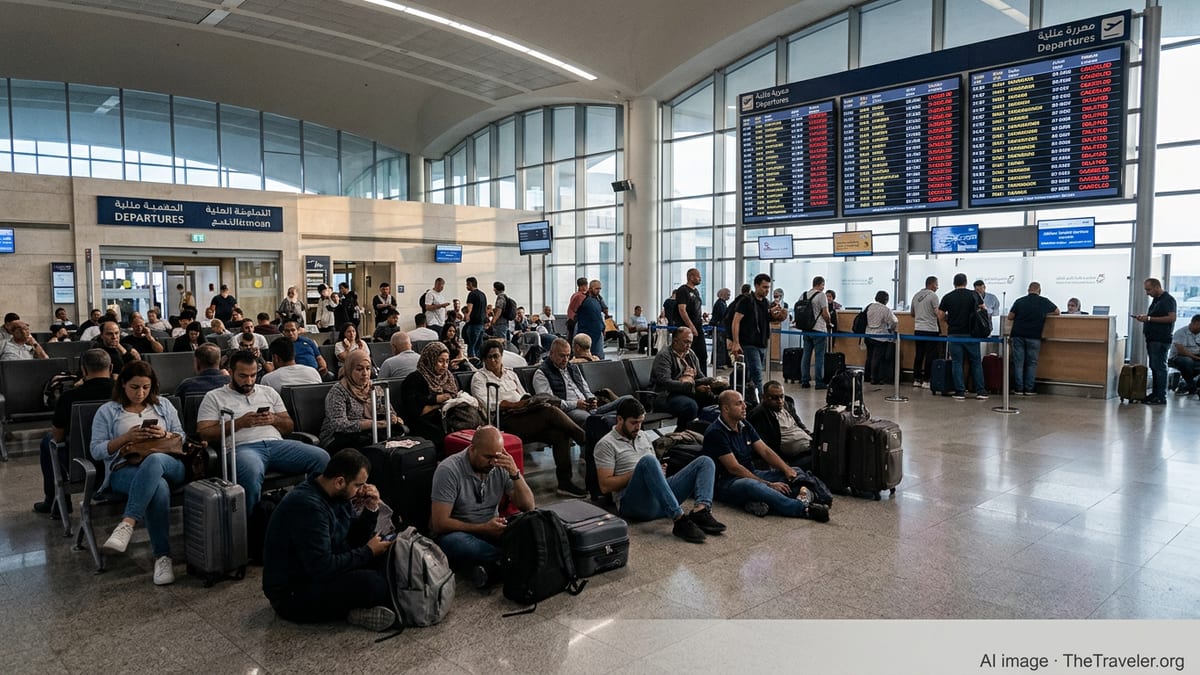
Stability Message Gains Traction With Global Travelers
After more than a year of regional conflict that unsettled visitor flows across the Middle East, Jordan is sharpening a simple message to international travelers: the country remains politically stable, comparatively calm and open for business. Publicly available information from Jordan’s tourism authorities highlights that the kingdom has not seen direct fighting on its territory, even as nearby conflicts continue to dominate headlines.
Reports from regional travel media in 2026 indicate that Jordan’s challenge is less about domestic security conditions and more about perception. Tour operators describe a pattern in which prospective visitors cancel entire Middle East itineraries when they see news of violence in neighboring states, despite Jordan’s long‑standing reputation for internal stability and controlled borders. As flight schedules normalize and more carriers restore capacity into Amman, industry data suggests that confidence is gradually returning, especially among experienced travelers familiar with the region.
Jordan’s government and tourism bodies have responded by placing safety and reassurance at the center of new promotion campaigns. According to recent policy documents and sector briefings, messaging targeted at Europe and North America increasingly emphasizes Jordan’s record of hosting major global events, its professional tourism workforce and robust infrastructure in hubs such as Amman, Aqaba and the Dead Sea coast. The aim is to convert cautious interest into firm bookings as the wider Middle East adjusts to a new security landscape.
Independent travel advisories in key source markets currently distinguish between Jordan and its conflict‑affected neighbors, generally describing the kingdom as stable while urging visitors to avoid sensitive border areas. This split in official guidance appears to be filtering through to travelers who are willing to adjust routes rather than scrap trips entirely, opening the door for a new wave of visitors seeking both reassurance and authenticity.
Tourism Numbers Rebound After Sharp Regional Shock
Jordan’s tourism sector entered 2023 and early 2024 in recovery mode, with international arrivals finally surpassing pre‑pandemic levels on the back of strong demand for cultural and adventure travel. UN‑linked tourism data and Jordan’s own statistical dashboards show that visitor numbers and revenues had become a core engine of economic growth, contributing a significant share of gross domestic product and employment across hospitality, transport and services.
The outbreak of the Gaza war in late 2023, followed by wider regional tensions, abruptly interrupted that momentum. Official data compiled in Jordan’s quarterly tourism reviews for 2024 describes steep cancellation rates for group tours and a pronounced drop in foreign arrivals to Petra, Wadi Rum and the Dead Sea. One ministry report noted that inbound tour operators saw cancellation rates approaching 90 percent in the months immediately after the conflict began, while hotel associations recorded double‑digit declines in occupancy across key destinations.
Yet by early 2026, multiple indicators suggest the sector is again edging toward recovery. International tourism figures released by global industry bodies show that worldwide travel has effectively returned to pre‑pandemic volumes, with the Middle East among the regions outperforming 2019 arrival levels. Within that broader rebound, recent coverage in business media points to Jordan as a candidate for faster‑than‑average growth once traveler confidence fully normalizes, citing its diversified mix of religious tourism, desert adventure, wellness stays and city breaks.
Jordanian planning documents and recent press coverage also highlight a wave of private investment that continued even during the downturn, including projects to add new hotel rooms in Petra and upgrade facilities in Aqaba and at the Dead Sea. Investors are betting that the recent dip in demand is cyclical rather than structural, and that pent‑up interest in Jordan’s flagship sites will translate into a fresh surge of arrivals as geopolitical risks are reassessed.
World Heritage Icons: Petra, Wadi Rum and Beyond
At the heart of Jordan’s travel appeal are its UNESCO‑listed and nationally protected heritage landscapes, which remain among the most recognizable in the world. Petra, inscribed as a World Heritage site in 1985 and later named one of the New Seven Wonders of the World, had been facing overtourism pressures before the pandemic, with crowding in narrow canyons and strain on local infrastructure becoming a recurring theme in conservation reports.
The regional downturn temporarily reversed those pressures, with international media in 2024 and 2025 describing eerily quiet streets in the “Rose City” and a collapse in visitor‑dependent incomes. Heritage sector analyses cited in Jordanian newspapers reported that Petra lost close to 80 percent of its foreign tourists at the height of the crisis, leading to the closure of dozens of hotels and a sharp fall in revenues for guides, artisans and small businesses.
That lull is now being reframed as an opportunity to reset how visitors experience Jordan’s most famous sites. Petra’s development authority has outlined a long‑term vision that prioritizes sustainability, including better visitor‑flow management, support for local communities and upgraded facilities that disperse travelers beyond the busiest monuments. New interpretive trails, digital ticketing systems and capacity limits in sensitive areas are being piloted to protect the archaeological fabric while still accommodating future growth.
Similar thinking is shaping plans in Wadi Rum and along the Dead Sea coast. Adventure travel operators are promoting star‑gazing, guided treks and Bedouin‑hosted experiences in the Wadi Rum protected area, while environmental agencies work to balance camp development with conservation. At the Dead Sea, resort investments are being paired with wellness and medical‑tourism offerings, positioning Jordan as a year‑round destination rather than a short add‑on to regional tours.
Safety‑Focused Itineraries Reshape the Visitor Experience
As Jordan leans into its safety narrative, the structure of typical itineraries is evolving. Recent dispatches in international travel media describe more visitors choosing point‑to‑point routes that remain entirely within Jordan, rather than multi‑country packages that combine Israel, the Palestinian territories and Egypt. This trend reduces exposure to potential border disruptions and helps keep tourism spending inside the kingdom.
Travel agencies are marketing itineraries that spotlight Jordan’s internal diversity: a start in Amman’s historic neighborhoods and museums; onward travel via the King’s Highway to Petra; overnight stays under the stars in Wadi Rum; and time at the Dead Sea or Red Sea for relaxation and diving. Security‑conscious visitors are also showing interest in less crowded northern sites such as Jerash and Ajloun, where Roman ruins and forest reserves offer cultural depth with lower perceived risk.
According to published coverage, accommodation providers have adapted by foregrounding practical safety measures, including clear communication about proximity to borders, emergency procedures and coordination with local authorities. Many hotels and camps now share detailed pre‑arrival information on transport routes and local conditions, helping visitors feel more in control of their movements.
On the ground, anecdotal accounts from recent travelers emphasize the contrast between tense regional headlines and relatively calm daily life in Jordan’s main tourism corridors. Evening café culture in Amman, organized tours in Petra and guided desert excursions in Wadi Rum continue to operate under established security protocols, reinforcing the perception that Jordan offers a manageable balance of adventure and reassurance.
Outlook: From Spillover Risk to Regional Safe Haven
Regional organizations and economic monitors have repeatedly flagged tourism as one of the sectors most vulnerable to conflict spillover in countries neighboring war zones, including Jordan. Policy briefs released by United Nations bodies in late 2024 projected short‑term hits to growth and employment in travel‑dependent communities if regional hostilities persisted, particularly in areas where women and young people rely heavily on tourism jobs.
Yet those same assessments also underline Jordan’s comparative advantages: a record of political continuity, strong ties to Western and Gulf markets, and an established tourism brand built around culture rather than mass beach tourism. Analysts note that when tensions ease, destinations perceived as safe and well managed can rebound quickly, capturing market share from competitors still dealing with domestic instability.
With global tourism volumes now essentially back to pre‑pandemic levels, Jordan’s task is to convert a global travel boom into a national one. That means aligning safety messaging with visible on‑the‑ground improvements, from better crowd management at Petra to diversified attractions beyond the classic circuit. It also involves supporting local businesses that weathered the downturn so they can scale up rapidly when visitor numbers rise.
For travelers weighing where to spend their next long‑haul vacation, the emerging picture is of a country that has absorbed a series of external shocks yet remains determined to welcome the world. If current trends hold, Jordan’s blend of perceived safety, political stability and world‑class heritage could make it one of the standout comeback stories in the Middle East’s new tourism cycle.