


Northern Thailand’s Chiang Mai to Chiang Rai corridor is one of the country’s most-travelled overland routes, linking two popular bases for temples, mountain scenery and slow-paced city life. If you are landing at Chiang Mai International Airport and heading straight to Chiang Rai, you will need to bridge a few gaps: getting out of the airport, crossing the city to the right bus terminal or pickup point, and then choosing whether to travel by Green Bus, private transfer, taxi or a short domestic flight. This guide explains each option in practical detail, with realistic journey times, sample prices and what to expect with luggage along the way.
Get the latest updates straight to your inbox!
Understanding the Chiang Mai to Chiang Rai Route
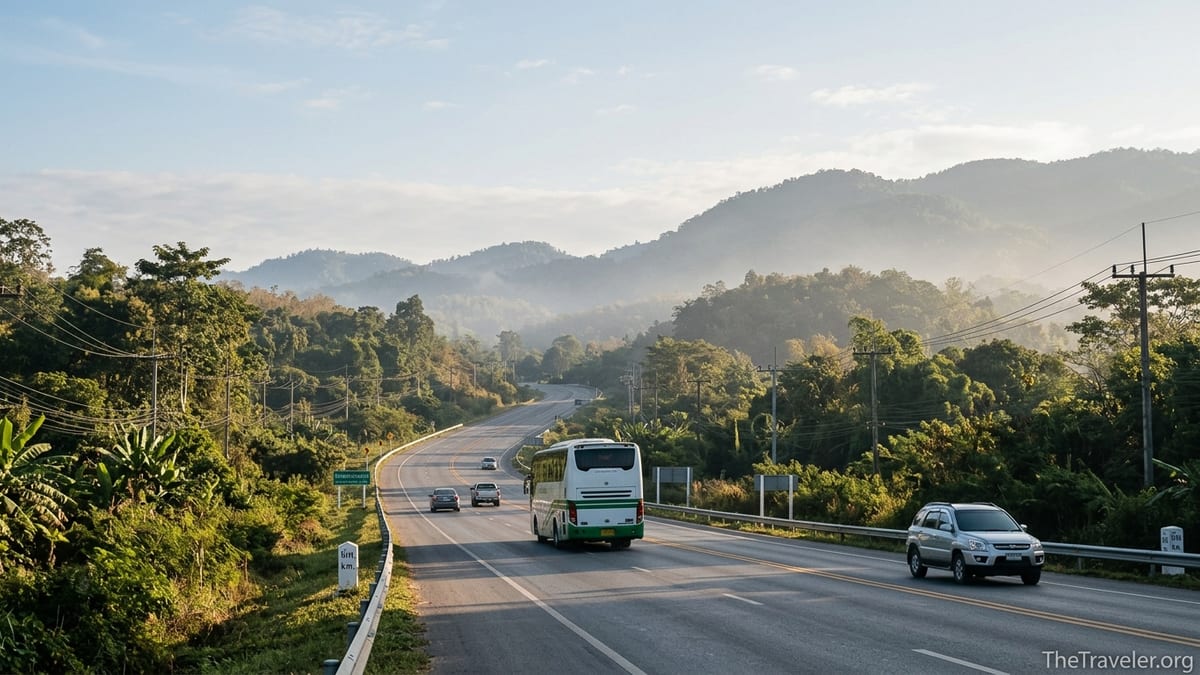
The road journey from Chiang Mai to Chiang Rai is roughly 180 to 190 kilometres, depending on the exact start and end points and which stretch of Highway 118 your driver or bus uses. In light traffic, point-to-point driving time between the cities is typically around 3 to 3.5 hours, although in peak periods, during roadworks or in the rainy season it can take closer to 4 hours. Most travelers experience the route as a single, continuous drive through low mountains and countryside, with only one or two short service-station stops if traveling by bus.
When you land at Chiang Mai International Airport, you are in the city’s southwest, about 4 to 6 kilometres from the main long-distance bus terminal in the northeast. That means even if you are relying on Green Bus for the main leg to Chiang Rai, you first need a short airport-to-bus-station transfer in a taxi, rideshare or airport car. The actual intercity portion then starts from Chiang Mai’s Arcade Bus Terminal and ends at Chiang Rai Bus Terminal 1, just a short walk from the famous Night Bazaar area and many guesthouses.
There is no direct intercity train between Chiang Mai and Chiang Rai, and public minivans have largely been replaced on this corridor by scheduled buses and pre-booked private road transfers. For most visitors, the choice narrows down to: take a Green Bus style connection from Arcade bus station, pay for a private car or taxi all the way from the airport to your Chiang Rai hotel, or skip the road entirely and fly the short hop between the two northern airports.
Each option has a different balance of cost, comfort and flexibility. Backpackers and independent travelers who are not in a rush usually choose the bus, families and groups often prefer a private transfer door to door, while travellers tight on time weigh up the short domestic flight against airport transfer time and check-in formalities at both ends.
From Chiang Mai International Airport to the Bus Station
For many visitors heading to Chiang Rai, the first step after landing at Chiang Mai International Airport is to reach the correct bus terminal. Long-distance buses to Chiang Rai are operated primarily by Green Bus and depart from the Arcade Bus Terminal, located in the northeast of the city near the Superhighway. Depending on traffic and your choice of vehicle, the 7 to 9 kilometre trip from the airport to Arcade usually takes 20 to 35 minutes.
As you exit the arrivals hall, you will find an official taxi desk and a line of metered taxis. A metered ride from Chiang Mai Airport to Arcade Bus Terminal typically comes to the equivalent of around 150 to 250 baht, including the airport surcharge, though prices can vary with time of day and traffic. If the driver prefers a flat fare, it is reasonable for most visitors to accept a pre-agreed price in this ballpark, especially late at night when metered taxis are fewer and negotiations more common.
App-based rides such as Grab or Bolt are frequently available around Chiang Mai Airport as well. Travelers report that booking a GrabCar from the airport to Arcade often comes out slightly cheaper than a walk-up taxi in light traffic, sometimes in the region of 120 to 200 baht depending on vehicle class and demand. In practice, many passengers simply choose whichever option involves the shortest wait time after clearing immigration and collecting bags.
If you have a long layover before your Green Bus departure, some travelers store their luggage at airport or city luggage services and then take a taxi into the Old City for a meal before heading to the bus station. However, most people with pre-booked bus tickets aim to be at Arcade at least 30 minutes before departure, particularly in high season when boarding can be crowded and buses often leave on time.
Green Bus and Other Coach-style Connections
Green Bus Thailand is, in practice, the main operator on the Chiang Mai to Chiang Rai corridor, running multiple departures most days between the two cities. Services use modern, air-conditioned coaches rather than minivans, with allocated seating and luggage placed either in overhead racks or in the under-floor cargo hold for larger bags. Typical journey times advertised on recent schedules range from about 3 to 4 hours, with one or two brief comfort stops depending on the service and traffic along Highway 118.
There are normally different seat classes available, often labelled as standard, first class or VIP. Standard class is the most economical and might cost in the ballpark of 180 to 220 baht per person, while VIP or so-called 24-seat buses with more legroom and a 2+1 seating layout tend to be priced higher, often somewhere around 250 to 300 baht. Schedules can shift from season to season, but it is common to see several daily departures spread across the day, for example in the early morning, late morning, mid-afternoon and early evening.
Tickets can be purchased at the Green Bus counters in Arcade Bus Terminal on the day of travel, but during busy periods such as December to February, Thai public holidays or weekends, many travelers find that popular departures sell out a day or more in advance. To avoid disappointment, it is increasingly common to pre-book seats using Green Bus’s official online booking platform or through local travel agencies in Chiang Mai’s Old City, Nimmanhaemin or along the Ping River.
On the day of travel, passengers with luggage usually check large suitcases, backpacks or duffel bags into the bus hold at no extra charge, while keeping valuables and smaller items in a daypack to take on board. Drivers and staff often attach a luggage tag to your bag and give you a stub in return, which you may be asked to show when collecting your bag in Chiang Rai. Inside the bus, air conditioning can be strong, so it is wise to keep a light layer handy even in the hot months. Many travelers use the 3 to 4 hours to catch up on sleep, read or admire glimpses of forested hills and rural scenery as the road climbs and descends through the mountains.
Private Transfers: Door-to-door Convenience
For travelers who value comfort and flexibility over strict budget considerations, a private transfer directly from Chiang Mai International Airport to a hotel in Chiang Rai can be an appealing option. Several Thai and international transfer companies, as well as local drivers advertising through guesthouses and online platforms, offer door-to-door service in private sedans, SUVs or vans. Vehicles typically seat between 3 and 9 passengers, making this especially cost-effective for families or small groups sharing the fare.
As of mid-2026, sample one-way prices quoted by reputable transfer providers for a standard private car or SUV on this route often fall in the general range of 3,000 to 4,000 baht, including fuel and tolls. Larger vans with space for bigger groups and extra luggage can be more expensive, sometimes approaching 4,500 to 5,000 baht for the full journey. Rates can be higher during peak season, late-night pickups or if you request sightseeing stops at attractions such as Wat Rong Khun (the White Temple) or the hot springs at Mae Khachan along the way.
The main advantage is simplicity. Upon arrival, you simply walk to the meeting point where your driver is waiting with a sign, load your bags into the vehicle and set off. There is no need to navigate city traffic to the bus station, queue for tickets, or share the vehicle with strangers. Travel time is usually around 3 hours in good conditions, though many drivers plan for about 4 hours to allow for a rest stop and variations in traffic, particularly on busy weekends.
Private transfers are also attractive if you are carrying oversized luggage such as large sports bags, camera equipment or multiple suitcases for a family. Most operators clearly state a luggage allowance when you book. In practical terms, a standard SUV can comfortably carry two to three large suitcases plus hand luggage, while a passenger van can carry a full complement of passengers and several large bags. If your group has unusually bulky items, it is worth informing the company in advance so they can recommend an appropriately sized vehicle.
Taxis, Rideshares and Self-drive Options
Some visitors consider taking a regular taxi all the way from Chiang Mai to Chiang Rai, either negotiated on the spot at the airport or pre-arranged through a taxi company. Online fare calculators that track real-world pricing suggest an indicative daytime fare of around 2,700 to 3,000 baht for a one-way taxi journey of about 183 kilometres between the two cities, with surcharges possible for airport pickup, night-time travel or significant waiting time en route. While not as cheap as the bus, this can be competitive with a private transfer for couples or small groups.
In reality, not every Chiang Mai taxi driver will be eager to undertake an intercity trip, especially if it leaves them empty on the return leg. Those who agree often prefer to set a flat door-to-door price after a brief negotiation. It is sensible to clarify whether the quoted fare includes fuel, tolls, and any detours to temples or viewpoints, and to confirm the drop-off address in Chiang Rai clearly before setting off. For safety and comfort, travellers usually prefer newer, air-conditioned sedans or SUVs whenever available.
App-based rides can sometimes be used for the entire route as well, although policies and driver willingness can vary. Some travellers report successfully booking Grab or Bolt rides between Chiang Mai and Chiang Rai, with the app quoting fixed-point fares similar to or slightly below private transfer prices at off-peak times. Because drivers incur time and fuel costs coming back, they may be more inclined to accept such jobs if they have a return booking or live in Chiang Rai, so advance communication via the app chat function is often helpful.
An alternative is to rent a car at Chiang Mai International Airport and drive yourself to Chiang Rai. Major international and Thai rental brands have desks in the arrivals area, offering small automatic hatchbacks, sedans and SUVs. Daily rental rates can start from roughly 800 to 1,200 baht for a basic compact car in low season, rising in peak periods. Self-drive allows maximum flexibility to stop along the way for coffee, viewpoints or hot springs, but requires confidence driving on the left, dealing with occasional slow trucks on mountain curves and adapting to Thai road etiquette. Most rental contracts include a standard mileage allowance and insurance, but it is important to inspect the car and clarify coverage before leaving the airport.
Travel Time, Comfort and Luggage Considerations
Whatever mode you choose, the Chiang Mai to Chiang Rai journey is long enough that comfort and luggage handling become meaningful factors. On Green Bus services, larger bags are checked into the luggage hold and not accessible during travel. If you need medication, electronics or valuables, keep them in a small backpack or shoulder bag that you take onto the bus. Overhead racks fit smaller daypacks, while anything heavier or bulkier is better stored under the coach. Queues to load luggage can be busy just before departure, so arriving at the stand 15 to 20 minutes early makes the process easier.
Seats on VIP or first-class buses are generally more spacious, with extra legroom and sometimes an adjustable footrest, which can make the 3 to 4 hour ride more pleasant, especially for taller passengers. Air conditioning can be chilly, so a light jumper or scarf is recommended. Noise levels are usually moderate, but it is common for Thai passengers to chat quietly, listen to music through earphones or, sometimes, for the bus to play Thai television for part of the trip. Earplugs or noise-cancelling headphones can help if you are sensitive to ambient sound.
In a private transfer, passengers have greater control over temperature, music and rest stops. Families with young children appreciate being able to stop at service areas whenever needed for toilet breaks or snacks. Many service stations along Highway 118 have clean toilets, small convenience stores and coffee kiosks, and some sections offer scenic views over forested hills. Drivers who regularly ply the route typically know which stops are most comfortable and least crowded at different times of day.
With taxis and rideshares, luggage handling is informal but usually straightforward. Drivers commonly help load and unload bags, and there is often space on the back seat or front passenger footwell for delicate items you prefer to keep close. If you are carrying very large suitcases or sports equipment, such as golf bags or camera tripods, it is wise to request a larger vehicle type when booking or to confirm trunk capacity by sending a message or photo to the provider ahead of time.
Flying vs Road: Should You Take a Domestic Flight?
On paper, flying between Chiang Mai International Airport and Chiang Rai’s Mae Fah Luang International Airport looks quick. Actual flight time is typically around 45 minutes to an hour, and several Thai carriers have, at various times, operated this short domestic route. However, once you factor in the time needed to travel from Chiang Mai city centre to the airport, check in, pass security, wait at the gate, collect luggage in Chiang Rai and then travel from Chiang Rai airport into town, the overall door-to-door journey can approach or even exceed that of a well-timed road transfer.
Costs also need to be weighed carefully. Promotional one-way fares on this domestic route can be attractive when booked well in advance, but when you add checked baggage fees, seat selection and airport transfers at both ends, the total spend can be similar to or higher than taking a private transfer, especially for two or more people travelling together. Buses remain significantly cheaper per person in most scenarios, particularly for budget travellers with flexible schedules who do not mind a 3 to 4 hour road journey.
Flying can make the most sense in specific cases. For example, if you are connecting in Chiang Mai directly from an international long-haul flight and want to continue immediately to Chiang Rai with minimal time on the road, a same-day domestic connection might save energy. Likewise, travellers planning to fly onward from Chiang Rai to Bangkok or southern beach destinations may choose to reposition by air rather than return by road via Chiang Mai.
However, for the majority of visitors spending several days in northern Thailand, going by road between Chiang Mai and Chiang Rai offers a more economical and often more scenic experience. It also allows the possibility of one-way overland travel and flying out of the other city, such as entering the region via Chiang Mai, travelling overland to Chiang Rai, then flying onward without backtracking.
Practical Booking Tips and Real-world Itineraries
In high season, it is common for popular Green Bus departures between Chiang Mai and Chiang Rai to sell out, especially around weekends and Thai holidays. A practical approach is to book your bus seats as soon as your travel dates are firm, either online through Green Bus’s booking platform or by asking your Chiang Mai guesthouse or hotel to assist. Travellers who wait until the day of travel often still find seats, but may need to accept less convenient times such as very early morning or late afternoon departures.
One common real-world itinerary looks like this: a traveler lands at Chiang Mai International Airport around midday, clears immigration and baggage by early afternoon, then takes a taxi straight to Arcade Bus Terminal to catch a mid-afternoon Green Bus departure. They arrive in Chiang Rai early evening, walk or take a short tuk-tuk ride to their hotel near the Night Bazaar, and have time for a relaxed dinner in town. This works well when flights and bus schedules line up comfortably and luggage is manageable.
Another frequent pattern is for small groups or families to spend a few nights in Chiang Mai first, then book a private transfer from their city hotel to a hotel in Chiang Rai. On departure day, the driver picks them up directly at their accommodation, loads their multiple suitcases, and drives via Highway 118 with a planned stop at the famous White Temple shortly before reaching Chiang Rai city. For three or four people, the per-person cost of this private transfer can be comparable to upgraded bus tickets plus separate city transfers, while offering a more relaxed experience and personalized sightseeing.
For ultra-budget travellers, the cheapest practical combination is usually a local songthaew or app-based ride from the airport to Arcade Bus Terminal, followed by a standard-class Green Bus ticket to Chiang Rai. This keeps total transport costs fairly low while still using safe, widely used services. Travelers on tight schedules or with mobility concerns might prefer to pay more for a private or taxi transfer in order to avoid hauling bags through terminals and waiting in ticket lines.
The Takeaway
Traveling from Chiang Mai International Airport to Chiang Rai is a straightforward journey once you understand the moving parts: a short city transfer from the airport to Chiang Mai’s Arcade Bus Terminal, followed by a 3 to 4 hour road trip to Chiang Rai, or a direct door-to-door trip in a taxi or private car. Green Bus and similar coach services offer the best value for most travelers, with scheduled departures, allocated seats and manageable fares, while private transfers and taxis deliver maximum convenience, especially for groups and those with substantial luggage.
Whether you opt for a budget-friendly bus, a comfortable private vehicle or a quick domestic flight, planning ahead pays dividends. Check approximate bus times, pre-book tickets or drivers when traveling in high season, and allow margin in your schedule for city traffic and check-in queues. With a realistic understanding of travel times, costs and what each option feels like in practice, you can choose the route that fits your style and arrive in Chiang Rai ready to explore temples, markets and the quieter side of northern Thailand.
FAQ
Q1. How long does it take to get from Chiang Mai International Airport to Chiang Rai by road?
The full journey usually takes about 3.5 to 5 hours door to door, depending on how quickly you transfer from the airport to the bus station and on road traffic conditions.
Q2. What is the cheapest way to travel from Chiang Mai Airport to Chiang Rai?
The most economical option is typically a local taxi or app-based ride from the airport to Chiang Mai’s Arcade Bus Terminal, followed by a standard-class Green Bus ticket to Chiang Rai.
Q3. How much does a Green Bus ticket from Chiang Mai to Chiang Rai cost?
Recent examples suggest standard-class tickets often cost in the region of 180 to 220 baht, while VIP or first-class seats with more space may be closer to 250 to 300 baht per person.
Q4. Do I need to book Green Bus tickets in advance?
While you can sometimes buy tickets on the day, it is wise to book in advance during peak season or holidays, as popular departures between Chiang Mai and Chiang Rai can sell out.
Q5. How much is a taxi or private transfer from Chiang Mai Airport directly to Chiang Rai?
A negotiated taxi or pre-booked private transfer for the roughly 180 kilometre journey commonly falls somewhere between about 2,700 and 4,000 baht, depending on vehicle type, season and any sightseeing stops.
Q6. Is it better to fly or go by road between Chiang Mai and Chiang Rai?
Flying can be faster in the air but, once you account for airport transfers and check-in time, overall door-to-door time is often similar to a road journey. Buses are usually much cheaper, while private cars offer comfort and flexibility.
Q7. Where do buses from Chiang Mai arrive in Chiang Rai?
Most Chiang Mai to Chiang Rai buses arrive at Chiang Rai Bus Terminal 1, which is centrally located near the Night Bazaar area and within a short tuk-tuk ride of many hotels and guesthouses.
Q8. Can I travel with large suitcases or sports equipment on the bus?
Yes, larger bags are typically placed in the under-floor luggage hold at no extra charge, while smaller items can go in overhead racks. If you have unusually bulky equipment, mention it when booking or arrive early to coordinate with staff.
Q9. Are there rest stops on the road between Chiang Mai and Chiang Rai?
Scheduled buses and many private drivers include one or more short stops at service areas along Highway 118, where you can use toilets, buy snacks or stretch your legs for a few minutes.
Q10. Is it safe to travel this route at night?
Many travelers prefer daytime departures for better visibility and scenery, but reputable bus companies and licensed private drivers do operate after dark. If traveling at night, choose well-reviewed providers, wear a seatbelt and avoid overly tight onward connections.