


More news on this day
Kenya’s main airports began returning to life on Tuesday after aviation workers ended a multi-day strike that had paralyzed operations at Nairobi’s Jomo Kenyatta International Airport and left thousands of travelers stranded across the country.
Get the latest news straight to your inbox!
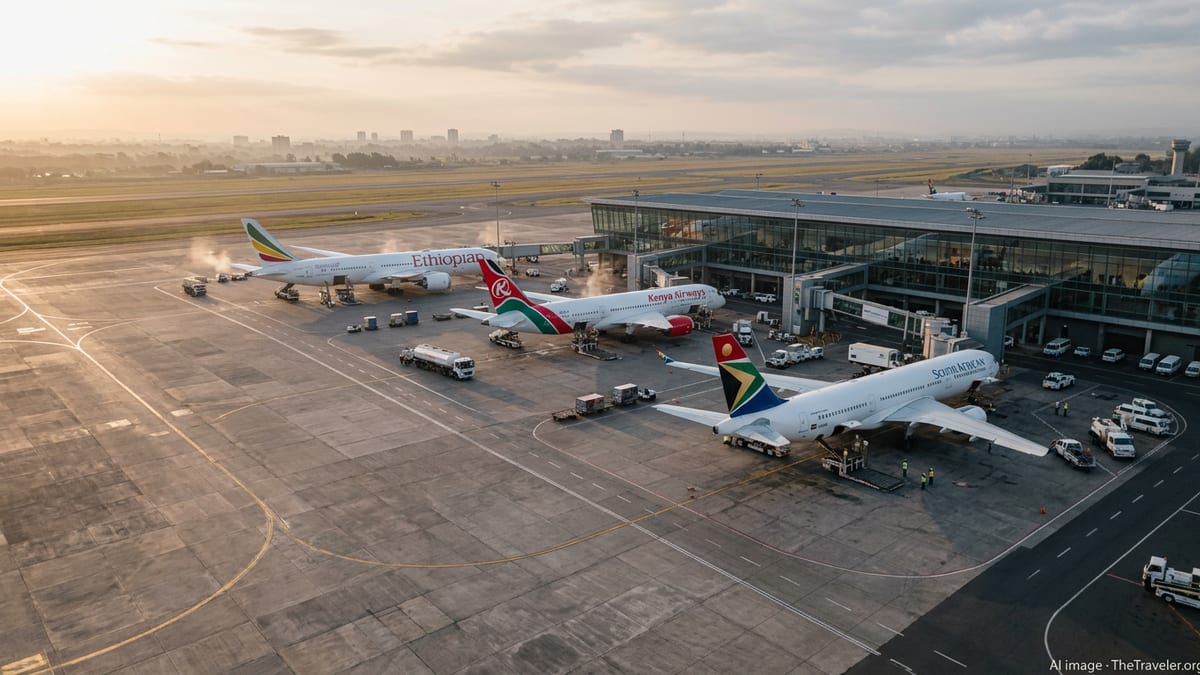
Return-to-work deal restores services at key hubs
According to published coverage from Kenyan and international outlets, the Kenya Aviation Workers Union (KAWU) agreed on September 1 to call off industrial action after reaching a return-to-work deal with the Ministry of Transport, the Kenya Airports Authority, the Kenya Civil Aviation Authority and carrier Jambojet. The agreement followed overnight and early-morning talks that sought to end a standoff that had severely disrupted air travel since Sunday.
Publicly available information shows that the strike, described in some reports as lasting two to three days, brought operations close to a standstill at Jomo Kenyatta International Airport (JKIA) in Nairobi, the country’s main international gateway. Additional disruptions were reported at Moi International Airport in Mombasa, Eldoret International Airport and Kisumu International Airport, impacting both domestic and regional connections.
Under the deal, KAWU instructed its members to resume normal duties immediately, paving the way for the restoration of full airport services. A return-to-work framework sets out commitments on salary talks, a collective bargaining agreement with the aviation regulator and recognition arrangements with some airport operators, according to Kenyan media summaries of the agreement.
Aviation authorities and airport operators have been advising passengers to expect residual delays as flight schedules are gradually normalized. Airlines are working through a backlog of cancellations and missed connections that accumulated during the stoppage.
Hiring, pay and airport management at the center of dispute
Reports indicate that the walkout was driven by a combination of labor and governance concerns within Kenya’s aviation sector. Unionized workers raised complaints over staff hiring practices, remuneration and proposed changes in the management of JKIA and other facilities, echoing grievances that have surfaced in earlier disputes between aviation staff and state-linked agencies.
Coverage from multiple Kenyan news outlets notes that KAWU members employed by the Kenya Airports Authority, Kenya Civil Aviation Authority and Jambojet had downed tools in protest, citing unresolved issues around pay progression, contract terms and the handling of union dues. The union has also been pushing for a formal recognition agreement with some employers, a matter that has featured in recent labor relations proceedings.
The return-to-work formula reached on Tuesday reportedly commits the civil aviation regulator and other stakeholders to accelerated negotiations on a new collective bargaining agreement and to following guidance from the Salaries and Remuneration Commission on future salary adjustments. Observers of the sector view this as a significant step in addressing longstanding disputes that have periodically spilled into industrial action.
At the same time, analysts point out that Kenya’s main airports are critical national infrastructure and a hub for East African travel, making any prolonged work stoppage particularly disruptive for tourism, trade and regional connectivity.
Passenger disruption felt across domestic and international routes
International wire services and local media have documented widespread disruption for passengers transiting through Nairobi and other affected airports during the strike. Flights were cancelled or delayed for hours, with images and social media posts showing crowded terminals, long queues and travelers sleeping on airport floors as they waited for information about their journeys.
Travelers on both domestic and international routes reported missed connections, rebooked itineraries and last-minute schedule changes as airlines attempted to adapt to limited ground handling and airside support. Nairobi-based JKIA, which serves as a major hub for flights linking Europe, the Middle East and the wider African region, experienced some of the most severe impacts.
Kenya’s national carrier has warned that, despite the formal end of the strike, the aftereffects are likely to linger. Published statements referenced in local coverage suggest that normal operations may only fully stabilize over the coming days as crews, aircraft and airport services are realigned to pre-strike patterns.
Some airlines have introduced flexible rebooking options at no additional cost for travelers whose journeys were disrupted, with travel advisories urging passengers to monitor flight status closely and arrive at airports earlier than usual while schedules remain congested.
Ongoing recovery and guidance for upcoming travelers
Travel industry reports emphasize that while flights have resumed, the operational recovery is gradual rather than instantaneous. Clearing the backlog of stranded passengers, repositioning aircraft and rebalancing crew rosters can take several days, particularly at a busy hub such as JKIA that also supports cargo and regional services.
Public travel advisories circulating on Tuesday encourage passengers planning to transit through Nairobi and other Kenyan airports to stay in close contact with their airlines or travel agents. Many carriers are updating flight information frequently as they adjust to revised slot times and available ground services.
For visitors arriving in Kenya in the coming days, especially those connecting to safaris or coastal holidays, industry observers recommend allowing extra time between flights and confirming ground arrangements that may have been affected by delayed arrivals. Tour operators and hotels are working with clients to re-coordinate transfers from airports whose operations were heavily disrupted during the strike period.
The episode has renewed attention on the resilience of aviation infrastructure in East Africa and the importance of stable labor relations in safeguarding critical travel corridors. As operations normalize, stakeholders in Kenya’s tourism and transport sectors are expected to closely track how the return-to-work commitments are implemented in order to reduce the risk of further disruption.
Implications for Kenya’s tourism and regional connectivity
Kenya’s aviation sector is a cornerstone of the country’s tourism industry, which relies heavily on smooth international arrivals into Nairobi and Mombasa. Industry data cited in recent analyses highlight that JKIA functions as a regional hub, funnelling visitors onward to national parks, coastal resorts and neighboring countries.
The multi-day paralysis at major airports therefore carried implications beyond Kenya’s borders, affecting passengers traveling on to destinations across East and Central Africa. Travel experts note that disruptions of this scale can temporarily dent traveler confidence, particularly among first-time visitors or those with tight itineraries that are sensitive to delays.
However, the relatively swift conclusion of the industrial action and the establishment of a structured framework for further negotiations are seen by many observers as positive signs. If followed through, the commitments on pay, staffing and union recognition may reduce the likelihood of renewed strikes during upcoming peak travel seasons.
For now, global travelers with plans involving Kenya are being advised to keep monitoring airline and airport announcements, but there is no indication in current reporting that trips scheduled for later in September or beyond should be cancelled solely because of the strike. As flight operations continue to stabilize, focus is shifting to lessons learned on contingency planning and communication with passengers during sudden disruptions at one of Africa’s busiest aviation hubs.
Associated Press coverage of the strike and its resolution
Standard Media report on the return-to-work agreement