


Landing at Kilimanjaro International Airport is a thrilling moment. One minute you are rolling your carry-on through a small, low-key terminal, and within a few hours you could be watching elephants in Tarangire or sunset over the Ngorongoro rim. The key is understanding how to get from the runway at Kilimanjaro International Airport, commonly called JRO, to the safari staging points of Arusha, Tarangire, Lake Manyara, Ngorongoro and the Serengeti, and whether it ever makes sense to head straight out on safari the same day you arrive.
Get the latest updates straight to your inbox!
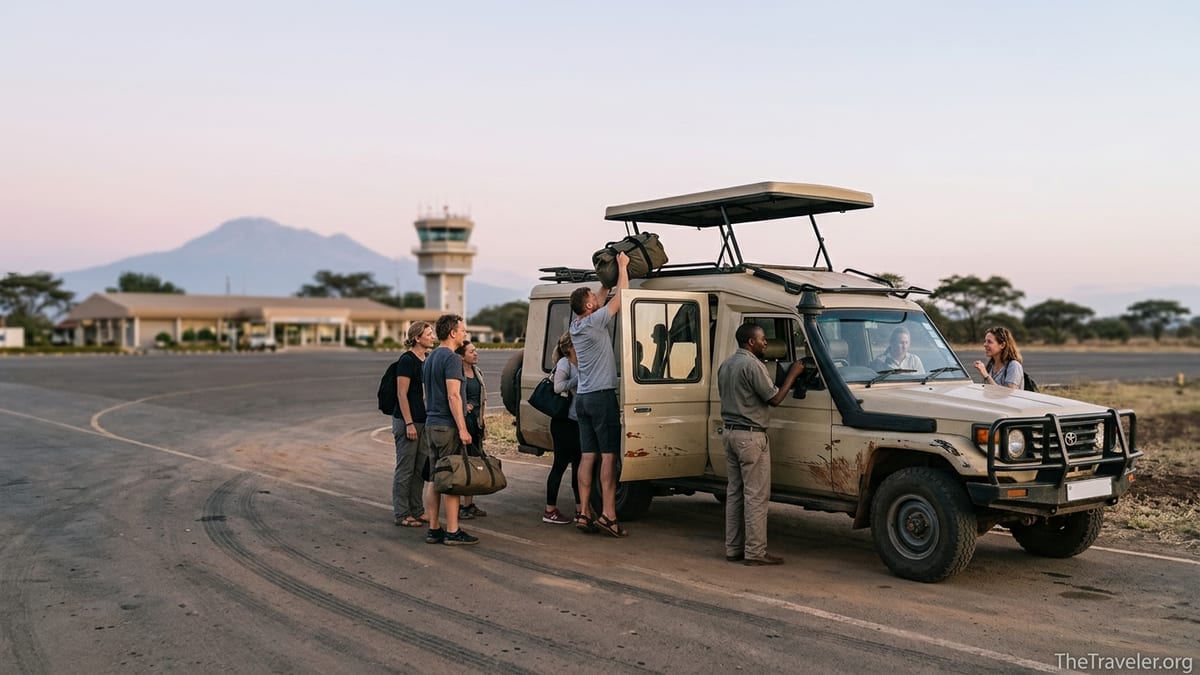
Understanding Kilimanjaro International Airport as Your Safari Gateway
Kilimanjaro International Airport sits between the towns of Arusha and Moshi, about 45 to 50 kilometers from central Arusha and roughly 35 kilometers from Moshi. Most travelers heading for the famous northern circuit parks fly into JRO on evening arrivals from hubs such as Amsterdam, Doha or Addis Ababa. The airport itself is small and straightforward, with a single terminal, a few baggage belts, a currency exchange booth, ATMs that sometimes run out of cash, and a small cluster of local transfer drivers waiting outside with name boards.
Immigration and baggage can be surprisingly efficient or uncomfortably slow, depending on how many flights land at once. In typical conditions, clearing formalities and collecting your luggage takes 30 to 60 minutes for travelers who already obtained an e-visa, and up to 90 minutes when queues are long or you are purchasing a visa on arrival. It is wise to factor this into any plan to drive onward the same day, especially in the late afternoon or evening.
Once outside, you will find that JRO is not served by formal metered city taxis in the same way as a large international hub. Instead, most visitors arrange private transfers in advance through their safari operator or lodge. As a rough real-world example, in mid 2026 many midrange operators quote around 60 to 80 US dollars per vehicle for a private transfer from JRO to central Arusha, while higher end lodges may bundle this in their package price. Shared shuttles do exist, often run by local transfer companies, but they are less frequent than in big-city airports and usually need to be booked ahead.
Because Kilimanjaro International Airport is closer to Arusha than to any park gate, almost all classic safaris begin with at least one night in or around Arusha. A few itineraries route guests directly from the airport to Tarangire or Lake Manyara by road if the inbound flight arrives before midday, but this is the exception rather than the rule. Understanding the distances and realistic drive times is essential for choosing what works for your arrival day.
From JRO to Arusha: Your First Step Into Safari Country
Arusha is the main gateway city for northern Tanzania safaris, and your first overland leg is usually JRO to Arusha. The distance on the main tarmac road is roughly 45 to 50 kilometers. In light traffic, a private vehicle typically makes the trip in about 60 minutes, but with slow trucks, occasional police checkpoints and roadworks, operators sensibly allow 60 to 90 minutes door to door. Many safari companies schedule their first night at hotels such as Four Points by Sheraton Arusha, Gran Melia Arusha, or midrange lodges on the outskirts like Planet Lodge or African Tulip, precisely because they are easy to reach after a long-haul flight.
In practice, a common pattern is an international flight landing between 19:00 and 22:00 at JRO. After immigration and luggage, your driver meets you outside and you are on the road by 20:30 to 23:00. The drive to Arusha is in the dark on paved roads, with occasional speed bumps and small roadside villages. By the time you reach your hotel it can easily be close to midnight. For that reason, even if your safari technically starts the next day, most operators avoid long night drives toward the parks and keep night one in Arusha only.
During the day, JRO to Arusha is a more scenic experience, with views of Mount Meru on clear mornings and glimpses of rural life along the roadside. Some travelers arriving on midday regional flights from Nairobi or Zanzibar opt to head straight to an Arusha-area coffee lodge such as Arusha Coffee Lodge, enjoying a relaxed afternoon before joining their guide for a briefing and vehicle handover. This slower start allows for forgotten items to be purchased in Arusha, such as local SIM cards, binoculars or warmer clothing for the Ngorongoro rim.
On the question of cost, you will rarely find Uber-style ride hailing here. Independent airport taxis may quote lower prices, for example 40 to 50 US dollars into town, but quality and reliability vary. With jet lag and valuable luggage, most safari travelers find the extra cost of a pre-booked driver worth the peace of mind. If your safari company includes transfers, confirm in advance whether that covers both arrival and departure and whether you will share the vehicle with other guests.
Arusha to Tarangire, Lake Manyara and Ngorongoro: Realistic Road Times
Once you leave Arusha, travel times start to stretch. The road toward Tarangire, Lake Manyara, Ngorongoro and onward to the Serengeti is a mix of good tarmac and slower park access roads. From central Arusha to the main Tarangire National Park gate, most operators quote about 2.5 to 3 hours of driving, covering roughly 150 to 170 kilometers depending on your exact route and Arusha departure point. Some online calculators show slightly shorter distances, but those do not account for speed limits, trucks and village traffic that your driver will respect.
For Lake Manyara National Park, the standard route from Arusha is on paved highway west to the small town of Mto wa Mbu at the base of the Rift Valley escarpment. The distance is around 115 to 125 kilometers and typically takes 2 to 3 hours by safari vehicle. Many sample itineraries used by Tanzanian operators still indicate an Arusha to Manyara drive of about 2.5 hours, which matches on-the-ground experience for most daytime runs when you include a short break.
Continuing from Lake Manyara to the Ngorongoro Conservation Area gate adds about 1 to 1.5 hours on paved road up the escarpment, followed by another 45 to 60 minutes on a narrower, winding road to reach popular crater rim lodges such as Ngorongoro Serena Safari Lodge or Ngorongoro Sopa Lodge. Realistically, you should plan on approximately 4 hours in total from Arusha to the crater rim, covering around 170 to 190 kilometers. While some distance charts quote slightly shorter times, travelers routinely report full half days spent on this segment, especially when factoring in photo stops and paperwork at gates.
These drive times matter when deciding whether to push straight from the airport to a park. For instance, if your international flight touches down at JRO at 09:00, you clear the airport by 10:30, reach Arusha by 11:30, and then still face at least 2.5 hours to Tarangire. It is possible to arrive at your Tarangire lodge by mid to late afternoon and enjoy a shorter game drive. However, if your flight lands after midday, that entire sequence shifts into late afternoon and evening, which greatly reduces your margin for delays and may put you on rural roads after dark, something most reputable operators avoid.
Getting to the Serengeti: When Driving Makes Sense and When to Fly
The Serengeti is the crown jewel of the northern circuit, but it is also the furthest major destination from Kilimanjaro International Airport. Driving from Arusha to central Serengeti, around the Seronera area, generally takes 7 to 8 hours in a safari vehicle, including a lunch stop and time at the Ngorongoro gate and Naabi Hill gate. The distance is often quoted as roughly 320 to 350 kilometers, with substantial stretches on corrugated dirt roads after you leave the crater highlands and enter Serengeti proper.
Because of the length and roughness of this drive, most itineraries that include the Serengeti will break the journey with a night at Lake Manyara or on the Ngorongoro rim first. A typical route might be Arusha to Lake Manyara on day one, Manyara to Serengeti on day two, then Serengeti back to Ngorongoro on the return. This pattern means that from your arrival at JRO, you are at least one or two overnights away from the central Serengeti, even if everything runs smoothly.
Internal flights shorten these connections considerably. From Arusha Airport, a small domestic field on the western side of town, daily bush flights run to airstrips such as Seronera (central Serengeti), Kogatende (northern Serengeti) and Ndutu (southern Serengeti in season). Many itineraries now include a road transfer from JRO to a hotel near Arusha Airport, then a morning bush flight the next day directly into the Serengeti. As a real-world example, a one-way seat in a small aircraft on routes like Arusha to Seronera often runs in the neighborhood of 250 to 350 US dollars per person for shared scheduled services, though exact fares vary by operator and season.
Flying is not only about saving time. Travelers regularly underestimate how tiring long hours of off-road driving can be. In the long dry season from July to October, the dirt sections into Serengeti can be very dusty and rutted, and 7 or more hours in a Land Cruiser the day after a red-eye flight can leave you exhausted for your first game drive. For families with younger children or older travelers, a strategy that uses road transfers for closer parks like Tarangire and Lake Manyara, while flying into and out of Serengeti, is often the best balance of cost and comfort.
Same-Day Safari or Overnight in Arusha: How to Decide
One of the most common questions for first-time visitors is whether they should start their safari the same day they land at JRO or schedule an overnight stop in Arusha first. There is no single right answer, but a few practical guidelines help. If your flight is scheduled to arrive in the early morning, before about 09:00, and you are headed to a relatively close park like Tarangire or Lake Manyara, many operators are comfortable driving straight out so you can enjoy an afternoon game drive. If your arrival is in the afternoon or evening, an overnight in Arusha is strongly recommended.
Jet lag plays a major role. Travelers coming from North America or Europe often arrive at JRO after 20 or more hours in transit. Even if you land at 08:00, by the time you have driven several more hours to a park gate and started your first game drive, your ability to appreciate the experience may be dulled by fatigue. In contrast, spending your first night in Arusha allows you to shower, sleep properly and begin the next day with a fresh briefing and clear head. Many seasoned safari planners consider that first relaxed morning in Arusha an essential buffer to protect the rest of the itinerary from airline delays.
Risk management is another factor. If your inbound international flight is delayed and you planned to drive straight to Ngorongoro or Serengeti, you may arrive after dark or even miss your first night in the park. Lodges inside protected areas often have strict latest check-in times due to park regulations and road safety. When your first night is in Arusha, your driver only needs to cover the one-hour transfer from the airport, which is far more manageable if your plane lands two or three hours late.
Budget-conscious travelers sometimes argue that an Arusha night is an extra hotel bill that could have gone toward more time in the parks. However, midrange Arusha hotels often cost significantly less per night than premium lodges in Ngorongoro or the Serengeti. In real terms, a missed first night at a crater rim lodge or high-end Serengeti camp due to a flight delay can cost several hundred dollars more than the price of a simple Arusha overnight. Seen that way, a buffer night is an inexpensive insurance policy, especially during peak seasons when rooms are nonrefundable.
Transfers, Luggage and Practical Arrival Logistics
Luggage handling at JRO is relatively straightforward, but a few safari-specific considerations are important. If you will use bush flights on small aircraft during your itinerary, the airline will likely impose strict weight and bag shape limits, often around 15 to 20 kilograms per person in soft-sided duffel bags. Hard suitcases and large wheeled bags may be accepted on international segments but will cause headaches once you transition to domestic flights. Many Arusha hotels and safari companies offer secure luggage storage so that you can leave hard cases or nonessential items in town while taking only soft bags into the parks.
For electronics and valuables, carry them in your hand luggage and keep that bag compact enough to fit in smaller bush planes if needed. Camera gear is common on safari, but remember that dust can be pervasive, especially on drives to Tarangire and Serengeti in the dry season. Practical examples from recent travelers include using inexpensive zip-top plastic bags or neoprene covers to protect lenses between sightings and bringing a simple microfiber cloth to clean gear daily. Charging options in safari vehicles vary; some Land Cruisers offer USB ports, while others do not, so a small power bank bought before you depart can be invaluable on long transfer days.
On arrival, you will find currency exchange at JRO, but rates are usually not as favorable as in Arusha and cash machines occasionally have outages. Many safari operators now accept park fees and package balances by bank transfer or card in advance, so you may only need local cash for tips and incidental expenses. In 2026 it remains common to tip drivers and guides in US dollars or Tanzanian shillings. Make sure any dollar bills are recent issues and in good condition, as some local banks and businesses refuse older or torn notes.
If your arrival into JRO is late at night, plan your luggage so that you can easily pull out pajamas and toiletries from a small daypack when you reach your Arusha hotel. It is not uncommon to roll into a lodge after midnight on delayed flights, and sorting through multiple large bags in a tired state is no fun. Likewise, keep a printed copy or clear screenshot of your safari operator’s contact details and your driver’s name. JRO’s mobile data coverage can be patchy in the terminal, and relying solely on an online confirmation email is risky if you cannot connect on arrival.
Sample Arrival Scenarios: What Works in Real Life
To make these principles more concrete, consider a few real-world style scenarios. A couple from New York arriving on a morning KLM flight at around 08:50 might clear immigration and baggage by 10:00 and meet their safari driver soon after. They have booked a midrange lodge just outside Tarangire National Park for the night. By 10:15 they are on the road, reach Arusha around 11:15 for a quick coffee stop, then continue toward Tarangire. After a simple roadside lunch near the turnoff, they enter the park gate by about 14:00 and enjoy a three-hour game drive before heading to their lodge at sunset. For them, a same-day start works because the arrival is early, the park is relatively close and they are comfortable with a full day of movement.
Contrast that with a family of four from London arriving at JRO at 20:30 on an evening flight. By the time they clear the airport it is after 21:30, and they still face a one-hour transfer to Arusha. Their plan is to overnight in a family room at a hotel on the outskirts of town, have breakfast around 08:00, meet their guide at 09:00, and then drive to Lake Manyara for a longer midday and afternoon game drive. Trying to push straight to Manyara the night of arrival would mean several hours on dark rural roads and a late check in at their lodge, with no real wildlife viewing to compensate for the tiring journey.
A third scenario involves a traveler combining a Mount Kilimanjaro climb with safari. After descending from the mountain, they spend a recovery night in Moshi and then transfer back past JRO toward Arusha to start a shorter 3 day safari to Lake Manyara and Ngorongoro. Because Kilimanjaro treks are physically demanding, most climbers appreciate at least one rest night before sitting in a vehicle for extended periods. In this case, the transfer planning revolves less around international arrival times and more around post-trek fatigue and the need for hot showers and proper sleep.
Finally, imagine a couple focused on the great migration in the northern Serengeti in August. They fly into JRO in the evening, overnight near Arusha Airport, and the next morning take a scheduled bush flight directly to Kogatende airstrip, arriving mid-morning in the middle of the migration action. After four nights in the northern Serengeti, they fly back to Arusha and transfer to JRO for an evening international departure. They never drive the long, dusty route to Serengeti by road. While this style costs more in flight tickets, it dramatically reduces transit time and maximizes hours actually watching wildlife instead of staring out the window of a bouncing vehicle.
The Takeaway
Turning a landing at Kilimanjaro International Airport into a seamless start to your safari is less about finding a secret shortcut and more about understanding where time goes in the real world. JRO to Arusha is a modest one-hour drive, but onward legs to Tarangire, Lake Manyara, Ngorongoro and the Serengeti are substantial journeys that deserve respect. The earlier in the day you land, the more realistic a same-day road transfer to the closer parks becomes. As arrival times slide toward afternoon and evening, the smarter and safer choice is almost always an overnight in or around Arusha.
Booking a private, prearranged transfer from JRO, packing with small aircraft limits in mind, and allowing a buffer night before major drives or bush flights all reduce stress. When budget allows, mixing road segments to nearby parks with flights into and out of Serengeti often delivers the best experience-to-fatigue ratio. In every case, honest conversations with your safari operator about your exact flight times, sleep preferences and appetite for long drives will yield an itinerary that feels tailored rather than rushed.
With realistic expectations and a bit of strategic planning, the stretch from Kilimanjaro International Airport to your first game drive can become part of the adventure instead of a test of endurance. The goal is simple: arrive in the parks rested enough to enjoy those first lions or elephants, knowing that you made smart choices from the moment you stepped off the plane.
FAQ
Q1. How long does it take to get from Kilimanjaro International Airport to Arusha?
In normal daytime traffic, the drive from Kilimanjaro International Airport to central Arusha takes about 60 minutes, but operators often allow 60 to 90 minutes to account for slow trucks, speed limits and occasional police checkpoints.
Q2. Can I go straight from JRO to Tarangire National Park on arrival day?
Yes, if your international flight lands early in the morning and you clear the airport by late morning, a same-day drive to Tarangire is realistic, with arrival in time for an afternoon game drive. If you land after midday, most reputable operators will suggest overnighting in Arusha instead of tackling several hours on rural roads late in the day.
Q3. Is it safe to arrive at night and drive directly to a safari lodge?
Driving long distances on rural roads after dark is generally avoided due to limited visibility, livestock on the road and higher accident risk. A short night transfer from JRO to a hotel in or near Arusha is common and considered safe, but continuing on to more distant parks such as Tarangire, Lake Manyara or Ngorongoro at night is not recommended.
Q4. Should I start my safari the same day I land or stay a night in Arusha?
If you land very early and are heading to a nearby park, a same-day start can work. However, many travelers find that an overnight in Arusha after a long-haul flight provides valuable rest, buffers against delays and makes the first game drive more enjoyable.
Q5. How far is Arusha from Lake Manyara and Ngorongoro by road?
From Arusha, Lake Manyara National Park is roughly a 2 to 3 hour drive depending on traffic and stops, while reaching the Ngorongoro crater rim typically takes about 4 hours, including the climb up the escarpment and time at the conservation area gate.
Q6. Is it worth flying to the Serengeti instead of driving?
For many travelers, yes. Driving from Arusha to central Serengeti is a full day of 7 to 8 hours on a mix of tarmac and rough dirt roads. Flying from Arusha Airport to airstrips like Seronera or Kogatende cuts this to around 1 to 2 hours of air time and leaves you fresher for game drives, though it increases costs.
Q7. What kind of luggage should I bring if I will use bush flights?
Small aircraft used for bush flights usually have strict limits of about 15 to 20 kilograms per person and require soft-sided duffel bags. Hard suitcases are discouraged. Many travelers leave larger bags in storage in Arusha and take only a soft duffel and daypack into the parks.
Q8. How do I arrange a transfer from JRO to Arusha?
The most reliable option is to book a private transfer through your safari operator or Arusha hotel before you travel. They will send a driver to meet you in the arrivals area with a name board. Independent taxis and occasional shared shuttles exist, but pre-booking avoids haggling and uncertainty after a long flight.
Q9. What happens if my international flight into JRO is delayed?
If your first night is scheduled in Arusha, a delay usually just shifts your pickup time and late check-in at the hotel. If you planned to drive directly to a park or catch a same-day bush flight, delays can cause missed connections or very late arrivals, which is why many operators build in at least one buffer night at the beginning of an itinerary.
Q10. How much cash should I carry on arrival at Kilimanjaro International Airport?
You do not need large amounts of cash if your safari is prepaid. Many travelers carry a few hundred US dollars in small, recent bills for tips and incidental purchases, plus a bank card to withdraw Tanzanian shillings from ATMs in Arusha. It is sensible to have enough for the first day or two in case airport ATMs or card machines are temporarily out of service.