


More news on this day
Travelers across Colombia have been stranded at major airports after LATAM Airlines Colombia canceled 18 flights and delayed another five, disrupting domestic and international services to and from Bogotá, Medellín, Cartagena, Cali, and Barranquilla.
Get the latest news straight to your inbox!
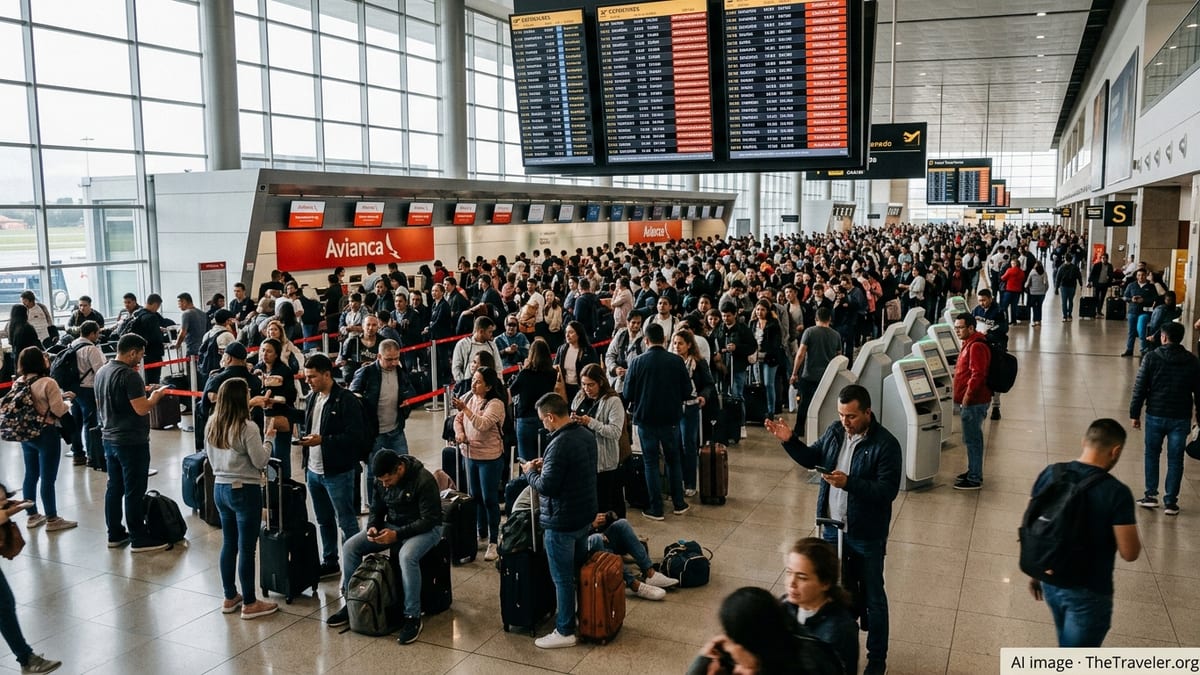
Widespread Disruptions Hit Colombia’s Busiest Hubs
Publicly available flight tracking data and local media coverage indicate that a wave of cancellations and delays affecting LATAM Colombia services began accumulating over the weekend, concentrating at Bogotá’s El Dorado International Airport and rippling quickly to Medellín, Cartagena, Cali, and Barranquilla. The pattern shows a cluster of grounded and late-running flights on trunk routes that normally connect the country’s largest cities with regional and international links.
The affected flights include both early morning and evening departures, complicating rebooking options and leaving passengers facing long queues at service desks and crowded boarding areas. With 18 cancellations and at least five flights operating with significant delays, seat availability on remaining services has narrowed, especially on the heavily traveled Bogotá to Medellín and Bogotá to Cartagena corridors.
Reports indicate that the knock-on effect is being felt beyond Colombia, as some of the canceled departures were scheduled to connect with regional and long-haul services operated by LATAM Group and partner airlines. Missed onward connections for travelers heading to other South American capitals and North American gateways are contributing to growing backlogs at rebooking counters.
Operational data suggests that disruptions are not concentrated on a single city pair but are instead scattered across the domestic network, magnifying the difficulty for passengers trying to piece together alternative routings within Colombia on short notice.
Passengers Face Long Waits, Missed Connections, and Limited Options
Travelers attempting to move between Colombia’s main business and tourism centers have described, through social media posts and public forums, hours-long waits for information as departure times slipped or flights disappeared from airport screens. Families on school holiday trips to Cartagena and international passengers transiting via Bogotá appear to have been among those hardest hit by the cancellations.
According to published coverage, airport terminals in Bogotá and Medellín saw lines stretching through check in halls as LATAM customers sought hotel vouchers, food allowances, and new itineraries. In several cases, passengers reported being rebooked for departures a full day or more after their original schedule, forcing overnight stays or last minute changes to ground transport and accommodation plans at their intended destinations.
On routes such as Bogotá to Cali and Bogotá to Barranquilla, where multiple carriers operate, some travelers were able to secure seats on rival airlines, though often at higher last minute fares. Others, especially those with tight international connections, faced the choice of canceling entire trips or attempting complex multi stop reroutes through secondary airports with limited facilities.
For tourists arriving in Colombia, the disruption has meant lost nights in prepaid hotels, rescheduled tours, and additional out of pocket spending on taxis and meals. Domestic business travelers, meanwhile, have cited missed meetings and postponed site visits, underlining how a relatively small number of cancellations on high demand routes can reverberate far beyond the departure boards.
Operational Strain Highlights Vulnerabilities in a Lean Network
LATAM Airlines Colombia operates a relatively focused network from its Bogotá base, with a fleet that public data shows is modest in size compared with some regional competitors. Aviation analysts note that when an airline runs a lean operation, irregular events such as crew imbalances, aircraft maintenance issues, or weather related constraints can quickly cascade into wider disruption if there are few spare aircraft or crews available to restore the schedule.
Industry observers point out that recent disruptions elsewhere in Latin America and beyond have followed a similar pattern, with a limited number of grounded aircraft or out of position crews triggering disproportionate delays and cancellations as airlines try to protect later departures or high revenue routes. In Colombia, the concentration of LATAM’s operations at El Dorado appears to amplify these effects when problems emerge during peak traffic banks.
Publicly available information suggests that airlines typically respond by consolidating lightly booked flights, trimming frequencies, or canceling some services in order to stabilize operations over subsequent days. For passengers, this strategy often translates into an uneven experience, with some flights operating close to schedule and others disappearing entirely with only a few hours notice.
While the exact operational triggers behind the current wave of cancellations have not been fully detailed in public documents, the pattern across routes to Medellín, Cartagena, Cali, and Barranquilla points to network wide strain rather than an isolated technical incident at a single airport.
What Rights Stranded Travelers May Have
Consumer advocacy groups and air passenger rights platforms note that travelers affected by cancellations and long delays can, in certain circumstances, pursue refunds, rebookings, or additional compensation. The specific entitlements depend on factors such as the origin and destination of the flight, the cause of the disruption, and whether the airline provided timely notice of schedule changes.
For domestic routes within Colombia, passenger protections are shaped by local aviation and consumer regulations, which generally require airlines to offer rebooking or refunds when a flight is canceled. In practice, this may mean travelers are offered seats on the next available flight on the same carrier, travel vouchers, or, in some cases, reimbursement to the original form of payment if the trip is no longer feasible.
On itineraries that start or end in jurisdictions with more detailed air passenger rights frameworks, such as the European Union, additional compensation can sometimes apply, especially when cancellations occur with little advance warning and are not clearly linked to extraordinary circumstances such as severe weather or airspace closures. Travelers on multi segment tickets involving connections outside Colombia are being urged by consumer groups to review the terms and conditions of their fare and any applicable regional regulations.
Specialists in travel claims emphasize that passengers should retain boarding passes, booking confirmations, and any written notices of schedule changes, as these documents can be important when filing complaints or seeking reimbursement for extra expenses like meals, ground transportation, or hotel stays incurred as a direct result of cancellations or extended delays.
Ongoing Rebooking Efforts and Advice for Upcoming Trips
As LATAM Colombia works to re accommodate affected passengers, airport monitors and booking platforms show a gradual normalization of parts of the schedule, although some delay indicators remain on key city pairs. Travel planners are cautioning that even once the immediate wave of cancellations passes, residual effects can persist for a day or more as aircraft and crews are repositioned and backlogged passengers are cleared from standby lists.
For travelers with upcoming itineraries on LATAM within Colombia, publicly available guidance from aviation and consumer agencies encourages frequent checks of flight status before leaving for the airport, using both airline channels and independent tracking tools. Arriving earlier than usual for check in, especially on routes involving onward international connections, is also being recommended to allow time for rerouting if schedules shift again.
Passengers with flexible plans are being advised to consider off peak departure times, when airport congestion may be lower and staff have more capacity to handle schedule changes. Those with fixed travel dates, such as cruise departures or tour start times, are urged to build in additional buffer time or alternative routing options where possible.
With Colombia heading into another busy period for both domestic and inbound tourism, the episode serves as a reminder of how quickly an airline specific disruption can ripple through a country’s wider transport network. For now, travelers booked on LATAM Colombia routes to Bogotá, Medellín, Cartagena, Cali, and Barranquilla are watching schedules closely and weighing contingency plans in case the disruption extends beyond the immediate wave of canceled and delayed flights.