


Two names come up again and again when travelers dream about the wild fells and deep snow of Finnish Lapland: Pallas–Yllästunturi and Urho Kekkonen National Park. Both are vast, both are beautiful, and both promise real Arctic wilderness. Yet they deliver very different experiences. If you have limited time in Lapland, choosing between them can shape your entire trip. This comparison looks at access, landscapes, activities, costs, and level of remoteness so you can decide which park better matches your idea of a Finnish wilderness adventure.
Get the latest updates straight to your inbox!
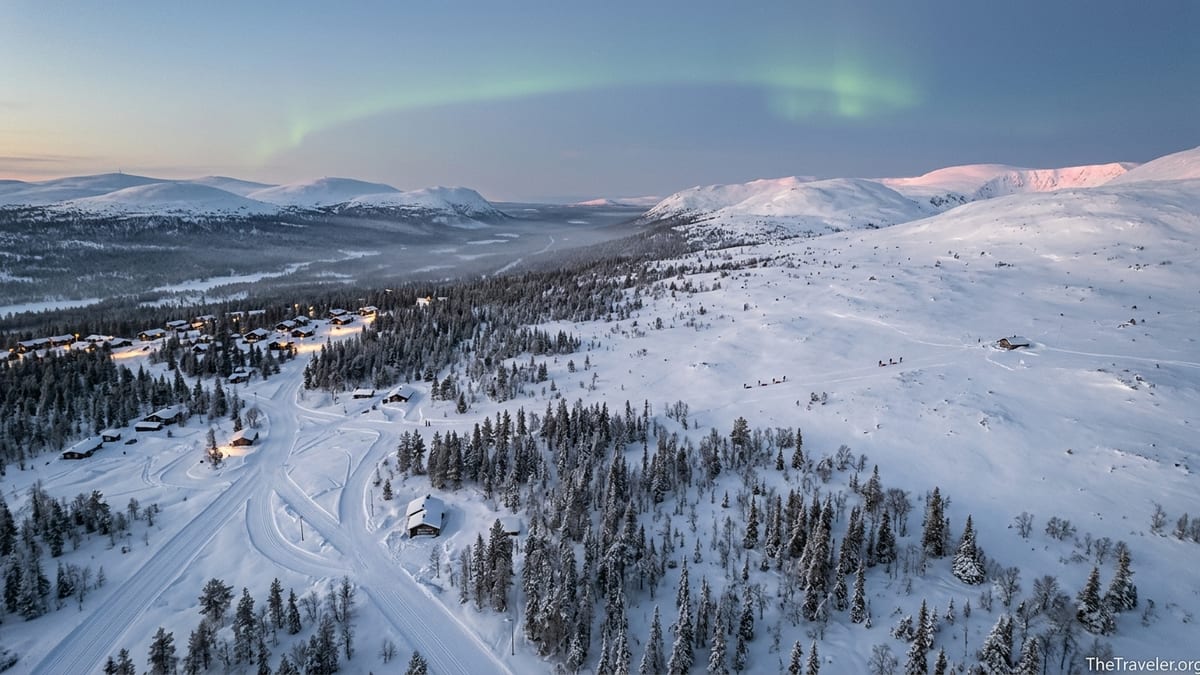
Big Picture: Two Giants of Lapland Wilderness
Pallas–Yllästunturi and Urho Kekkonen are among the most visited national parks in Finland, regularly trading places at the top of the visitor statistics. In recent years, Pallas–Yllästunturi has typically attracted slightly more visitors than Urho Kekkonen, with both seeing several hundred thousand visits a year. That alone tells you two things: they are not obscure backcountry secrets, but they are large enough that you can still find solitude once you step away from the main trails.
Pallas–Yllästunturi lies in northwestern Lapland between the ski resort fells of Ylläs and Pallas. It covers a little more than 1,000 square kilometers of rolling fells, old forests and bogs. The area has a long tourism history dating back to the 1930s, and today it is intertwined with some of Finland’s best-known winter resorts such as Äkäslompolo and Ylläsjärvi. By contrast, Urho Kekkonen National Park stretches across about 2,500 square kilometers of eastern Lapland, from the Saariselkä fell area almost to the Russian border, and is known for its sense of remoteness and long-distance routes.
In practical terms, Pallas–Yllästunturi suits travelers who like a strong infrastructure of ski tracks, marked day trails, rental shops and restaurants right next to the park boundary. Urho Kekkonen is better for those who want to push deeper into the backcountry on multi-day trips, ski or hike from hut to hut, and feel far from the road network and village lights. Both have well-run visitor centers and maintained routes, but the character on the ground could not be more different.
Before you book, it helps to be honest about what you want. Do you imagine stepping out of a cabin door in Ylläs with rental skis waiting and a supermarket five minutes’ walk away, or do you dream of pulling a pulk for five days between wilderness huts, losing your phone signal an hour from Saariselkä? Your answer already points strongly toward one park or the other.
Getting There and Getting Oriented
For most international visitors, the entry point to either park is a flight to Lapland, often via Helsinki. Pallas–Yllästunturi is typically accessed through Kittilä Airport, about 40 to 60 minutes by bus or taxi from the resort villages of Äkäslompolo and Ylläsjärvi. Both are firmly established holiday bases with regular ski buses, rental shops and hotel shuttles. In winter, package holidays from the UK, Central Europe and elsewhere often include transfers directly to accommodation near the park boundary, which makes Pallas–Yllästunturi especially convenient for first-timers.
Urho Kekkonen is most commonly reached via Ivalo Airport, around 30 minutes by bus or taxi from Saariselkä, or about 45 minutes to the Kiilopää fell center. Saariselkä is smaller than Ylläs but still has several hotels, cabin villages and a compact center with restaurants, supermarkets and outdoor gear rentals. Many guided tours into the park, including cross-country skiing and snowshoe trips, depart from Saariselkä or Kiilopää. For those arriving overland, both regions are also reachable by overnight train to Rovaniemi followed by a 3 to 5 hour bus journey.
Once you are on site, orientation is straightforward in both areas. Pallas–Yllästunturi has visitor centers in Hetta, Pallastunturi and Ylläs, where you can pick up free trail maps, ask about current snow or trail conditions and book guided activities. In Urho Kekkonen, key information hubs include the Saariselkä and Kiilopää visitor centers, where staff can advise on hut reservations, river crossings and suitable routes for your fitness level. English is widely spoken in all of these facilities, and up-to-date route boards show which ski tracks are groomed or which bridges are in place after the spring melt.
The main difference is that around Pallas–Yllästunturi you rarely feel far from some form of tourism village. Even if you stay at a remote-feeling cabin in Äkäslompolo, you are still a short walk from a supermarket like Jounin Kauppa and a cluster of restaurants. Around Urho Kekkonen, once you leave Saariselkä or Kiilopää, settlements thin out quickly and many multi-day routes may not intersect any roads at all. If you prefer having a clear “base village” with many services, Pallas–Yllästunturi has the edge. If you want that sense of leaving civilization behind after an easy approach, Urho Kekkonen will feel closer to your ideal.
Landscapes, Seasons and Northern Lights
Both parks offer archetypal Lapland scenery: rounded fells, sparse birch forests, bogs and, in winter, deep snow and pastel skies. Yet their personalities differ. Pallas–Yllästunturi is famed for its long fell chains and broad, open views. Hikers often cite the classic Hetta–Pallas trail, a roughly 50 to 55 kilometer route along a series of fells, as one of Finland’s most beautiful multi-day hikes. In winter, the same terrain becomes a network of ski tracks leading to cafes, day huts and small wilderness cabins. Because the fell ridges are elongated, even modest elevation gains quickly reveal wide panoramas that are especially photogenic at sunset.
Urho Kekkonen, being larger and more easterly, has more varied terrain and a stronger sense of wilderness. Near Saariselkä and Kiilopää you get rounded fells similar to those in Pallas–Yllästunturi, but as you push east toward areas such as Sokosti and the Suomujoki river valley, the landscape becomes more rugged, with broad river valleys, higher fells and long distances between marked trails. This park is also home to famous landmarks such as Korvatunturi, the remote fell associated with the Finnish Santa Claus legend, though actually reaching it involves a lengthy and logistically complex trip.
Seasonality plays a big role in which park feels “better.” In winter, roughly December to April, Pallas–Yllästunturi is geared heavily to cross-country skiing and resort-based holidays. Groomed trails radiate in all directions from Äkäslompolo and Ylläsjärvi, often lit in the evenings and serviced by cafes or kota-style huts where you can grill sausages. Urho Kekkonen also has excellent winter skiing, but the character leans toward touring and hut-to-hut trips. Guided outfits in Saariselkä and Kiilopää sell full-day fell skiing tours and multi-day expeditions pulling pulks, often recommending late March or early April for milder temperatures and stable snow.
For northern lights, both parks enjoy dark skies, long winter nights and relatively low light pollution. In practice, Pallas–Yllästunturi may make aurora hunting slightly easier for casual visitors, simply because there are so many cabins and hotels with open views to the north within a short walk of the resorts. In Äkäslompolo, for example, it is common to see people step out around 22:00 when aurora alerts buzz on their phones, walking onto the frozen lake to watch the sky. Around Saariselkä, you can do the same on local hills or open boggy areas, and many accommodations run aurora alert services. For those who ski or snowshoe into the backcountry huts of Urho Kekkonen, however, the lack of any village glow can make aurora displays feel even more intense.
Activities and Trails: From Day Walks to Weeklong Expeditions
Pallas–Yllästunturi’s great strength is its mix of easy day options and comfortable multi-day routes that still feel accessible. In summer, there are hundreds of kilometers of marked hiking trails, including short family-friendly loops near visitor centers and longer tracks between wilderness huts. The Hetta–Pallas route usually takes 3 to 4 days for moderately fit hikers, with overnight stays in atmospheric open wilderness huts or pre-booked reservable huts. In winter, ski tracks are groomed daily around the main resort villages, and a typical visitor might spend a week skiing 10 to 25 kilometers per day, returning each evening to a sauna-equipped cabin.
Urho Kekkonen is where many Finns go when they want a genuinely wild feeling without giving up the safety net of Finland’s hut system. Multi-day ski or hiking tours of 4 to 7 days are common, starting from Kiilopää or Saariselkä and heading east toward wilderness huts like Luirojärvi, which sits by a lake under high fells. Some routes are lightly marked in summer, but in winter you must often navigate more independently, following snowmobile tracks or unmarked valleys. Guided companies in the area offer 5 to 6 hour day tours on skis or snowshoes, which are a good way to get a taste of the landscape if you are not ready to commit to a full expedition.
Day-trippers are well served in both parks. Around Ylläs, trails like the easy Kellostapuli loop or the slightly tougher ascent of Yllästunturi (partly outside the park but overlooking it) give you a satisfying half-day without any complex logistics. Around Saariselkä, short hikes to fells such as Kaunispää or Iisakkipää deliver big views within 1 to 3 hours, while the Kiilopää fell center has clearly marked nature trails suited to beginners and families. In either region, it is entirely realistic to come without a car, rent skis or snowshoes in the village and be on a marked route within 30 minutes.
The key difference is the prevalence of hut-to-hut culture. While both parks have wilderness huts, Urho Kekkonen has a denser network designed specifically for multi-day tours, and many visitors plan routes that involve sleeping in a different hut each night. In Pallas–Yllästunturi, hut-to-hut trips exist but many winter visitors instead base themselves in a single rental cabin near Ylläs or Levi and explore different day routes. If your dream is a supported week of pulling a pulk from hut to hut, Urho Kekkonen is usually a better fit. If you prefer comfortable evenings with restaurant meals and only day packs on your back, Pallas–Yllästunturi makes logistics much easier.
Infrastructure, Comfort and Costs
From a comfort perspective, Pallas–Yllästunturi is the more developed choice. The adjacent resort villages offer everything from basic apartments to full-service spa hotels. In mid-winter, a self-catering apartment for two in Äkäslompolo might start around the equivalent of 100 to 150 euros per night if booked well in advance, while larger chalets with private saunas can be significantly more. Restaurant prices are in line with Finnish Lapland in general: expect to pay around 15 to 25 euros for a main course in a casual restaurant, and more in high-end hotel dining rooms. Rental shops typically charge in the region of 25 to 35 euros per day for cross-country skis, with discounts for multi-day packages.
Urho Kekkonen’s main base, Saariselkä, has fewer beds overall but still a good range of accommodation, from simple cabins to resort hotels with saunas and restaurants. Prices are broadly comparable to Ylläs: modest cabins may start around 90 to 130 euros per night in shoulder seasons, rising in peak winter and spring. If you opt for a guided multi-day tour in Urho Kekkonen, expect higher per-day costs than casual independent skiing near Ylläs because of the included guide services, hut fees, equipment rental and sometimes food. Hut usage itself is relatively budget-friendly by international standards, especially in basic open huts that do not require reservations, though you must be prepared to carry your own stove fuel and provisions.
Transport costs are similar for both areas. Flights to Kittilä or Ivalo tend to be in the same price band from Helsinki, and regional buses from Rovaniemi or the airports are priced comparably. Once you arrive, Pallas–Yllästunturi arguably offers better value for those who want variety without paying for guiding. The combination of extensive waymarked ski tracks, regular grooming funded by local municipalities and reasonable trail maps sold in supermarkets means you can design your own program cheaply. In Urho Kekkonen, self-guided trips are absolutely possible, but newcomers to Arctic touring may feel more comfortable joining an organized group, which adds to the cost.
Food and gear are equally expensive in both areas, so there is no real financial winner on those fronts. Where you might see a difference is in vehicle rental: some visitors to Urho Kekkonen choose not to rent a car at all, relying instead on shuttle transfers and buses, because once they leave Saariselkä on a multi-day route they do not need a vehicle. Around Pallas–Yllästunturi, a rental car can be handy for exploring between villages like Äkäslompolo, Ylläsjärvi and Hetta, especially in summer when you may want to access more remote trailheads for day hikes.
Wildness, Solitude and Safety
If your priority is a strong sense of wilderness, Urho Kekkonen usually has the edge. Once you move beyond the immediate surroundings of Saariselkä and Kiilopää, you quickly enter areas without phone coverage, roads or snowmobile tracks other than those used for maintenance. Multi-day routes to huts such as Luirojärvi, Tuiskukuru or Hammaskuru can involve full days without seeing anyone outside your group, particularly outside peak holiday periods. For experienced backcountry travelers, this sense of isolation is part of the appeal. For beginners, it is important to treat it with respect, carrying proper maps, a compass, adequate clothing and backup food.
Pallas–Yllästunturi feels milder in comparison, even though it still offers plenty of quiet corners. The density of ski tracks and the proximity of villages mean that even if weather turns or you misjudge a route, it is usually easier to retreat to a road or lit track. Many trails are patrolled or at least monitored via regular grooming, and day huts can serve as informal refuges where you meet other skiers. This makes Pallas–Yllästunturi a safer choice for families, first-time Lapland visitors or those who want freedom to explore without serious expedition planning.
Both parks are managed by Metsähallitus, which maintains clear rules on camping, fire use and off-trail travel. In both, you are expected to use designated fireplaces and huts where provided and to pack out your trash from the backcountry. In busier areas of Pallas–Yllästunturi, especially near Ylläs, supervision and cooperation agreements with tourism businesses are active, reflecting the high visitor numbers. Urho Kekkonen also sees careful management, but the much larger area and lower density of visitors mean you must be more self-reliant.
For solo travelers, guided day tours are an excellent way to experience the wilder parts of either park without taking on all the risk yourself. In Pallas–Yllästunturi, local outfitters run snowshoe safaris, aurora walks and easy fell tours that stay close to groomed tracks. In Urho Kekkonen, guiding companies specialize in off-trail skiing and multi-day expeditions; these can be demanding but provide an efficient way to learn Arctic travel skills while safely reaching more remote huts and summits.
The Takeaway
Choosing between Pallas–Yllästunturi and Urho Kekkonen National Park is less about which is objectively “better” and more about matching the park’s character to your style of travel. Pallas–Yllästunturi excels at combining genuine Lapland fells with solid resort infrastructure. It is the easier choice if you want to base yourself in a comfortable cabin, rent skis or snowshoes on arrival, and mix active days outside with restaurant dinners and spa evenings. Its classic routes, such as Hetta–Pallas, deliver memorable views without requiring advanced expedition skills.
Urho Kekkonen, on the other hand, is the park to choose if your vision of Lapland involves long days in the wilderness, hut-to-hut journeys and the feeling that you have left the road network far behind. It is particularly rewarding for experienced hikers and skiers who are comfortable with navigation, self-sufficiency and variable Arctic weather. The payoff is a powerful sense of space, deep silence, and night skies that feel far from any village lights.
If you have never visited Lapland before and are unsure of your abilities, starting with Pallas–Yllästunturi around Ylläs or Hetta is usually the smarter move. You can still arrange a guided overnight trip or tackle a section of a longer route, but you will have an easy safety net and plenty of non-outdoor options if weather turns. If you already have some winter touring or multi-day hiking experience and crave something wilder, then setting your sights on Urho Kekkonen’s huts and fells may deliver the more satisfying adventure.
In an ideal world, the best solution is not to choose at all. Many repeat visitors plan one holiday around Ylläs for resort-based skiing and another around Saariselkä for a hut-to-hut expedition. If that is not realistic, use your honest answers about comfort level, skill and desired remoteness as your guide, and you will not go wrong with either of Finland’s Lapland giants.
FAQ
Q1. Which park is better for first-time visitors to Lapland?
For most first-timers, Pallas–Yllästunturi is better because its resort villages, groomed trails and easy access to rentals and restaurants make logistics simple without sacrificing scenery.
Q2. Is Urho Kekkonen National Park suitable for beginners?
Yes, but beginners should stay near Saariselkä or Kiilopää and join guided day tours rather than attempting long independent hut-to-hut trips, especially in winter.
Q3. Where is it easier to see the northern lights?
Both parks offer excellent aurora conditions, but Pallas–Yllästunturi may be easier for casual viewing because many accommodations sit next to open lakes and fells with minimal light pollution.
Q4. Do I need a car for either park?
You can manage without a car in both areas by using airport shuttles and local buses, though a rental car adds flexibility around Pallas–Yllästunturi for reaching different trailheads and villages.
Q5. Which park offers better hut-to-hut skiing?
Urho Kekkonen is stronger for hut-to-hut skiing, with a large network of wilderness huts and routes designed for multi-day pulk trips deeper into the backcountry.
Q6. How expensive are guided tours in these parks?
Prices vary by season and length, but a typical full-day guided ski or snowshoe tour might cost roughly the same as a mid-range hotel night, with multi-day expeditions priced higher due to included logistics and equipment.
Q7. Can families with children visit both parks?
Yes. Pallas–Yllästunturi is often easier for families thanks to short loops, lit ski tracks and child-friendly services, while Urho Kekkonen works well for families on shorter, well-planned day trips near Saariselkä.
Q8. Which park is less crowded in peak season?
Both see many visitors in school holidays, but Urho Kekkonen generally feels quieter once you leave the immediate resort area, while Pallas–Yllästunturi’s popular trails near Ylläs can be busier.
Q9. What is the best season to visit for skiing?
Late winter, from roughly March to early April, is often ideal in both parks, with longer daylight, more stable snow and milder temperatures than mid-winter.
Q10. If I can only visit one park, which should I choose?
Choose Pallas–Yllästunturi if you value comfort, easy logistics and varied day routes, and choose Urho Kekkonen if your priority is multi-day wilderness travel and a stronger sense of remoteness.