


Liberty State Park in Jersey City looks straightforward on a map, but in reality it offers three very different experiences. You can treat it as a peaceful waterfront escape with sweeping Manhattan skyline views, as a walk-through chapter of immigration and rail history, or as one of the most efficient springboards to the Statue of Liberty and Ellis Island. Deciding which of these matters most before you go will shape everything from how you enter the park to how long you stay.
Get the latest updates straight to your inbox!
Understanding the Layout of Liberty State Park
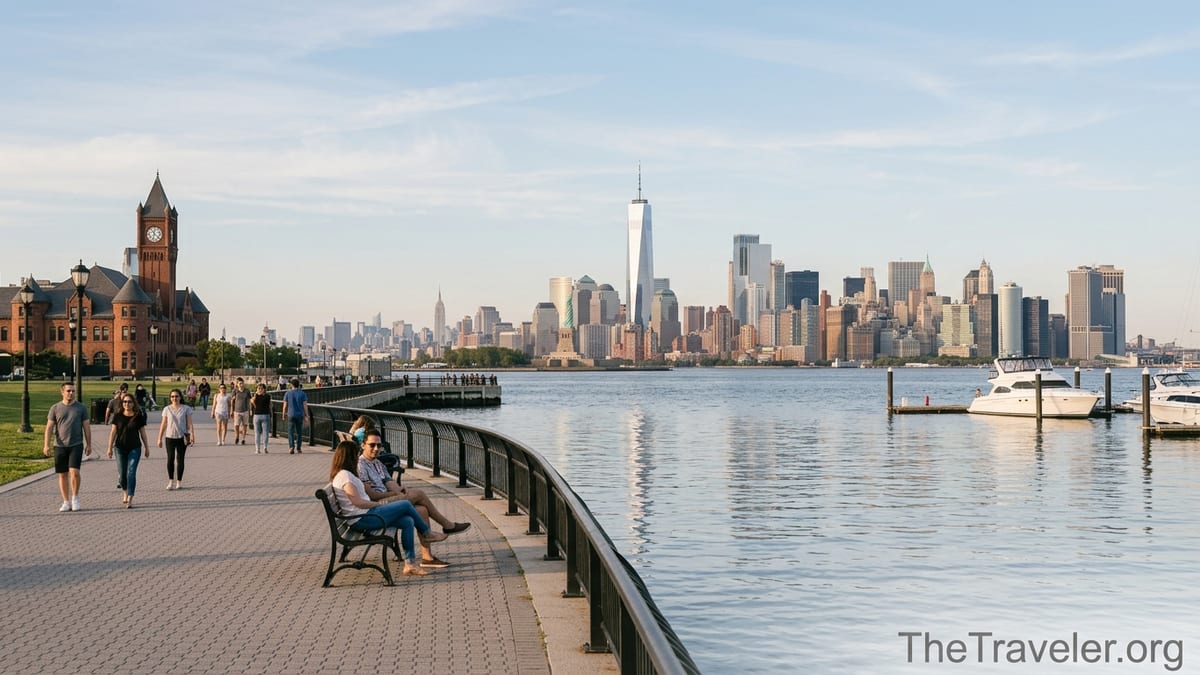
Liberty State Park stretches along New York Harbor, with over a thousand acres of lawns, wetlands and restored rail yards. First-time visitors are often surprised by the distances involved. The historic Central Railroad of New Jersey Terminal sits toward the center-east edge of the park on the water, while Liberty Science Center and the Hudson-Bergen Light Rail station are closer to the inland, southwestern corner. Much of the best skyline viewing happens along the north and east waterfront promenades that arc around the harbor.
The park’s different zones loosely match its three main draws. If you are chasing skyline photos and a relaxing stroll, you will spend most of your time on the northern and eastern promenades near Liberty Landing Marina and the picnic areas facing lower Manhattan. If you are interested in history, your day will orbit around the Central Railroad of New Jersey Terminal and its restored train shed. Visitors focused on the Statue of Liberty and Ellis Island head toward the same terminal, but spend most of their time in security lines and on ferries rather than exploring the wider park.
Because the park was built on reclaimed rail yards and industrial land, it is more spread out and less urban-feeling than many New York City visitors expect. On a summer Saturday, you might walk 15 to 20 minutes between Liberty Science Center and the historic terminal, longer if you stop for photos. On quieter weekdays, the wide lawns and long sightlines can make the park feel almost rural, especially in the southern sections away from the ferries.
Before you go, take a moment to imagine your ideal day: a relaxed picnic with skyline views, a deep dive into immigration-era history, or a mission-focused Statue of Liberty trip. That mental picture will tell you where to park, which entrance to use, and how much time to budget inside the park.
If You Want Skyline Views: Where to Go and When
If your top priority is the Manhattan skyline, Liberty State Park rivals or surpasses many classic New York viewpoints. The most reliable skyline vantage points run along the Liberty Walk promenade from Liberty Landing Marina north toward the flag plaza. From here you get a full sweep of One World Trade Center, the towers of the Financial District, and the Verrazzano-Narrows Bridge in the distance, with the Statue of Liberty off to the south. On clear evenings, it is one of the easiest places in the region to photograph both Lady Liberty and the skyline without crowds pressing against you.
In practice, many visitors drive directly to the Liberty Landing Marina parking areas or the north-end lots near the picnic grounds and simply wander the waterfront. You will pass locals jogging, families barbecuing on weekends, and wedding parties slipping away for portraits at golden hour. It is common to see tripods set up about an hour before sunset, when the glass towers in lower Manhattan turn rose and orange. On hot summer days, the harbor breeze along the promenade can be noticeably cooler than interior city streets.
If you want skyline views without boarding a ferry, you can also consider the short Liberty Landing Ferry ride that connects the marina to lower Manhattan on weekdays and some weekends. It operates as a commuter ferry, not a sightseeing boat, but the 10-minute crossing gives you harbor-level views of the city and the Statue of Liberty. Think of it as an inexpensive, quick add-on for more angles, not a replacement for the official Statue of Liberty cruise.
Timing matters. Photographers often aim for late afternoon into sunset during spring and fall, when the sun sets roughly behind the New Jersey shoreline and lights the Manhattan buildings from the side. In winter, clear, cold mornings can bring sharp blue skies and stark contrasts that make the skyline appear almost etched. In peak summer, bring sunscreen and water: there is little shade along the waterfront itself, and the reflection from the water can make it feel warmer than the forecast suggests.
If You Want History: Walking Through the Immigrant Rail Gateway
Liberty State Park’s historical heart is the red-brick Central Railroad of New Jersey Terminal, often simply called the Communipaw Terminal. From the late 19th century through much of the 20th, this was the final mainland stop for immigrants who had passed through Ellis Island. After being processed, many people boarded trains here that fanned out across the United States. Standing in the terminal’s great hall today, with period details restored, you can imagine the flow of families hauling suitcases and trunks toward distant new homes.
Outside, the long train shed structure, once home to dozens of platforms, still stretches back from the terminal. Much of the old track area has been cleared, and informational panels help you picture how dense and industrial this site once was. Travelers interested in rail history often combine a walk through the terminal area with archival photos on their phones, comparing the empty tracks today with images of steam locomotives lined up in the 1950s. The contrast between the quiet park and its former life as one of the busiest passenger terminals in the region is striking.
History-minded visitors can easily spend one to two hours around the terminal, reading interpretive signs, studying the architecture, and walking the paths that trace former rail alignments. If you have already visited Ellis Island’s museum, Liberty State Park offers a useful land-side counterpart, showing what happened after immigrants left the island. Some travelers bring older relatives whose families once came through Ellis Island; for them, a slow walk from the terminal toward the ferry docks can be unexpectedly emotional.
Beyond the terminal, smaller historical touches are scattered through the park. The Liberty Walk itself includes plaques and memorials, and there are views toward the Statue of Liberty that echo early 20th-century harbor scenes. On the western side of the park, closer to Liberty Science Center, you can still see hints of the former industrial shoreline mixed with new wetlands and restored landscapes, a reminder of how dramatically the area has been remade.
If You Want Ferry Access: How Liberty State Park Compares
For many travelers, Liberty State Park is primarily a launch point to the Statue of Liberty and Ellis Island. Official ferries operated by Statue City Cruises depart from the piers just beside the historic terminal. Most seasonal schedules start in the morning and run into late afternoon, with the first boats typically leaving around 9 am. Actual departure frequency changes with the time of year and day of the week, so it is wise to check the current timetable shortly before your trip rather than relying on an old brochure or guidebook.
Compared with Battery Park on the Manhattan side, Liberty State Park departures are usually calmer and less crowded, which can cut down on waiting time for security screening. Families staying in New Jersey hotels along the Hudson waterfront, or travelers road-tripping by car, often prefer the Jersey City side for this reason. Parking is available near the terminal for a relatively modest daily fee, which can be more predictable than arranging multiple subway and taxi connections into lower Manhattan.
There are trade-offs. If you depart from Liberty State Park, your ferry typically stops at Ellis Island first, then continues to Liberty Island, before later returning to New Jersey. Travelers on a tight schedule who only care about the Statue of Liberty pedestal or crown may find the stop patterns and security checks make the visit an almost half- or full-day commitment. As a rough guide, many visitors report that a standard visit including Ellis Island can easily run four to five hours from the time they join the security line to their return to the park, longer if they linger in the museums.
The ferry itself is not a luxury cruise but a practical transport vessel with indoor and outdoor decks. You can buy basic snacks and drinks on board, but many travelers bring a simple packed lunch to save both time and money. Views from the top deck are excellent, so if you want unobstructed photos, try to head upstairs as soon as you board. Remember that the ticket time printed on Statue of Liberty reservations usually refers to your security screening entry, not the exact sailing you will board, so arrive a bit early and expect airport-style checks.
Choosing Your Base: New Jersey vs Manhattan Logistics
Your choice of focus at Liberty State Park is closely tied to where you are staying. If you are already based in Manhattan and mainly want skyline photos or a quick ferry ride, you might compare Liberty State Park to viewpoints like Brooklyn Bridge Park or the Staten Island Ferry. Getting to Liberty State Park from midtown Manhattan typically involves a PATH train to Jersey City plus a light rail connection or rideshare, which can add 45 minutes or more each way depending on transfers and walking times.
On the other hand, if you are staying in Jersey City, Hoboken, or near Newark, Liberty State Park becomes one of your closest major attractions. Many regional travelers drive, park near the terminal or north-end lots, and blend their day: a morning ferry trip, a picnic with skyline views in the afternoon, and perhaps a visit to nearby Liberty Science Center for families with children. The relative ease of car access and parking on the New Jersey side is one of the park’s biggest advantages over Manhattan locations.
Budget-conscious visitors should factor in more than just ticket prices. For couples and families staying in New Jersey hotels, driving to the park, paying for parking, and sailing from Liberty State Park may end up cheaper than paying multiple subway fares and rideshare trips to and from Battery Park in Manhattan. Conversely, solo travelers based in Manhattan might find it more efficient and economical to stick with the Battery Park departure, especially if they have a MetroCard and are comfortable with the subway.
A useful rule of thumb is to choose Liberty State Park ferries if you are starting from New Jersey or planning to explore the park’s other attractions anyway, and to choose Battery Park if you are starting deep in Manhattan with no interest in spending extra time across the river. Either way, decide in advance so you do not waste time crossing back and forth just to change departure points.
Combining Views, History and Ferries in One Visit
Many travelers do not want to pick only one focus, and Liberty State Park makes it possible to weave skyline views, history and ferry access into a single visit if you plan your day carefully. A typical full-day itinerary might start with the earliest available ferry from Liberty State Park, giving you cooler temperatures and thinner crowds at both Liberty Island and Ellis Island. After you return to the park in early afternoon, you can spend an hour exploring the historic terminal before walking north along the Liberty Walk.
Along the promenade, you will find lawns, benches and often food trucks or seasonal vendors on busy weekends. This is a natural spot to spread out a picnic or simply rest and watch harbor traffic: container ships gliding in from the Atlantic, sailboats tacking across the channel, and helicopters tracing loops over the skyline. By late afternoon, the light softens and you can take your time capturing photos of One World Trade Center, Jersey City’s waterfront towers, and the Statue of Liberty with fewer harsh shadows.
If you are visiting with children or science enthusiasts, you could reverse the order. Start your morning at Liberty Science Center, which offers interactive exhibits and a large-screen planetarium, then walk or ride to the terminal area for a late-afternoon stroll and skyline viewing. In this version, you might skip the ferries entirely, using Liberty State Park as a green counterpoint to the indoor energy of the museum.
Regardless of your order of stops, the key is to remember that Liberty State Park is large and mostly open-air. Wear comfortable walking shoes, bring layers for wind off the water even in warmer seasons, and give yourself breathing room in the schedule instead of stacking commitments like Broadway tickets or dinner reservations too tightly after a Statue of Liberty excursion. The harbor and skyline will still be there an hour later if you decide to slow down.
The Takeaway
Liberty State Park is not just a pretty patch of grass opposite Manhattan. It is a place where three distinct experiences overlap: a generous, crowd-thinning vantage point on one of the world’s most famous skylines, a preserved rail terminal that tells the land-side story of Ellis Island immigration, and a practical, often calmer gateway to the Statue of Liberty and Ellis Island.
Deciding what you want most before you arrive will spare you unnecessary backtracking and frustration. If your priority is photographs and a relaxed waterfront stroll, head straight for the Liberty Walk and the north and east promenades. If you are drawn by the stories of arrivals, departures and cross-country journeys, give the Central Railroad of New Jersey Terminal the time it deserves. And if your goal is to set foot on Liberty Island or wander the halls of Ellis Island, treat Liberty State Park primarily as a well-organized embarkation point and plan your day around ferry schedules and security checks.
In practice, many visitors end up experiencing a bit of all three. They board a morning ferry, absorb the history of Liberty and Ellis Islands, linger in the restored terminal, and then drift north along the promenade as the skyline lights up for evening. With a little forethought, Liberty State Park can be more than just a stop on the way to somewhere else. It can be the calm, spacious frame around some of the most iconic views and stories in the region.
FAQ
Q1. Is it better to visit the Statue of Liberty from Liberty State Park or Battery Park?
The best choice depends on where you are staying and what else you want to see. Liberty State Park is often less crowded, with easier parking for New Jersey visitors, while Battery Park is more convenient if you are based in Manhattan and do not plan to spend time in New Jersey.
Q2. How much time should I allow for a Statue of Liberty and Ellis Island trip from Liberty State Park?
Most travelers should plan on at least four to five hours from the time they enter the security line until they return to Liberty State Park, especially if they intend to explore both museums at a relaxed pace.
Q3. Can I enjoy good skyline views without taking a ferry?
Yes. The Liberty Walk promenade and the waterfront near Liberty Landing Marina offer excellent views of lower Manhattan, the Statue of Liberty in the distance, and New York Harbor without boarding a boat.
Q4. Do I need a car to visit Liberty State Park?
No, but a car can make logistics easier. You can reach the park via the Hudson-Bergen Light Rail to Liberty State Park station and then walk or use a rideshare. Many local visitors drive and park near the historic terminal or picnic areas.
Q5. Is there an entrance fee for Liberty State Park itself?
The park grounds are typically free to enter, but you will pay for services such as parking, Statue of Liberty ferry tickets, and admission to nearby attractions like Liberty Science Center.
Q6. What is the best time of day for skyline photography at Liberty State Park?
Late afternoon through sunset usually offers the most flattering light, with warm tones on the Manhattan skyline. Clear winter mornings can also produce very crisp, detailed views.
Q7. Can I visit the historic Central Railroad of New Jersey Terminal without taking a ferry?
Yes. You can walk through the restored terminal area, view the train shed and interpretive panels, and explore the surrounding plazas without purchasing a ferry ticket.
Q8. Are there food options inside Liberty State Park?
Food options change seasonally. On busy days you may find snack stands or food trucks near the terminal and marina, but many visitors bring a picnic or simple snacks, especially if they plan a long day with ferry rides.
Q9. Is Liberty State Park suitable for a full day if I skip the Statue of Liberty?
Yes. Between the waterfront paths, picnic areas, historic terminal and proximity to Liberty Science Center, you can easily fill a day with views, walking and museum time without ever boarding a ferry.
Q10. Do ferries from Liberty State Park run year-round?
Ferry schedules vary by season, and service from Liberty State Park has occasionally paused during winter or for maintenance. Always check the current Statue of Liberty ferry schedule for your specific travel dates before finalizing plans.