


For many travelers, "cruise" still means giant ships, formal nights, and island-hopping in the Caribbean. Lindblad Expeditions offers something very different. Its small ships are floating base camps for serious exploration, backed by scientists, photographers, and a long-standing partnership with National Geographic. From Antarctica to the Galápagos, these voyages are designed less as vacations and more as immersive expeditions, which is exactly why they have become so popular among curious, conservation-minded travelers.
Get the latest updates straight to your inbox!
What Exactly Is Lindblad Expeditions?
Lindblad Expeditions is a U.S.-based expedition travel company that operates a fleet of small ships to some of the most remote corners of the planet, from Antarctica and South Georgia to the Galápagos, Alaska, and the Arctic. Founded in 1979 by Sven-Olof Lindblad, the company traces its roots to his father, Lars-Eric Lindblad, who helped pioneer non-scientific voyages to places like Antarctica in the 1960s. Today, the company runs voyages on all seven continents with ships typically carrying between a few dozen and around 150 guests, a far cry from mainstream mega-cruise vessels.
A defining feature of Lindblad Expeditions is its decades-long collaboration with National Geographic. On most departures, you will find a National Geographic photographer on board, along with an expedition team made up of naturalists, marine biologists, historians, and undersea specialists. This combination of small ships, serious expertise, and the National Geographic brand has positioned Lindblad as one of the most recognizable names in modern expedition cruising.
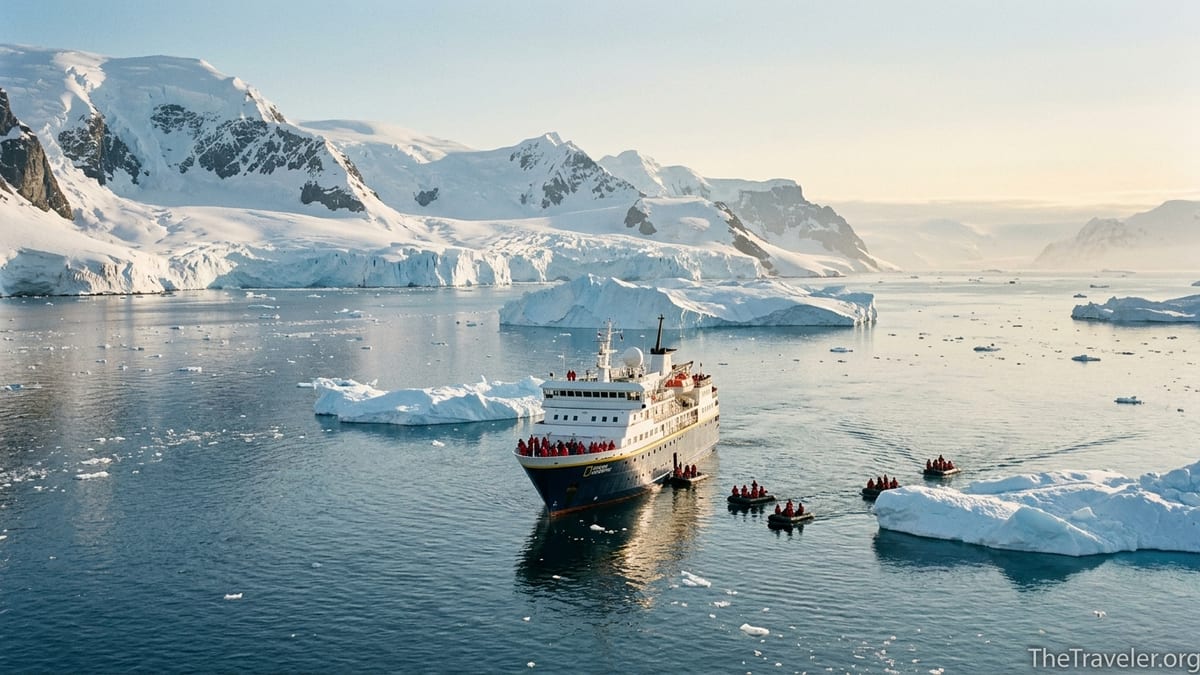
While at sea, life on board is focused on exploration, not entertainment. Instead of casinos and stage productions, guests can expect daily briefings, wildlife talks, and photo workshops. The ships are equipped with Zodiacs, kayaks, paddleboards, and undersea cameras, and many have tools such as hydrophones to listen to whales or remotely operated vehicles to film deep ocean life. The emphasis is on learning about the regions visited and getting off the ship as much as the conditions allow.
In recent years, Lindblad has expanded beyond ships into land-based adventure brands, including safari and hiking operators, but its core identity remains tied to small-ship expeditions that bring travelers close to wildlife, glaciers, and remote cultures while maintaining a relatively comfortable, premium onboard experience.
Where Lindblad Sails: Signature Destinations and Real Trip Examples
For most travelers, Lindblad is synonymous with marquee expedition destinations like Antarctica and the Galápagos. In Antarctica, the company operates purpose-built polar ships such as National Geographic Endurance and National Geographic Resolution, which are ice-strengthened vessels designed to navigate pack ice and rough Southern Ocean conditions. Typical itineraries run from roughly 10 to 24 days, with routes that may include the Antarctic Peninsula alone or combine it with South Georgia and the Falkland Islands for extended wildlife viewing.
A concrete example: a 7-night “fly the Drake” program uses a charter flight from southern Chile to King George Island, where guests board a ship like National Geographic Explorer and skip the notoriously rough Drake Passage sailing. For travelers with limited time or those prone to seasickness, this kind of itinerary makes the White Continent more accessible, even if the per-day cost lands at the premium end of the spectrum.
In the Galápagos, Lindblad has a particularly deep presence. Ships like National Geographic Endeavour II and National Geographic Islander II are tailored for 7- to 10-day itineraries through the archipelago. From early 2025, new small vessels such as National Geographic Delfina, a 16-guest catamaran, and National Geographic Gemini, a 48-guest ship, are scheduled to launch in the islands after revitalizations. These smaller-capacity ships allow for even more intimate wildlife encounters and flexibility in landing sites, which appeals to repeat visitors and photographers who want more time on shore and in the water.
Beyond the polar regions and Galápagos, Lindblad operates in Alaska’s Inside Passage, the Arctic (including Svalbard and Greenland), the South Pacific, Costa Rica and Panama, Patagonia, and parts of Europe. For instance, Alaska sailings often use compact ships that can slip into narrow coves and anchor close to glaciers, with days structured around Zodiac cruises among icebergs, hikes in temperate rainforest, and chances to spot bears and humpback whales bubble-net feeding. More recently, Lindblad has introduced river and coastal itineraries in regions like the Rhine and Danube by chartering upscale river vessels, giving returning guests new ways to travel with a familiar expedition style in less remote parts of the world.
What Sets Lindblad Apart From a Regular Cruise Line?
The biggest difference between Lindblad and a conventional cruise line is intent. A mainstream cruise might treat a glacier as a scenic backdrop to a cocktail party. A Lindblad expedition is built around that glacier: why it is retreating, what wildlife depends on it, and how to get you out in a Zodiac or on a kayak right up to the ice edge when conditions allow. The ship is essentially a mobile field camp with comfortable cabins and good food, but the schedule is dictated by wildlife sightings, sea ice, and weather patterns rather than fixed entertainment slots.
On a typical day in Antarctica with Lindblad, you might wake up to an announcement that orcas have been spotted off the bow. Breakfast is delayed so guests can head out on deck with binoculars while the naturalists narrate behavior through the PA system. Later, you may board Zodiacs for a cruise among tabular icebergs and then land on a snowy beach crowded with gentoo penguins. In the evening, instead of a Broadway-style show, you attend a lecture by a seabird biologist or participate in an informal Q&A with the onboard National Geographic photographer about shooting in low light on sea ice.
Lindblad’s ships are also intentionally small, giving them access to narrower channels and shallow anchorages that big cruise ships cannot reach. Vessels in the fleet typically carry between about 28 and 150 guests, which means landings can be staggered so that you are not sharing a beach with hundreds of people. On a Galápagos voyage aboard a 48-guest ship, for example, your snorkeling group might include just 8 to 12 people, with more time to observe sea lions or marine iguanas without feeling rushed.
A more subtle distinction is the passenger mix. Lindblad tends to attract travelers who prioritize learning over luxury, including families with older children, active retirees, and professionals who enjoy photography, science, and conservation topics. Cabins and public spaces are generally comfortable and stylish but not ultra-opulent, and the atmosphere on board leans relaxed and informal. Many repeat guests describe feeling like they are traveling with a floating community of curious people rather than anonymous crowds.
Onboard Experience: Daily Life on a Lindblad Expedition
Daily life on a Lindblad ship revolves around the expedition schedule. Mornings often start early with a gentle wake-up call from the expedition leader announcing the day’s plan and conditions outside. On an Antarctica voyage, you might hear that ice has shifted overnight, opening a new channel that allows a landing at a penguin colony the team rarely visits. Breakfast follows, then guests are called by groups for Zodiac operations, kayaking, or hikes.
Throughout the day, there is a strong emphasis on choice and activity level. A guest in the Galápagos might choose between a strenuous hike over lava fields to spot nesting Nazca boobies, a moderate coastal walk for photographing Sally Lightfoot crabs, or a relaxed Zodiac cruise suitable for those with limited mobility. In Alaska, some guests might opt for a long kayak exploration in a secluded bay while others take a shorter Zodiac cruise closer to the ship for whale watching. Staff are generally quick to adjust plans based on wildlife sightings or changing winds and tides, and itineraries are treated as flexible outlines rather than rigid scripts.
Afternoons often include an “undersea” component. On many voyages, Lindblad carries a professional undersea specialist who dives with a camera, bringing back high-definition footage of kelp forests, coral, or Antarctic sea stars that guests can watch during evening recaps. Some ships are equipped with a video microscope, allowing the team to display plankton and other tiny organisms collected that day. For travelers who enjoy science, these sessions can be as memorable as a whale breach.
Evenings usually feature a social recap in the lounge, where the naturalists and expedition leader review the day’s highlights using photos and maps. Guests enjoy drinks and canapes while the team outlines the tentative plan for tomorrow, often with alternatives depending on conditions. Dinners are generally open seating, encouraging guests to mingle with staff and fellow travelers. There may be occasional themed nights or local specialties, such as Patagonian lamb in southern Chile or fresh seafood in Alaska, but the central attraction is always what happened off the ship that day.
Pricing, Value, and the Type of Traveler Who Chooses Lindblad
Lindblad sits firmly in the premium price tier of expedition cruising. Per-person rates often run into the high four figures or five figures for longer itineraries, especially in Antarctica and the Galápagos. To give a real sense of scale, a traveler on a 16-day Antarctica expedition that combined Buenos Aires, Iguazú Falls add-ons, and a ship-based journey reported spending roughly the equivalent of mid–five figures for the full package in 2025, while shorter 9- to 12-day Antarctic Peninsula voyages can still easily reach the mid to high five-figure range for two people sharing a cabin, depending on cabin category and season.
In the Galápagos, week-long Lindblad itineraries are typically priced above many mainstream competitors of similar length, reflecting the small ship sizes, National Geographic collaboration, and high guide-to-guest ratios. By comparison, an Antarctic traveler weighing options might find that entry-level cabins on certain larger expedition ships from other operators start lower, while Lindblad’s fares sit closer to what you would expect from best-in-class polar operators that emphasize education and guiding quality.
Who finds value at these price points? Generally, it is travelers who prioritize the expedition experience itself over onboard frills. Guests who are passionate about wildlife, conservation, and photography often view the access to experts, flexible itineraries, and strong safety culture as a worthwhile investment. Multi-generational families looking for a meaningful shared adventure also show up frequently, particularly on holiday sailings in the Galápagos or Alaska, where kids and teens can participate in junior naturalist programs.
Budget-conscious travelers sometimes access Lindblad by watching for shoulder-season sailings, cabin promotions, or last-minute deals via specialist travel agencies. There are also cases where travelers or staff have mentioned discounted “at cost” opportunities for unsold spots close to departure on certain expeditions, though these are unpredictable and not something to rely on. Overall, Lindblad is not a brand for travelers looking for the cheapest way to see Antarctica or the Galápagos, but rather for those who are willing to pay a premium for small-group exploration and in-depth interpretation.
Why Lindblad Is Popular: Expertise, Access, and Sustainability
Lindblad’s popularity rests on a combination of reputation, experience, and a clear identity. The National Geographic partnership is a strong draw in itself: many guests grew up reading the magazine or watching National Geographic documentaries and are eager to travel in a way that feels aligned with that spirit of exploration. Having National Geographic photographers on board who run workshops and share practical tips on everything from composition to camera settings helps guests come home with stronger images and a sense of having learned a new skill.
Expert guiding is another major factor. Lindblad invests heavily in onboard staff, often employing naturalists and expedition leaders who have spent decades in specific regions. On a South Georgia and Falklands voyage, for example, you might have ornithologists who specialize in albatrosses, historians who focus on Shackleton’s expeditions, and marine mammal experts who can interpret whale behavior in real time from the observation deck. Guests are not just told what they are seeing; they are encouraged to ask questions and engage informally with the team at meals and on deck.
Sustainability and conservation efforts also resonate with Lindblad’s core audience. The company has publicly committed to carbon neutrality for its operations, and guest donations through a dedicated conservation fund support projects like marine habitat restoration, whale research programs in the Southern Ocean, and educational initiatives such as the Grosvenor Teacher Fellowship that brings educators into the field. On board, travelers are often briefed on local conservation challenges and shown how their presence, and the company’s contributions, can support science and community projects in the regions visited.
Finally, Lindblad benefits from word of mouth. Many Antarctica and Galápagos travelers share detailed trip reports, and a significant portion of bookings each year come from repeat guests or their referrals. When someone returns from a voyage describing standing silently among thousands of king penguins in South Georgia or snorkeling alongside sea lions and penguins in the Galápagos, the emotional impact tends to carry more weight than any brochure. That combination of storytelling, science, and immersive experiences explains much of the brand’s enduring appeal.
How to Decide if a Lindblad Expedition Is Right for You
Deciding whether Lindblad is the right match comes down to your priorities, travel style, and tolerance for unpredictability. If you want fixed schedules, elaborate onboard entertainment, and a traditional resort-style cruise, there are many other lines better suited to that style of vacation. Lindblad expeditions, particularly in polar regions, are highly dependent on weather, ice, and wildlife; landings can be shifted or canceled at short notice, and the reward for that flexibility is the chance to take advantage of unexpected openings or wildlife encounters.
Travelers who tend to be happiest on Lindblad voyages are those who enjoy learning, value natural history and photography, and would rather spend three hours in a Zodiac searching for whales than sitting by a pool. They understand that the ship is a means to reach and explore remote places, not the main attraction. They also tend to be comfortable with an active pace: even though there are usually options for shorter walks and easier activities, getting on and off Zodiacs, walking on uneven terrain, and dressing for changing weather are part of daily life.
It is also important to consider your budget and expectations. If paying a premium for a small ship, robust guiding team, and partnership with National Geographic feels worthwhile, then Lindblad belongs on your shortlist. If you simply want to check a destination off your list at the lowest possible cost, another operator may be a better fit. Many experienced expedition travel advisors recommend comparing a Lindblad itinerary with two or three alternatives in the same region, looking carefully at ship size, guest capacity, guide-to-guest ratios, and included activities instead of focusing only on headline price.
Talking with past guests can be helpful. Some travelers report truly life-changing experiences and become loyal repeat customers, while others might note that, at such high prices, they expected a higher level of culinary polish or more detailed pre-trip communication. Reading a mix of reviews, including both enthusiastic and critical ones, can give you a realistic sense of what to expect on board.
The Takeaway
Lindblad Expeditions occupies a distinctive niche in the travel world: small ships with serious scientific and photographic backing, sailing to some of the wildest places left on Earth. Its long partnership with National Geographic, deep bench of naturalists and expedition leaders, and sustained investment in conservation have made it one of the most recognizable brands in expedition cruising. For travelers who care more about standing among penguins, kayaking beneath cliffs, or listening to a glaciologist explain a calving event than about casinos or Broadway-style shows, Lindblad offers a compelling way to explore.
It is not the right choice for everyone. The trips are expensive, the itineraries are flexible to a fault, and comfort is balanced with practicality rather than over-the-top luxury. Yet for many guests, the trade-off is more than worth it. They return home with a deeper understanding of the places they visited, a trove of photographs, and often a stronger sense of connection to the planet’s wild spaces. If your ideal journey sounds more like an expedition than a cruise, that is precisely why Lindblad Expeditions remains so popular.
FAQ
Q1. What is Lindblad Expeditions in simple terms?
Lindblad Expeditions is a small-ship travel company that runs educational, adventure-focused voyages to remote destinations like Antarctica, Alaska, and the Galápagos, often in partnership with National Geographic.
Q2. How is a Lindblad trip different from a regular cruise?
Instead of big-ship entertainment, a Lindblad voyage centers on exploration, with daily landings by Zodiac, guided hikes, wildlife viewing, and talks from naturalists and photographers.
Q3. How much does a Lindblad expedition typically cost?
Prices vary widely, but many itineraries run into the high four figures or five figures per person, especially for longer polar or Galápagos voyages in higher cabin categories.
Q4. What are Lindblad’s most popular destinations?
Antarctica, the Galápagos, Alaska, and the Arctic are among the most popular, with additional itineraries in places like Patagonia, Costa Rica and Panama, and select European and river routes.
Q5. Is the experience suitable for children and families?
Yes, many departures welcome families, particularly in the Galápagos and Alaska, where ships may offer family-friendly programming and activities for older children and teens.
Q6. How physically demanding are Lindblad expeditions?
Most voyages require enough mobility to get in and out of Zodiacs and walk on uneven terrain, but activities are usually offered at different intensity levels to suit a range of abilities.
Q7. What is included in the fare on a Lindblad trip?
Fares typically include accommodations, most meals, daily guided excursions, use of expedition gear like kayaks or snorkel equipment, and onboard talks, but not usually international flights or gratuities.
Q8. How far in advance should I book a Lindblad expedition?
Popular itineraries in peak seasons, such as Antarctica and the Galápagos, often sell out many months or even a year or more in advance, so early planning is advisable.
Q9. What kind of travelers enjoy Lindblad the most?
Curious, active travelers who value learning about wildlife, ecosystems, history, and photography, and who do not mind flexible schedules or expedition-style conditions, tend to enjoy Lindblad the most.
Q10. Is Lindblad a good choice for my first trip to Antarctica or the Galápagos?
For travelers who can afford the premium price and want strong guiding, small ships, and a structured educational program, Lindblad is considered a very solid option for a first expedition to these regions.