


More news on this day
Passengers using Manchester Airport today are facing a mixed picture of disruption, with live flight boards showing a series of delayed departures and a smaller number of cancellations affecting both short haul and long haul routes.
Get the latest news straight to your inbox!
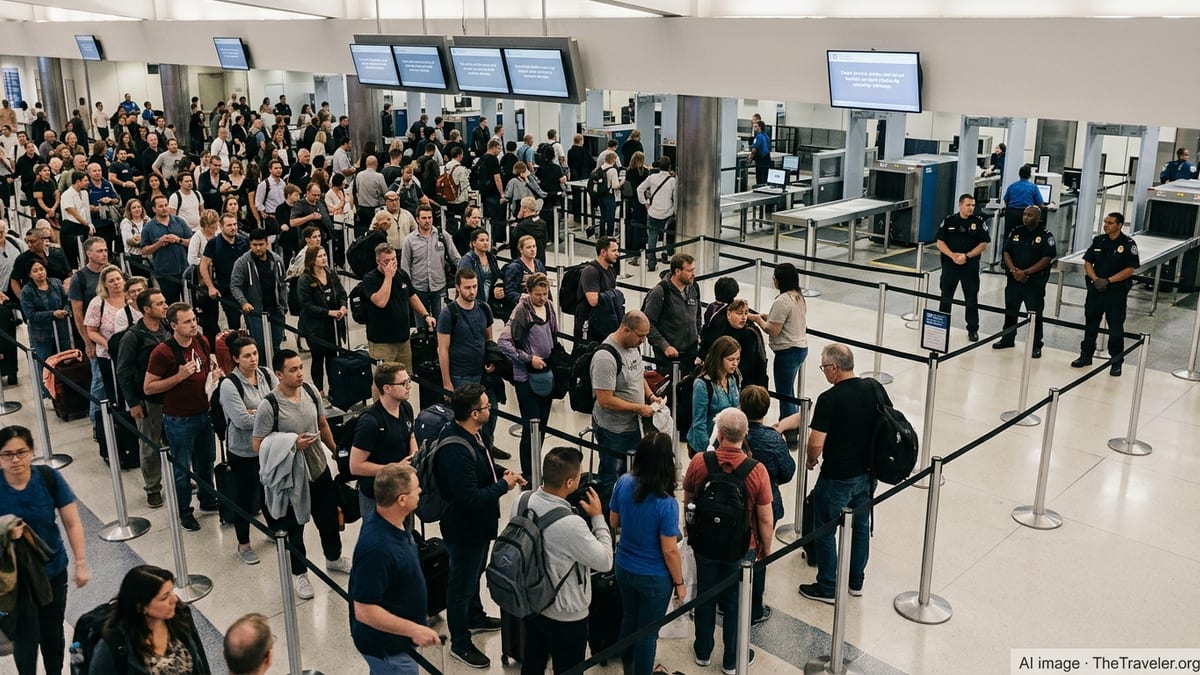
Overall disruption picture across terminals
Live departure and arrival boards for Manchester Airport on 24 July indicate that most flights are operating, but many are leaving behind schedule, with delays clustering in the early morning and again through the busiest mid-morning wave. Real-time trackers show rolling pushbacks of between 15 and 60 minutes on a range of services to European and domestic destinations, alongside isolated longer hold-ups on long haul sectors.
Across Terminals 1, 2 and 3, publicly available data highlights a pattern that has become familiar to frequent flyers using the hub. Short turnaround leisure flights operated by low-cost and charter carriers are among those most exposed to knock-on delays when early rotations slip, while some full-service carriers are holding departures to protect connecting passengers from inbound services arriving late into the airport.
Arrival boards reflect similar pressure, with incoming aircraft from popular summer destinations in Spain, Greece and Turkey often shown as running late, feeding into subsequent outbound delays. At the same time, a significant proportion of services continue to show on-time status, meaning disruption is uneven and highly route and airline specific rather than airport-wide gridlock.
For passengers travelling today, the implication is that schedules remain broadly intact but with a heightened risk of moderate delay. Travellers are being advised through airline channels and travel platforms to keep boarding passes and booking references to hand so they can react quickly if their flight status changes at short notice.
Key delays on short haul and domestic routes
Short haul services across Europe make up the majority of Manchester Airport’s movements, and today’s delay pattern is most visible on these routes. Morning and mid-morning departures to Spanish holiday airports, major hubs such as Amsterdam and Frankfurt, and key city links including Dublin and Paris show a higher-than-normal share of “delayed” status updates.
Domestic routes are also experiencing pockets of disruption. Services to London, Scotland and the Midlands, as well as flights linking Manchester with Northern Ireland, have seen a mixture of minor delays and scattered cancellations across the schedule. These issues appear closely tied to aircraft and crew rotations rather than any single, clearly defined cause such as weather or runway closure.
In many cases, the delay window is relatively modest, with pushbacks moved by less than an hour. However, a smaller subset of departures has been subject to more extended disruption, particularly where the incoming aircraft was already running late or where operators have consolidated services with lower passenger loads onto a reduced number of flights.
Passengers with time-sensitive connections at onward hubs are being encouraged, through airline apps and email alerts, to monitor their itineraries closely and consider alternative routings where options are available. Same-day travellers on point-to-point leisure routes, by contrast, are more likely to experience inconvenience in the form of extended waiting times rather than full-scale trip abandonment.
Long haul services and notable cancellations
Long haul operations out of Manchester, including services to North America, the Middle East and Asia, appear less numerous but more individually sensitive to disruption. When a widebody departure is delayed today, real-time trackers typically show revised estimated times that reflect the complexities of crew duty limits, slot availability at destination airports and the need to coordinate with connecting banks of flights at major hubs.
Published flight status boards for today list a limited number of outright cancellations, affecting both short haul and long haul routes. These cancellations are spread across the day rather than concentrated in a single time band, suggesting they are largely the result of airline-specific operational decisions, aircraft availability and network-level schedule adjustments.
Where flights have been cancelled, airlines generally appear to be rebooking passengers onto later departures on the same route or rerouting them via partner hubs. Travellers affected by cancellations today are being directed via online self-service tools and mobile apps to confirm new itineraries, with airport screens and announcements providing only high-level status rather than detailed rebooking information.
As a result, while the overall number of cancelled flights remains relatively small compared with the daily schedule, the impact on individual passengers can be significant, particularly for those heading to long haul destinations with fewer daily frequencies.
Ground access, knock-on effects and what passengers can expect
The disruption in the air is feeding through into a more crowded experience on the ground. Reports from public transport operators and travel updates around the airport show that rail, tram and bus services to and from Manchester Airport are running close to normal timetables, but with some services experiencing heavier passenger loads as travellers adjust their arrival times in response to changing flight information.
Inside the terminals, extended waits for delayed departures can lengthen queues at food outlets, seating areas and charging points. While there is no indication today of the severe congestion seen during earlier periods of extreme disruption at the airport, the live pattern suggests that passengers may face busier-than-usual gate areas and a greater likelihood of last-minute gate changes as airlines work to keep aircraft turning around.
For travellers due to fly later today, publicly available guidance emphasises the importance of checking live flight status before leaving for the airport and staying closely tuned to airline communications. Many carriers serving Manchester now use push notifications, text messages and in-app alerts to flag delays, boarding time changes and rebooked itineraries, which often update more quickly than static display boards.
Travel industry commentary also underlines the value of allowing extra time in personal schedules when flying from busy hubs such as Manchester. With delays and occasional cancellations appearing across today’s timetable, passengers who build in flexibility for onward train journeys, hotel check-in windows and ground transfers are better placed to absorb the impact of rolling disruption.