


Perched on a forested hill above Slovenia’s capital, Ljubljana Castle is one of those attractions that nearly every visitor ends up seeing. What is less obvious, especially if you are here for only a day or two, is which ticket you actually need, whether it is worth paying extra for the funicular, and how to avoid wasting time in queues. This guide breaks down current ticket and funicular options, shows how they work in real life, and shares practical tips drawn from how locals and frequent visitors actually use the castle.
Get the latest updates straight to your inbox!
Ljubljana Castle in 2026 at a Glance
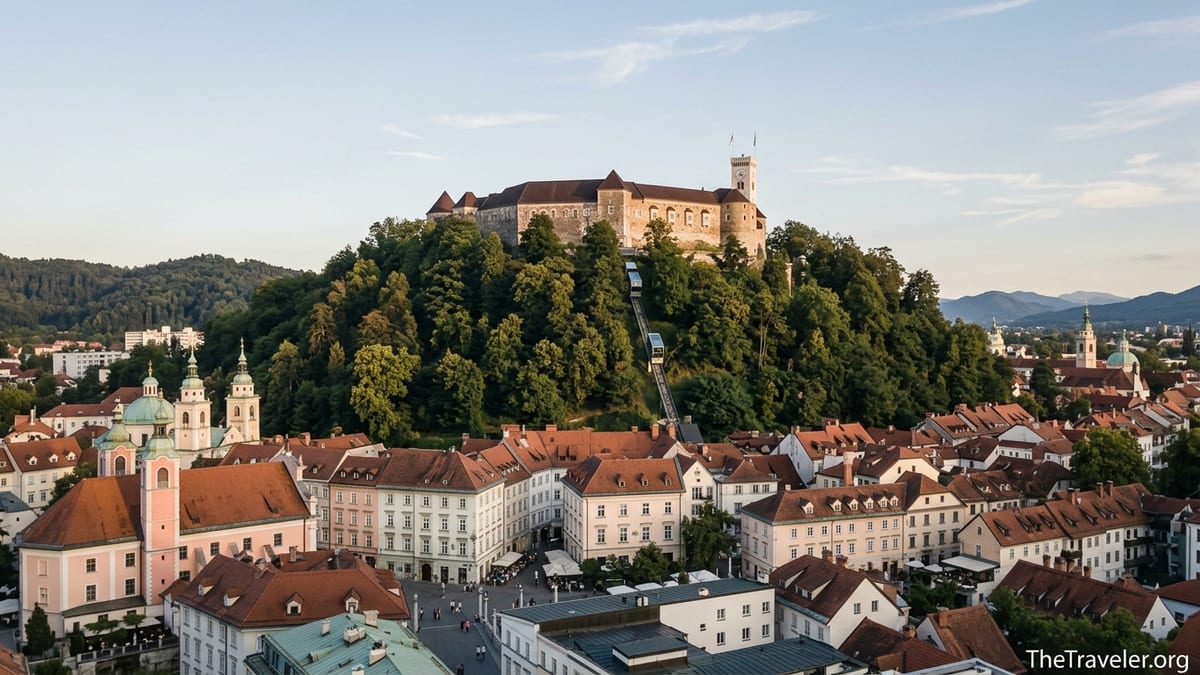
Ljubljana Castle sits directly above the Old Town and the Ljubljanica river, so you will see its white walls and tower from almost anywhere in the historic center. The hill is relatively low compared with Alpine castles, which means you can either walk up in about 10 to 15 minutes or ride the glass funicular from Krek Square in roughly one minute. The castle complex itself is a mix of open courtyards, a viewing tower, small museums, art exhibitions, cafes and restaurants, and several free-to-enter spaces.
The attraction is open all year and operates with extended hours in summer. In recent seasons published hours have been roughly 9:00 to 20:00 for the castle and 9:00 to 22:00 for the funicular from May to September, with shorter hours in the colder months. On New Year’s Eve and New Year’s Day, the castle and funicular typically close earlier or open later than usual, so anyone visiting around 31 December or 1 January should verify the exact schedule shortly before arrival, as hours can vary slightly year to year.
Most travelers encounter Ljubljana Castle in one of three ways. Day trippers from places like Lake Bled or Trieste often buy a combined ticket that includes both funicular and entrance to the major interiors so they can maximize their time. Budget-conscious backpackers frequently walk up for free and purchase only the basic “Castle” ticket or skip paid interiors entirely, enjoying the courtyard, views and cafes. Families with younger children often prioritize the funicular ride itself as a mini attraction and choose a family funicular or combined ticket that keeps logistics simple.
Because there is a mix of free and paid areas, it is very possible to “visit the castle” in a casual way, stopping for coffee in the courtyard and enjoying the views, without ever buying a ticket to the exhibitions or tower. The trade-off is that you will miss the in-depth history and highest viewpoints, which many visitors consider the highlight. Deciding how deep you want to go is the first step to choosing the right ticket.
Ticket Types Explained: What You Really Get
Ljubljana Castle tickets are structured around two main elements: access to the castle’s paid interiors and access to the funicular railway. In practice you will see several variations of these two components. The most common option sold at official sales points is a combined ticket that bundles the funicular ride with “Castle” entry, which usually includes key sights such as the Viewing Tower, the Virtual Castle multimedia presentation, permanent exhibitions inside the walls, and access to audio guides when available.
Alongside combined tickets, you can normally purchase a stand-alone castle ticket without funicular. This is aimed at visitors who prefer to walk up or drive to the castle parking area. It typically includes the same set of interior attractions and tower access but expects you to make your own way up the hill. For those who only care about the ride and the view from the platform at the top, funicular-only tickets are available as single and return journeys, with reduced prices for children, students, pensioners, and families.
As an example of how the structure works in real life, a couple visiting for a weekend might choose one combined castle plus funicular ticket each, ride up from Krek Square, explore the exhibitions, climb the Viewing Tower, then walk back down into the Old Town along the forest path. A solo traveler staying nearby who enjoys walking could instead hike up for free, buy only the castle ticket at the entrance pavilion, and spend the saved amount on coffee and cake at the castle cafe.
There are also special tickets tied to seasonal events and exhibitions. When large temporary shows are hosted in spaces like the castle’s casemates, the castle may offer a separate ticket or a small surcharge on top of the standard entry. Tickets for concerts, theater performances or culinary events at the castle courtyard are sold separately through local ticketing platforms and at the castle’s own box offices. These event tickets usually cover attendance at the performance rather than general access to all castle interiors, so visitors sometimes combine them with a standard ticket if they want the full experience.
Current Funicular Prices, Opening Hours and How It Works
The funicular railway is the most popular and comfortable way to reach Ljubljana Castle. It runs from a glass-walled lower station beside the Puppet Theatre at Krek Square up the forested hillside to the upper station integrated into the castle walls. The journey takes around one minute and offers broadening views over the Old Town and river as you ascend. The cabin is spacious enough for a small tour group and is wheelchair accessible, which makes it a practical option for anyone with mobility challenges.
Recent price lists for the funicular in 2026 show that a standard adult ride costs on the order of a few euros one way and a little more for a return ticket. Concession fares for children aged roughly 7 to 18, students, and pensioners are slightly cheaper, and family tickets cover up to two adults plus at least one child for a moderate combined price. Operating schedules published locally indicate that the funicular typically runs from about 9:00 until late evening in summer and closes earlier in winter, with cabins departing approximately every 10 minutes in normal periods and almost continuously when crowds build up. While the exact euro amounts can change with periodic updates, the structure and relative differences between ticket categories have remained stable in recent years.
In day-to-day use, the funicular behaves more like an elevator than a train. You arrive at the lower station, buy your ticket at the window or automated machine, and usually wait only a few minutes for the next cabin. There is no need to plan around a timetable. During peak summer afternoons, you may see a short queue forming in Krek Square, especially if multiple tour groups arrive at once, but the line tends to move quickly because each ride is so short. On rainy or very hot days, the funicular can be busier because it saves visitors from a steep, damp or sun-exposed walk through the trees.
For many visitors, the funicular ride is part of the experience, particularly at sunset when the city glows below. For others, it is mainly a time and energy saver. A common strategy among budget-conscious travelers is to buy a single-ride ticket to go up and then walk down. This still gives the elevated glass-cabin viewpoint but uses the free forest path for the return, reducing overall costs while avoiding the hill climb.
Combined Tickets, Discounts and the Ljubljana Card
Because Ljubljana Castle is such a central attraction, it is integrated into several discount schemes and city cards. Most notably, the Ljubljana Card, a popular tourist pass that includes public transport and entrance to a range of museums and attractions, has typically covered both the funicular and castle entrance when valid. This means that visitors who purchase the city card do not need to buy a separate ticket at Krek Square; they can present the card directly at the funicular gates or castle ticket desk, saving both time and money if they plan a busy sightseeing schedule.
Besides city cards, there are often discounts for organized groups, students, and pensioners. For example, a school group or a university outing that books in advance through the castle’s sales office might receive a reduced per-person rate on combined castle and funicular tickets, especially outside the high summer season. Similarly, older travelers who show a pensioner card at the ticket window are usually offered the concession price automatically. Families benefit from bundled family tickets that cost less than buying individual adult and child tickets separately, which can make a noticeable difference for larger households visiting in summer.
The castle also runs occasional promotional offers linked to exhibitions, cultural festivals or off-season events. In past years this has included reduced-price entry on specific weekdays, combination tickets with particular concerts or film nights in the courtyard, and joint offers with the city’s tourist train. Because these promotions change regularly, travelers planning a visit several months ahead should treat any specific figure they see as indicative and check closer to the travel date. An easy real-world example is a wintertime visitor who notices posters in the Old Town advertising a joint ticket for a special exhibition at the castle plus a hot drink in the courtyard cafe; buying that bundle on the day might be cheaper than separately purchasing a standard ticket and drink.
One important practical tip is to decide early whether a city pass like the Ljubljana Card suits your style of travel. A couple staying three nights who plan to ride city buses, visit multiple museums such as the National Gallery and City Museum, and take the funicular to the castle almost always extract good value from the card. By contrast, a traveler on a quick one-night stopover who only wants to stroll the riverfront and see the castle courtyard may be better off buying a single combined castle plus funicular ticket on the spot and skipping the broader pass.
Walking, Driving and Other Ways to Reach the Castle
Despite the popularity of the funicular, walking remains the classic way to reach Ljubljana Castle. Several forested paths begin directly from the Old Town, including routes from Mestni trg, Stari trg and Vodnikov trg, and most visitors reach the top in 10 to 15 minutes of steady uphill walking. The paths are well maintained but can be a little uneven in places, especially after rain, so sneakers or comfortable shoes with grip are sensible. The shade from the trees makes the climb surprisingly pleasant even in warmer months, and along the way you will encounter small clearings with first glimpses of the rooftops and river below.
Driving is technically possible but not generally recommended for short visits. Access to the narrow roads on Castle Hill is controlled by a barrier, with entry allowed only during specific hours and primarily for guests with reservations at the on-site restaurants or for people with mobility issues. There is a small paid parking area with around 40 spaces near the castle, with one designated space for visitors with disabilities and a couple equipped with charging stations for electric vehicles. Hourly rates are modest by European standards, and payment can be made using cash, cards, or parking apps widely used in Ljubljana. Because spaces fill quickly on busy weekends and public events, many locals instead park in larger garages closer to the city center and walk or ride the funicular from there.
An alternative way to reach the castle, particularly popular with families and day trippers, is the “Urban” electric tourist train that loops through central Ljubljana. The route stops at various landmarks around the city and includes a stop on Castle Hill, giving a relaxed overview without the exertion of walking. This train is especially useful for travelers with limited mobility who still want to explore several areas in a single outing. Tickets for the tourist train are separate from castle and funicular tickets, and while it is a scenic way to arrive, it does not replace entry fees for the castle itself.
Public buses operated by the city’s LPP service stop near the base of Castle Hill, particularly around Krek Square and the central market area. Visitors staying in outer neighborhoods or arriving by bus at the main station can ride these lines into the center and transfer easily to the funicular. Because the funicular’s lower station sits only a short walk from the large central market and from landmarks such as the Dragon Bridge, it fits neatly into a half-day walking route that combines city sightseeing with a castle visit.
Buying Tickets: Where, When and How to Avoid Hassles
Tickets for Ljubljana Castle and the funicular are available from multiple official points, which helps avoid long lines at any single location. The most visible sales spot for many visitors is the lower funicular station at Krek Square, where there is a staffed counter and, often, ticket machines. Here you can purchase funicular-only tickets, combined castle plus funicular tickets, and check information about current exhibitions or events. The staff are accustomed to answering common questions such as whether the Viewing Tower is open that day or which exhibitions are included in the standard ticket.
At the top of the hill, near the main entrance into the castle courtyard, you will find another sales point often referred to as the entrance pavilion. This is the logical place to buy a ticket if you have walked or driven up and only decide on arrival that you would like to see the tower or exhibitions. Tickets for special exhibitions, guided tours, and events can also be purchased here, subject to availability. For visitors attending a specific performance or concert at the castle, tickets are sometimes sold through wider Slovenian ticket networks as well as directly at castle sales counters in the weeks leading up to the event.
To minimize hassles, consider timing your purchase outside of the peak afternoon window. On sunny Saturdays in July and August, the funicular station and castle entrance both get noticeably busier from late morning through mid-afternoon as tour groups and day-trippers from the coast arrive. If you are staying overnight in Ljubljana, a practical strategy is to ride up shortly after the funicular opens, explore the castle before the main crowds arrive, then descend to enjoy lunch in the Old Town. Alternatively, evening visits are often calmer, especially on weekdays outside school holidays, and reward you with sunset or nighttime views over the illuminated city.
Online ticket purchase through official channels is another option that has become more prominent in recent years. While many casual visitors still buy tickets on the day, those traveling in high season or planning around tight connections sometimes prefer to secure a specific time slot for guided visits or special experiences in advance. For example, a couple passing through Ljubljana on a long train journey might book combined castle and funicular tickets online for early afternoon, leaving enough margin to store luggage, walk across the center, ride up, enjoy the views and exhibitions, and still be back at the station on time for their onward train.
What to See with Your Ticket: Towers, Exhibitions and Views
Once inside the walls, your ticket unlocks several of the castle’s best-known attractions. The Viewing Tower is usually the standout feature, offering a 360-degree panorama over the red rooftops of the Old Town, the Ljubljanica river winding below, and on clear days distant views toward the Kamnik-Savinja Alps and the Julian Alps. Climbing the tower involves a series of stairs, so visitors with limited mobility may prefer to enjoy the views from the ramparts and panoramic terraces instead, which are easier to access and still highly scenic.
Another core element included in most castle tickets is the Virtual Castle or similar multimedia presentation that compresses centuries of history into an engaging short film or interactive display. It provides context about how the site evolved from a medieval fortress into a defensive stronghold, prison, and finally a cultural venue and symbol of the modern city. Families, in particular, find this a useful introduction before exploring the physical spaces, as children often better appreciate walls and towers after seeing stories of knights, sieges and transformations.
The castle also houses permanent and temporary exhibitions that range from archaeological displays about Roman and medieval Ljubljana to art shows highlighting Slovenian painting, photography or design. A long-running exhibition on Slovenian history has typically been a staple, helping visitors connect what they see at the castle to broader themes such as the Habsburg period, the formation of Yugoslavia, and Slovenia’s path to independence. Short-term exhibitions, sometimes included in the standard ticket and sometimes sold as add-ons, can focus on anything from Impressionist painting to contemporary installations staged in the casemate spaces.
A standard ticket does not cover everything at the castle. Certain experiences, such as fine-dining restaurants inside the walls, wine tastings in the castle cellar, or special evening tours with actors in historical costume, carry separate charges. Nevertheless, even with just the basic castle ticket and a funicular ride, most travelers easily spend one and a half to three hours exploring, taking photographs, and lingering over coffee or dessert in the courtyard cafe while watching the flow of visitors.
Timing, Crowd Strategies and Local-style Tips
Because Ljubljana is compact and many people visit for only a night or two, crowd levels at the castle follow a fairly predictable pattern. Midday in high summer is the busiest, particularly on weekends and on days when cruise excursions or large bus tours stop in the city. This is when queues for the funicular are longest and the Viewing Tower platform can feel quite full. Visiting either early in the day, shortly after opening, or later in the evening generally means cooler temperatures, softer light for photography, and more space to enjoy the views.
Weather is another important factor. On hot July or August afternoons, the shaded forest paths are appealing, but the exposed parts of the tower can feel intense under direct sun. Many locals plan their visits for late afternoon or early evening in summer, timing the funicular ride to coincide with the changing light and then staying for dinner or a drink at one of the castle restaurants. In winter, the castle can be atmospheric with frost or snow on the surrounding woods and Christmas lights visible in the Old Town below, but reduced daylight and cooler temperatures make it wise to check the forecast and dress accordingly.
Travelers with limited time often wonder whether to prioritize the castle or other regional sights like Lake Bled and Postojna Cave. For those staying only a single day in Ljubljana as a side trip from another city, the castle plus a walk through the Old Town delivers a compact but memorable overview of the Slovenian capital. One realistic itinerary for a day-tripper arriving by morning train would be to stroll from the station to Preseren Square, wander across the Triple Bridge and central market, ride the funicular up late morning, explore the castle, then descend for lunch and a final coffee along the river before catching an evening train.
Finally, it is worth remembering that the castle hill is also a local green space. Residents use the forest paths for jogging, dog walking and short hikes, especially outside peak tourist hours. Respecting this dual role means staying on marked trails, avoiding loud music, and giving way politely on narrower sections of path. Doing so not only keeps the experience pleasant for everyone but also preserves the character that makes Ljubljana Castle feel like a natural part of the city rather than a stand-alone tourist attraction.
FAQ
Q1. Do I need a ticket just to go up to Ljubljana Castle?
In most cases you can walk up the forest paths and enter the main courtyard without a ticket, paying only if you want to ride the funicular, climb the Viewing Tower, or visit paid exhibitions inside.
Q2. Is the funicular worth paying for if I am able to walk?
For many visitors it is, because the glass cabin offers a distinctive perspective over the Old Town and saves time, but if you enjoy short uphill walks and want to save money, the shaded paths provide a pleasant alternative.
Q3. How long should I plan for a visit to Ljubljana Castle?
If you only want the views and a quick look around the courtyard, an hour can be enough, but to include the Viewing Tower, exhibitions, and a relaxed drink or snack, most travelers are comfortable with two to three hours.
Q4. Can I buy tickets to the castle and funicular online in advance?
Yes, official channels allow advance purchase of combined tickets, and this can be helpful in high season or when planning around tight schedules, though many visitors still buy on the day at the funicular station or entrance pavilion.
Q5. Is the funicular and castle accessible for visitors with limited mobility?
The funicular cabins are designed to be wheelchair accessible, and once at the top several areas of the castle, including parts of the courtyard and some exhibitions, can be reached without stairs, although the Viewing Tower itself involves climbing steps.
Q6. Does the Ljubljana Card include Ljubljana Castle tickets?
Recent versions of the Ljubljana Card have typically included both the funicular ride and entry to the castle’s main attractions, but because offers can change, it is sensible to verify what is covered at the time you buy the card.
Q7. Is there parking at Ljubljana Castle?
There is a small paid parking area near the castle with a limited number of spaces, including one for visitors with disabilities and a couple with electric chargers, but it often fills up, so many drivers prefer to park in central garages and walk or take the funicular.
Q8. When is the best time of day to visit?
Early morning and late afternoon or evening usually offer fewer crowds and better light for photos; midday in summer is the busiest and can be hot on exposed viewpoints like the tower.
Q9. Are there places to eat or drink at the castle?
Yes, the castle complex includes at least one cafe and one or more restaurants where you can get coffee, snacks, or full meals, making it easy to combine a visit with lunch, dinner, or drinks with a view.
Q10. What happens if the weather is bad on the day of my visit?
Many parts of the castle, including exhibitions and some viewing areas, are indoors or sheltered, so visits remain worthwhile in light rain, though in heavy storms or strong winds access to the tower or outdoor terraces may be restricted for safety.