


More news on this day
Flight delays at Boston Logan International Airport eased on Tuesday morning after an air traffic control equipment failure at a regional facility disrupted operations and grounded or delayed hundreds of flights across the Northeast on Monday.
Get the latest news straight to your inbox!
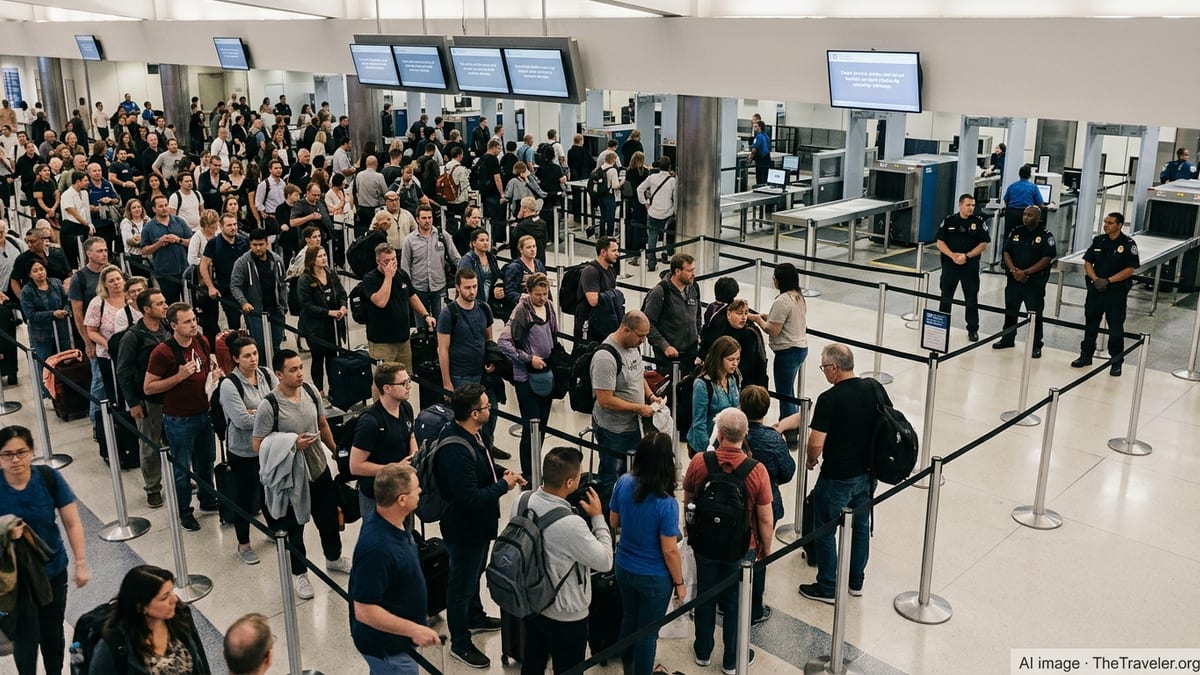
Regional equipment failure ripples into Boston
Published coverage and aviation data indicate that a telecommunications and equipment problem affecting air traffic control facilities in the New York and Philadelphia region on Monday, September 21, led the Federal Aviation Administration to impose ground stops and ground delay programs at several major Northeast airports. Boston Logan, which relies on that airspace structure for a large share of its domestic traffic, was swept up in the disruption as controllers worked to safely meter flights into constrained sectors.
By Monday evening, publicly available tracking information compiled by outlets such as FlightAware and referenced in regional news reports showed that roughly 480 to 490 flights at Logan had been delayed and more than 70 had been canceled. Average delay times at the height of the disruption were reported at about 105 minutes as aircraft waited for release slots into affected routes.
Reports on the incident describe the root cause as physical damage to communications lines serving key air traffic centers, rather than a software failure. Transportation updates on social media late Monday indicated that repair work on the damaged lines had been completed, allowing air traffic systems in the corridor from Philadelphia to Boston to resume more typical operations.
The outage in the mid-Atlantic airspace produced knock-on effects across the country as aircraft and crews were held out of position. Logan’s role as both a transatlantic gateway and a major domestic hub meant that disruptions to short-haul routes in the Northeast also cascaded into longer-haul schedules, with some flights diverted or delayed as far away as the Midwest and Southeast.
Delays ease as Tuesday operations stabilize
By early Tuesday, September 22, public dashboards for the national airspace system and local news coverage showed conditions at Logan improving significantly compared with the previous day. The FAA’s online status portal listed arriving and departing traffic for Boston as generally on time, and no destination-specific ground delay or ground stop programs were in effect for the airport.
Flight-tracking data cited in Boston-based coverage indicated that average delays at Logan on Tuesday morning had fallen into the range of roughly one hour or less for affected flights, a notable improvement from Monday’s peak. While some early departures still faced residual holds and gate changes, the overall pattern reflected a network working through a backlog rather than an ongoing systems failure.
Published summaries of airline operations show that carriers continued to adjust schedules into Tuesday, canceling some flights in advance in order to restore reliability and reposition aircraft and crews. That proactive trimming of schedules, combined with the restoration of normal air traffic control capabilities, contributed to the faster recovery at Logan compared with some previous large-scale disruptions.
Travel industry analysis points out that, even as headline delay numbers eased, travelers with tight connections or complex itineraries through Boston and other Northeast hubs continued to feel the effects into Tuesday. Missed onward flights, rebookings for later in the week, and overnight stays near airports remained common for passengers whose plans intersected with the worst of Monday’s outage.
Construction and heavy traffic add to strain
In addition to the regional air traffic equipment failure, Logan’s own operating environment added pressure to Monday’s schedules. Airport planning documents and prior public statements have highlighted runway and taxiway construction projects at Logan extending through September and into mid-November 2026, work that reduces available capacity during certain hours and can lengthen taxi times.
Posts on aviation forums and traveler discussion boards in recent days have pointed to longer than usual afternoon delays at Logan even before the latest outage, with two-hour waits on the ground described as not uncommon when winds or low clouds concentrate traffic onto fewer runways. Those preexisting constraints meant that when the regional equipment issue arose, controllers and airlines had less flexibility to absorb disruptions without significant knock-on effects.
Reports on the September 21 incident describe a mix of challenges in the Northeast corridor, including low cloud ceilings in parts of the region and the continuing construction-related limits at busy airports such as Boston and Newark. The combination of infrastructure work and a sudden loss of full air traffic control capability left little margin, prompting the formal ground delay program that held flights at origin airports until slots into Boston became available.
Massport’s previously published board materials and planning updates have noted that Logan handled more than 12 million passengers in the first quarter of its 2026 fiscal year, underscoring how busy the airport remains even outside peak summer months. That baseline traffic level, combined with business travel ramping up in late September and visitors arriving for conferences, sporting events, and foliage season, helped explain the scale of Monday’s disruption once a key link in the air traffic chain failed.
What travelers experienced and how airlines responded
Firsthand accounts shared on social media and aviation forums describe a day of shifting information and repeated delay notifications for travelers across the Northeast on Monday. Many passengers at Logan and other affected airports reported boarding aircraft only to sit parked at gates or on taxiways awaiting revised departure times as air traffic control worked through congestion.
Some short-haul flights within New England and the mid-Atlantic, which usually operate on tight turnarounds of an hour or less, saw delays stretch to three or four hours or more. A number of travelers described connections unraveling as arrival times pushed into late evening, forcing them to seek hotel rooms or accept rebookings for the following day.
Published airline advisories show that several major U.S. carriers introduced travel waivers for customers ticketed to or from Boston and other Northeast airports for September 21 and 22. Under those waivers, travelers could typically change to alternate dates within a limited window without standard change fees, provided they kept the same origin and destination and rebooked into the same cabin of service.
Consumer resources highlight that, in disruptions linked to air traffic control or other infrastructure issues, passenger rights and compensation options can differ from cases where an airline-specific technical problem is at fault. Guidance commonly recommends that travelers keep boarding passes, receipts, and written delay notifications if they plan to seek reimbursement for extra expenses or to file complaints with regulators or customer relations teams.
What passengers should know for upcoming Logan trips
With the immediate equipment problem resolved and no active ground stop orders in place for Boston, publicly available data suggests that Logan’s operations are on a path back toward normal levels of punctuality. Aviation analysts quoted in travel industry coverage expect conditions at major Northeast airports to continue stabilizing through midweek, barring additional technical issues or severe weather.
However, the ongoing runway and taxiway projects at Logan mean that travelers in the coming weeks may still encounter longer than typical taxi times and periodic congestion, especially in the early afternoon and evening peaks. Airport planning information indicates that this work is scheduled to continue into mid-November 2026, so occasional ground delay programs remain possible during busy travel periods even without wider regional outages.
For passengers preparing to fly through Boston in the near term, public guidance from airlines and travel advisors generally emphasizes checking flight status repeatedly on day of travel, enabling push notifications in airline apps, and allowing extra time for connections. Those steps can be especially important at hubs recovering from recent disruptions, where residual schedule adjustments and crew repositioning may continue for several days.
As traffic builds into the autumn travel season, the events of September 21 illustrate how quickly an isolated equipment problem in one part of the air traffic control system can affect airports hundreds of miles away. For Logan-bound travelers, the easing of delays on Tuesday brings welcome relief, but the combination of infrastructure work and a busy calendar means that flexibility and advance planning remain valuable tools for navigating the rest of 2026.