


More news on this day
Passengers using London Gatwick on Monday 20 July are encountering scattered delays and some knock-on disruption on surrounding rail links, as the airport gears up for the main summer getaway period and advances plans for a new robotic car parking system.
Get the latest news straight to your inbox!
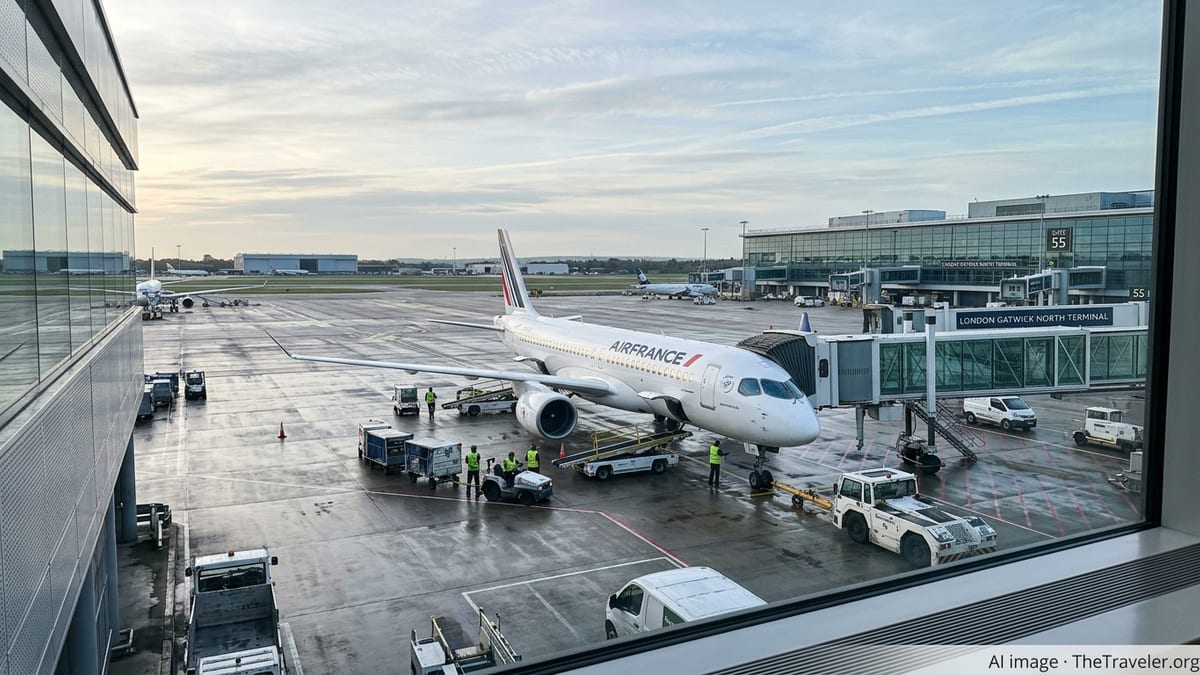
Flights running, but with pockets of delay
London Gatwick’s runways and terminals are operating broadly to schedule on Monday, with most departures and arrivals reported on time or subject to modest delays of under an hour. Live tracking data for key leisure routes, including services to Egypt and Turkey, indicates that many flights are departing close to their scheduled evening slots, although a number of services show late departures or extended turnaround times.
Some individual departures listed from the South Terminal on Monday evening are marked with delays of more than 30 minutes, particularly on longer European and North African routes. Earlier in the day, several mid-morning flights reported minor disruption as aircraft arrived late from other airports affected by weather and air traffic constraints across Europe.
Publicly available flight information suggests that the pattern at Gatwick remains one of intermittent hold-ups rather than widespread cancellations. Aviation data platforms continue to urge passengers to keep checking departure boards and airline apps in case late-running inbound aircraft lead to further timetable shuffling during the peak evening wave.
While no single technical incident is dominating operations on Monday, the cumulative effect of late arrivals, crew rescheduling and high load factors typical of late July is contributing to longer queues at security and boarding in some parts of the airport.
Rail disruption adds pressure to airport journeys
Beyond the terminal, rail links serving Gatwick are experiencing their own timetable changes around the Monday morning peak, adding complexity for travellers connecting to and from London and the South Coast. Southern Railway’s service updates for 19 to 20 July highlight amended late night and early morning services between London Victoria and Gatwick, with adjusted Gatwick Express and Southern stopping patterns through the early hours.
Separate incident reports from National Rail over recent weeks, including disruption near East Croydon and Balcombe on the Brighton Main Line, underline how quickly rail problems can spill over into longer journey times for airport users. Although these particular incidents were recorded earlier in the summer, they illustrate the fragile nature of a corridor that carries thousands of Gatwick-bound passengers every day.
On Monday, published service information points to a mixture of planned engineering work and residual minor delays across parts of the Southern and Thameslink networks. Travellers heading for Gatwick are being advised by operators to allow extra time for connections and to check train running information before setting out, especially for early morning flights that depend on overnight or first-wave rail services.
The interaction between rail reliability and airport punctuality is especially critical during the school holiday period, when family groups with luggage often rely on a single, tightly timed train to reach check-in before cut-off.
Summer getaway builds after a turbulent July
The current pattern of moderate disruption at Gatwick comes after a turbulent start to the summer for parts of the UK aviation network. Discussions on aviation forums and passenger accounts from earlier in July describe periods of heavy holding, diversions and congestion in southern England airspace, with some aircraft reportedly forced into unplanned fuel-critical situations on approach to London.
Consultative documents from Gatwick’s own stakeholder meetings reflect concern about recent summers marked by system-wide challenges, ranging from global IT outages to staffing pressures. These reports outline efforts to coordinate more closely with airlines and air navigation services to even out peaks and to build additional resilience into daily schedules as passenger volumes continue to recover.
As schools break up in England and Wales, Gatwick is preparing for one of its busiest weeks of the year, with high demand for flights to Mediterranean, Canary Islands and long-haul leisure destinations. Industry analyses suggest that load factors on many routes are running close to capacity, leaving limited flexibility to rebook passengers when delays escalate into cancellations.
Travel commentators note that even on days without dramatic incidents, the combination of full flights, constrained airspace and busy ground operations can translate into longer queues, stretched terminal facilities and a more fragile experience for passengers than headline punctuality statistics might imply.
Robotic car parking part of wider investment push
Alongside day-to-day operational pressures, Gatwick is advancing a longer-term investment programme that includes the introduction of robotic car parking. Planning and capital investment material released by the airport highlight a dedicated budget line for a “Robotic Car Parking System” within a broader package of commercial and capacity projects scheduled through the second half of the decade.
The proposed technology involves automated units moving vehicles into dense parking configurations, designed to increase capacity in existing footprints and reduce the time drivers spend searching for spaces. Such systems, already in use at a limited number of European airports, are promoted as a way to streamline arrivals and departures while reducing emissions associated with circling traffic in multi-storey car parks.
Gatwick’s investment papers position robotic parking alongside new multi-storey structures at the North Terminal and other car park product developments, indicating that surface access and landside infrastructure are a growing focus. The airport’s capital programme allocates hundreds of millions of pounds over five years to improvements in terminal refurbishment, baggage systems, airfield technology and commercial facilities, with parking upgrades viewed as a key contributor to future revenue and passenger experience.
While detailed timelines for commissioning robotic parking have not been publicly confirmed for Monday’s summer operations, the presence of the project in recent corporate documents signals that travellers can expect visible changes to Gatwick’s parking estate over the next few seasons.
What today’s travellers should expect at Gatwick
For passengers flying on Monday 20 July, the overall picture at Gatwick is one of generally functioning operations with localised delays and the possibility of extended journey times to and from the airport. Most scheduled flights continue to depart, but some are doing so behind timetable, especially where aircraft and crews are arriving late from earlier rotations.
Transport updates for the rail network suggest that anyone depending on trains should monitor services closely and plan for contingencies, particularly if travelling late at night or early in the morning when engineering work can lead to diversions or replacement buses. Road access around the airport remains available, although heavier summer holiday traffic and busy forecourts can slow drop-off and pick-up.
Looking ahead to the peak school holiday exodus, Gatwick’s push toward automation in areas such as check-in, boarding and future robotic parking points to an airport seeking to manage higher volumes without proportionate increases in physical space. For today’s users, however, the most immediate considerations remain familiar: arrive early, check live updates frequently and be prepared for queues at key pinch points during the busiest times of day.
As the summer getaway gathers pace, Gatwick’s performance over days like Monday will be closely watched by airlines, regulators and passengers alike as an indicator of how well the UK’s second-busiest airport can balance high demand with the promise of a more streamlined, technology-enabled experience in the years ahead.