


More news on this day
Travellers flying through Dubai and other major Gulf hubs are being warned to brace for renewed cancellations and last-minute changes as ongoing missile and drone attacks on Kuwait, Bahrain and Jordan once again roil Middle East air traffic.
Get the latest news straight to your inbox!
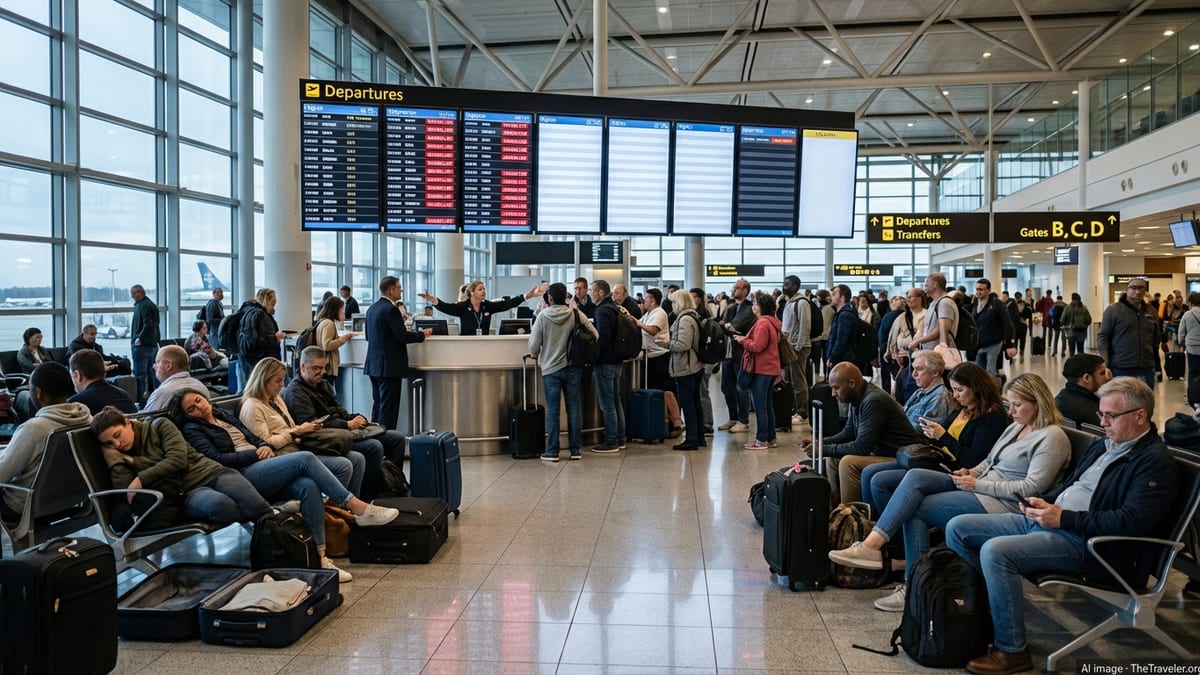
Regional attacks reignite pressure on Gulf aviation
Missile and drone strikes linked to the ongoing Iran conflict have intensified across parts of the Gulf in recent days, with public statements from regional governments and international coverage pointing to repeated attacks on targets in Kuwait, Bahrain and Jordan. These incidents are part of a broader campaign of strikes that has repeatedly threatened critical infrastructure and military sites since late February 2026, and that has already forced widespread airspace closures and flight suspensions across the region earlier in the year.
Published accounts describe waves of missiles and drones being intercepted over Bahrain and Jordan, alongside reported hits on power and water facilities in Kuwait. Aviation infrastructure has repeatedly been caught in the crossfire, from earlier damage at Kuwait International Airport and Dubai International Airport to more recent warnings that key hubs remain at heightened risk should the tempo of attacks increase again.
This renewed security backdrop has reintroduced uncertainty for airlines that rely on stable airspace corridors over the northern Gulf and Levant. While full closures on the scale seen in March have not been reimposed, the pattern of intermittent attacks and interceptions is prompting carriers to adjust schedules and routing at short notice, particularly on links touching Kuwait, Bahrain and Jordan.
Airlines and aviation agencies are continuing to stress that safety remains the primary determinant for any operational decision. However, with the conflict proving prolonged and unpredictable, the likelihood of rolling disruption for passengers travelling to, from or over the region is rising again.
Dubai hub faces knock-on disruption from Kuwait and Bahrain
Dubai remains one of the world’s busiest international hubs, and any instability in surrounding airspace has an immediate global impact. Earlier phases of the crisis saw thousands of flights cancelled or rerouted when Iran’s retaliatory strikes led states including the United Arab Emirates, Kuwait, Bahrain and Jordan to close or severely restrict their airspace, while debris incidents near Dubai International underscored the risks to civil aviation corridors.
Current reporting from regional outlets indicates that Dubai International Airport is operational, but subject to network pressures created by instability in neighbouring states. Kuwait International Airport has faced repeated interruptions since drone and missile attacks earlier this year, and Bahrain’s airspace has periodically tightened around missile interception activity. Each time Kuwait or Bahrain imposes restrictions, Dubai-based carriers are forced to re-time, cancel or reroute services, creating ripple effects across their global networks.
Flight-tracking data and local aviation coverage show that airlines have already cancelled or consolidated several Dubai–Kuwait rotations around the latest flare-up, with further adjustments flagged for the coming days. Services linking Dubai with Bahrain and Amman are also described as vulnerable to short-notice schedule changes when air defence alerts are issued along preferred routings.
For passengers, that translates into a growing gap between published timetables and actual operations. Even when Dubai departures appear to be running, onward connections through Kuwait City, Manama or Amman can be disrupted, forcing travellers into extended layovers, rebookings or diversions via alternative Middle East or European hubs.
Airspace warnings and evolving safety advisories
Beyond individual airline decisions, aviation safety authorities have been updating their guidance as the conflict develops. Earlier this month, the European Union Aviation Safety Agency issued a formal advisory urging European carriers to avoid or exercise extreme caution in the airspace of the UAE, Bahrain, Kuwait and Qatar, citing a high risk to civil aviation from missiles, drones, combat aircraft and air defence systems. That warning highlighted the possibility of threats at multiple flight levels, rather than being confined to low-altitude operations.
Travel advisories from governments including the United States, the United Kingdom and Canada have been progressively tightened for parts of the Middle East. Recent updates have singled out Kuwait and certain areas of Jordan for particular caution, while also flagging an elevated security environment affecting aviation in the wider Gulf, such as the UAE, Bahrain, Qatar and Saudi Arabia. Although these notices are framed as precautionary, they influence corporate travel policies and insurance coverage, and can in turn reduce demand on exposed routes.
Security analysts note that modern air defence systems are designed to protect high-value targets and populated areas, but interceptions themselves carry risks when debris falls over wide areas. Reports of missile fragments landing in and around cities, including earlier incidents near Dubai and in parts of Jordan, have fed into assessments that any renewed concentration of attacks could once again make routine civil operations challenging, particularly on night-time and overflight corridors.
The combination of direct attacks, interception activity and shifting advisories means that routes transiting Kuwait, Bahrain and Jordan are likely to remain under close review. Airlines are balancing the commercial importance of maintaining connectivity with the need to avoid predictable flight paths through contested skies.
What passengers flying via Dubai should expect
For travellers with itineraries involving Dubai and the wider Middle East in the coming days, the immediate impact is greater uncertainty rather than blanket shutdowns. Carriers serving the region are continuing to operate the majority of flights, but regional media and airline communications point to targeted cancellations on routes into Kuwait in particular, along with operational flexibility on services touching Bahrain and Jordan.
Publicly available information from airport operators and travel advisories emphasises that schedules may change at short notice, sometimes only hours before departure, when new threats emerge or when air defences are activated. This dynamic environment can be especially disruptive for long-haul passengers connecting through Dubai to destinations such as Kuwait City or Amman, who may find that an otherwise on-time arrival at Dubai does not guarantee their onward sector will run as planned.
Industry observers recommend that passengers allow additional time for security procedures and possible re-screening during connections, especially on days following intense attack activity. Travellers may also see longer flight times on certain routes as airlines file more circuitous flight plans to skirt sensitive airspace near Bahrain, Kuwait or northern Jordan, including altitude restrictions or dogleg routings that add distance.
Flexible ticket conditions, access to real-time flight status tools and up-to-date contact details with airlines are increasingly important, as many carriers are relying on digital channels and apps to notify customers of late schedule changes. For those needing to make essential journeys into the most affected states, local media and embassy advisories remain key references for assessing whether trips should proceed.
Broader implications for Middle East connectivity
The Middle East’s role as a global aviation crossroads means that sustained instability in its airspace has consequences well beyond the immediate conflict zone. Previous waves of cancellations during the early months of the Iran war temporarily shifted some long-haul traffic to European, African and South Asian hubs, as airlines sought alternatives to Dubai, Doha, Abu Dhabi and other Gulf connecting points. Analysts now suggest that similar patterns could re-emerge if attacks on Kuwait, Bahrain and Jordan continue or intensify.
Dubai’s position as a primary link between Europe, Asia and Africa makes it particularly sensitive to any renewed closure of adjacent airspace corridors. Should Kuwait or Bahrain be forced into prolonged restrictions, airlines may need to reconfigure networks, potentially reducing frequencies on marginal routes and prioritising high-demand trunk services that can be profitably detoured around affected zones.
There are also potential economic repercussions for Gulf states that have invested heavily in aviation as part of diversification strategies. Extended disruption can weigh on tourism arrivals, business travel and cargo flows, with knock-on effects for sectors from hospitality and retail to logistics. Earlier phases of the crisis prompted concerns about higher insurance premiums for aircraft operating in or near conflict-affected airspace, adding cost pressures for airlines already managing volatile fuel prices.
For now, the dominant outlook among regional commentators is one of cautious vigilance. The latest attacks on Kuwait, Bahrain and Jordan underline how quickly the security picture can change, and how directly those shifts are transmitted into the schedules and route maps of airlines using Dubai and other Gulf hubs. With no clear timeline for de-escalation, travellers can expect the prospect of sudden flight cancellations and diversions to remain a defining feature of Middle East air travel in the weeks ahead.