


More news on this day
Passengers travelling through London Gatwick on Sunday 26 July are being advised to allow extra time, as early reports point to a busy summer getaway weekend, pockets of flight disruption and ongoing travel adjustments on rail links serving the airport.
Get the latest news straight to your inbox!
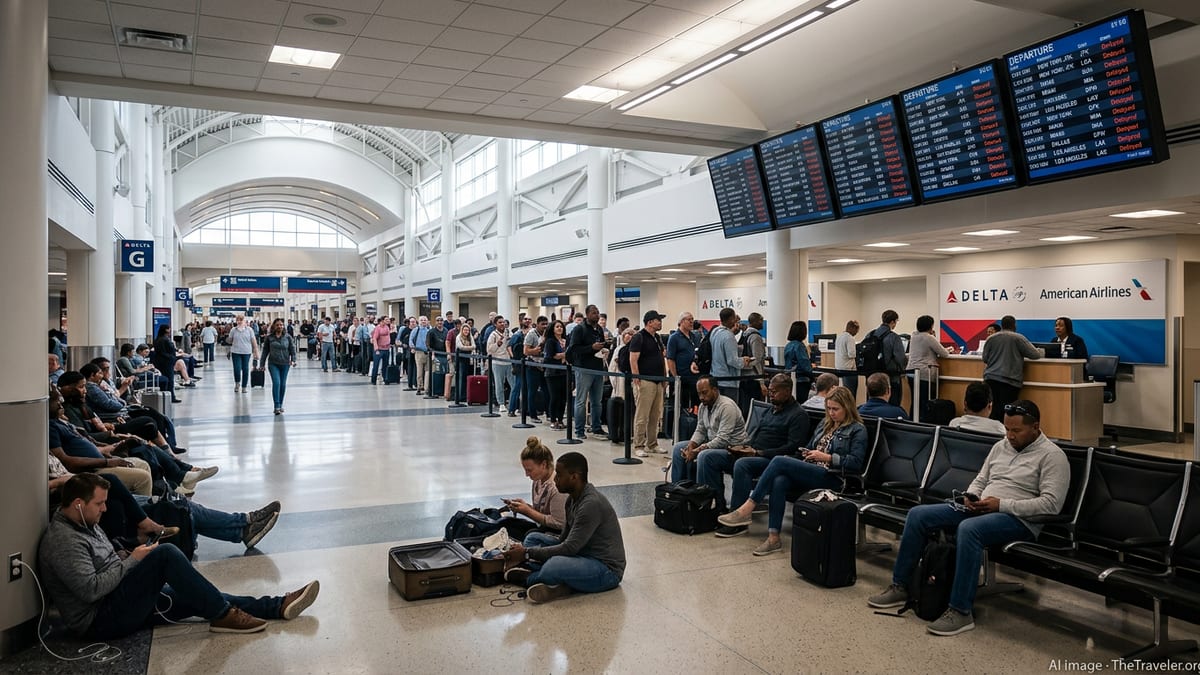
Early delays and cancellations on a peak summer Sunday
Flight tracking data and airport monitoring services for London Gatwick indicate a familiar pattern for a peak summer Sunday, with a small but noticeable number of early-morning delays and a limited number of cancellations building through the morning schedule. Short-haul leisure routes to Mediterranean destinations appear most affected, in line with the broader holiday traffic profile at this time of year.
The disruption comes as the airport moves into one of the busiest phases of the school holiday season, with millions of passengers expected to travel over the coming weeks. Gatwick has highlighted more than 230 destinations and a record portfolio of airline partners for summer 2026, pointing to particularly heavy weekend peaks through July and August.
Operational data suggests that while most flights are continuing to depart broadly on schedule, knock-on effects from earlier delays, airspace constraints and weather-related restrictions across Europe are continuing to filter into the London system. Passengers are being encouraged, through public travel advice, to check the latest status of their flights before setting out for the airport.
Weather conditions around Gatwick in the early hours of Sunday show warm, cloudy skies with light winds and generally favourable operating conditions. While not a primary cause of disruption locally, unsettled conditions elsewhere along popular routes may contribute to minor holding and arrival delays as the day progresses.
Rail adjustments add pressure to surface access
Alongside flight disruption, rail services linking central London with Gatwick continue to see planned engineering and timetable adjustments across the late July weekend. Service update bulletins from operators on the Brighton Main Line highlight overnight and early-morning changes to some trains that call at Gatwick Airport, including retimed or altered services on Sunday 26 July.
These adjustments follow a series of recent incidents and infrastructure works in the wider corridor between London, East Croydon and the South Coast that have, at times, reduced capacity for airport-bound passengers. While the main airport links are operating, some trains are running at different times or with amended stopping patterns, creating the potential for longer end-to-end journey times for travellers heading to early departures.
Publicly available journey planners and operator notices are advising passengers to check for late-notice changes before travelling, particularly those connecting from outer suburban or regional services. For many holidaymakers relying on a single morning connection to meet a flight, even short timetable changes can add stress to an already time-sensitive journey.
The combination of busy terminal volumes, minor flight delays and rail alterations means road traffic to Gatwick is also expected to be heavy at traditional weekend peak times. Transport commentators note that passengers driving to the airport or using taxis should factor in possible congestion on the approaches to both terminals.
Robotic car parking prepares for August launch
Looking beyond the immediate weekend, Gatwick is putting final preparations in place for a new robotic car parking system that is due to go live in August in partnership with Stanley Robotics. According to published coverage from the airport and industry outlets, the system will be located near the South Terminal and is described as the first large-scale robotic parking operation of its kind at a UK airport.
The concept allows drivers to drop off their vehicles in dedicated entry cabins within an official airport car park. After the driver checks in and keeps their keys, a low-profile autonomous robot moves underneath the vehicle, lifts it and parks it in a dense, pre-arranged layout that does not require walking aisles or space for doors to open. The design is intended to maximise use of existing land while reducing the time passengers spend looking for spaces.
On return, the system uses flight information to anticipate when passengers will arrive back at Gatwick. The robot retrieves the car and positions it in a collection cabin close to the terminal area, aiming to shorten the time between clearing customs and driving away. Airport parking pages describe the walk time from the robotic facility as similar to, or slightly longer than, existing long-stay options, but with the convenience of not having to search for a space.
Aviation and airport-planning analysts view the project as part of a broader trend toward automation across the passenger journey, from check-in to baggage handling and now car parking. If the launch runs smoothly and customer feedback proves positive, commentators suggest similar systems could be expanded to other UK airports over the coming years.
Managing the summer getaway at a growing hub
Gatwick’s preparations for the holiday period are taking place against a backdrop of continued growth in destinations and airlines using the airport. Recent updates from the airport highlight a network of over 230 routes served by more than 60 carriers this summer, reflecting both strong low-cost leisure traffic and a growing mix of full-service and long-haul operators.
This scale places particular pressure on weekend operations, when large numbers of families and leisure travellers pass through the terminals within compressed time windows. Public information from the airport emphasises measures such as additional staff in busy zones, expanded security capacity and pre-travel guidance to help smooth passenger flows during these peaks.
Travel industry observers note that airports across Europe are still fine-tuning schedules, staffing and infrastructure after several volatile summer seasons. While overall resilience has improved compared with earlier years, limited spare capacity at major hubs means even modest disruptions can cascade across the system, especially on high-demand days like the final weekend of July.
For Gatwick, the introduction of innovations such as robotic parking is seen as part of a longer-term strategy to manage growth within a constrained footprint, while maintaining or improving the passenger experience. The airport has repeatedly pointed to technology-driven solutions as a way of handling larger volumes without significantly expanding terminal buildings or car parks.
What Sunday passengers should expect
For those travelling through Gatwick on Sunday 26 July, the immediate picture is one of a very busy airport with manageable, but noticeable, disruption. Most flights are operating, yet delays are more likely than on a typical off-peak weekday, particularly on popular leisure routes. Rail links remain available but require closer attention to timetable changes, and road access may be slower at core departure and arrival times.
Passenger advice issued through public channels ahead of the weekend has focused on straightforward steps: arriving in good time for check-in and security, confirming travel plans with airlines and rail operators before setting out, and allowing extra margin for road or rail connections. Those planning to drive and park at the airport this summer are also being directed to book official parking early, as demand for long-stay spaces remains high.
As the August launch of robotic parking approaches, Gatwick will be watched closely by the wider aviation sector for indications of how well automation can ease pressure on crowded forecourts and car parks during peak periods. On one of the first major getaway Sundays of the summer, the airport’s experience highlights both the challenges of handling sustained holiday demand and the potential role of new technology in helping passengers move more smoothly through one of the country’s busiest gateways.