


Lower Manhattan is where New York City began, and it still feels like the place where everything converges: ferries pulling in at Wall Street, office workers spilling onto cobblestone streets, families biking along the Hudson, and visitors craning their necks up at glass towers and centuries-old church steeples. This compact corner of the island combines some of the city’s most powerful landmarks with an increasingly livable, neighborhood feel, making it an ideal base for travelers who want big sights, walkable streets, and easy access to the rest of New York.
Get the latest updates straight to your inbox!
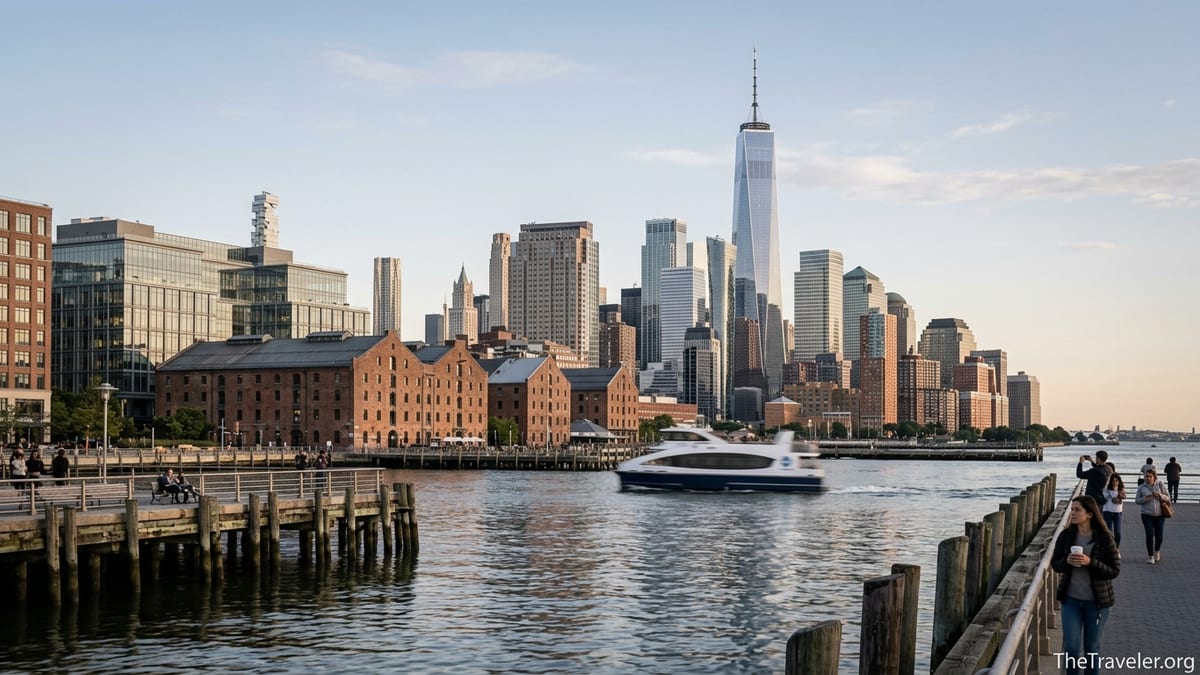
Getting Oriented in Lower Manhattan
Lower Manhattan typically refers to the southern tip of the island below roughly Chambers Street, taking in the Financial District, Battery Park City, the Seaport, parts of Tribeca, and the historic civic core around City Hall. Distances are short, but streets twist and narrow in ways that surprise visitors used to Midtown’s grid. Pack comfortable shoes and expect to cover ground on foot, from the World Trade Center area on the west side across to the East River piers in 15 to 20 minutes.
The easiest subway hubs are Fulton Center and the World Trade Center complex, where multiple lines converge and put you within a few blocks of major sights. Many visitors arrive by ferry at Pier 11 / Wall Street on the East River, especially via NYC Ferry routes from Brooklyn and Queens, which cost about the same as a subway ride and offer skyline views you simply do not get underground. Taxis and rideshares can be practical late at night or with luggage, but during rush hour streets clog quickly and walking often wins.
Travelers sometimes imagine Lower Manhattan as only a Monday-to-Friday business district, yet more than 60,000 people now live in the area and the street life reflects that. You will see kids at playgrounds in Battery Park City, dog walkers looping around the Seaport, and residents popping into independent coffee bars on cobbled alleys. That mix of office towers and growing neighborhood amenities is what makes it such an appealing place to stay rather than just visit for a single afternoon.
For first-time visitors, a simple mental map helps: picture the World Trade Center and Oculus transit hub as the western anchor, Battery Park and the harbor at the very southern tip, and the Brooklyn and Manhattan Bridges plus the Seaport lining the east side. The Financial District fills much of what lies between, with early American-era churches and stone-fronted banks tucked below the modern towers.
Unmissable Landmarks and Views
The rebuilt World Trade Center site is the emotional and physical center of Lower Manhattan. The 9/11 Memorial’s twin reflecting pools, free to visit, sit in the footprints of the original towers and are ringed by bronze panels inscribed with the names of nearly 3,000 victims. Many travelers allow at least an hour here simply to walk the perimeter and reflect; those who choose to visit the 9/11 Museum inside typically spend two to three hours exploring immersive exhibits and preserved artifacts, so plan accordingly and consider timed tickets on weekends and holidays.
Just steps away, One World Observatory crowns One World Trade Center. Standard timed tickets are not cheap, but you are paying for one of the most expansive views in the city, with floor-to-ceiling windows framing Brooklyn, New Jersey, the Statue of Liberty, and on clear days even the distant outline of the Verrazzano-Narrows Bridge. If you are on a budget, an alternative is to ride the Staten Island Ferry from nearby Whitehall Terminal, which is free and glides right past the Statue of Liberty and Ellis Island on a 25-minute crossing, giving you harbor views from open-air decks.
Battery Park itself tends to be more of a transit hub than a destination, as it is where ferries depart for Liberty and Ellis Islands. Still, it is worth a short stroll to see the SeaGlass Carousel, an imaginative indoor carousel where riders sit inside glowing fish-shaped shells, and the sweeping lawn and tree-lined paths that look out to the harbor. Benches around the park are a good place to rest between major stops while watching commuter ferries and tour boats come and go.
On the eastern side, the Brooklyn Bridge remains a must for many visitors. From Lower Manhattan you can access the pedestrian walkway near City Hall and walk toward Brooklyn in about 25 to 35 minutes, depending on crowds and photo stops. Sunrise and early morning tend to be less congested and cooler in summer; sunset offers golden light on the towers and cables, but you will share that view with many others. Consider walking one way and returning via the subway or an NYC Ferry from DUMBO back to Pier 11 to vary the experience.
Historic Streets and Neighborhood Character
Beyond headline attractions, Lower Manhattan rewards slow wandering. Stone Street, one of the city’s oldest lanes, is now a short pedestrian block lined with pubs and restaurants that spill tables outdoors in warm weather. While it can skew touristy at peak times, office workers still crowd the cobbles for after-work drinks, so stopping here for a midweek lunch or late-afternoon beer lets you tap into a very local atmosphere.
Nearby, Trinity Church presides over the head of Wall Street with its copper spire and quiet graveyard holding the remains of Alexander Hamilton and other early American figures. You can walk into the nave during visiting hours at no cost, a calm counterpoint to the bustle outside. A few minutes away, Federal Hall National Memorial stands on the site where George Washington took the oath of office as the first U.S. president. Its grand neoclassical facade, complete with broad steps and a Washington statue, has become a favorite quick photo stop for visitors exploring Wall Street’s canyon-like streets.
South Street Seaport and the Seaport neighborhood along the East River combine carefully restored 19th-century brick buildings with contemporary retail and dining. You will find preserved tall ships docked along the piers, including vessels maintained by the South Street Seaport Museum, and open public terraces with Adirondack chairs and loungers facing the water. Summer evenings often bring outdoor concerts and film screenings, while the Rooftop at Pier 17 has evolved into a key live-music venue with seasonal programming.
Battery Park City on the west side feels almost like a separate town. Built on landfill created from World Trade Center construction, it is a planned residential neighborhood of leafy promenades, playgrounds, and waterfront parks along the Hudson. Locals jog and cycle the riverside path at all hours, and visiting families often gravitate to the lawns and seating areas outside Brookfield Place, where kids can play while adults snack from coffee and pastry counters overlooking the water and New Jersey’s skyline beyond.
Where and What to Eat in Lower Manhattan
Lower Manhattan’s dining scene has broadened significantly beyond the grab-and-go salad bars and quick sushi that once dominated the Financial District. Today you will find everything from high-end tasting menus in Tribeca to casual food halls and home-style neighborhood spots serving quick, affordable meals. As with much of New York, prices shift quickly, but a simple rule of thumb holds: a fast-casual lunch will often land in the 15 to 25 dollar range per person, while a sit-down dinner with drinks in a well-regarded spot easily climbs to 50 dollars and up.
Near the World Trade Center, Brookfield Place offers an indoor run of options in its food court and surrounding restaurants, which is especially useful in cold or rainy weather. Here you can mix a salad from a build-your-own counter, grab tacos or noodles, or sit down at a higher-end bistro with river views. The nearby Oculus also houses chains and coffee bars, convenient for quick breakfasts before a day of sightseeing.
The Financial District has seen a wave of new coffee halls and food concepts appear in restored bank buildings and office towers. One example is a soaring coffee hall off Hanover Street set in a former Art Deco bank lobby, where the original teller counter has been transformed into an espresso bar beneath ornate molding and murals. Spaces like this appeal both to residents working remotely and travelers looking for a striking but relaxed place to recharge with a flat white and pastry between attractions.
For something more atmospheric, explore the narrow side streets around Stone Street and Pearl Street, where long-running taverns sit beside newer cocktail bars serving small plates and oysters. A casual dinner here might involve sharing burgers, fish and chips, or mussels with a couple of beers or glasses of wine, with the total for two commonly coming in around 70 to 100 dollars, depending on drinks. If fine dining is your focus, look north into Tribeca, where Michelin-starred spots on and around Greenwich Street offer contemporary tasting menus with prices to match their ambition; securing reservations in advance is essential for these venues, particularly on weekends.
Local Experiences Beyond the Postcards
To experience Lower Manhattan the way locals do, build unstructured time into your itinerary rather than sprinting from memorial to observation deck. Start a weekday morning with a coffee from an independent cafe near City Hall or the Seaport, then sit on the broad steps or a nearby bench watching courthouse staff, journalists, and bicycle couriers rush past. This simple half-hour offers more insight into the city’s daily rhythms than many more packaged experiences.
Along the Hudson in Battery Park City, rent a Citi Bike or simply walk the riverside path north toward Tribeca at golden hour. On summer evenings you will see office workers in untucked shirts walking dogs, kids racing scooters, and couples sharing takeout on park benches with the river and Jersey City skyline in the background. Even in cooler months, bundled-up runners and photographers keep the path lively, and you can pause at small piers and lookouts to watch ferries arriving and departing from nearby terminals.
Seasonal food events organized by the local business improvement district also offer a direct line into the area’s culinary community. One example is Dine Around Downtown, a lunchtime food festival typically held in early summer at Fosun Plaza on Liberty Street. Dozens of local restaurants set up stalls selling tasting-size portions of signature dishes at accessible prices, enabling you to sample everything from ramen to modern steakhouse plates without committing to a full reservation. In autumn, pop-up markets such as Lunch Box return to the same plaza, letting office workers and visitors alike discover new neighborhood eateries in a single sitting.
Culture-wise, keep an eye on programming at the arts center at the edge of the World Trade Center site, which hosts theater, dance, music, and multidisciplinary performances in intimate venues. Evening shows here pair well with a pre- or post-performance drink at one of the surrounding hotel bars, many of which welcome non-guests and offer quietly sophisticated spaces that feel far from the street-level rush.
Practical Tips, Transport and Safety
Lower Manhattan is one of the most transit-rich corners of New York City, but a little planning makes movement smoother. Download a transit app that works offline and familiarize yourself with key subway lines that serve the area, such as the 1, 2, 3 along the West Side, the 4 and 5 running under Broadway, and the A, C, J, Z, and R lines feeding into Fulton Center. Trains can be crowded at rush hours on weekdays, so if you have flexibility, start sightseeing days just after the peak, around 9:30 or 10:00 a.m., to enjoy quieter platforms and more space on board.
NYC Ferry services, particularly to Pier 11 / Wall Street, are a scenic alternative that many visitors overlook. Routes from DUMBO, Brooklyn Bridge Park, and other Brooklyn stops typically cost about the same as a subway fare and accept the city’s tap-to-pay system, but sail schedules vary by season and day of week. Grab a spot on the outdoor upper deck for photographs as the skyline approaches, but bring a light jacket even in summer as the wind on the water can be surprisingly cool.
On foot, be prepared for uneven cobblestones and narrow sidewalks, especially around the Seaport, Stone Street, and older sections of the Financial District. Comfortable, broken-in shoes matter more than fashion here. Crossing streets requires attention, as both cars and bicycles move quickly through tight intersections. Use marked crosswalks, and when in doubt follow locals’ lead rather than stepping out based purely on the signal.
In terms of safety, Lower Manhattan is generally considered one of the safer parts of the city, especially during business hours when thousands of workers are on the streets. Nighttime can feel quieter on some blocks once offices empty out, but subway stations, ferry terminals, and major thoroughfares remain busy. Standard big-city precautions apply: keep your bag zipped, avoid displaying large amounts of cash or expensive electronics, and consider using a money belt or interior pocket for passports and extra cards. If you are returning late to your hotel, a yellow cab or rideshare from a well-lit main avenue or transit hub is often worth the modest extra cost.
Planning Your Stay and Budget
Accommodation in Lower Manhattan tends to skew toward business-friendly hotels, but that works in visitors’ favor on many weekends, when corporate demand drops and room rates can slip noticeably below Midtown equivalents. You will find a cluster of mid- and upper-midrange properties around the World Trade Center, Seaport, and Wall Street areas, ranging from contemporary design-forward hotels to more traditional chains with familiar layouts. Checking date ranges that include a Friday or Saturday night sometimes reveals better-value packages than midweek stays.
For many travelers, a realistic daily budget in Lower Manhattan might break down roughly into accommodation, meals, transport, and attractions. Midrange hotels frequently run a few hundred dollars per night before taxes and fees, while budget-conscious visitors sometimes opt to stay in Brooklyn or uptown and commute down by subway. Meals can be moderated by combining sit-down dinners with grab-and-go breakfasts from delis or bakeries and casual lunches from food halls or takeout counters, where you can often keep costs around or just under 20 dollars per person if you skip drinks.
Major paid attractions include the 9/11 Museum, One World Observatory, Statue of Liberty and Ellis Island ferry tickets, and occasionally guided walking tours of the Financial District or Brooklyn Bridge. Buying timed tickets in advance for at least your must-see experiences helps avoid disappointment on busy weekends and holidays. Free or low-cost offsets include simply walking the Brooklyn Bridge, visiting Trinity Church and Federal Hall, and riding the Staten Island Ferry for harbor views.
Families with children might pace their days more gently, combining one major attraction with plenty of park time. Battery Park City’s playgrounds and riverside lawns, the SeaGlass Carousel, and seasonal public art installations give younger travelers room to move without requiring separate admission tickets. In summer, pack sunscreen and a light layer for air-conditioned interiors; in winter, plan a logical sequence that minimizes time spent outdoors between heated transit hubs, museums, and hotel.
The Takeaway
Lower Manhattan compresses centuries of New York history and some of its most photographed views into a compact, highly walkable district that continues to evolve beyond its stereotype as a 9-to-5 financial hub. Between the 9/11 Memorial, the Brooklyn Bridge, the harbor ferries, and the emerging arts venues and food halls, you could easily spend several days here without repeating experiences.
What makes this part of the city especially rewarding is the way monumental landmarks blend with everyday local life. Office workers clogging salad counters at noon, kids racing through Battery Park City playgrounds, residents lingering over coffee in restored bank lobbies and on Seaport piers all remind you that this is not a museum district but a living neighborhood.
Plan your visit with a mix of structured highlights and unscheduled time: secure tickets for key observatories or ferries, but leave space to wander side streets, sit on waterfront benches, or follow a line of locals into a promising lunch spot. With realistic expectations about prices, a bit of transit savvy, and comfortable shoes, Lower Manhattan can serve not just as a day-trip destination but as a memorable base for exploring New York City as a whole.
FAQ
Q1. How many days should I spend in Lower Manhattan?
Most visitors cover the main sights in one very full day, but two to three days allow time for the 9/11 Museum, Statue of Liberty and Ellis Island, a Brooklyn Bridge walk, and unhurried neighborhood wandering.
Q2. Is Lower Manhattan a good place to stay overnight?
Yes. It is well connected by subway and ferry, generally safe, and often offers better hotel value on weekends compared with Midtown, with easy access to both Brooklyn and the rest of Manhattan.
Q3. What is the best way to get to Lower Manhattan from the airports?
From JFK or LaGuardia, most travelers combine the AirTrain or airport bus with the subway, or use a yellow cab or rideshare, which is more expensive but simpler if you have heavy luggage or arrive late at night.
Q4. Do I need to book tickets in advance for the 9/11 Museum and One World Observatory?
Advance tickets are strongly recommended, especially on weekends, holidays, and during peak travel seasons, to avoid long lines and ensure you get your preferred time slots.
Q5. Can I see the Statue of Liberty without buying a ticket?
You can see the statue from a distance for free from Battery Park, the Staten Island Ferry, and parts of the harbor, but visiting Liberty Island and the pedestal or crown requires a paid, timed ferry ticket.
Q6. Is Lower Manhattan walkable for families with children?
Yes, but plan realistically: streets can be crowded and some walks, like the Brooklyn Bridge, offer little shade. Building in playground time in Battery Park City and regular snack breaks helps keep kids happy.
Q7. What should I wear when visiting Lower Manhattan?
Comfortable walking shoes are essential due to cobblestones and uneven sidewalks. Dress for the season, bring layers for changing indoor and outdoor temperatures, and consider a light rain jacket spring through fall.
Q8. Are there good budget food options in the Financial District?
Yes. Look for delis, pizza slices, food halls, and quick-service counters, especially around Fulton Center, Brookfield Place, and side streets off Broadway, where you can find filling meals without a full-service price tag.
Q9. Is it safe to walk around Lower Manhattan at night?
Generally yes, especially on main streets and near transit hubs, but some office areas become quieter late. Stick to well-lit routes, keep valuables secure, and consider a cab or rideshare if you feel uncomfortable.
Q10. How can I avoid crowds at the Brooklyn Bridge and major attractions?
Arrive early in the morning, especially on weekends; consider visiting in cooler months; and buy timed tickets for indoor attractions so you can plan around peak midday and late-afternoon surges.