


For most first-time visitors to the Bahamas, Lynden Pindling International Airport in Nassau is the gateway to turquoise water, white-sand beaches, and resort life. Navigating NAS is straightforward, but knowing what to expect with arrivals, customs, taxis, transfers, and money can make your first hour in the country feel relaxed instead of rushed. This practical guide walks you through the airport experience step by step, from landing to reaching your hotel.
Get the latest updates straight to your inbox!
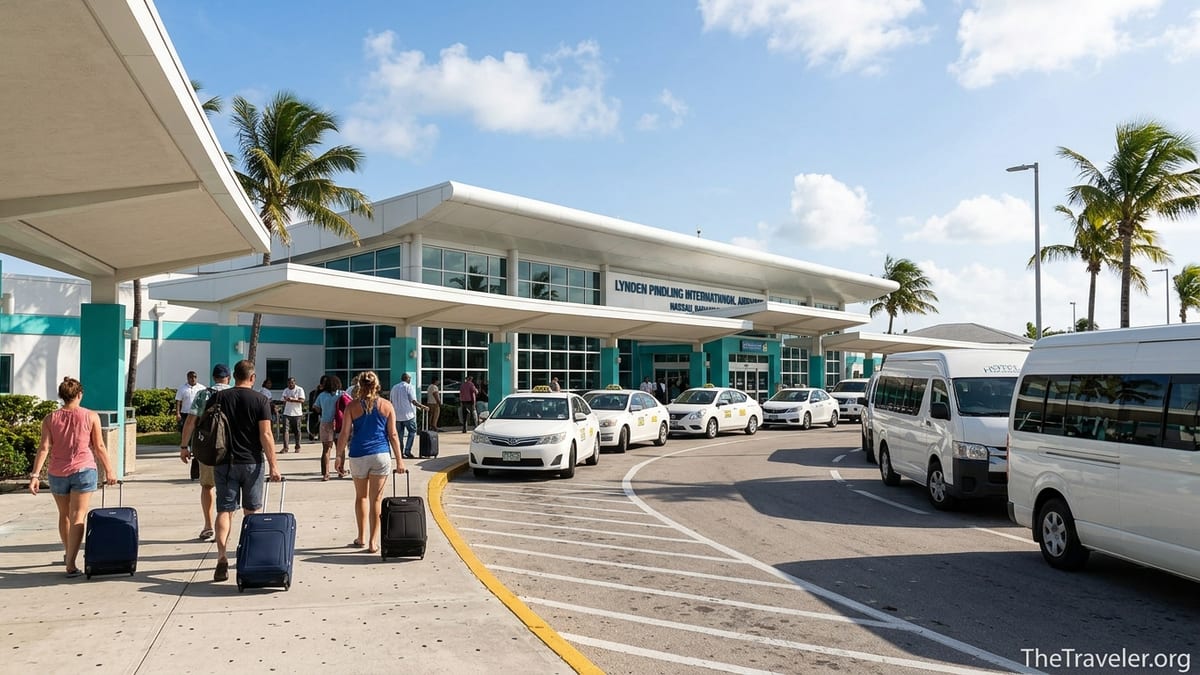
Orientation: Getting to Know Lynden Pindling International Airport
Lynden Pindling International Airport, airport code NAS, sits on the western side of New Providence Island, about a 20 to 30 minute drive from downtown Nassau and Paradise Island depending on traffic. It is the largest and busiest airport in the Bahamas and the main international gateway for resort areas like Cable Beach, Paradise Island, and many out islands reachable by onward flights. Most visitors from North America and Europe will land here before continuing to their final destination.
The airport has three main terminal areas: International Arrivals and Departures for most non U.S. flights, a separate U.S. Departures terminal with on-site U.S. border preclearance, and a smaller Domestic terminal handling flights to islands such as Exuma, Eleuthera, and Abaco. For a first-time arrival, you will follow signs for International Arrivals, regardless of whether you are connecting or ending your trip on New Providence.
Architecturally, NAS feels modern and airy, with high ceilings, lots of natural light, and island-inspired decor. You will see palm motifs, Bahamian artwork, and bright colors that immediately signal you have arrived in the Caribbean. At peak times, particularly on Saturdays and during winter high season, the terminal can feel crowded but layout and signage are clear enough for first-timers to follow without stress.
Free Wi-Fi is typically available in the terminal, and you will find ATMs and currency exchange services once you clear immigration and customs. However, it is smart to arrive with a small amount of U.S. cash in hand for early taxi fares and tips, especially if you land at night when some services operate on shorter hours.
Arrivals, Immigration, and Customs: What to Expect
After your aircraft parks at the gate, you will follow the flow of passengers into the International Arrivals corridor. Overhead signs direct you to Immigration. Before you reach the officers, you will usually pass through a large hall with lines separated by nationality or residency status, such as Bahamian citizens, CARICOM, and All Other Passports. Most first-time visitors will join the All Other Passports line.
Have your passport, completed landing card if your airline provided one, and your hotel or accommodation address ready. Officers commonly ask simple questions: the purpose of your trip, length of stay, and where you will be staying. For example, if you are staying at a major resort like Atlantis Paradise Island or Baha Mar, saying the resort name is normally sufficient. If you are staying at an Airbnb or small guesthouse, keep the full address on your phone or printed out in case you are asked.
Once your passport is stamped, you proceed to the baggage claim hall. Overhead monitors show which carousel is assigned to your flight. Baggage handling at NAS is reasonably efficient, but in peak season you could wait 20 to 30 minutes for bags on busy arrivals from major hubs like Miami, New York, or London. Use the time to connect to Wi-Fi or quickly message your hotel or transfer driver that you have landed.
After collecting your luggage, you move toward Customs. You will either hand a form to an officer or pass through an electronic system depending on current procedures. Officers may ask whether you are bringing in food, alcohol, or commercial goods. Most tourists with standard luggage pass through quickly. Random secondary inspections do happen, so pack prescription medications in original labeled containers and avoid bringing fresh produce or meat products. Once cleared, you exit through automatic or staffed doors directly into the public arrivals area.
Taxis, Transfers & Ride Options: From NAS to Your Hotel
Most first-time travelers choose a taxi from the airport. Official taxis queue directly outside the terminal exits. Rates are based on government regulated zone fares rather than a meter. For example, a standard taxi from NAS to downtown Nassau is typically around the mid 30 U.S. dollars range, to the Cable Beach resort strip around the upper 20s, and to Paradise Island around the mid 40s, quoted for up to two passengers plus standard luggage. Expect small surcharges for extra passengers, extra bags, or late-night trips.
When you leave the customs area, you will see dispatchers or taxi coordinators directing passengers to cars. It is good practice to confirm the fare before you get in. A simple line such as, “How much to Atlantis for two people with two suitcases?” helps avoid misunderstandings. Taxis are usually sedans or minivans. Drivers are accustomed to first-time visitors and will often point out landmarks on the roughly 30 minute drive to Paradise Island or about 15 to 20 minutes to Cable Beach.
Many resorts and tour operators offer private transfers that you can prebook. For example, couples heading to a luxury property on Paradise Island might arrange a prebooked SUV transfer that meets them with a name sign in the arrivals hall and includes chilled water and a brief orientation. Prices are higher than standard taxis but can be worthwhile if you want guaranteed space, a child seat, or a direct ride without waiting in the taxi line at peak times.
Ride-hailing apps such as Uber and Lyft do not operate in Nassau as of mid 2026. Some local companies and drivers operate via WhatsApp or their own apps, but first-time visitors generally find it simpler to stick with official airport taxis or prearranged hotel transfers. If someone approaches you aggressively inside the terminal offering a ride, politely decline and walk to the official taxi rank just outside.
Car Rental, Buses, and Getting Around on Your Own
Several major car rental brands and local companies operate at or near Lynden Pindling International Airport. International brands like Avis, Hertz, and Dollar typically have counters inside or adjacent to the terminal, with vehicles parked in lots just a short walk away. Sample daily rates often start around the mid 70 U.S. dollars range for a small car in low season and can rise considerably during holidays. Because demand spikes during winter and spring break, first-timers who really want a car should reserve in advance rather than waiting until arrival.
Driving in the Bahamas is on the left side of the road, which may feel unfamiliar to North American visitors. Vehicles often have right-hand drive, and roundabouts are common on the main roads leading from the airport into Nassau. Traffic around downtown and the bridges to Paradise Island can be heavy at peak hours. Renting a car can make sense if you plan to explore beyond the main resorts, such as spending a day at quieter western beaches or visiting local restaurants far from tourist areas. However, for a typical resort stay where you mostly shuttle between hotel, beach, and a few sights, taxis are usually simpler.
Public buses, known locally as jitneys, serve much of New Providence, but they do not drive directly into the airport grounds. The nearest routes run along John F. Kennedy Drive outside the airport roundabout. A traveler determined to use public transport could walk out of the airport complex, around 10 to 15 minutes along the access road, and then flag down a jitney toward Cable Beach or downtown for a fare typically under 2 U.S. dollars equivalent. This is only recommended for light packers with carry-on bags arriving in daylight, as sidewalks are limited in places and it can be hot and humid.
Within Nassau and Paradise Island, jitneys can be a very economical way to move between neighborhoods during the day. However, they usually stop running in the evening, are not set up for large suitcases, and do not follow the same fixed schedule tourists may expect in large cities. For most first-time visitors, taxis or hotel shuttles remain the most practical options, especially on travel days when you have luggage and a fixed schedule.
U.S. Preclearance and Departing the Bahamas
One of the most important features of Lynden Pindling International Airport for U.S.-bound travelers is the on-site U.S. border preclearance facility. When you depart Nassau on a flight to cities such as Miami, Atlanta, New York, or Charlotte, you typically clear U.S. immigration and customs in Nassau before you board, rather than on arrival in the United States. This means that when you land at your U.S. destination, you are treated as a domestic arrival and can connect more easily to onward flights.
The U.S. Departures terminal is separate from the general international departures area, with its own check-in counters and security lanes. After you check in with your airline and drop your bags, you pass through Bahamian exit controls, standard security screening, and then U.S. Customs and Border Protection. At busy times, particularly midday on Saturdays during winter high season, lines can be long. Many airlines and frequent travelers recommend arriving at least three hours before a U.S.-bound flight to allow for check-in and both security checks.
Inside the U.S. Departures area, you will find duty-free shops, restaurants, and bars catering to outbound travelers. For example, you might have time for a final Bahamian conch fritter or rum-based cocktail while waiting at the gate. Keep your boarding pass and passport handy, and listen for announcements, as boarding times can start earlier than you expect due to the added preclearance steps.
If you are departing to Canada, Europe, or another non U.S. destination, you use the regular International Departures terminal instead. The experience is more typical of a medium-size international airport, with airline check-in desks, security, and departure gates all in one main hall. In both terminals, airport staff are accustomed to guiding first-time visitors who are unsure which line or checkpoint comes next.
Money, Payments, and Practical Basics at NAS
The Bahamas uses the Bahamian dollar, pegged 1 to 1 with the U.S. dollar. U.S. dollars are widely accepted island-wide, including at taxis and most shops and restaurants. At the airport, you can pay taxi fares and small purchases in U.S. cash without exchanging money. Your change may be given in Bahamian dollars, which you can spend locally just like U.S. bills at face value.
ATMs are usually available in the arrivals and departures areas, dispensing Bahamian dollars. International cards from major networks such as Visa and Mastercard are commonly accepted, though occasionally terminals may be down, and some smaller vendors prefer cash. For example, a family buying quick snacks from a small stand outside the airport might find it easier to pay in cash, while a traveler booking a rental car at a major counter will need a credit card in their own name.
Service charges or gratuities may be added automatically to restaurant bills in Nassau, but for taxis a tip of around 10 to 15 percent of the fare is customary when service is friendly and bags are handled. So if your taxi from the airport to Paradise Island costs around 45 U.S. dollars, a 5 to 7 dollar tip is a reasonable gesture. Drivers appreciate small bills. Having a mix of ones and fives in U.S. currency when you land saves you from over-tipping simply because you lack smaller notes.
Mobile payments and digital wallets are gradually becoming more common, especially at larger hotels and resorts, but they are not universal. A first-time visitor should not rely solely on phone-based payment options. Carry at least one physical credit or debit card, plus enough cash for a taxi ride, snacks, and a first meal in case of technical issues or card declines on arrival.
First-Time Arrival Tips: Staying Calm in the Tropics
Arriving in a new country can be disorienting, especially after an early morning wake-up or a long connection. A few small habits make your first hour at Lynden Pindling International Airport much smoother. Before landing, fill out any arrival forms, drink water, and visit the restroom so you can walk straight to immigration without having to stop. If you are traveling with children, explain the basic steps in advance: line up for passport control, wait for bags, then exit to find your ride.
Dress for the climate. The moment you step out of the air-conditioned terminal, the warmth and humidity can be intense, especially from May through October. Lightweight clothing and comfortable shoes are much better than heavy jeans and thick sneakers. For example, swapping into sandals and a cotton shirt during your last in-flight restroom break means you step into the Bahamian air already comfortable, rather than rummaging through your suitcase on the curb.
Keep important documents and a small amount of cash in a daypack or crossbody bag rather than buried in checked luggage. You will need easy access to your passport and hotel details several times during the arrivals process. If you have arranged a private transfer, confirm where your driver will be waiting. Many stand just outside customs with handheld signs, while some hotels instruct guests to meet at a specific post just beyond the exit doors.
Finally, build some flexibility into your schedule on arrival day. It is unwise to book a tight same-day ferry or domestic flight connection that leaves you less than two hours between scheduled landing and next departure. Tropical weather, air traffic, and seasonal crowds can cause minor delays. Give yourself time to breathe, adjust, and start enjoying being in the Bahamas rather than racing through the airport clock-watching.
The Takeaway
Lynden Pindling International Airport is designed to be a smooth, welcoming first stop in the Bahamas. Its compact size, clear signage, and U.S. preclearance facilities make it easier to navigate than many large hub airports, particularly for North American visitors. Understanding the basic layout, arrival sequence, and typical taxi or transfer options goes a long way toward turning a potentially stressful travel day into an easy transition from plane seat to beach chair.
For first-time travelers, the key is preparation rather than perfection. Know roughly what a taxi should cost to your hotel, decide in advance whether you will rent a car or rely on cabs, and arrive for U.S.-bound departures with enough time to clear preclearance. Carry some small U.S. bills, keep your hotel details handy, and remember that island time is real: lines move, bags arrive, and drivers show up, even if it all happens a bit more slowly than at home.
Most visitors find that by the time they pass the pastel-colored buildings and glimpses of sea on the drive away from NAS, the stresses of flying have already started to fade. With a little planning and the tips in this guide in mind, your first experience at Lynden Pindling International Airport can feel like a natural and easy beginning to your Bahamas vacation.
FAQ
Q1. How long does it usually take to get from Lynden Pindling International Airport to Paradise Island?
In normal traffic it takes about 25 to 35 minutes by taxi from the airport to Paradise Island, with longer times possible during rush hour or peak tourism days.
Q2. Are taxis at the Nassau airport fixed price or metered?
Taxis from NAS use government zone-based fares rather than meters. Rates to common areas like downtown, Cable Beach, and Paradise Island are standardized, with surcharges for extra passengers and luggage.
Q3. Can I pay for my airport taxi in U.S. dollars?
Yes. U.S. dollars are widely accepted, and most taxi drivers expect to be paid in U.S. or Bahamian dollars at a one-to-one rate. Having small bills makes tipping easier.
Q4. Is it worth renting a car at Lynden Pindling International Airport?
Renting a car can be worthwhile if you plan to explore beyond major resorts or stay on the island several days. For short resort-focused stays where you mostly shuttle between hotel and a few attractions, taxis are usually simpler and less stressful.
Q5. Do public buses or jitneys go directly into the airport?
No. Public jitneys do not enter the airport grounds. The nearest routes run along John F. Kennedy Drive outside the airport, which requires a walk from the terminal that is practical only for light packers in daytime.
Q6. What time should I arrive at NAS for a U.S.-bound flight?
Because of U.S. preclearance, many airlines and frequent travelers recommend arriving at least three hours before departure for flights to the United States, especially during winter high season and weekends.
Q7. Is there Wi-Fi at Lynden Pindling International Airport?
Yes. Free Wi-Fi is typically available in the main terminal areas. Coverage is generally sufficient for messaging, checking emails, and confirming hotel or transport details while you wait.
Q8. Can I use credit cards easily at the airport?
Most major car rental counters, shops, and restaurants at NAS accept international credit cards. However, you may occasionally encounter outages or smaller vendors that prefer cash, so it is wise to carry some cash as a backup.
Q9. Are there ATMs and currency exchange services at NAS?
ATMs dispensing Bahamian dollars are usually available in arrivals and departures areas, and currency exchange services may operate depending on the time of day. Many visitors skip exchange entirely and use U.S. dollars, which are widely accepted.
Q10. Is it safe to arrive at Nassau airport late at night?
NAS operates into the evening, and official taxis are normally available even on later flights. As with any destination, stay inside the terminal until you are ready to go, use the official taxi rank or a prebooked transfer, and keep valuables close to you.