


Lynden Pindling International Airport in Nassau is the main gateway to the Bahamas and the first place many travelers consider picking up a rental car. The island looks compact on the map, but decisions about insurance, deposits, driving on the left and whether you even need a car can have a big impact on your trip and budget. This guide focuses on what actually happens at the airport counters and out on the road so you can decide confidently before you get to the arrivals hall.
Get the latest updates straight to your inbox!
Where to Rent at Lynden Pindling International Airport
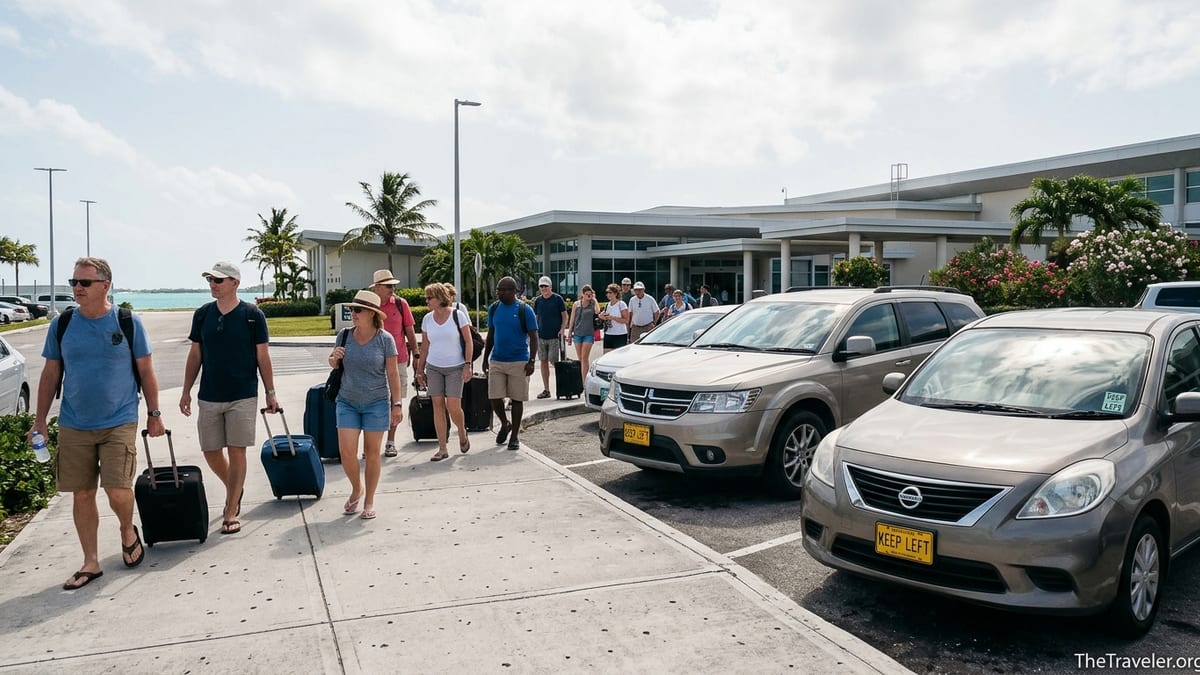
Lynden Pindling International Airport, commonly called Nassau Airport, is the largest airport in the Bahamas and the main arrival point for visitors headed to Nassau and Paradise Island. Car rental counters for major brands such as Avis, Budget, Hertz, Dollar, Thrifty, and local agencies are located in the arrivals area, so you can arrange a car as soon as you clear customs and immigration. Most rentals are picked up in lots just outside the terminal, a short walk from the baggage claim doors.
International brands typically run on-airport locations at Nassau with their own parking bays. A common pattern is to complete paperwork at the counter inside the terminal, then step outside to a small booth or parking area where staff walk you around the vehicle. For example, a traveler landing on an afternoon flight from Miami might clear customs by 3:30 p.m., sign paperwork at the Budget counter in the U.S. arrivals hall, and be driving away by 4:00 p.m. if there are no lines. At peak times such as Saturdays in winter, expect longer waits and consider adding buffer before any activities you have planned.
Some smaller companies and independent operators do not maintain terminal desks but will meet you in arrivals or outside at the curb. With these, you typically pre-book online, then look for a staff member holding a sign with your name. They may walk you to a nearby lot or shuttle you a few minutes off-airport to pick up the vehicle. Travelers often like these options because they can be a bit cheaper than the big brands, but the trade-offs can include older vehicles and more limited roadside assistance if something goes wrong.
If you are staying at major resorts such as Baha Mar or Atlantis, note that there are no full-service car rental plazas on those properties. Their own websites advise that major car rental brands operate from the airport rather than on site, so most guests who want a car for their stay either collect it at Lynden Pindling when they land or arrange for an agency to deliver a car to the resort later. Choosing the airport pick-up avoids extra delivery fees and means you can use the car from the moment you arrive.
Driving on the Left: What Visitors Really Experience
The Bahamas follows United Kingdom rules of the road, which means you drive on the left-hand side. For visitors arriving from the United States and Canada, this is often the biggest mental adjustment. You will turn into roundabouts clockwise and yield to traffic approaching from your right. Road signs and lane markings are designed for left-side driving, and you will see “KEEP LEFT” stickers on some rental vehicles and on roadside reminders near tourist areas.
The twist is that many rental cars in Nassau are left-hand-drive vehicles imported from North America. In practice, that means you sit on the left side of the car, like at home in the United States, but you are driving on the left side of the road. Locals and repeat visitors often describe the first day as the hardest, because your seating position near the center line can make judging lane position and right-side mirrors feel unusual. To manage this, keep your speed conservative at first and follow local traffic rather than trying to overtake.
Roundabouts are common on New Providence Island, especially on the main route from the airport into Nassau and Cable Beach. A practical rule that local drivers repeat to visitors is that the left lane of a roundabout is generally for taking the immediate next exit, while the right lane is for going farther around. In busy traffic, drivers may not always signal or follow textbook rules perfectly, so defensive driving is more important than insisting on right-of-way. Give yourself extra time when entering and exiting roundabouts, and avoid aggressive lane changes until you are fully comfortable.
Visitors with valid foreign driver’s licenses, including U.S. licenses, can legally drive in the Bahamas for typical tourist stays without obtaining a local license. Some travel sites and rental staff may still recommend carrying an International Driving Permit as an added form of identification, especially if you are renting on multiple islands. Whether or not you carry an additional permit, it is important that the license you present at the rental counter matches the name on your passport and credit card, as agencies can refuse rentals when names do not align.
Rental Insurance and What Is Actually Covered
When you arrive at the airport counter, the most confusing part of the rental process is often insurance. By law, vehicles in the Bahamas must carry basic third-party liability coverage, and this is normally held by the rental company, not specifically by you as the renter. What the desk agent offers you are optional coverages that limit your financial risk for damage to the rental vehicle and for higher liability claims. The names and abbreviations can vary slightly between companies, but you will commonly hear about Collision Damage Waiver, sometimes called Loss Damage Waiver, and Supplemental Liability Insurance.
Collision Damage Waiver at Nassau airport locations typically runs in the range of about 15 to 25 U.S. dollars per day for a small car, though exact prices vary by season and brand. CDW usually reduces your financial responsibility for damage or theft of the rental car, often down to an excess that is still a few hundred dollars. For example, a traveler renting a compact car for a week might pay roughly 140 dollars for CDW and still be responsible for the first 500 dollars of damage in the event of a claim. Without CDW, the company may hold you liable for the full value of the car.
Supplemental Liability Insurance increases the liability limits beyond the basic coverage required locally. This can matter in serious accidents involving injuries or multiple vehicles, because medical costs and legal claims can exceed minimal policy limits. SLI at the airport can add approximately 10 to 15 U.S. dollars per day. Some U.S. visitors rely on their own travel insurance or credit card protections instead, but those policies often have conditions such as declining the rental company’s CDW or paying for the rental entirely on the card, so it is important to check the fine print before your trip rather than at the counter.
A practical approach many travelers follow is to check with their credit card issuer and personal auto insurer at home before departure, then bring written confirmation of coverages. For instance, a U.S. driver whose premium travel card offers primary rental coverage in the Bahamas might decline CDW but still consider buying SLI at the counter to increase liability limits in the local legal environment. Another traveler whose home auto policy does not extend to foreign rentals might choose to accept both CDW and SLI from the rental agency for peace of mind, even if it increases the daily cost noticeably.
Security Deposits, Holds and Payment Methods
Most car rental agencies at Lynden Pindling International Airport place a security hold on your credit card at collection. The exact amount varies by company and car class but often falls somewhere between about 500 and 1,500 U.S. dollars, with higher holds for SUVs and luxury vehicles. This hold is separate from the estimated total rental charge. For example, if your weekly rental is quoted at 420 dollars including taxes and fees, a company might place a 1,000 dollar hold, leading some travelers to see more than 1,400 dollars temporarily unavailable on their credit limit until the hold is released.
Debit cards are less widely accepted, especially at the airport counters, and those agencies that do accept them may require proof of return flight, utility bills, or additional identification, as well as larger deposits. If you plan to use a debit card, contact the specific branch you are booking with and ask about conditions before confirming. Some travelers have shared that local and independent agencies are more flexible with cash or debit deposits for visitors who are staying on the island several weeks, but this usually comes with strict mileage and damage rules written into the contract.
The deposit process is one reason it is smart to avoid back-to-back large holds on the same trip. If you are also placing hotel incidentals holds, booking excursions, and paying restaurant tabs on the same card, your available credit can shrink quickly. A common workaround is to dedicate one major credit card to the rental car only, especially if you are adding insurance that requires you to pay with a specific card. When you return the car, the agency inspects it and then instructs your bank to release the hold, which can take anywhere from a couple of days to over a week depending on the bank’s processes.
Before driving away from the airport, walk around the car with an agent and ensure any dents, scratches or cracked glass are marked on the form. Take photos or a quick video that clearly shows the condition of the vehicle, including the fuel gauge and odometer. Many visitors have later avoided disputes over pre-existing damage by forwarding these images to the rental office when questions arose. Doing this at the parking lot, in daylight, is far less stressful than trying to argue about a small scuff at the return lane right before your flight home.
Parking at Resorts and Around Nassau
Parking is an overlooked cost in Nassau and Paradise Island. Large integrated resorts like Baha Mar on Cable Beach and Atlantis on Paradise Island offer parking options for guests and visitors, which can range from complimentary self-parking areas to paid valet services. Specific day and overnight rates can change, but visitors often report that self-parking at big resorts may be free or modestly priced for registered guests, while valet can add a noticeable nightly charge. For example, a couple staying four nights and using valet at a high-end tower might add over 100 dollars in parking charges by the end of their stay.
Not all attractions and beaches are as straightforward. Popular spots such as Jaws Beach, Saunders Beach and some local fish fry areas can involve informal parking along the roadside or in small unpaved lots. In peak hours and on weekends, these areas can become congested and slightly chaotic, with cars parked close together and limited marked bays. Visitors unfamiliar with local habits should avoid blocking driveways or parking where a curb is clearly painted or a sign indicates restrictions, as towing and tickets for obvious violations do occur, particularly in central Nassau.
Paradise Island presents its own quirks. The road approaching the resort district funnels most vehicles toward hotel entrances and the marina village area. Travelers who drive across for boat excursions from the Paradise Island Ferry Terminal often find there is effectively no dedicated parking for day visitors near the docks, leading many to be dropped off by taxi instead. If you plan to drive there, ask the excursion operator in advance about realistic parking options and whether they recommend leaving the car at your hotel and using a taxi to the marina.
If your itinerary revolves around staying on-property at a major resort with only occasional off-site dinners or a day trip, it often makes sense to rely on taxis or pre-arranged shuttles instead of paying both rental and parking fees every day. On the other hand, if you plan to explore grocery stores, smaller beaches and local restaurants scattered across New Providence, free or low-cost parking in those neighborhoods can quickly offset the daily rental cost compared to multiple taxi trips.
Island Road Trips: When a Rental Car Shines
Having a car becomes particularly valuable once you leave the resort bubble and treat Nassau and New Providence Island as a destination to explore. A typical day trip from a Cable Beach hotel might start with a morning drive to Jaws Beach near Clifton Heritage National Park, continue with a stop at a supermarket or local bakery, then end with sunset at a quieter beach and dinner at a seafood shack. Doing this by taxi could involve four or more separate rides, each potentially in the range of about 25 to 40 dollars depending on distance and time of day, making a single day’s taxi spend similar to or higher than a full day’s rental cost for a compact car.
Road conditions on New Providence are mixed but manageable. Main routes connecting the airport, Cable Beach, downtown Nassau and Paradise Island are paved and heavily used, with traffic lights and frequent roundabouts. Side streets and some suburban pockets can have potholes, speed bumps and occasional flooding after heavy rain. Night driving requires extra caution due to variable street lighting and some drivers using high beams, which visitors on recent trips have highlighted as a key challenge on island roads. Choosing a car with good headlights and avoiding long unfamiliar drives after dark can improve comfort and safety.
For those flying on to other islands such as Eleuthera or Exuma, rental cars are generally arranged at the smaller island airports rather than carried over from Nassau. Travelers regularly report that driving on these “family islands” is less congested and more relaxed than in Nassau but that road quality can vary more and that gas stations and repair services are fewer and farther between. If your vacation includes several islands, it may be worth combining a short rental at Lynden Pindling with separate rentals on each outer island rather than trying to rely on taxis everywhere.
One instructive example comes from visitors who wanted to visit out-of-the-way beaches and historic sites over several days. They compared the cost of taxis to a rental car and discovered that a single round-trip taxi to a distant beach could approach the price of a full day’s rental. Once they added in trips to grocery stores, craft markets and restaurants beyond walking distance, the rental became the better value, with the added benefit of flexibility to stop where they liked along the way.
Is Renting a Car at Nassau Airport Really Worth It?
Whether renting is worthwhile depends heavily on your plans. Visitors whose itineraries focus on large resorts like Atlantis or Baha Mar, spending most of their days by the pool, at the beach and in on-site restaurants, often find that a car is more hassle than help. Left-side driving, airport counter lines, parking charges and the stress of navigating unfamiliar roads can outweigh the occasional convenience of having your own vehicle. In these cases, the combination of airport taxis, resort shuttles and perhaps one or two organized tours usually works well.
On the other hand, independent travelers who want to explore New Providence beyond the resort zone frequently conclude that an airport rental is a smart decision. For example, a couple staying a week on Cable Beach might calculate two airport taxi rides, several evening trips to restaurants in Nassau, a grocery store run and a day visiting multiple beaches. Those journeys could easily total several hundred dollars in taxi fares. A compact car rented at Lynden Pindling for the same period, even with local taxes and moderate insurance added, can often undercut that figure, especially outside peak holiday periods.
Comfort level with driving on the left is another major factor. Some visitors feel confident adapting after a few minutes and appreciate the independence of being able to drive themselves around the island. Others find the combination of unfamiliar traffic patterns, roundabouts and local driving style too nerve-wracking to justify a rental, especially when traveling with young children or after a long flight. It is perfectly reasonable to skip the car altogether and rely on professional drivers if you fall into the latter group.
A middle-ground strategy many travelers use is to take a taxi on arrival, settle into the resort for a day or two, and then arrange a short-term rental later in the stay, either from an airport counter or via delivery to the hotel. That way you only pay for a car on the days you know you will be sightseeing or running errands. This approach can be particularly appealing for four- or five-night stays where you want a balance between simple resort time and a taste of local life.
The Takeaway
Renting a car at Lynden Pindling International Airport opens up Nassau and New Providence beyond the resort gates, but it also brings responsibilities and costs that are easy to underestimate. From security deposits that temporarily tie up a chunk of your credit line to optional insurance packages and the mental shift of driving on the left while seated on the left side of the car, the decision is not trivial. Thinking through how often you will leave your hotel, what parking will cost, and how comfortable you are with local traffic will go a long way toward avoiding surprises.
If your idea of the perfect Bahamian vacation is staying put at a major resort with occasional short excursions, you may be happier hopping in licensed taxis and organized shuttles rather than dealing with a rental car every day. But if you are eager to discover quieter beaches, local eateries and everyday neighborhoods, an airport rental can pay for itself and give you the freedom to explore at your own pace. Whichever option you choose, arriving with a clear understanding of insurance, deposits and driving norms means you can focus less on logistics and more on enjoying the turquoise water just beyond the runway.
FAQ
Q1. Do I really need a car if I am staying at Atlantis or Baha Mar?
Probably not for a resort-focused stay. Most guests rely on taxis and shuttles for airport transfers and occasional off-site dinners. A car becomes more useful only if you plan multiple days exploring beaches, grocery stores and attractions away from the resort area.
Q2. Is it difficult to adjust to driving on the left in Nassau?
Most visitors find the first day the most challenging, especially at roundabouts and turns. Taking things slowly, following local traffic and remembering to “keep left” at every junction usually helps you adapt within a few short drives.
Q3. Can I use my U.S. driver’s license to rent a car in the Bahamas?
Yes, visitors with a valid U.S. or other foreign driver’s license can normally rent and drive legally for typical tourist stays. Some travelers also carry an International Driving Permit, but it is not mandatory for most short visits.
Q4. How much should I budget for rental car insurance at Nassau Airport?
Costs vary by company and season, but many travelers find that Collision Damage Waiver and Supplemental Liability Insurance together can add roughly 25 to 40 U.S. dollars per day to the rental price for a small car.
Q5. What kind of deposit or credit card hold should I expect?
Airport rental agencies commonly place a security hold of about 500 to 1,500 U.S. dollars on your card, in addition to the estimated rental charges. The hold usually releases a few days after the car is returned in good condition.
Q6. Is parking expensive at Nassau and Paradise Island resorts?
Large resorts offer a mix of self-parking and valet, with self-parking sometimes complimentary or modestly priced for guests and valet typically carrying a nightly fee. Over several nights, valet charges can add up to a significant extra cost.
Q7. Are taxis a better option than renting a car?
Taxis are simpler for travelers who plan to stay mostly on resort property or only take a few short trips. If you expect to crisscross the island several times, especially for beach-hopping or shopping, a rental car often becomes more economical and flexible.
Q8. What should I watch out for when driving at night?
Street lighting can be uneven, and some drivers use high beams frequently. Potholes and pedestrians near the road are harder to see after dark, so reduce speed, avoid long unfamiliar routes at night and be prepared for sudden glare from oncoming headlights.
Q9. Do I need a car to reach beaches like Jaws Beach or Clifton Heritage National Park?
Having a rental car makes reaching outlying beaches and parks much easier and often cheaper than arranging multiple taxis. Many visitors specifically rent a car for the days they want to explore these areas in one or two longer outings.
Q10. Can I rent a car at Lynden Pindling and then take it to another island?
Typically no. Rentals picked up in Nassau are meant to stay on New Providence Island. If you fly to islands such as Eleuthera or Exuma, you generally arrange a separate rental at the local airport there rather than transporting the Nassau car by boat.