


More news on this day
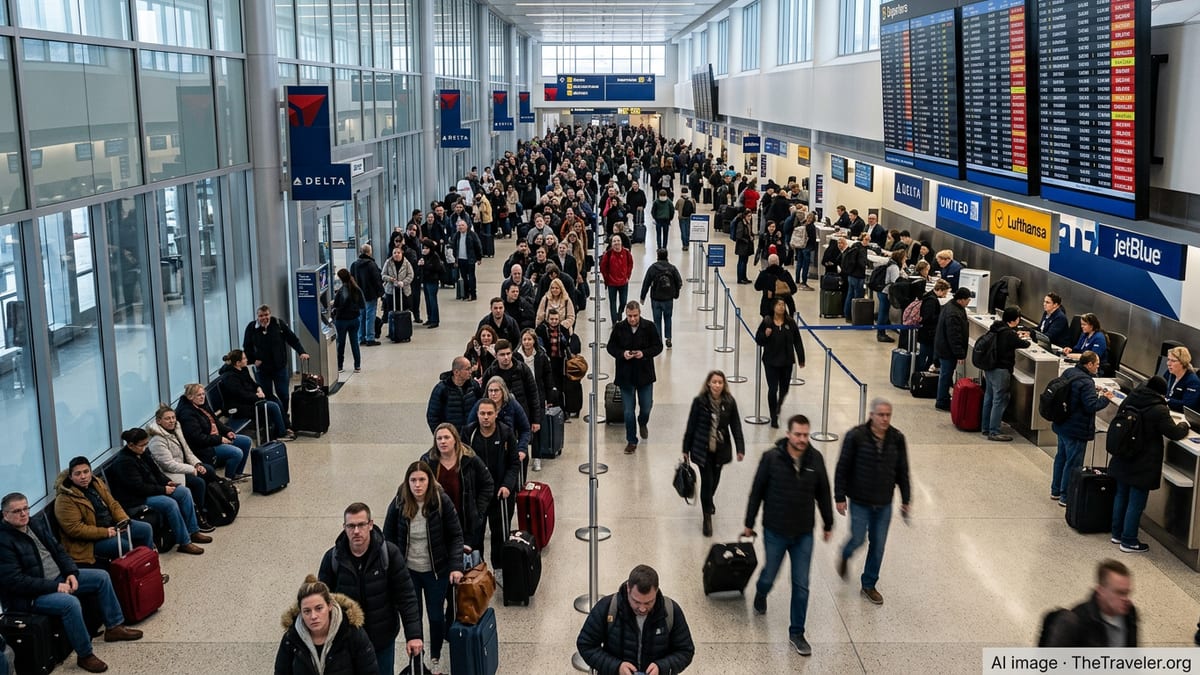
Air travelers across the United States faced another difficult day as more than 1,579 flights were reported delayed and at least 128 canceled, highlighting ongoing strains on the nation’s aviation network during the peak summer travel period.
Get the latest news straight to your inbox!
Storms, Congestion and Crew Limits Converge
Reports from major tracking services indicate that a mix of severe thunderstorms, airspace congestion and crew time limits contributed to the latest wave of disruptions affecting airports from the Northeast to the West Coast. Weather systems rolling through key hubs created temporary ground stops and slowed the rate at which air traffic controllers could safely move planes through busy corridors.
Publicly available information on recent disruptions points to a familiar pattern. When storms line up along the East Coast or over major hubs, flights are held on the ground, departure rates are reduced and arriving aircraft stack up, creating ripple effects that extend for hours and sometimes days. Once schedules begin to fray, even minor operational issues such as routine maintenance checks or late-arriving crews can escalate into significant delays.
Crew duty-time rules, designed to prevent pilot and flight attendant fatigue, also play a visible role. Several recent accounts from travelers describe flights returning to gates or canceling outright when delays push crews beyond their legal working limits. In such situations, airlines must either find replacement crews or cancel the flight, putting further pressure on an already stretched network.
Major Hubs Shoulder the Heaviest Disruption
Based on widely cited tracking dashboards, the heaviest delays are once again clustering at large coastal and Midwest hubs that already handle some of the country’s densest schedules. Airports serving New York City, along with major connection points such as Chicago, Dallas, Denver and Atlanta, frequently appear near the top of daily delay and cancellation tallies when adverse weather intersects with peak demand.
Recently shared passenger experiences from airports including New York’s John F. Kennedy International and Newark Liberty International describe packed terminals, long lines at customer service counters and difficulty rebooking as later departures filled quickly. Travelers report that when a bank of flights is disrupted at a single large hub, seats on alternative departures to nearby cities and regional airports can sell out within minutes, leaving some passengers facing extended overnight or multi-day waits.
West Coast gateways are not immune. Accounts from San Francisco-bound passengers in recent days describe cancellations linked to traffic-management initiatives around the Bay Area, with knock-on effects at connecting airports in the central United States. When high-traffic hubs encounter constraints, connecting travelers often bear the brunt, as missed links cascade into lost vacation time, business delays and added accommodation costs.
Passengers Confront Long Waits and Limited Options
The latest figures on delays and cancellations translate into long hours in terminals for many travelers. Social media posts and forum discussions are filled with stories of passengers enduring multiple rolling delay notices, only to see flights canceled late in the evening when weather or operational limits fail to improve in time.
Several firsthand accounts describe travelers receiving short delay notifications in 30 to 60 minute increments that ultimately added up to many hours on the ground. In some cases, passengers report boarding aircraft and waiting on the tarmac before being required to deplane as weather cells intensified or ground operations paused. Others recount missed connections that forced them into unplanned overnight stays, sometimes with limited access to hotel or meal vouchers as airlines balanced their obligations under company policies and federal rules.
With summer schedules already heavily booked, rebooking can be especially challenging. Publicly visible seat maps and fare searches often show remaining seats on popular routes being snapped up quickly when disruptions occur, particularly on Fridays and weekends. Travelers who do manage to secure new flights frequently report taking less convenient routings, such as multi-stop itineraries or journeys through smaller airports several hours’ drive from their intended destination.
Airlines and Regulators Under Ongoing Scrutiny
The recurring waves of disruptions arrive amid sustained public attention on airline reliability and consumer protections. Recent data in federal air travel consumer reports shows that while overall on time performance has improved compared with some previous pandemic-era lows, cancellations and extended delays remain a persistent issue during peak travel periods.
Advocacy groups and some policymakers have pressed for clearer standards on passenger compensation, arguing that travelers should receive more consistent support when disruptions occur for reasons within an airline’s control. Airlines, for their part, continue to point to a combination of factors, including infrastructure constraints, air traffic control staffing challenges and increasingly volatile weather patterns, as key contributors to schedule volatility.
Observers note that coordination between airlines, airports and federal agencies is critical during high-impact events. Industry analysts following the latest disruption suggest that incremental improvements in technology, staffing and infrastructure are helping to manage some of the strain, but that limited slack in the system leaves little room for error when storms or operational problems arise at multiple hubs on the same day.
What Travelers Can Expect in the Days Ahead
With the busy late-summer travel period continuing, forecasting tools and schedule data suggest that the system is likely to remain sensitive to weather and airspace constraints. Even when total daily cancellations remain a small fraction of the thousands of flights scheduled nationwide, concentrated disruptions at key hubs can significantly affect individual travel plans.
Travel planners monitoring recent patterns indicate that early-morning departures tend to experience fewer knock-on delays than flights scheduled for late afternoon or evening, when the compounding effects of weather and congestion are most visible. Nonstop flights, where available, also reduce the risk of missed connections in the event of ground stops or equipment changes.
For now, the tally of more than 1,579 delayed flights and at least 128 cancellations underscores the continued fragility of the aviation system during peak demand. As storm seasons evolve and demand for air travel remains strong, travelers are likely to see further days of disruption, even as airlines and regulators pursue long-term efforts to strengthen resilience across the network.