


Choosing the right booking platform can change your entire trip, from how much you pay to who actually picks up the phone when things go wrong. MakeMyTrip and Trip.com are two of the biggest online travel agencies serving millions of travelers, but they are built around very different strengths. Understanding those differences is the key to deciding which one fits your travel style better.
Get the latest updates straight to your inbox!
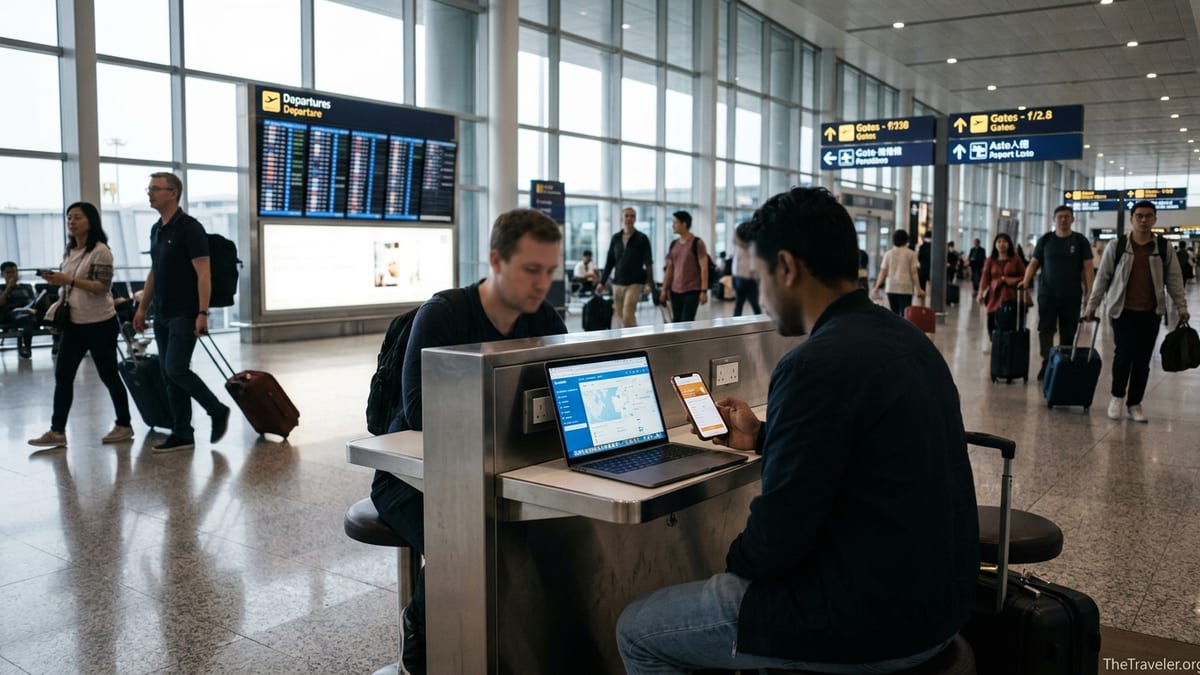
MakeMyTrip vs Trip.com at a Glance
MakeMyTrip is an India-born online travel agency that built its reputation on serving Indian travelers booking flights, hotels, buses, trains, and holiday packages. It is particularly strong on domestic and regional travel within India and nearby countries, and it increasingly targets Indian travelers heading to the Middle East, Southeast Asia, and Europe. Its platform, prices, and payment flows are clearly optimized for Indian residents, even though it can also be used from the United States and other countries.
Trip.com, by contrast, is the international flagship brand of Trip.com Group, one of the world’s largest online travel companies with a portfolio that includes Ctrip, Qunar, and Skyscanner. Headquartered in Singapore and backed by a major Chinese travel conglomerate, Trip.com is designed from the ground up as a global one-stop shop. It handles flights, hotels, trains in certain markets, rental cars, airport rides, attraction tickets, and even eSIMs, with localized sites in dozens of countries and support for many languages and currencies.
In practice, this means a traveler booking a Mumbai to Goa flight and a Shatabdi train might find MakeMyTrip a natural fit, while someone arranging a multi-leg trip from Los Angeles to Tokyo to Bangkok is more likely to find deeper coverage and more currencies on Trip.com. Both platforms can technically do both, but each has a clear home turf where it tends to be more convenient and often better value.
To work out which platform fits your travel style, it helps to compare how they perform across key areas: route coverage, pricing, payment and currency options, loyalty programs, customer support, and what happens when your plans change unexpectedly.
Route Coverage and Where Each Platform Really Shines
If most of your trips are centered on India, MakeMyTrip is hard to ignore. It has deep integrations with Indian low-cost carriers, domestic full-service airlines, Indian Railways for train bookings via authorized connections, and an enormous inventory of Indian hotels, homestays, and villas. For example, if you are planning a long weekend from Delhi to Manali, MakeMyTrip will typically surface a neatly bundled combination of an overnight Volvo bus, a mid-range hotel in Old Manali, and add-ons like airport cabs in Delhi and local sightseeing options, all priced in Indian rupees.
The strength of that domestic network matters more than it might appear. Many small guesthouses and budget hotels in Indian hill stations or temple towns participate more actively on MakeMyTrip and its sister brands than on global sites. As a result, someone looking for a 1,500 to 2,000 rupee roadside hotel near Varanasi railway station may find more granular filtering and more local reviews on MakeMyTrip than on international rivals.
Trip.com’s core strength is international connectivity, especially across Asia and on long-haul routes to and from the region. A traveler in San Francisco searching for a one-way flight to Osaka in late autumn, or a Dubai-based expatriate trying to piece together a complex itinerary through Southeast Asia, will often see Trip.com show multiple airline combinations and cabin options that mirror or slightly undercut the prices seen on global metasearch engines. Trip.com also has strong hotel coverage in East Asia, including properties in Japan, South Korea, and mainland China that may not appear or be well-localized on Western platforms.
Where this really shows is in cross-border routing. Consider a United States traveler flying from New York to Bali via Singapore. Trip.com might surface an option combining a North American carrier on the transpacific leg and a regional low-cost airline for the Singapore to Denpasar segment on one booking reference, something that could be more fragmented on other sites. MakeMyTrip can technically sell the same flights, but its fare combinations and promotions are usually tuned for customers starting in India, not in North America or Europe.
Pricing, Service Fees, and Real-World Value
Both MakeMyTrip and Trip.com make money through commissions from airlines and hotels plus various service and convenience fees. For the traveler, the question is less about the internal revenue model and more about what the final price looks like once you are on the payment screen, including any extras that appear only at the last step.
Trip.com acknowledges that it may charge a service fee on certain bookings to cover platform operations and customer services. In practice, this can show up on some flight or hotel reservations as a small extra charge, especially when booking in a currency different from the hotel’s or airline’s home market. For example, a United States traveler booking a budget hotel in Bangkok might see a nightly room rate in dollars plus a modest platform fee or a slightly higher effective rate than the bare minimum advertised earlier in the search flow.
MakeMyTrip also adds convenience or service fees, commonly seen with flight bookings, visa services, and some value-added options. An Indian traveler booking a domestic flight may see a base fare from the airline and then a MakeMyTrip convenience fee per passenger. For bus and train bookings, the fees are often smaller, but on a tight budget the difference can still matter, particularly for families booking multiple tickets in peak holiday periods.
In side-by-side tests, neither platform consistently wins every fare comparison. There are situations where Trip.com surfaces a flight fare 10 or 20 dollars lower than booking directly with the airline, but there are also cases where MakeMyTrip has a more aggressive promotion on a hotel or package, especially for India-origin customers paying in rupees. For example, a family in Bengaluru booking a five-night Diwali package to Dubai might see a discounted bundle on MakeMyTrip that is meaningfully cheaper than putting together separate flights and hotels on Trip.com as a non-bundled trip.
Payment Options, Currencies, and Hidden Friction
For frequent travelers, how you pay can be almost as important as what you pay. Trip.com functions as a global platform and supports payment in dozens of currencies, including U.S. dollars, euros, British pounds, and a wide range of Asian currencies. It accepts major credit cards and, depending on the country version you use, additional local payment methods and wallets. This is particularly convenient for travelers who want to avoid foreign transaction fees by paying in their home currency for hotels or flights denominated abroad.
One thing to be aware of is how currency conversion is handled at the hotel or airline end. If Trip.com allows you to pay online in your home currency, the amount is usually fixed at that point, but in some “pay at hotel” scenarios the final charge may be processed by the hotel in local currency. That can lead to small mismatches from what you saw on screen due to exchange rate movements or dynamic currency conversion. Savvy travelers often prefer using cards that waive foreign transaction fees and, where possible, opt to be charged directly in the local currency at the hotel or airline to avoid extra markups.
MakeMyTrip’s roots and primary focus are in the Indian market, so its most seamless experience is for customers paying in Indian rupees with Indian-issued cards, netbanking, or local wallets. When MakeMyTrip sells outbound holidays or international flights, it may quote and charge in rupees even when the underlying services are priced in another currency. This can be convenient for Indian travelers who want a single rupee-denominated bill, but for United States or European travelers booking via MakeMyTrip, the payment process can feel less tailored, with fewer non-Indian payment options and occasional foreign exchange quirks from the card issuer’s side.
If you are based in the United States, Trip.com generally feels more aligned with typical Western payment expectations. If you are based in India and used to paying everything in rupees with local methods, MakeMyTrip will feel more natural. Either way, it is wise to check the currency language on the payment page carefully and verify whether your card issuer will treat the transaction as domestic or international, which can add 1 to 3 percent in fees.
Loyalty, Rewards, and Perks for Frequent Users
Trip.com operates a loyalty setup built around Trip Coins and membership tiers. Trip Coins are earned on many bookings and can be applied as discounts on future flights or hotels, effectively functioning like a platform-specific rebate. Frequent users can also unlock higher membership levels, which may come with better customer service routing and occasional extra savings on certain “members-only” deals. For someone who books multiple trips a year to and within Asia, these incremental perks can add up to meaningful savings over time.
For example, a business traveler making monthly trips between Singapore and Tokyo might accumulate enough Trip Coins through repeated flight and hotel bookings to cover one or two nights at a mid-range Tokyo business hotel each year. Since these rewards are platform-specific, the value is highest for travelers who are comfortable consolidating much of their booking activity on Trip.com rather than spreading it across many different sites.
MakeMyTrip has experimented with various reward and subscription-style offerings, including partnerships, wallet credits, and periodic “super offers” targeted at Indian domestic travelers and small businesses. Its corporate travel product, myBiz, is designed for companies that want centralized control and reporting on employee travel, with negotiated fares and expense management benefits. For a small tech firm in Bengaluru or Gurugram, putting all staff travel through MakeMyTrip’s business tools can simplify approvals and reduce administrative overhead, though the rewards flow mostly to the company rather than the individual traveler.
If you are a leisure traveler booking a couple of trips a year from the United States, Trip.com’s rewards may feel more tangible in day-to-day use than the more India-centric benefits on MakeMyTrip. On the other hand, if you are an Indian traveler who regularly books domestic trains, buses, and budget hotels, MakeMyTrip’s coupons and periodic rupee-denominated promotions can feel more straightforward and localized.
Customer Support, Cancellations, and When Things Go Wrong
Any booking platform looks good when trips run smoothly. The real test comes when an airline cancels your flight, a hotel refuses to honor your prepaid rate, or a visa processing delay forces you to move your dates. Here, user experiences with both MakeMyTrip and Trip.com are mixed and heavily dependent on the specific case and region.
Trip.com advertises 24/7 multilingual customer support and backs this up with call centers in multiple countries and in-app chat. Travelers often report that straightforward tasks such as correcting a name or reconfirming a booking are handled quickly. However, in more complex scenarios involving schedule changes, partial refunds, or disputes between the airline, hotel, and the platform, resolution times can stretch. For instance, where an airline has rescheduled a return leg, some travelers have described spending considerable time between the platform and the airline before securing a confirmed alternative or refund, and in some cases being charged additional fees.
MakeMyTrip has similar challenges. Its size and dominance in the Indian online travel market mean that it handles enormous booking volumes every day, and while many customers report smooth experiences, there are also visible complaints about slow or unhelpful responses during disruptions. Examples include cases where a hotel claims that the platform undercharged the guest and demands extra payment at check-in, or where a flight is canceled and the airline claims to have refunded MakeMyTrip but the funds take weeks to reach the end customer.
For travelers deciding between the two, the practical takeaway is that booking through any intermediary adds a layer between you and the airline or hotel. The benefit is the ability to compare and book easily, often at lower prices; the downside is that in complex irregular operations, the airline or hotel may insist that changes go through the agency, and the agency may need to wait on the supplier. If you value hands-on, direct control in emergencies, you may prefer to use these platforms primarily for hotels and simple one-way or round-trip tickets, while booking complicated multi-leg flights directly with the airline whenever the price difference is small.
Which Platform Fits Different Travel Styles?
Because MakeMyTrip and Trip.com have different geographic and customer focuses, the better choice depends strongly on your usual routes, your base country, and your appetite for juggling currencies and support channels. There is no single winner, but certain patterns emerge when you look at real-world traveler profiles.
Consider an India-based budget traveler who takes four or five domestic trips a year plus an occasional regional vacation to Sri Lanka, Thailand, or the United Arab Emirates. They pay in rupees, use Indian bank cards or wallets, and value bus and train bookings as much as flights. In this scenario, MakeMyTrip is often the more natural choice. It bundles Indian Railways tickets, intercity buses, domestic flights, and packages that include airport cabs and sightseeing. Even if Trip.com offers the occasional cheaper regional flight, the total ecosystem of services on MakeMyTrip can outweigh minor price differences, especially when time and familiarity are factored in.
Now picture a United States or European traveler whose main trips involve flying to Asia for two to three weeks at a time, visiting multiple countries in one go. They might fly from Los Angeles to Seoul, then to Bangkok, and finally on to Singapore before returning home. For this person, Trip.com’s global flight inventory, localized websites, and wide currency support can be a better match. The platform is designed around cross-border bookings and has strong coverage in Asian hotel markets, which means better rates or more options in neighborhoods popular with regional travelers but less visible on Western-centric platforms.
A third scenario is the frequent business traveler within India or the wider South Asia region. If their company already runs travel through MakeMyTrip’s corporate tools, that decision is mostly made for them: the platform centralizes invoices, reporting, and policy compliance. In contrast, an independent consultant in California who travels internationally for clients may find more value in using Trip.com alongside a frequent flyer program, stacking airline miles with Trip Coins and occasionally switching to direct airline bookings when schedules are volatile.
The broader pattern is that MakeMyTrip fits travelers whose life and work are rooted in India and who prize domestic and regional convenience, while Trip.com is generally better suited to globally mobile travelers, especially those moving repeatedly into and around Asia from multiple starting points.
The Takeaway
Both MakeMyTrip and Trip.com are powerful tools, but they are optimized for different types of journeys. MakeMyTrip is at its best when you are booking travel that revolves around India: domestic flights and trains, intercity buses, homestays and budget hotels, and Indian travelers’ outbound holidays. For that audience, the ability to keep everything in rupees, use familiar payment methods, and access India-specific deals makes the platform a strong everyday choice.
Trip.com, in turn, shines as a global gateway, especially for international routes into and within Asia. Its wide currency support, multilingual interfaces, and deep hotel and flight coverage in East and Southeast Asia make it a good fit for United States and European travelers heading that way, as well as for expatriates and frequent flyers based in hubs like Singapore, Dubai, or Hong Kong.
To decide which platform fits your travel style better, look first at your most common trips over the next year, not just the one you are researching today. If most of your tickets and stays touch India, MakeMyTrip may deserve to be your default. If your travel is more scattered across borders and continents, especially with a focus on Asia, Trip.com is likely to feel more natural and often more competitive. Many experienced travelers keep accounts on both, using each where it is strongest and always comparing the all-in price with booking directly with airlines or hotels before hitting pay.
FAQ
Q1. Is Trip.com safer to use than MakeMyTrip for international travelers?
Both platforms are established, large online travel agencies, but Trip.com is generally more geared to international users, with wider currency and language support, which can feel more comfortable if you live outside India.
Q2. Which platform is better for booking domestic Indian travel?
MakeMyTrip usually offers a more integrated experience for Indian domestic flights, trains, and buses, with rupee pricing and local payment methods that suit India-based travelers.
Q3. Will I always get cheaper prices on Trip.com or MakeMyTrip than booking direct?
No single site is always cheapest; sometimes an online agency is lower, and sometimes the airline or hotel is. It is worth checking both the platform and the direct supplier before paying.
Q4. I live in the United States and travel mainly to Japan and Southeast Asia. Which platform should I start with?
Trip.com is usually a better first stop for this pattern, because it is optimized for international travelers heading into and around Asia, with strong coverage of regional airlines and hotels.
Q5. Are there extra fees on MakeMyTrip or Trip.com that travelers should know about?
Both may add service or convenience fees on some bookings, and currency conversion can also affect the final amount charged, so always review the payment page details carefully.
Q6. Which platform has better customer support when flights are canceled or changed?
Experiences vary widely, but in complicated disruptions any intermediary can slow resolution. Many travelers prefer to book complex multi-leg flights directly with airlines for faster handling.
Q7. Do either MakeMyTrip or Trip.com offer useful loyalty rewards?
Trip.com has a visible coin and membership system that can reduce future costs, particularly for frequent international users, while MakeMyTrip’s benefits tend to be more locally focused in India.
Q8. Can I use MakeMyTrip comfortably if I am not based in India?
You can, but the experience is most polished for India-based customers paying in rupees. Travelers from other countries may find the payment and support environment less tailored to their needs.
Q9. Is it better to book hotels or flights through these platforms?
Many travelers like using them for hotels, where price and availability differences can be significant, but often choose to book complex or critical flights directly with airlines, even if it costs a little more.
Q10. Should I create accounts on both MakeMyTrip and Trip.com?
Having accounts on both gives you flexibility to compare prices, currencies, and options quickly, then book on whichever platform best matches that particular trip.