


Set high above Naples’ historic center, the Real Bosco di Capodimonte is far more than a shady place to stroll. This former Bourbon hunting reserve, now the city’s largest public park, hides a royal palace packed with masterpieces, panoramic lawns made for yoga and picnics, sports fields where locals play rugby and cricket, and even open-air cultural events on summer nights. With a bit of planning, you can easily turn a simple walk into a full day of art, nature, and local life.
Get the latest updates straight to your inbox!
Understand the Royal Park: More Than Just a Green Lung
Before planning activities, it helps to understand what the Bosco di Capodimonte actually is. Covering roughly 130 hectares, it is one of the largest urban parks in Italy and was created in the 18th century as the royal hunting estate surrounding the Palace of Capodimonte. Today it is both a protected historic garden and a public park where Neapolitans jog, walk dogs, push strollers, and escape the city’s traffic for a few hours.
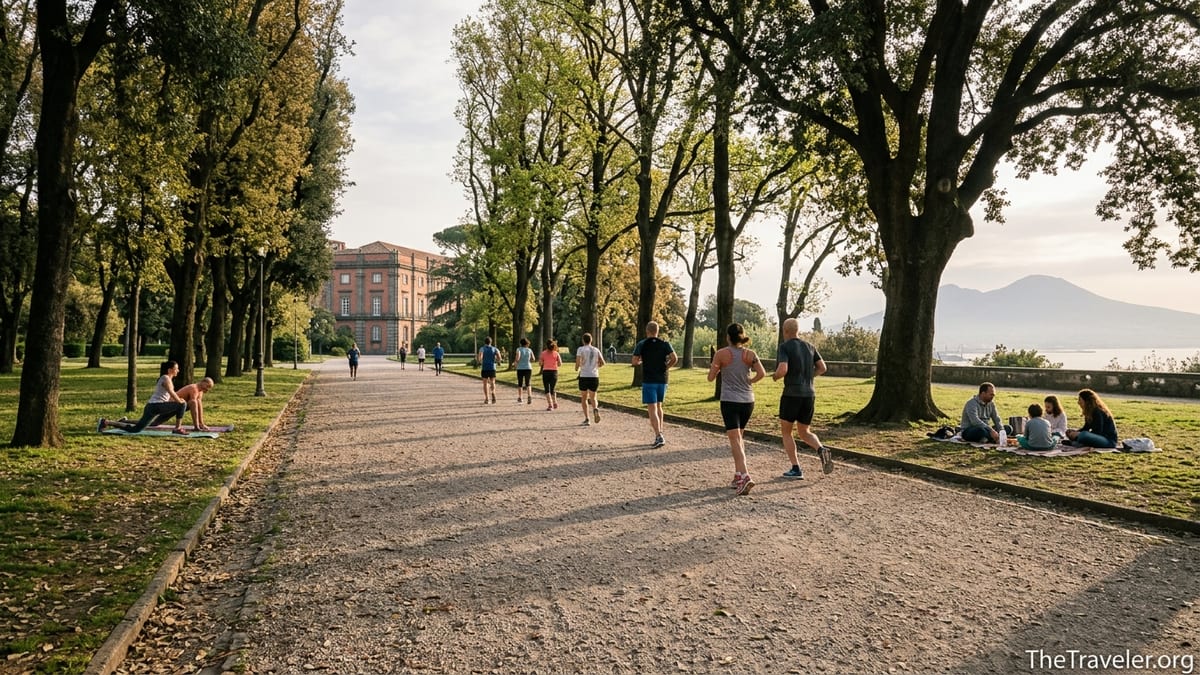
The park is crisscrossed with wide gravel viali, wooded sections, and open praterie where you will see families playing football and groups of friends sunbathing on mild days. Because it is also a historic site, there are rules: cycling is allowed only at gentle speed, picnics are confined to designated lawns, and some areas near the palace are pedestrian only. Expect a relaxed atmosphere, but with more structure and patrolling staff than in a typical neighborhood square.
Most visitors enter through Porta Grande (often called Porta di Mezzo), the main gate, but there are other entrances such as Porta Miano. You can pick up a free map from information points near the palace, which is very useful if you plan to combine museum time with outdoor activities or if you want to find the picnic meadows and sports fields without wandering in circles.
The park is open daily to pedestrians, usually from early morning to sunset, although exact hours can vary by season, so it is wise to check the current schedule before an early run or a late-afternoon visit. The palace museum keeps different hours and closes one day a week, often Wednesday, so if seeing the art collections is part of your day, plan around that constraint.
Explore the Capodimonte Museum: Art, Porcelain and Royal Rooms
Spending time inside the Museo e Real Bosco di Capodimonte is one of the best ways to enrich your visit beyond the park itself. Housed in the massive red-brick palace at the heart of the Bosco, the museum holds important works by Titian, Caravaggio, and other Italian masters, along with royal apartments furnished as they were when the Bourbon dynasty lived here. For many travelers, a 2 to 3 hour visit is enough to see the highlights without rushing.
If you are interested in decorative arts, the porcelain collection is a highlight. Capodimonte porcelain, produced in a factory that once stood in these very grounds, is famous for intricate floral decorations and small sculptural groups. Display cases show pieces from Naples alongside Meissen, Sèvres, and Vienna, giving a sense of how this royal court competed with other European capitals. Seeing these objects in the former royal residence makes them feel less like museum pieces and more like parts of a lived-in palace.
Standard admission prices are in line with major Italian museums, and there are usually reductions for EU citizens under a certain age and for combined tickets that cover temporary exhibitions. From time to time, guided tours in English are available through accredited operators; a private 2-hour tour can cost in the region of a few hundred euros for a small group, comparable to similar services at the Archaeological Museum. If you are on a tighter budget, the museum also participates in nationwide discounted or free-entry days several times a year, when queues can be long but the atmosphere is festive.
A practical strategy is to visit the museum in the late morning, when light in the galleries is beautiful and temperatures outside are climbing. Afterwards you can step straight out onto the surrounding terrace to admire views over Naples and Vesuvius before heading into the park’s lawns for a picnic lunch or a relaxed siesta under the trees.
Make the Most of the Life Trail, Jogging Routes and Bike-Friendly Paths
The Bosco di Capodimonte is one of the best places in Naples for outdoor exercise, and the park administration has actively developed facilities for this. A dedicated “Percorso Vita”, or life trail, runs for roughly 2.5 kilometers through a mix of woodland and open areas, dotted with simple workout stations. Each station has equipment for bodyweight exercises targeting different muscle groups, from parallel bars for dips and push-up platforms to low beams for balance work. Local runners use it as a way to alternate jogging with strength sessions in a single circuit.
For a gentle run, visitors often follow the broad loop that leaves from the area near the palace, descends toward the more wooded sections, and returns along the main viale. Depending on the exact route, you can easily put together a 5 to 7 kilometer run without repeating too many sections. Early morning is the most atmospheric time, when mist can hang between the trees and you share the paths mainly with other joggers, dog-walkers and older locals out for their constitutional.
Cyclists are welcome, but the park is not a racetrack. Regulations require a slow, “walking pace” speed, typically not more than about 10 kilometers per hour, and bikes must be pushed by hand in particularly crowded or monument-heavy zones such as the Belvedere terrace and the area immediately surrounding the palace. Electric scooters and e-bikes are often restricted. In practice, this makes Capodimonte a pleasant setting for families and casual riders, less so for those seeking serious training.
If you are staying near the Archaeological Museum or Piazza Cavour, reaching the Bosco for a morning run or ride is straightforward. City buses on routes such as 3M and 168 regularly climb the hill toward Capodimonte, taking around 15 minutes when traffic is reasonable. Many local runners ride the bus up and jog back down toward the historic center after their workout, making a small downhill “cool-down” run part of the experience.
Slow Down with Picnics, Yoga and Open-Air Relaxation
One of the most enjoyable ways to use the Bosco di Capodimonte is simply to slow down in a structured way. Rather than wandering aimlessly, choose one of the designated picnic lawns and set up a base for a few hours. Two official areas are commonly used for this purpose: a large meadow between Porta Caccetta and the Church of San Gennaro, and another open area near the rugby field sometimes referred to as the Prateria della Quercia. Both have scattered wooden tables and benches, though locals often bring their own rugs to sit closer to the grass.
On weekends, you will see Neapolitan families unpacking foil-wrapped frittata, sfogliatelle, and homemade parmigiana, but visitors can keep things simple. A realistic option is to stop at a supermarket or deli near the Museo Metro station before taking the bus uphill, picking up fresh bread, sliced salami or prosciutto, local cheese such as provola, fruit, and bottled water. Expect to spend less than the price of a single restaurant main course per person for a generous picnic if you shop this way.
The wide lawns are also ideal for yoga or stretching sessions, and the park authorities explicitly promote yoga practice in areas like the Belvedere terrace. Small informal groups often meet in the late afternoon when the sun is lower and the view of the city softens. If you bring a lightweight travel mat, you can find a quiet corner away from football games and set up your own routine. Simple ground rules apply: keep music very low or use headphones, leave no litter, and avoid blocking main paths.
For pure relaxation, many visitors simply choose a bench with a view. Some of the best spots look toward Vesuvius and the bay, while others face inward toward the palace façade. On cooler days, you might bring a book and a jacket and spend an hour reading to the sound of birds and distant conversations in Neapolitan dialect, a pleasant contrast to the intense streets of Spaccanapoli below.
Discover Hidden Corners: Historic Buildings, Gardens and Wildlife
Beyond its obvious draws, the Bosco di Capodimonte is full of smaller features that reward curious visitors. Scattered through the grounds are architectural follies and functional buildings from its royal past, such as the Cellaio, once used for storage, and the Giardino Torre, an area that now often hosts educational activities and occasional refreshments. Exploring these corners gives you a better sense of how self-sufficient a royal estate once needed to be, with orchards, service buildings, and decorative gardens all functioning together.
The Church of San Gennaro, built in the mid-18th century and later reimagined by architect Santiago Calatrava, is one of the park’s most intriguing structures. While it may not always be open to casual visitors, its colorful interior and location inside a forested royal park make it quite unlike typical city churches. Check locally for current access, as opening arrangements can change, especially when restoration or special projects are underway.
Naturally inclined travelers should pay attention to the park’s biodiversity. Over the centuries, botanists introduced species from Asia, the Americas, and Australia, so along the paths you may notice camphor trees, camellias, magnolias, and tall eucalypti alongside native oaks. Birdlife is rich: you might spot blackbirds, robins, great tits, green woodpeckers, and kestrels circling overhead. Foxes are occasionally seen in quieter sections near the Cellaio and less-trafficked gardens, especially early or late in the day.
Because the Bosco is a protected historic garden, avoid picking flowers or leaves, and stay on established paths when possible. Photography is welcome for personal use, and the combination of towering trees, distant city views, and glimpses of the palace through foliage makes it one of Naples’ most photogenic green spaces. If you are interested in historic gardens, consider downloading a park map or any available botanical guide in advance to identify some of the more unusual specimens as you walk.
Experience Local Life Through Sports, Events and Community Activities
For all its royal history, the Real Bosco di Capodimonte is very much a living park used by today’s Neapolitans. Several sports fields sit within or at the margins of the grounds, including football and rugby pitches and even a cricket field used by local clubs and expatriate communities. On a Saturday afternoon you might watch a rugby match in progress while children play on the surrounding grass, giving a sense of how the park functions as an everyday neighborhood resource as well as a tourist attraction.
Throughout the year, the Bosco also hosts special events that transform its atmosphere. One notable example is “Bosco in Rosa,” a non-competitive women’s run of about 5 kilometers organized in cooperation with local charities and sports groups. Hundreds or even thousands of participants, from serious runners to women pushing strollers, follow a marked route through the park to raise funds for children’s hospitals and other causes. If your visit coincides with such an event, it can be inspiring to witness or join, though you should expect some path closures and crowds on that day.
In summer, parts of the park and palace courtyard sometimes become venues for open-air concerts, theater performances, or movie screenings. These may be tied to wider cultural festivals in Naples and can range from classical music to contemporary dance. Tickets are usually affordable compared to big-city performances elsewhere in Europe, and because capacity is limited, it is worth buying in advance if you spot something interesting in local listings.
Behind many of these initiatives are associations and volunteer groups dedicated to preserving and promoting the Bosco. One such organization works on fundraising for restoration projects, guided walks, and educational outings for schools. Joining a themed walk, even if it is only in Italian, can be a rewarding way to see parts of the park you might otherwise miss and to hear locals talk about their connection to this “green lung” above the city.
Practical Tips for Visiting Bosco di Capodimonte
Reaching the Bosco di Capodimonte is straightforward but involves a bit of a climb, so planning your transport can make the day smoother. From central Naples, many visitors take the Metro Line 1 to Museo or Piazza Cavour and then transfer to a bus that ascends to Capodimonte. Journey times vary with traffic but often take around 20 minutes from the historic center. Taxis and ride-hailing services are another realistic option, especially for families or groups; fares are usually moderate for the distance, but always confirm that the meter is running or agree the approximate cost in advance.
Once inside the park, services are more limited than in a city square, which is part of its charm. There are a few kiosks or cafés in and around the palace area, but they may not keep the same hours as the park itself. Bringing a reusable water bottle is advisable, as there are public fountains where you can refill it. Comfortable walking shoes are essential because the gravel paths can be uneven in places, and in rainy weather they may become muddy.
Safety in the Bosco is broadly similar to that in large urban parks elsewhere in Europe. During the day, especially on weekends and holidays, families and groups create a lively but relaxed environment. As in any big park, it is sensible to avoid very isolated areas after dark and to keep valuables out of sight. Solo travelers often report feeling comfortable running or walking in the morning and late afternoon when there is a steady flow of people on the main paths.
Seasonally, the atmosphere changes significantly. Spring and early autumn are ideal, with mild temperatures and long light. In high summer, midday heat can be intense on open lawns, so plan morning or early evening visits and seek shade under the large trees. In winter, the park is quieter and can feel contemplative, though damp weather occasionally leads to temporary path closures for maintenance or safety, so staying flexible with your exact route is wise.
The Takeaway
Visiting the Bosco di Capodimonte is an opportunity to experience Naples from a different angle, both literally and figuratively. From the palace terraces and Belvedere lawns you look down on the dense historic center and the bright curve of the bay, yet within the park itself the mood slows to the pace of dog-walkers and joggers. By combining time in the museum, a picnic or yoga session on the grass, and a wander through quieter botanical corners, you can turn what might have been a brief walk into one of the most memorable days of your trip.
Rather than treating Capodimonte as a quick detour, consider dedicating at least a half day, and ideally more, to this royal park. Arrive with good shoes, a simple picnic, and a sense of curiosity about both art and everyday life in Naples. In return, the Bosco di Capodimonte will offer shade, stories, and a rare feeling of open space above one of Italy’s most energetic cities.
FAQ
Q1. How much time should I plan for a visit to Bosco di Capodimonte?
Most travelers are happy with half a day, which allows a couple of hours in the museum plus a relaxed walk or picnic in the park. If you enjoy art, running, or photography, you could easily spend a full day exploring different corners without feeling rushed.
Q2. Is the park free to enter?
Access to the Bosco di Capodimonte itself is generally free, as it functions as a public park. You only pay to enter the museum and special exhibitions inside the palace. It is still advisable to check the latest details before you go, in case of changes linked to events or maintenance.
Q3. What are the opening hours of the park and museum?
The park usually opens in the early morning and closes around sunset, with exact times shifting by season. The museum keeps separate hours and is commonly closed one day per week, often Wednesday. Before your visit, verify the current schedule for both to avoid arriving when the museum or certain gates are closed.
Q4. How do I get to Bosco di Capodimonte from central Naples?
A practical route is to take Metro Line 1 to Museo or Piazza Cavour and then catch a bus heading up to Capodimonte, such as routes that stop near the main park entrances. Travel time from the historic center is usually around 20 minutes, depending on traffic. Taxis and ride-hailing services are also reasonable options, especially if you are traveling with luggage or in a group.
Q5. Is Bosco di Capodimonte safe for solo travelers?
During daytime and early evening, the park is generally considered safe and is regularly used by solo joggers, students, and dog-walkers. As in any large urban park, it is best to stay on well-used paths, avoid very remote sections after dark, and take normal precautions with valuables. If you feel unsure, time your visit for busy periods, such as weekend afternoons.
Q6. Can I have a picnic in the park?
Yes, picnics are encouraged in designated areas equipped with benches and tables, especially the meadows near Porta Caccetta and close to the rugby field. Bring your own food and drinks, and be sure to collect all rubbish and follow any recycling instructions posted on-site so the lawns remain clean for everyone.
Q7. Are there good running and cycling options in the park?
The Bosco is popular with runners, who use both the 2.5 kilometer life trail with workout stations and longer loops on the main paths. Cycling is allowed at slow speed, with bikes walked in crowded or monument-heavy zones. Serious training rides are better done elsewhere, but for gentle rides and family outings the park is very pleasant.
Q8. What should I wear and bring for a visit?
Comfortable walking shoes are essential, as paths are often gravel and can be uneven. In summer, a hat, sunscreen, and water bottle are important, while in cooler months a light jacket is useful. If you plan to picnic or practice yoga, bring a mat or blanket. A small daypack is recommended to keep hands free as you move between the museum and park.
Q9. Are there places to buy food and drinks inside the park?
There are usually a few cafés or kiosks in and around the palace area, but they may not cover all hours or days. Many visitors prefer to pick up snacks and drinks from bakeries, supermarkets, or bars in the city before heading up. Having at least water and a small snack with you makes it easier to enjoy longer walks without worrying about finding an open café.
Q10. Can I visit Bosco di Capodimonte with children?
Yes, the park is a popular destination for local families and works well for visitors with children. The large lawns offer plenty of space for running and simple games, and paths are mostly stroller friendly. If you plan to include the museum, you might focus on a shorter, child-friendly route through a few key rooms, then let younger travelers unwind on the grass afterward.