


For most first-time visitors to Spain’s Costa del Sol, Malaga-Costa del Sol Airport is the main gateway. It is busy, modern and generally well organized, but if you land after a long flight with luggage and family in tow, it helps a lot to know the layout, how transport works and where to find the essentials. This guide walks you through Malaga Airport step by step so you can move from plane door to beach promenade with as little stress as possible.
Get the latest updates straight to your inbox!
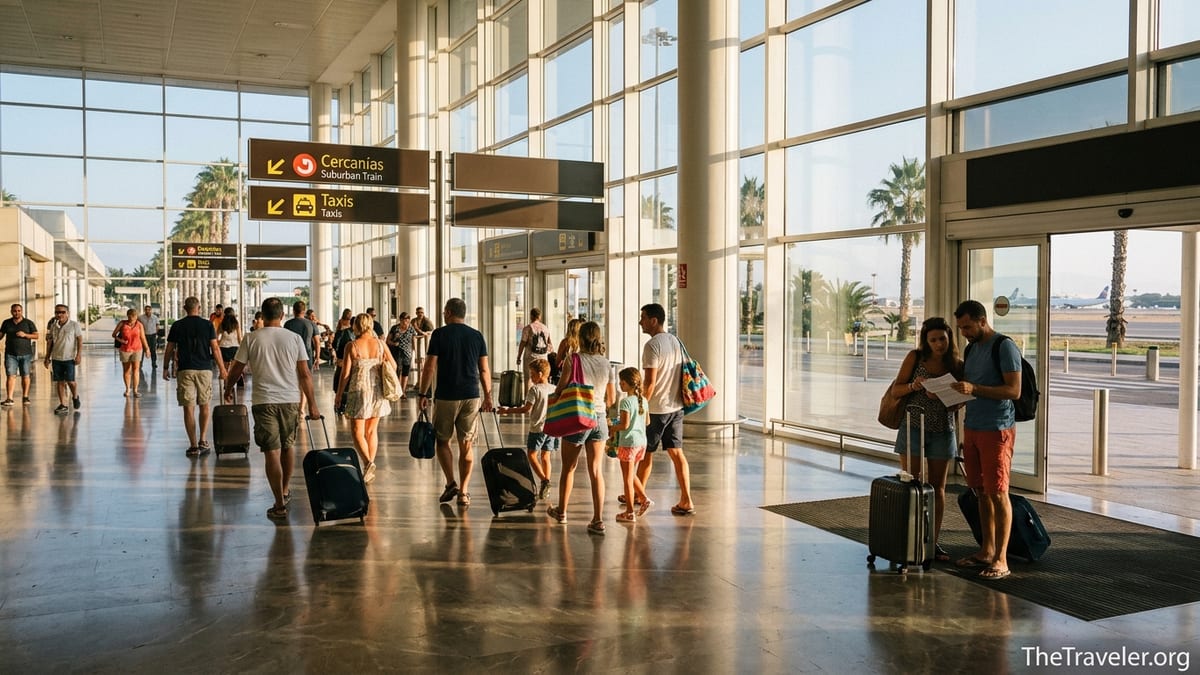
Understanding Malaga Airport at a Glance
Malaga-Costa del Sol Airport sits in the Churriana district, around 8 kilometers southwest of Malaga city center and directly on the coastal corridor that leads to Torremolinos, Benalmadena, Fuengirola, Marbella and beyond. It is Spain’s fourth busiest airport and the main international hub for the Costa del Sol, with dozens of daily flights from the United Kingdom, Germany, the Nordic countries and the rest of Europe, plus growing long-haul connections. On a typical summer day you will see a mix of beach holidaymakers, golfers with hard-shell club cases and Andalusian residents commuting to hubs like Madrid or Paris.
The airport has one main passenger complex today, effectively combining terminals T2 and T3. Most international flights use Terminal 3, the newer glass-and-steel building with the large departures hall and arrivals zone. The older Terminal 2 is physically attached and used for some Schengen operations, so you may walk through parts of both without realizing it. As a first-time traveler, you only really need to follow the overhead signs in English and Spanish, which clearly direct you toward baggage reclaim, arrivals, departures and transport.
Malaga handles a wide variety of carriers, from low-cost airlines like Ryanair, easyJet, Jet2 and Wizz Air to legacy and network carriers such as Iberia, Air Europa, British Airways, Lufthansa, KLM, Air France and Qatar Airways. Seasonal routes ramp up sharply from around April through October, when additional flights serve secondary British airports, Nordic cities and smaller European destinations. If you are connecting from an intercontinental route via Madrid or Barcelona onto a short domestic hop, Malaga’s compact layout makes the final leg relatively straightforward.
For orientation, think of the terminal complex as a long rectangle parallel to the runway. Arrivals are on the ground level, departures and check-in one level above. Landside you will find the taxi rank, suburban train station and airport bus stop all within a short walk. Immediately opposite the terminal sit the main car parks and, a little farther away, hotel shuttles and off-airport car rental depots. Once you understand this basic geography, all of the services described in this guide become much easier to locate.
Arrivals: From Plane Door to Exit
On arrival, aircraft usually disembark via airbridge into the upper airside level of Terminal 3, though in peak summer you may sometimes be bussed from a remote stand. Follow the yellow signs marked "Baggage reclaim" and "Exit" through the passport control corridor. Non-Schengen arrivals pass through regular border checks, while flights from other Schengen countries use the quicker intra-EU channels. Queues fluctuate throughout the day but are usually manageable; early morning and late evening banked arrivals from the UK and northern Europe can be the slowest.
After passport control you reach the baggage reclaim hall with multiple carousels and oversize luggage belts for golf bags, bikes and surfboards. Electronic screens show which belt serves your flight, for example "London Gatwick – Carousel 32." Trolleys are available, and the floor is level, so pushing luggage out to transport is straightforward even with children. If you need cash, there are ATMs dotted around this hall, though exchange rates and fees from airport machines can be less favorable compared with using a regular bank ATM in the city.
Just beyond customs, you emerge into the public arrivals area. This is where you will see people holding name boards for private transfers, tour operators and golf groups. Immediately to your right are exits leading toward the bus stops and the suburban C1 train station, while walking straight ahead brings you toward the main taxi rank and short-stay parking. If someone is collecting you in a private car, they will typically wait in the P1 or Express car park opposite the terminal, as stopping directly outside at the curb is tightly controlled.
You will also find practical services in the arrivals zone, such as a small supermarket for basic groceries, pharmacies selling sunscreen and travel-size toiletries, and phone providers offering prepaid SIM cards. For example, visitors from the United States often pick up a Spanish or EU eSIM in advance, then use the airport Wi-Fi to activate it and avoid roaming charges. Taking ten minutes here to grab water, snacks and a data plan can make the onward journey to your accommodation much more comfortable.
Ground Transport: Train, Bus, Taxi and Transfers
One of Malaga Airport’s main strengths is how easy and affordable it is to reach both the city and the coast. The Cercanías C1 suburban train line is usually the most efficient option for central Malaga, Torremolinos, Benalmadena and Fuengirola. The station is directly outside Terminal 3; from arrivals, follow signs for "Tren" and walk a few minutes via the covered walkway. Trains typically run every 20 minutes during the day, and the ride to Malaga María Zambrano station takes around 12 minutes. A one-way ticket to the city costs in the range of 1.80 euros, with a small supplement for the reusable card that first-time users must purchase at the ticket machine.
The C1 line also stops at resort towns along the western Costa del Sol. For instance, Torremolinos is roughly a 10-minute journey, Benalmadena Arroyo de la Miel around 18 minutes and Fuengirola close to 35 minutes. This makes the train very attractive if you are traveling light or staying near a station. Many budget-conscious travelers headed to Torremolinos choose this train and then walk 5 to 10 minutes from the station to their hotel near the beachfront. If you are dragging heavy suitcases or traveling late at night when frequency drops, a taxi or pre-booked transfer may be preferable.
For Malaga city center, the airport express bus (often labeled A Exprés) offers an alternative for those whose accommodation is nearer the historic quarter than the train line. Buses usually run multiple times an hour during daytime, connecting the airport with Paseo del Parque near the old town and the main bus station. As an example, a couple arriving midday in July might choose this bus if their hotel is a short walk from the cathedral, avoiding an extra transfer from the train station. Tickets are purchased directly from the driver for a few euros per person; card payments are increasingly common but having small cash notes is still useful.
Taxis line up at the clearly signposted rank just outside arrivals. Official white Malaga taxis use meters and display standard tariffs at the stand. Recent travelers commonly report paying in the area of 20 to 25 euros for the 15 to 20 minute ride into central Malaga, depending on traffic, time of day and small supplements for luggage or airport pickup. For popular coastal destinations like Marbella or Nerja, many visitors opt for pre-booked private transfers or ride-hailing services because the distance and price are higher. For example, a small family heading directly to a villa near Marbella may compare a fixed-rate private transfer quoted around 80 to 100 euros against the combined cost and hassle of train plus local taxi and often decide the door-to-door car is worth it.
Departures: Check-in, Security and Boarding
The departures hall of Terminal 3 is a large, bright space with long rows of check-in desks divided by airline and destination. Most low-cost carriers like Ryanair and easyJet cluster together, while legacy airlines occupy other zones. Overhead screens list flights by time and show which bank of desks to use. If you are flying hand-luggage only and have checked in online, you can usually go straight to security, but remember that some carriers still require a passport check at the desk even without checked baggage, especially for flights to the United Kingdom or non-Schengen countries.
Security at Malaga is generally efficient, but the queues vary significantly by season and time of day. In peak summer mornings, when dozens of flights depart between 7 a.m. and 10 a.m., lines can extend along the mezzanine. As a rule of thumb, arriving 2 hours before departure is usually adequate for intra-Europe flights outside high season, while 2.5 to 3 hours is sensible in July and August or during holiday periods. Airlines operating to long-haul hubs like Doha or Toronto may recommend even earlier arrival, so always check your specific carrier’s guidance.
Once through security, you enter the main airside departures area, which includes duty-free shopping, fashion brands, pharmacies and several food and drink outlets. International chains sit alongside Spanish names, so you might grab a bocadillo and coffee at a local-style café or a burger from a familiar fast-food brand. For those with a bit more time, sit-down restaurants and tapas bars allow you to enjoy a final plate of jamón or a glass of tinto de verano before boarding. Prices are typical for European airports: coffee might be around 2 to 3 euros, a sandwich 5 to 8 euros, and a hot meal more.
Boarding gates stretch along long piers with good natural light. Schengen and non-Schengen gates are separated, so if you are flying, for example, to London, Dublin or Morocco, be prepared for an additional passport check at the gate or a control point on the way. Seating at gates can be tight at peak times, and power outlets are not available at every seat, so charging devices earlier in the departure lounge or in a café is wise. Many frequent flyers treat Malaga as a pleasantly compact airport, but first-timers should still allow 10 to 15 minutes to walk from security to the more distant gates.
Airlines, Terminals and Key Services
By mid-2026, Malaga Airport hosts flights from more than 50 airlines serving over 200 destinations. Budget carriers play a major role, with Ryanair, easyJet, Vueling, Jet2 and Norwegian moving large numbers of leisure travelers between the Costa del Sol and cities such as London, Manchester, Birmingham, Dublin, Copenhagen, Stockholm, Berlin and Paris. Traditional airlines including Iberia, Air Europa, British Airways, Lufthansa, KLM and Air France connect Malaga to their main hubs, giving onward access to global networks. A growing roster of carriers from the Middle East and North America offers seasonal long-haul options that appeal to holidaymakers from further afield.
All these operations are concentrated in the combined T2 and T3 complex. Terminal 3 is the focal point for most check-in, security and boarding, while Terminal 2 areas are now effectively extensions of the main building. As a passenger, you seldom need to know which is which; what matters is following the clearly marked colored signage to arrivals, departures and baggage reclaim. Within the terminal you will find information desks staffed by Aena, the Spanish airport operator, where you can ask about specific airlines, lost items or last-minute gate changes.
Malaga Airport also provides useful services for different traveler profiles. Families benefit from baby-changing rooms, play areas and high chairs in many restaurants. Golfers will notice oversize baggage belts and handling zones designed for sports equipment, reflecting the Costa del Sol’s popularity as a golf destination. Business travelers can make use of meeting points, work-friendly cafés with strong Wi-Fi and the VIP lounge, which offers quieter seating for those who need to answer emails or join calls before a flight. The terminal is generally accessible for passengers with reduced mobility, with elevators, ramps and dedicated assistance points throughout.
For day-of-travel questions like "Which check-in row is Vueling using today?" or "Is my flight to Amsterdam delayed?" screens in the departures hall and aena-operated information counters are your best live sources. Many airlines also use app notifications or SMS alerts at Malaga, so it is worth enabling push notifications on your booking. In practice, a first-time visitor who has downloaded their airline’s app before arrival will often have a smoother experience, from mobile boarding passes to last-minute gate updates.
Car Rental, Parking and Nearby Hotels
Car rental is one of the most popular options for exploring the Costa del Sol, especially if you plan to visit smaller coastal towns or inland white villages such as Frigiliana, Mijas Pueblo or Ronda. At Malaga Airport, major international car hire brands like Avis, Hertz, Europcar, Enterprise and Sixt operate alongside well-known Spanish and local companies. Many have counters inside the terminal building, with vehicle pick-up in the multi-story car parks P1 and P2, while lower-cost brands often run frequent shuttle buses to off-airport depots a few minutes away.
As a first-timer, it can be tempting to choose the cheapest advertised rate, but it is worth reading the fine print on fuel policies, insurance and deposits. For example, a visitor booking a week in July for a compact car might see a base rate under 20 euros per day, but discover at the counter that a high deposit and aggressive damage waiver upsell apply. Booking in advance with a well-reviewed provider, checking that collision damage waiver and basic theft protection are included, and taking dated photos of the car at pick-up and return can help you avoid unpleasant surprises.
Parking at Malaga Airport is divided into several categories. The P1 car park directly opposite the terminal is geared toward short stays and picking up or dropping off passengers. Prices per hour are higher but convenient if a friend is meeting your flight and wants to walk into the arrivals hall. For those leaving a vehicle while they travel, long-stay options such as P3 and other official long-term facilities are located slightly farther away, with shuttle buses connecting them to the terminal. Off-airport private car parks also compete for business, typically offering lower daily rates and valet-style drop-off at the terminal, which can make sense for trips of several days or weeks.
If you have an early-morning flight or arrive on a late-night one, staying in an airport hotel can be a smart move. Several properties cluster within a short taxi ride of the terminals, including recognizable international chains and locally run hotels. A common strategy for long-haul travelers from North America is to land in Malaga in the late morning, check into a nearby hotel for an afternoon nap and quick swim, then pick up a rental car the next morning rested and ready for the drive to places like Marbella or Nerja. Conversely, on the way home, some visitors drop off their rental car the night before departure, stay beside the airport, and simply walk or take a 5-minute taxi to check-in at dawn.
Lounges, Food, Shopping and Practical Facilities
Despite its leisure-focused traffic, Malaga Airport offers a decent lounge and services infrastructure by regional standards. The main VIP lounge, often branded as a Sala VIP, is located airside in Terminal 3 on the upper level, with views over the apron. It is open for much of the day and into the late evening, providing comfortable seating, snacks, beverages and quiet workspaces. Access can usually be gained through airline status, business class tickets, lounge membership programs such as Priority Pass, or by paying a day rate at reception, which tends to be in the few dozen euros range per adult.
For those without lounge access, the public areas still provide many ways to make time pass more pleasantly. Food choices range from quick counter-service cafés to sit-down tapas bars and international fast-food outlets. A traveler arriving early for a flight to Manchester, for example, might grab a coffee and tostada at a Spanish café, then later pick up a takeaway salad or sandwich for the plane. Families with children often favor venues where kids can share a pizza or pasta dish while adults enjoy a final glass of local wine.
Shopping includes the usual duty-free perfumes, cosmetics and spirits, as well as fashion brands, travel accessory shops and regional product stores. It is easy to pick up last-minute souvenirs such as olive oil, local sweets or Spanish ceramics. Practical outlets such as pharmacies, electronics shops and bookstores are also present, useful if you need reading material for the flight or a replacement phone charger. Prices are higher than in the city, but having everything under one roof airside is convenient when time is tight.
Other facilities important to first-timers include free Wi-Fi throughout the terminal, information desks, lost property services, ATMs and currency exchange counters. Water fountains and bottle-refill points can be found in several locations, and many restrooms have baby-changing stations. Passengers with reduced mobility can pre-book assistance, ensuring staff help them from check-in through security and onto the aircraft. While Malaga is not as large or complex as major European hubs, knowing these services exist can reassure anxious travelers or those accompanying elderly relatives.
Costa del Sol Travel Tips from Malaga Airport
Arriving at Malaga marks the start of your Costa del Sol experience, and a few simple strategies can make the transition from airport to resort smoother. One widely recommended approach is to keep your first trip on the coast simple: if your flight arrives late in the evening, choose accommodation relatively close to the airport, such as in Malaga city, Torremolinos or Benalmadena. These are all on the main transport corridor served by the C1 train, airport bus and taxis, so you can sleep shortly after landing rather than undertaking a long nighttime drive.
For day trips and onward journeys, Malaga María Zambrano station is your main rail and bus hub. A quick suburban train ride from the airport brings you to this station, where high-speed AVE trains depart for Madrid and other major cities, and where long-distance buses run to destinations such as Granada, Seville, Córdoba, Cádiz and Algeciras. Many travelers headed to Nerja, Ronda or inland villages take the train from the airport into the city, then change to a regional bus, rather than renting a car immediately. This can be particularly appealing if you are not comfortable driving in unfamiliar traffic right after a flight.
When planning luggage, remember that a significant portion of local accommodation, especially in historic centers like Malaga’s old town or hillside villages, may involve some walking from the nearest drop-off point. Rolling suitcases over cobblestones and up steps is easier if you pack light. If you plan to use trains or buses from the airport, consider whether you can manage your bags without a trolley. Families with small children often benefit from collapsible strollers and backpacks rather than multiple bulky suitcases.
Finally, adjust your expectations to the local rhythm. In summer, midday heat along the Costa del Sol can be intense, so it often makes sense to use the cooler morning hours for travel. For example, you might leave your Nerja apartment on the early-morning bus back to Malaga, arrive at the airport with time to spare, have a leisurely breakfast in the departures area and board a late-morning flight. Similarly, on arrival, do not feel pressure to "do it all" on day one. Allow yourself time to navigate Malaga Airport calmly, reach your base on the coast, check in, and simply enjoy a first stroll along the promenade at sunset.
FAQ
Q1. How long does it take to get from Malaga Airport to the city center?
In normal traffic it usually takes around 15 to 20 minutes by taxi and about 12 minutes by suburban C1 train from the airport station to Malaga María Zambrano.
Q2. What is the cheapest way to reach Malaga city from the airport?
The suburban C1 train is typically the cheapest and fastest option, with tickets costing in the low single euros per person plus a small fee the first time you buy the reusable card.
Q3. How early should I arrive at Malaga Airport before my flight?
For most European flights, arriving 2 hours before departure is usually enough outside peak season, while 2.5 to 3 hours is safer in summer or during holidays.
Q4. Are there direct transport options from Malaga Airport to resorts like Marbella or Nerja?
There is no direct train, but you can use a combination of airport train or bus and then a regional bus, or book a taxi or private transfer that takes you door to door.
Q5. Is it easy to rent a car on arrival at Malaga Airport?
Yes, major international and local car rental companies have desks at or near the terminal, but booking in advance is recommended, especially in summer, to secure better rates and availability.
Q6. Does Malaga Airport have a lounge I can pay to use?
Yes, the main VIP lounge in Terminal 3 usually offers paid entry subject to space, along with access through certain airline tickets and lounge membership programs.
Q7. Can I stay overnight at or near Malaga Airport for an early flight?
Several hotels within a short taxi ride cater to early departures and late arrivals, and some travelers choose to stay there the night before a morning flight.
Q8. Is Malaga Airport easy to navigate for first-time visitors?
The terminal layout is compact and well signposted in English and Spanish, so most first-time travelers find it straightforward to move between arrivals, departures and transport.
Q9. What payment methods are accepted for transport from the airport?
Train and bus ticket machines typically accept cards and cash, taxis accept cash and increasingly cards, but carrying some euros in small notes is still useful.
Q10. Are there good food and shopping options if I arrive early for my flight?
Yes, the departures area offers cafés, tapas bars, fast-food outlets, duty-free shops and fashion and souvenir stores, so you can eat, shop or simply relax before boarding.