


Landing in Manila for the first time can feel overwhelming. Ninoy Aquino International Airport (NAIA) is busy, spread across multiple terminals and still working through long-term upgrades. The good news: with a bit of preparation, arrival and onward travel can be smooth. This guide focuses on what first-time visitors in 2026 actually experience at NAIA, with clear explanations, realistic timings and concrete examples for getting into the city or catching a domestic connection.
Get the latest updates straight to your inbox!
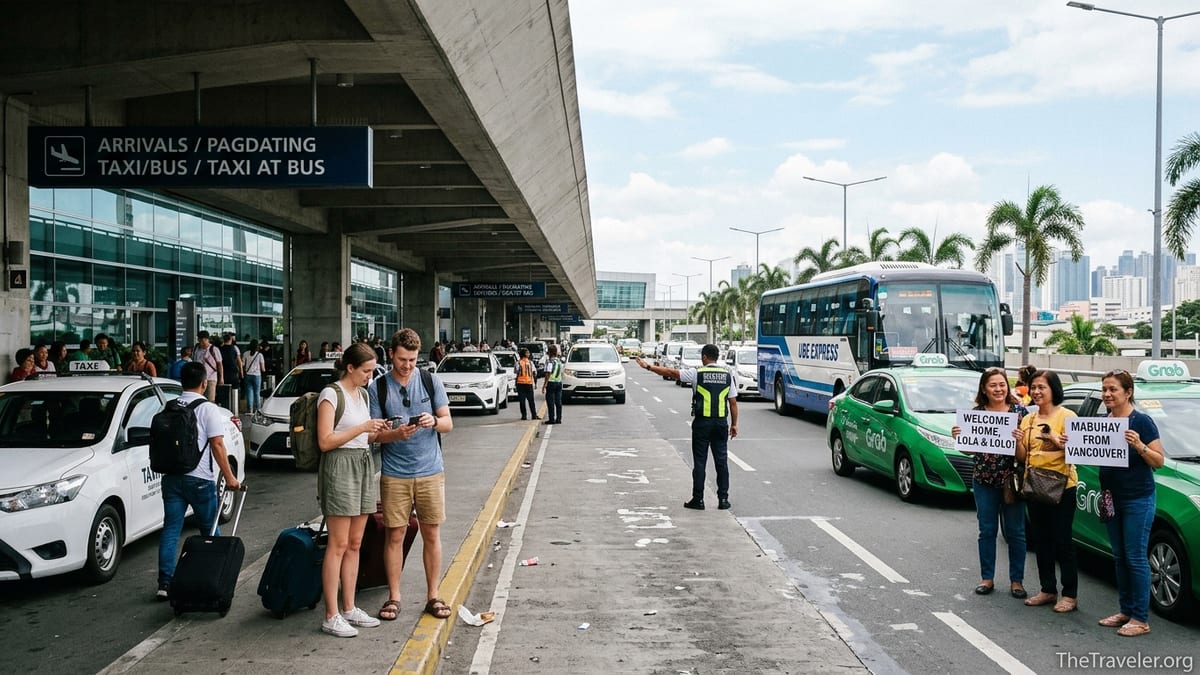
Understanding NAIA’s Terminals in 2026
NAIA is one airport with several terminals spread around the same airfield. In 2026, Terminal 1 handles most foreign airlines plus some Philippine Airlines (PAL) international services. Examples include Emirates, Qatar Airways, Cathay Pacific, Singapore Airlines and many AirAsia Philippines international flights. Terminal 2 is largely the home of PAL’s domestic network, while Terminal 3 is a major hub for Cebu Pacific and a growing list of international carriers such as Air China, China Eastern, Vietnam Airlines and several Japanese and regional airlines that recently shifted there. Terminal 4, the small old domestic terminal, is being phased out and partially demolished, with remaining operations limited and subject to change, so most first-time visitors will not see it at all.
Your terminal matters because there are no airside walkways between them. If you land in Terminal 1 and have a separate ticket for a Cebu Pacific domestic flight out of Terminal 3, you must clear immigration, collect bags, pass customs and then transfer by road. Even on a good day the loop roads around NAIA can clog quickly, especially around 16:00 to 20:00 when many regional flights arrive and depart. For anything involving a terminal change, allow at least three to four hours between scheduled arrival and departure. That buffer is not an exaggeration; travel agents in Manila routinely book 4-hour gaps for separate tickets specifically because of NAIA traffic and queues.
Within each terminal, arrivals and departures are on different levels, and space can feel cramped at peak times. Terminal 3 is currently the most modern and has the widest range of food and retail, including international fast-food chains, local brands and a busy landside arrival hall. Terminal 1, though older, has seen incremental refurbishments and now has improved lighting, more organized taxi bays and slightly clearer signage than it had a decade ago. Do not expect the polished feel of hubs like Singapore Changi or Seoul Incheon, but do expect functional facilities and gradually improving services.
Before you fly, double-check your terminal on your airline’s booking or app a day or two before departure. NAIA has recently reshuffled several airlines between terminals to ease congestion, and more adjustments are expected as a private operator continues refurbishment. Online airline pages and updated e-tickets usually reflect these changes faster than generic airport information printed on older guides or blogs.
Arrivals: Immigration, Baggage and Customs
Most first-time visitors arrive on long-haul or regional international flights that land in Terminal 1 or Terminal 3. On both terminals, the sequence is similar: deplane, follow “Arrivals” signs, pass health and immigration checks, collect baggage, clear customs, then walk into the public arrivals hall. In the early morning bank of arrivals from the Middle East and overnight Asian flights, immigration queues in Terminal 1 can stretch 30 to 60 minutes. At quieter times, such as mid-afternoon, clearance can be 15 to 20 minutes. Terminal 3 often moves a bit faster, but this varies by day and airline schedule.
Have your passport, completed arrival information and any required visas ready before you reach the counter. The Philippines still requires most passengers to complete a brief online or paper arrival card that includes your accommodation address in Manila or your next destination. If you did not fill out the online form beforehand, paper cards are usually available in the immigration hall. Pens are scarce, so carry your own. Immigration officers commonly ask about the purpose of your visit, length of stay and onward ticket; answers like “tourism for 10 days, staying at a hotel in Makati, then flying on to Cebu” are expected and routine.
After immigration, baggage claim areas are straightforward but can feel crowded. Baggage delivery can take anywhere from 15 minutes to 45 minutes, especially on wide-body flights arriving in waves. Screens above each carousel display your flight number. Porters circulate and may offer help with trolleys; tipping around 50 to 100 pesos for assistance with multiple heavy bags is typical but not compulsory. Customs checks are generally light touch. Most passengers walk through the “Nothing to Declare” channel, though random inspections do occur. If you are carrying high-value electronics for work or large quantities of certain goods, be ready to explain and show receipts if asked.
Once you exit customs, you step into the arrivals hall proper. Here you will find currency exchange counters, ATMs, telecom booths selling SIM cards, transport desks for Grab-style car services or coupon taxis and clusters of people meeting relatives. Crowds and noise can be intense, especially in Terminal 3 arrivals, so it helps to already know whether your priority is to get cash, buy a SIM or immediately head for transport.
Getting into the City: Grab, Taxis and Buses
For most first-time visitors, the safest and simplest way to leave NAIA is by booking a Grab car or using an official taxi or airport bus. Grab is the dominant ride-hailing service in Manila and operates a specific “Airport to Anywhere” service from NAIA. Inside the arrivals hall of each active terminal, you will typically see a Grab or ride-hailing help desk where staff can assist with bookings. You can also book directly on the Grab app if you have mobile data. Fares fluctuate with demand and distance, but as a point of reference, a Grabcar from Terminal 3 to Makati’s central business district often costs around 350 to 500 pesos in moderate traffic, while a ride to Bonifacio Global City, commonly called BGC, may fall in a similar range.
Official airport taxis line up outside arrivals in marked bays. White metered taxis charge by the meter and are generally cheaper than Grab at off-peak times, though some drivers may try to negotiate a fixed fare instead of using the meter. If a driver refuses to turn on the meter or quotes a price that sounds unreasonably high, it is acceptable to politely decline and move to another taxi. Yellow airport taxis, where still operating, have slightly higher flag-down rates but are monitored more closely. Inside Terminal 1 and Terminal 3 you may also find coupon taxi counters, where you pay a fixed price based on destination at a desk and receive a coupon to hand your driver. These can be more expensive than metered taxis but reduce haggling for nervous first-time visitors.
Budget-conscious travelers can consider the UBE Express airport bus, especially from Terminal 3. These modern, air-conditioned coaches follow set routes to major transport hubs such as the Paranaque Integrated Terminal Exchange (PITX), Robinsons Place Manila near Ermita and Malate and Araneta City in Cubao. A one-way ticket typically costs around 150 pesos, significantly less than a private car. The trade-off is that buses run to hubs, not individual hotels, so you will likely still need a short taxi or Grab ride at the other end. For solo travelers with one suitcase, this can be an economical and reasonably comfortable way into the city.
Whatever option you choose, build in realistic travel times. The distance from NAIA to Makati is only about 7 to 10 kilometers, but in heavy evening traffic the drive can stretch to 60 to 90 minutes. Mid-morning or late-night journeys might take 20 to 30 minutes. Avoid accepting unsolicited ride offers from people who approach you directly in the arrivals hall whispering “taxi” or “car.” Stay within the marked transport areas instead. If you are being picked up by friends or a hotel car, arrange a specific bay number or door to meet them, because outside curbside areas can become chaotic with constant drop-offs and security moving vehicles along.
Domestic Connections and Terminal Transfers
Manila is the main domestic hub for the Philippines, so many visitors connect straight onto flights to Cebu, Boracay via Caticlan or Kalibo, Palawan via Puerto Princesa or Bohol via Panglao. The challenge is that domestic and international flights often use different terminals. Philippine Airlines may fly you into Terminal 1 or another international gate, then send you onward domestically from Terminal 2; Cebu Pacific mainly operates from Terminal 3 for both domestic and international routes. Low-cost and regional airlines occasionally shift between terminals as part of airport reorganization, so information can change from one season to the next.
If your international and domestic flights are on a single ticket with the same airline group, your minimum connection time is usually built into the booking, and airline staff can assist with directions on arrival. For example, a through-ticket from Sydney to Coron via PAL might involve landing at Terminal 1, transferring by shuttle or bus to Terminal 2 and checking in again at a dedicated transfer counter. In irregular operations or delays, the airline bears more responsibility for rebooking. In these cases, follow the carrier’s signage and ask their staff at the arrivals exit where the free terminal transfer shuttle stops.
If you are on separate tickets, such as a European carrier into Terminal 1 and a separately booked Cebu Pacific domestic flight out of Terminal 3, treat the connection as entirely self-managed. You must clear immigration, collect baggage and pass customs, then find road transport to the other terminal. Even though the terminals sit close by in a loop, traffic and queuing can eat a surprising amount of time. Most experienced Manila travelers recommend at least three and a half to four hours between scheduled arrival and your next departure for such “self-transfer” itineraries, especially in late afternoon or evening. With less than three hours, you risk missing check-in if your inbound flight is even slightly delayed.
NAIA and some airlines provide an inter-terminal shuttle service that runs along the airside service roads or public roads between terminals, but schedules are not always clearly published or tightly kept. The shuttle is useful when clearly marked and operating, but many locals still default to Grab or a taxi for reliability, especially when traveling with luggage. Do not be surprised if a taxi journey between Terminal 1 and Terminal 3 takes 20 to 30 minutes in dense traffic despite being just a few kilometers around the perimeter road.
Lounges, Food and Waiting Comfortably
For those with time to spare before a flight, NAIA’s lounge and food offerings have improved in recent years, especially at Terminal 3. Several shared premium lounges now serve passengers from multiple airlines, replacing or supplementing older single-carrier lounges. In practice this means that, depending on your airline and ticket class, you may be directed to a common premium lounge rather than a branded flag-carrier facility. These spaces typically offer comfortable seating, self-service hot meals and snacks, a bar with soft drinks and coffee, showers and fast Wi-Fi. Some new lounges at Terminal 3 have even added family rooms, quiet zones and work booths, reflecting the airport’s shift toward more modern passenger expectations.
Economy passengers without airline status can still access some lounges by paying at the door or through membership programs such as Priority Pass or DragonPass, although policies change frequently. Walk-in prices in Manila often land in the range of 1,800 to 3,000 pesos for a three-hour stay, including food and non-alcoholic drinks. During busy evening periods, some lounges temporarily stop accepting walk-ins to avoid overcrowding, so it helps to check at the reception desk early in your wait. Also be prepared for some inconsistency in which credit cards or memberships are accepted; travelers regularly report that rules can change or be interpreted flexibly depending on the day and the crowd.
Outside the lounges, Terminal 3 in particular has a good spread of food. You will find local chain restaurants serving Filipino classics like chicken inasal and adobo rice bowls, alongside global fast-food giants and coffee brands that will be familiar to most travelers. Prices are generally higher than in the city but still moderate by international-airport standards. A fast-food combo meal might cost 250 to 350 pesos, while a sit-down restaurant main course can range from 350 to 600 pesos. Terminal 1 and Terminal 2 have fewer options but still offer basic cafes, snack counters and a handful of casual restaurants on both the landside and airside areas.
Power outlets and seating can be scarce at peak times, particularly at older gates in Terminal 1 and some domestic gates in Terminal 3. If you need to work, the newest shared lounges usually provide more reliable desks and charging points, while some cafes have power strips under benches for customers. Wi-Fi in the terminals is available but can be patchy; registering with a local SIM data package is more reliable for anything beyond light browsing or messaging.
SIM Cards, eSIMs and Getting Connected
Once you step into the arrivals area, you will quickly notice kiosks and small shops selling prepaid SIM cards from the three main Philippine mobile networks: Globe, Smart and DITO. These are usually located near the exits in Terminals 1, 2 and 3, and some operate around the clock to catch late-night flights from the Middle East and early-morning arrivals from East Asia. Staff at these airport booths are accustomed to foreign passports and can help activate SIMs or eSIMs on the spot, including mandatory registration under local SIM registration laws.
Tourist-focused SIM packages at the airport tend to cost more than similar data bundles purchased in a city mall, but they offer one key advantage: convenience. As of mid-2026, it is common to see offers such as a 7 to 15-day tourist SIM with a generous data allowance, often 20 GB or more, bundled with local call minutes, for the equivalent of 15 to 25 US dollars. Some booths now actively promote eSIM activation, so if your phone supports eSIM you can scan a QR code and avoid handling a physical card at all. This is particularly handy for travelers who want to keep their home-country SIM active in the same device for banking codes or two-factor authentication.
If you are comfortable waiting until you reach the city, you can find cheaper SIM deals at major malls like SM Mall of Asia, Greenbelt or Ayala Malls, or at convenience stores and branded telecom shops in many neighborhoods. For example, a standard prepaid SIM with a 30-day data package may cost several hundred pesos less than the equivalent airport bundle. The trade-off is the extra step of finding a store, presenting your passport again, and sometimes dealing with staff less familiar with foreign registration details than those at the airport desks.
Before buying, check that your phone is unlocked and supports the bands used in the Philippines. Most recent mid-range and flagship smartphones from Apple, Samsung, Google and Xiaomi work fine. If you plan to travel beyond Manila to islands with patchier coverage, Globe and Smart generally have the broadest reach, while DITO may offer strong data value in urban areas. For basic messaging, ride-hailing and map navigation in Manila and major tourist spots, any of the big three networks will usually suffice.
Cash, Cards and ATMs on Arrival
NAIA’s arrivals halls include a mix of bank-branded ATMs and currency exchange counters. You can withdraw Philippine pesos directly using an international debit or credit card at many of these machines. Typical withdrawal fees include a local ATM charge of around 250 to 300 pesos per transaction, plus any fee from your home bank. For this reason, many travelers choose to withdraw a larger amount once, such as the equivalent of 100 to 200 US dollars, rather than multiple small withdrawals. Machines from major Philippine banks tend to be more reliable and are often found grouped together along a wall or near exits.
Airport currency exchange counters are convenient but rarely offer the best rates. They are acceptable if you need immediate cash for a taxi or SIM and have no card options, but you will almost always get a better rate in city money changers in areas such as Makati, BGC or Ermita, or by using ATMs. If you do exchange at the airport, convert only a modest amount, for example 50 to 100 US dollars, then shop around later in the city once you have time to compare posted rates at different changers.
Major credit and debit cards such as Visa and Mastercard are widely accepted in NAIA’s shops, cafes, SIM booths and official transport desks. However, smaller local food stalls, some taxis and rural guesthouses around the Philippines may remain cash-only. It is wise to carry at least 2,000 to 3,000 pesos in small bills after landing to cover initial transport, snacks and incidental fees. When paying with a card in the Philippines, you may occasionally be asked if you want to be charged in your home currency via dynamic currency conversion. In most cases, choosing to pay in pesos and letting your home bank do the conversion results in a better exchange rate.
Pickpocketing inside the secure areas of NAIA is relatively rare but can occur in crowded arrival bays and outside smoking or waiting areas. Keep your wallet and cash in front pockets or a money belt, and avoid counting large stacks of bills in the open. ATMs inside the terminal are safer than standalone machines on isolated streets, especially if you arrive late at night and head straight to your accommodation afterward.
First-Time Manila Tips: Safety, Scams and Getting Oriented
For many visitors, Manila is their first encounter with the Philippines’ animated street life, tropical heat and uneven infrastructure. The airport is simply the first chapter. To keep that first chapter stress-free, it pays to know a few local patterns. Heat and humidity can be intense as soon as you step out to the pickup lanes. Light, breathable clothing and a refillable water bottle help. Most terminals have drinking fountains or shops selling bottled water near the exits; a small bottle typically costs 40 to 60 pesos in the airport.
Safety inside NAIA is generally good, with visible security personnel and CCTV, although petty scams targeting tired arrivals do appear. Common scenarios include drivers offering “all-in” fixed fares to city hotels at prices two to three times the usual metered or Grab cost, or individuals who pose as helpful porters then demand a high tip after pushing your trolley a short distance. The best response is polite but firm refusal if something feels off. Stick with clearly marked counters for taxis and buses, and double-check prices at the transport desk. As a rough guide, if someone at the curb is quoting 2,000 pesos for a ride to Makati, you can assume you are being overcharged substantially.
If you arrive very late at night, you may find fewer dining options open inside the terminal, but Grab cars and taxis usually continue running around the clock, just at lower frequency. Many international flights from the Middle East arrive between 04:00 and 06:00, so there is often a noticeable “rush hour” around dawn as well. Traffic into the city during early morning weekdays can already be heavy, especially on the main EDSA corridor, so consider this when booking early morning meetings or same-day onward land travel.
Language is rarely a barrier at the airport. English is widely spoken among airline staff, immigration officers, security and most shop clerks. In taxi queues and bus counters, you can comfortably ask, “How much to Makati?” or “Where is the UBE Express stop?” and expect to be understood. If you plan to stay longer in the Philippines, learning basic Tagalog greetings such as “Salamat” for thank you and “Magandang umaga” for good morning can go a long way toward friendly interactions, but they are optional at the airport level.
The Takeaway
NAIA has a reputation for congestion and complexity, and parts of that reputation remain deserved in 2026. Terminals sit on crowded roads, airline assignments shift occasionally and infrastructure upgrades are still a work in progress. Yet for a first-time visitor who arrives with realistic expectations and a simple plan, the airport is manageable. The key is to know your terminal, allow generous time for any domestic connection, and decide in advance whether you will use Grab, a metered or coupon taxi, or the airport bus into the city.
Once you clear immigration and customs, prioritize your essentials: get local cash, pick up a SIM or eSIM if needed, then move promptly to official transport counters. Avoid informal offers at the curb, keep luggage and valuables close, and be patient with traffic that might turn a short distance into a surprisingly long ride. In return, you will step out from the airport into a city that can be challenging but is also full of food, music and warmth, and that serves as a jumping-off point to beaches, mountains and islands across the archipelago.
FAQ
Q1. Which NAIA terminal will I most likely arrive at as a first-time tourist?
Most foreign tourists land at Terminal 1 or Terminal 3, depending on their airline. Many full-service international carriers use Terminal 1, while Cebu Pacific and several regional airlines operate from Terminal 3.
Q2. How much time should I allow for a domestic connection through Manila?
If your flights are on one ticket, follow your airline’s guidance. For separate tickets involving a terminal change, aim for at least three and a half to four hours between scheduled arrival and departure.
Q3. Is Grab safer than regular taxis at NAIA?
Both Grab and official airport taxis are generally safe. Grab offers app-based pricing and tracking, which many visitors find reassuring. With taxis, insist on using the meter or a coupon from an official desk and decline rides that refuse.
Q4. How much does a ride from NAIA to Makati usually cost?
In normal conditions, a Grabcar or metered taxi from NAIA to Makati typically falls somewhere around 350 to 500 pesos, though this can rise with heavy traffic or surge pricing.
Q5. Should I buy a SIM card at the airport or in the city?
Airport SIMs from Globe, Smart and DITO are more expensive than city options but are very convenient, with staff used to foreign visitors and able to handle registration quickly. City shops and malls are cheaper if you are comfortable waiting.
Q6. Are NAIA lounges worth paying for on a long layover?
For a layover of several hours, paid access to a shared premium lounge can be worthwhile, especially if you want reliable Wi-Fi, hot food, showers and quieter seating compared with crowded gate areas.
Q7. What is the best way to get from NAIA to budget accommodation in Ermita or Malate?
Many travelers either take a Grabcar directly to their hotel or use the UBE Express bus to a nearby hub such as Robinsons Place Manila, then transfer by a short taxi or Grab ride.
Q8. Can I use my credit card everywhere in the airport?
Most shops, restaurants, SIM booths and official transport desks accept major credit and debit cards. Still, it is sensible to withdraw or exchange some pesos on arrival for smaller vendors and incidental expenses.
Q9. Is NAIA safe for solo travelers arriving late at night?
Inside the terminals, security is active and most solo travelers, including women, transit without issues. Use official transport services, avoid isolated outside areas and head directly to your accommodation rather than lingering unnecessarily.
Q10. Is there a train or metro directly from NAIA to the city?
As of mid-2026, there is no direct rail or metro line into NAIA. Construction of a future airport rail link is underway, but for now all access is by road using cars, taxis, buses and occasionally jeepneys just outside the airport zone.