


More news on this day
Heavy operational disruptions at Phoenix Sky Harbor International Airport are triggering extensive delays for Southwest and American Airlines, creating cascading schedule problems across some of the busiest domestic routes in the United States.
Get the latest news straight to your inbox!
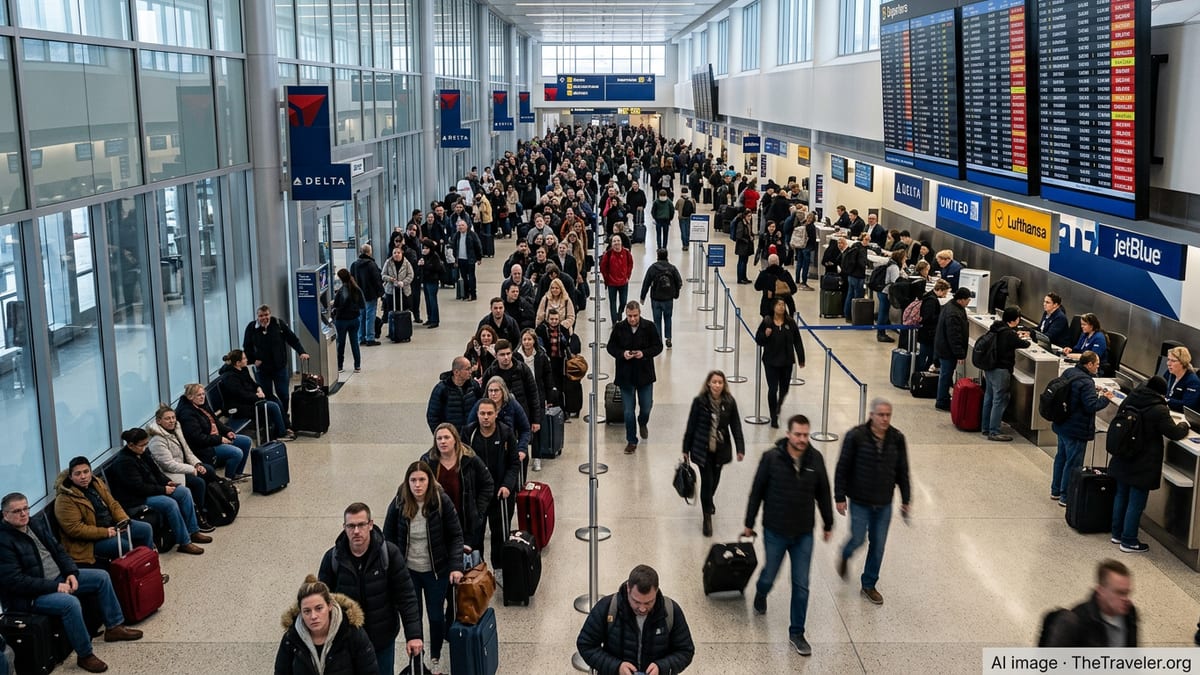
Delays Spread Across Key Hub for Southwest and American
Publicly available flight-tracking boards on July 1 show dozens of delayed departures and arrivals at Phoenix Sky Harbor, affecting a broad mix of Southwest and American Airlines services across terminals three and four. Early-morning and mid-day banks in particular are showing rolling departure-time changes, with some flights pushed back by several hours and others re-timed multiple times.
Data visible on the airport’s official flight information pages indicates that both carriers, which operate large hub schedules out of Phoenix, are contending with late-arriving aircraft, gate holds, and air traffic flow constraints. Southwest’s dense schedule of short-haul flights across the Southwest and Mountain West and American’s hub-and-spoke connections into the Midwest and East Coast are both experiencing knock-on impacts as delayed turns compound throughout the day.
Phoenix Sky Harbor functions as one of the nation’s most important domestic connecting points, with American and Southwest together responsible for a significant majority of passenger traffic. When operations slow at the airport, the resulting disruption often extends to secondary markets that rely on Phoenix as a primary connection point, including smaller cities in Arizona, California, New Mexico, Colorado, and the broader Mountain West.
According to recent aviation statistics from the City of Phoenix, Southwest and American have consistently ranked as the top two carriers by passenger volume and landed weight at Sky Harbor. That concentration means that even a moderate level of delay can feel “massive” in practical terms, particularly during peak travel periods when terminals and security checkpoints are already heavily utilized.
Operational Constraints and Construction-Related Limits
Flight operations at Phoenix have been operating under various capacity constraints in recent months, some of them tied to infrastructure work and airfield configuration. Federal aviation planning documents describing runway rehabilitation projects at Sky Harbor highlight periods of reduced capacity, including nighttime and peak-period impacts when sections of the airfield are temporarily unavailable.
These constraints can force air traffic managers to reduce the number of arrivals and departures scheduled for certain hours, resulting in what are known as flow-controlled operations. When inbound demand exceeds these reduced limits, flights may be held at their origin or placed in holding patterns, leading to departure and arrival delays that quickly accumulate across airline networks. For carriers with high-frequency schedules such as Southwest, a handful of extended holds or ground delays is often enough to trigger a day-long ripple effect.
Weather patterns in the region can add another layer of complexity. The early summer period in Arizona frequently brings intense heat and the onset of the monsoon season, which can produce strong winds, dust, and thunderstorms in the vicinity of Phoenix. Even when severe weather is not directly overhead, convective activity along major flight corridors can prompt reroutes, speed restrictions, and reracking of departure flows, all of which slow operations through a hub like Sky Harbor.
Recent online discussions among travelers and aviation watchers have pointed to a mix of local weather variability, airfield work, and national air traffic constraints as contributors to the latest disruptions. These reports often describe flights delayed multiple times, aircraft swaps, and last-minute gate changes that complicate boarding and deplaning.
Passenger Experience: Missed Connections and Overnight Disruptions
For travelers flying through Phoenix on July 1, the operational issues are translating into missed connections, long lines at customer-service counters, and extended waits at departure gates. Social media posts and forum discussions from affected passengers describe extended waits on the tarmac, rebookings onto later flights, and in some cases the need to seek overnight accommodation when onward connections are no longer viable.
Because Southwest operates on a point-to-point model with tight aircraft turns, a delay of several hours on an early segment can cause a domino effect that touches multiple subsequent flights. Passengers who planned relatively short connections at Phoenix are finding themselves reprotected on itineraries departing much later in the day, or routed through alternate hubs as seats become available.
American customers are facing similar challenges, particularly those connecting onward to smaller regional destinations that may have only one or two daily flights. When a Phoenix inbound arrives late, there is often no immediate backup option, leaving passengers at the hub until the next scheduled departure cycle. Travel forums frequently reference frustration with limited seat inventory on alternative routings during busy summer travel periods, which narrows rebooking choices.
The disruptions are also affecting baggage handling and customer communication. Passengers report inconsistent updates through mobile apps and airport displays, along with confusion about whether to remain at the gate or seek assistance at service desks. While these issues are common during large-scale delay events at any major hub, the concentration of two large carriers at Phoenix amplifies the impact on the overall passenger experience.
Network-Wide Impact Across Domestic Routes
The delays at Phoenix are not confined to Arizona. Because both Southwest and American use the airport as a key connecting point for domestic traffic, disruptions are spreading across multiple time zones. Flights from Phoenix to major destinations such as Denver, Dallas, Chicago, Las Vegas, and Southern California are departing late, which in turn delays their onward legs and return services.
Publicly available performance data from recent months already shows that Southwest’s network has been under pressure from tighter turn times and a complex route map, with Phoenix frequently cited by travelers as an airport where small operational issues can escalate quickly. American, meanwhile, uses Phoenix as a strategic western hub feeding transcontinental routes, so prolonged delays there can disturb schedules at other major airports.
When a hub experiences persistent congestion, airlines sometimes respond by temporarily trimming frequencies, upgauging aircraft to move more passengers on fewer flights, or adjusting published schedules for future months. Industry analysts following on-time performance trends have noted that carriers across the United States are still recalibrating their operations to account for strong demand, aging fleets in some segments, and ongoing staffing and maintenance pressures.
As the July peak travel season ramps up, the situation at Phoenix is likely to be closely watched by both airlines and regulators as an indicator of how well domestic networks are coping with the combined strain of high passenger volumes, infrastructure constraints, and increasingly volatile weather patterns.
What Travelers Can Do When Phoenix Backs Up
With delays already in motion at Phoenix Sky Harbor, travel planners are focusing on practical steps passengers can take to reduce disruption. Aviation advisories and consumer-travel guidance commonly recommend building longer connection times when routing through delay-prone hubs, especially during summer afternoons when weather and traffic volumes are most volatile.
Passengers are generally advised to monitor flight-status tools from their airline and the airport closely, since official departure times can change multiple times in a short window. When delays threaten to cause missed connections, earlier contact with airline customer-service channels typically offers more rebooking options, whether through self-service apps or staffed desks in the terminal.
Flexible travelers may benefit from considering alternate routings that bypass Phoenix altogether, particularly if their origin or destination is served by multiple hubs on the same carrier. For example, some passengers connecting between the West Coast and Midwest might find options via Dallas, Denver, or other large airports during periods when Phoenix is experiencing significant congestion.
For now, the operational challenges at Phoenix Sky Harbor underscore how sensitive modern airline networks remain to localized disruptions. When a single major hub experiences a spike in delays, the consequences can reverberate across dozens of cities, and on busy summer days that impact is felt most acutely by Southwest and American customers relying on Phoenix as their gateway to the rest of the country.