


More news on this day
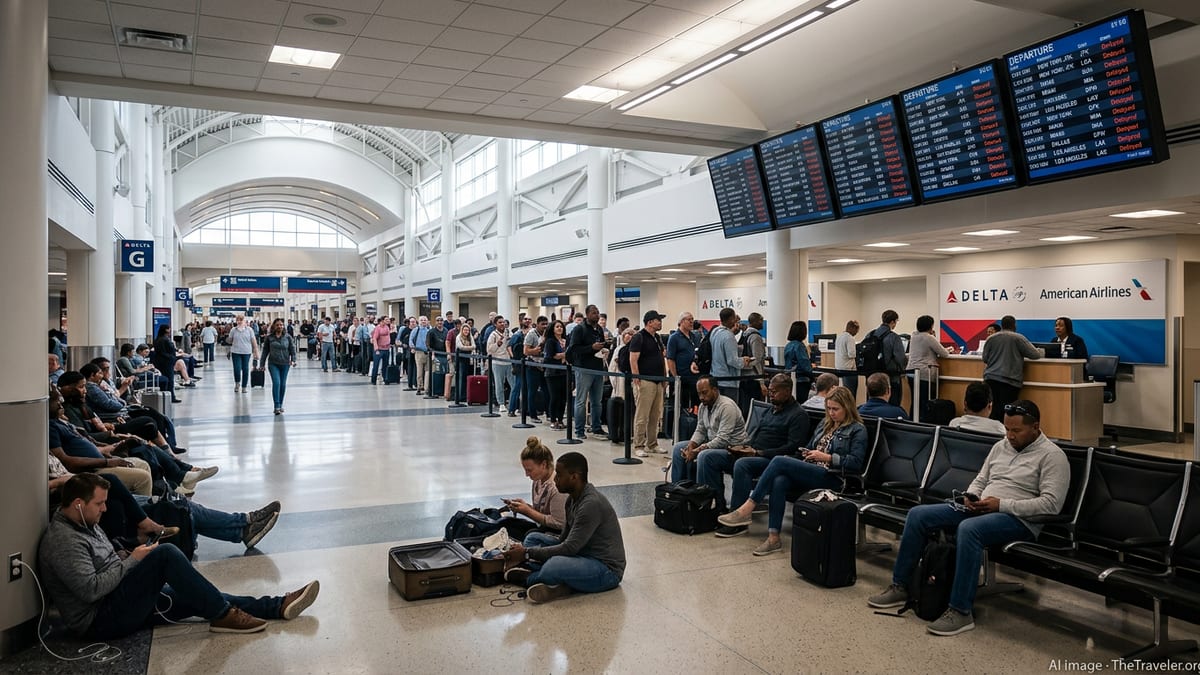
One of the busiest travel days of the summer turned into an hours-long ordeal for many passengers at Hartsfield-Jackson Atlanta International Airport on July 1, as 198 flights were delayed and four were canceled, stranding travelers and disrupting connections across the United States and overseas.
Get the latest news straight to your inbox!
Delays Mount Across the World’s Busiest Hub
The disruptions at Hartsfield-Jackson, a key hub for domestic and international traffic, affected services throughout the day as delayed departures and a small number of cancellations rippled through the airport’s tightly scheduled operations. Publicly available aviation data for Atlanta on July 1 show that 198 flights were delayed and four canceled, a relatively small share of the airport’s overall traffic but enough to significantly impact passenger journeys.
With Atlanta serving more than 100 million passengers annually in recent years and operating as a central connecting point between U.S. regions and overseas destinations, even a few dozen disrupted flights can quickly cascade through airline networks. As aircraft and crews arrive late, subsequent departures often slip behind schedule, causing missed connections and forcing passengers to rebook on later services.
The delays were concentrated in peak travel periods, when morning and late-afternoon banks of flights funnel passengers through Atlanta to cities such as New York, Chicago, Dallas, Los Angeles, Orlando and Miami, as well as to major long-haul destinations including London, Paris, Amsterdam and Tokyo. Many travelers faced extended waits at departure gates and congested concourses as they monitored departure boards for fresh updates.
While the overall number of cancellations remained low, the scale of delays underscored how sensitive large hub airports are to any operational strain, particularly during the high-demand summer travel season that includes the U.S. Independence Day holiday period.
Multiple Airlines Affected, With Delta Most Exposed
The disruption touched a broad mix of carriers that operate at Hartsfield-Jackson. Delta Air Lines, which maintains its largest hub and headquarters in Atlanta, experienced a series of delayed services and some cancellations, reflecting the airline’s dominant presence at the airport. Publicly available schedules show that Delta continues to operate hundreds of daily departures from Atlanta, making it especially vulnerable when operations slow.
Other major U.S. airlines were also affected. Southwest Airlines, American Airlines, United Airlines, Alaska Airlines, Frontier Airlines and ultra-low-cost carriers listed Atlanta in their daily schedules on July 1, and many saw knock-on delays as aircraft arrived late or ground operations took longer than planned. For passengers, the practical result was similar regardless of airline: longer than expected waits at gates and uncertainty around onward travel plans.
The disruption followed a series of weather and operational challenges that have periodically hit Atlanta in recent months. Published coverage and aviation tracking sites have documented earlier episodes in 2026 where thunderstorms, heavy rain and staffing constraints contributed to large waves of delays and cancellations at the airport. Against that backdrop, carriers have faced continued pressure to keep tightly timed schedules running smoothly during peak periods.
Despite the strain, airport operations remained open throughout July 1, with security checkpoints, baggage systems and runway movements continuing as carriers worked to push out delayed flights and reposition aircraft and crews.
Weather, Network Complexity and Seasonal Crowds Intensify Impact
While precise triggers for individual disruptions on July 1 varied by flight, the pattern at Atlanta fits a broader trend at major U.S. hubs where weather, airspace congestion and the complexity of airline networks combine to amplify even modest operational problems. When storms or low clouds pass through the region, controllers can reduce the rate at which aircraft land and depart, which in turn pushes flights into holding patterns or ground delays.
Industry analyses of past Atlanta disruptions have highlighted how a single storm cell or runway constraint at the world’s busiest airport can quickly affect dozens of flights. Once aircraft are out of position and crews reach duty-time limits, carriers must shuffle schedules, prioritize certain routes and, in some cases, cancel flights that no longer fit within staffing or gate constraints.
The timing of the latest disruption, coinciding with one of the busiest travel periods around the July 4 holiday, further intensified the impact. Passenger volumes typically surge as families and leisure travelers head to coastal destinations, national parks and major cities. With fuller flights and fewer spare seats, travelers whose flights are delayed or canceled can find it harder to secure quick rebooking, resulting in extended airport stays or overnight interruptions to their journeys.
Air travel data from previous summer peaks show that these holiday periods often produce some of the year’s highest national delay counts, particularly at large hubs like Atlanta that serve as critical transfer points between regions.
Knock-On Effects Felt Beyond Atlanta
The disruption at Hartsfield-Jackson did not stay confined to Atlanta’s terminals. Because many flights operating to and from the airport are part of complex multi-leg rotations, delays there can spill into other airports throughout the day. Aircraft scheduled to depart Atlanta late may reach their next destination behind schedule, forcing additional crews, gates and connecting passengers to adjust.
On July 1, this pattern was visible on routes linking Atlanta to major hubs such as New York, Chicago and Dallas, as well as to popular vacation gateways like Orlando and Miami. Late-arriving flights from Atlanta had the potential to delay return services, compress turn times or push back evening departures, particularly in regions already experiencing busy traffic and summer thunderstorms.
International networks also faced pressure. Flights connecting through Atlanta to transatlantic and transpacific destinations can run into tight turnaround windows, especially for overnight departures. When inbound segments arrive late, airlines may need to hold connecting flights for clusters of passengers or rebook those travelers onto later long-haul services. This can lead to schedule reshuffling at overseas airports hours after the initial disruption occurs.
While the majority of July 1 flights at Atlanta ultimately operated, the delays served as a reminder that what appears as a localized issue at a single hub can quickly become a multi-airport event as aircraft, crews and passengers move through the broader system.
Guidance for Travelers Navigating Ongoing Uncertainty
For travelers, the latest wave of disruptions at Hartsfield-Jackson underscores the importance of proactive planning during busy travel seasons. Aviation guides and consumer advocacy resources point to real-time flight tracking, airline mobile apps and airport information screens as key tools to anticipate schedule changes before arriving at the terminal.
Publicly available guidance from transportation regulators notes that passengers on flights that are significantly delayed or canceled may have varying options depending on the cause of the disruption and the specific airline’s policies. In the United States, refunds are typically available when a flight is canceled and the traveler chooses not to fly, although meal vouchers, hotel stays and other compensation are often handled according to individual carrier rules.
Airport and airline information services also recommend building in longer connection times when planning itineraries through major hubs such as Atlanta, particularly in the late afternoon and evening when earlier delays can accumulate. Choosing earlier departures where possible, traveling with carry-on luggage instead of checked bags and monitoring weather forecasts for both departure and arrival cities can help reduce the risk of severe inconvenience.
As the busy July 4 holiday period continues, Hartsfield-Jackson and its partner airlines are expected to face sustained pressure to keep operations running smoothly. Travelers passing through the Atlanta hub may continue to experience sporadic delays, making preparation and flexibility important parts of any summer itinerary.